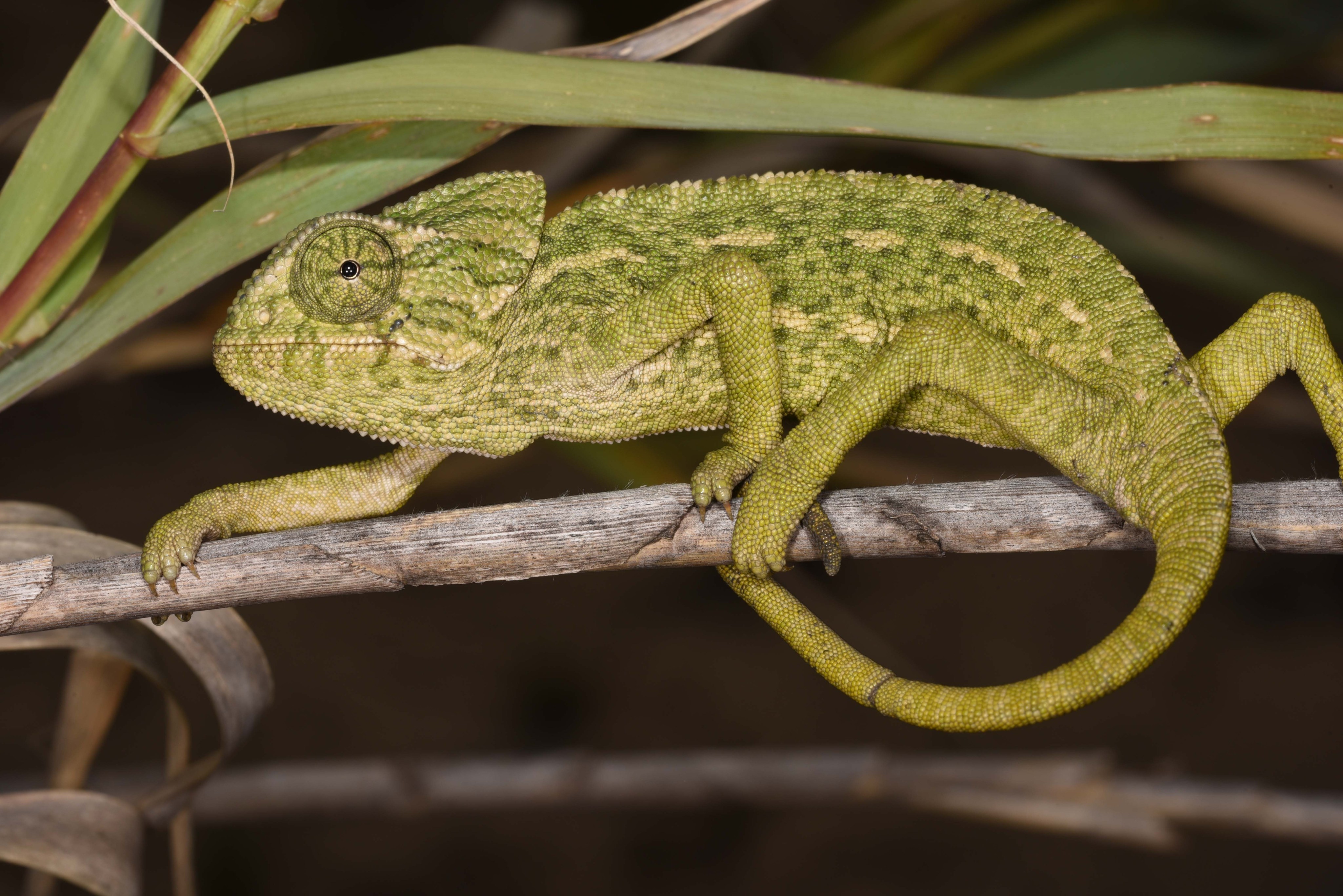
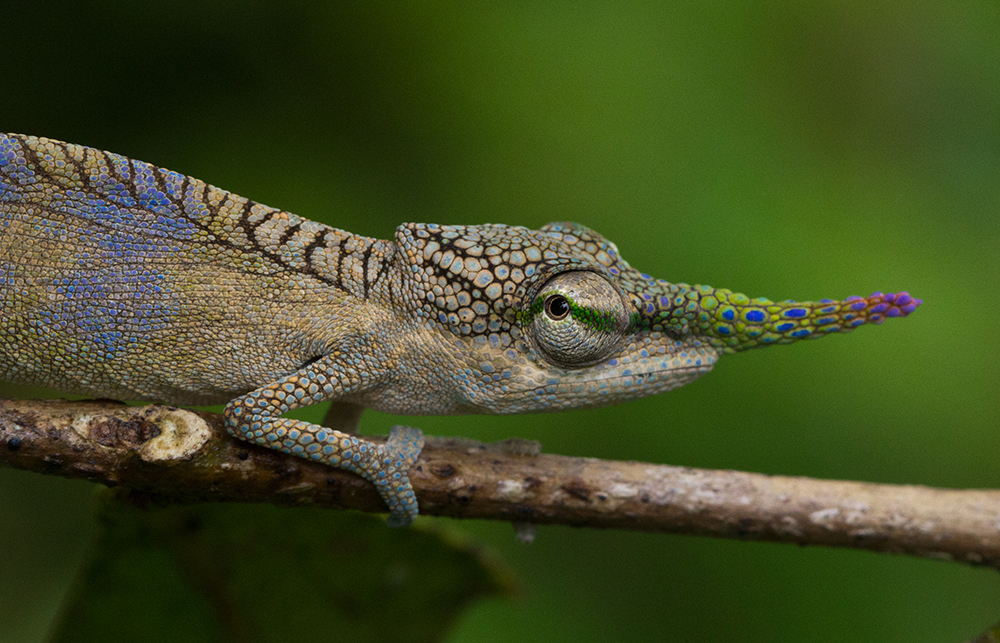
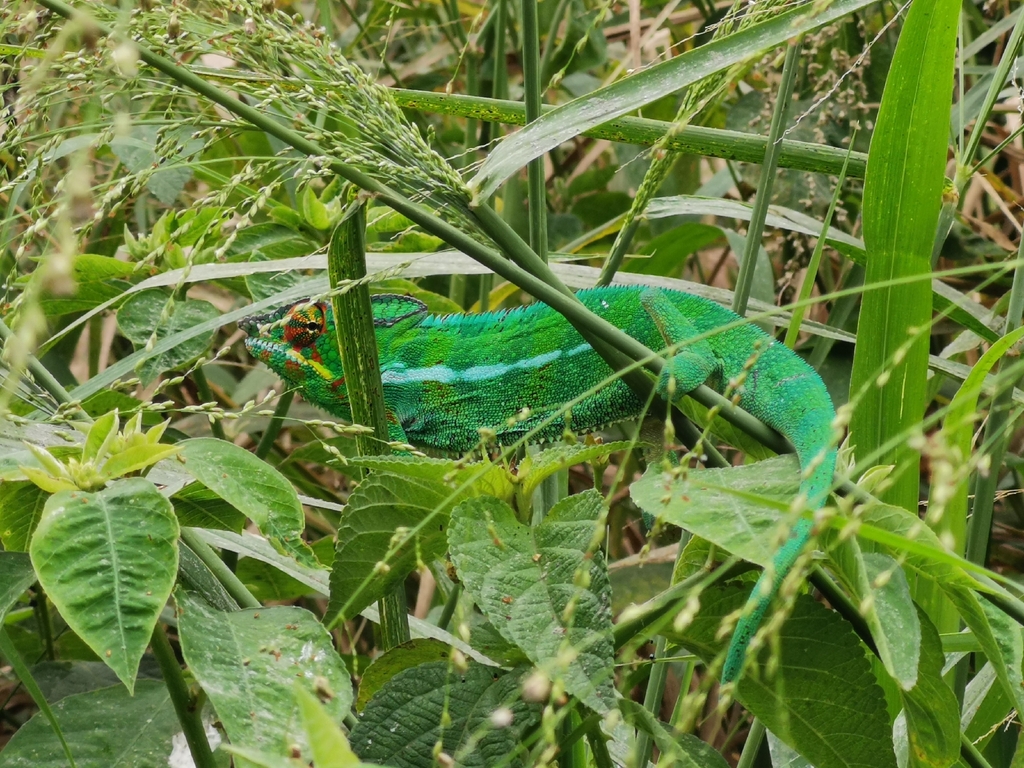
[:de]Lebensräume verschiedener Chamäleons in Vohimana (Madagaskar)[:en]Habitats and distribution of chameleon species in Vohimana (Madagascar)[:]

[:de]Lebensräume verschiedener Chamäleons in Vohimana (Madagaskar)[:en]Habitats and distribution of chameleon species in Vohimana (Madagascar)[:]

Verbreitung Wissenschaft

[:de]

Eine Studie zur Verbreitung und den Lebensräumen verschiedener Chamäleonarten wurde kürzlich in Vohimana in Madagaskar durchgeführt. Das Reservat Vohimana liegt zwischen 800 und 1000 m Höhe im östlichen Hochland der Insel. Es erstreckt sich über eine Fläche von 15 km², davon 6 km² Primärregenwald, 8,5 km² Sekundärvegetation und etwas über 1 km² Eukalyptusforst. Die Regenzeit reicht von Oktober bis Mai und ist vor allem von vermehrtem Regen gekennzeichnet, wobei die Trockenzeit ebenfalls über verhältnismäßig viele Niederschläge verfügt.

An insgesamt 195 Tagen, davon 158 in der Regenzeit und 37 in der Trockenzeit wurden Chamäleons innerhalb des Reservats entlang der vorhandenen Wege mit dem bloßen Auge gesucht. Dabei liefen verschiedene Personen insgesamt 350 km Strecke. 80% der Datenerhebung fand nachts statt, nur 20% tagsüber. Jedes gefundene Chamäleon wurde fotografiert sowie Temperatur, relative Luftfeuchtigkeit und UV-Index am Fundort gemessen. Die Daten wurden anschließend statistisch ausgewertet.

Während der gesamten Studienzeit konnten 577 Chamäleons dokumentiert werden. Darunter befanden sich ein einziges Calumma brevicorne, sieben Furcifer willsii, zwei Brookesia ramanantsoai, sieben Brookesia thieli, 143 Brookesia superciliaris und Brookesia therezieni (zusammengefasst zu einer Gruppe), 53 Calumma furcifer, 207 kleine Calumma des nasutum-Komplexes (auf Grund von Schwierigkeiten bei der der rein äußerlichen Artbestimmung zu einer Gruppe zusammengefasst), 24 Calumma parsonii, 118 Calumma pinocchio, 11 Furcifer bifidus und 4 Furcifer pardalis.

Am häufigsten in Vohimana waren Brookesia superciliaris und Brookesia therezieni, kleine Chamäleons des Calumma nasutum-Komplex und Calumma pinocchio. Brookesia superciliaris, Brookesia therezieni und Calumma furcifer wurden nur selten außerhalb des Primärwaldes aufgefunden. Calumma pinocchio war am häufigsten in einem kleinen Primärwaldrest im Nordosten des Reservats zu finden. Alle übrigen Arten konnten die Wissenschaftler sowohl in Primärwald als auch in Sekundärvegetation immer wieder entdecken. Calumma parsonii, Calumma pinocchio als auch Arten des nasutum-Komplexes wurden häufig im Bereich von Waldrändern gefunden.

Die Temperaturen der Fundorte lagen in der Regenzeit durchschnittlich bei 24,2°C, in der Trockenzeit dagegen bei durchschnittlich 18,3°C. Während der Regenzeit wurden tagsüber mehr Chamäleons an Orten mit höherem UV-Index gemessen (durchschnittlich 0,5). Die relative Luftfeuchtigkeit war in Vohimana das ganze Jahr über hoch mit einem Durchschnitt über 90% für beide Jahreszeiten. Die Unterschiede zwischen den verschiedenen Chamäleonarten waren eher gering, was die Mikroklimata anging. Einzelne Furcifer pardalis und Furcifer willsii wurde zu den höchsten gemessenen Tages- und Nachttemperaturen (29°C und 27,5° tagsüber, 25°C nachts) gefunden. Diese beiden Arten sonnten auch im höchsten durchschnittlich gemessenen UVI (8,2 für Furcifer pardalis und 7,7 für Furcifer willsii). Die UV-Indizes aller übrigen Arten lagen im Durchschnitt deutlich niedriger.

Diversity, distribution, and microclimatic conditions experienced by the chameleons of the Vohimana Reserve, Madagascar
Olivier Marquis, Marc Gansuana, Sébastian Métrailler
Herpetological Conservation and Biology 21(1), 2026: 101-119
DOI: nicht verfügbar
Kostenloser Download des Artikels

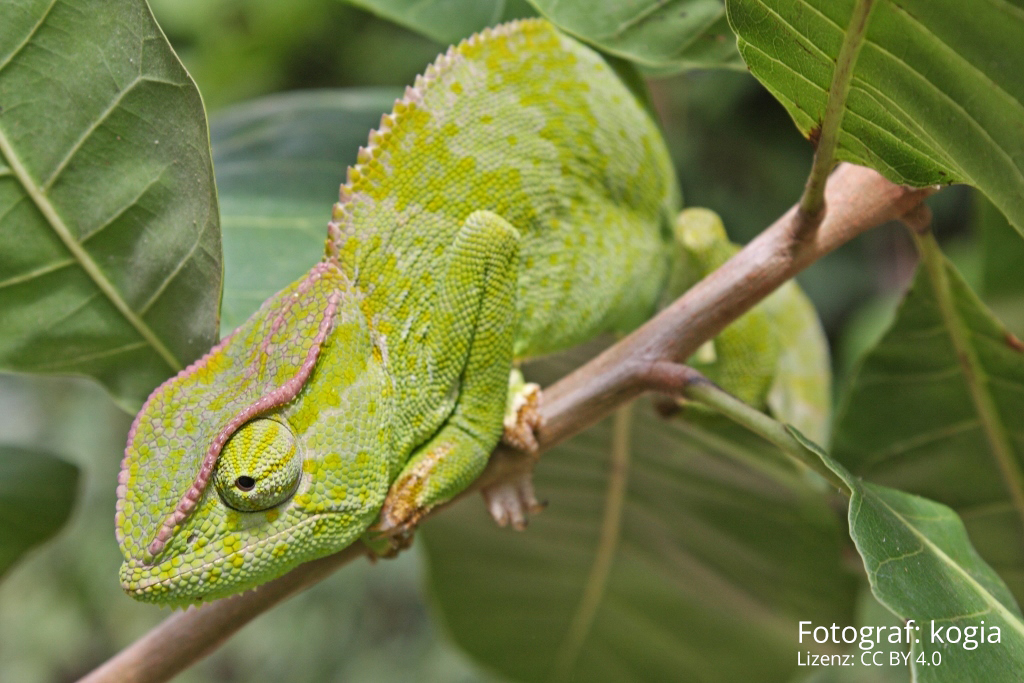
Foto: Calumma pinocchio im Reservat von Vohimana, fotografiert von Alex Negro[:en]

A study on the distribution and habitats of various chameleon species was recently carried out in Vohimana, Madagascar. The Vohimana Reserve is situated at an altitude of between 800 and 1,000 metres in the island’s eastern highlands. It covers an area of 15 km², comprising 6 km² of primary rainforest, 8.5 km² of secondary vegetation and just over 1 km² of eucalyptus forest. The rainy season runs from October to May and is characterised primarily by increased rainfall, although the dry season also sees a relatively high amount of rainfall.

Over a total of 195 days – 158 of which were during the rainy season and 37 during the dry season – chameleons were searched for with the naked eye within the reserve along the existing paths. In the process, various individuals covered a total distance of 350 km. 80% of the data collection took place at night, with only 20% during the day. Every chameleon found was photographed, and the temperature, relative humidity and UV index were measured at the site of discovery. The data was then statistically analysed.

A total of 577 chameleons were recorded during the entire study period. These included a single Calumma brevicorne, seven Furcifer willsii, two Brookesia ramanantsoai, seven Brookesia thieli, 143 Brookesia superciliaris and Brookesia therezieni (grouped together), 53 Calumma furcifer, 207 small Calumma of nasutum-complex (grouped together due to difficulties in identifying them solely on the basis of external characteristics), 24 Calumma parsonii, 118 Calumma pinocchio, 11 Furcifer bifidus and 4 Furcifer pardalis.

The most common species in Vohimana were Brookesia superciliaris and Brookesia therezieni, small chameleons of the Calumma nasutum complex, and Calumma pinocchio. Brookesia superciliaris, Brookesia therezieni and Calumma furcifer were rarely found outside the primary forest. Calumma pinocchio was most commonly found in a small remnant of primary forest in the north-east of the reserve. The scientists repeatedly found all other species in both primary forest and secondary vegetation. Calumma parsonii, Calumma pinocchio and species of the nasutum complex were frequently found along forest edges.

Temperatures at the study sites averaged 24.2°C during the wet season, compared with an average of 18.3°C during the dry season. During the wet season, more chameleons were observed during the day in locations with a higher UV index (averaging 0.5). Relative humidity in Vohimana was high throughout the year, averaging over 90% for both seasons. The differences between the various chameleon species were rather small in terms of microclimates. Individuals of Furcifer pardalis and Furcifer willsii were found at the highest recorded daytime and night-time temperatures (29°C and 27.5°C during the day, 25°C at night). These two species were also basking at the highest average UVI recorded (8.2 for Furcifer pardalis and 7.7 for Furcifer willsii). The UV indices for all other species were, on average, significantly lower.

Diversity, distribution, and microclimatic conditions experienced by the chameleons of the Vohimana Reserve, Madagascar
Olivier Marquis, Marc Gansuana, Sébastian Métrailler
Herpetological Conservation and Biology 21(1), 2026: 101-119
DOI: not available
Free article download

Photo: Calumma pinocchio in the Vohimana Reserve, photographed by Alex Negro[:]

[:de]Eingeschleppte Chamäleons in Subsahara-Afrika[:en]Invasive chameleons in subsaharan Africa[:]

[:de]Eingeschleppte Chamäleons in Subsahara-Afrika[:en]Invasive chameleons in subsaharan Africa[:]

Verbreitung Wissenschaft

[:de]

Ein polnischer Biologe hat kürzlich ausgewertet, wie viele eingeschleppte Reptilien- und Amphibienarten es in Subsahara-Afrika gibt.

Unter den in andere Länder eingeschleppte Arten finden sich auch einige Chamäleons: Das Pantherchamäleon (Furcifer pardalis) wurde bereits vor 1830 in La Réunion eingeführt. Es kommt bis heute auf der Insel vor. Das Kap-Zwergchamäleon (Bradypodion pumilum) wurde in den 1990er Jahren in Namibia ausgesetzt und bildete kleine Populationen in Swakopmund, Walvis Bay, Lüderitz und Windhoek. Alle diese Populationen sind heute jedoch ausgestorben. Das Parsons Chamäleon (Calumma parsonii parsonii) wurde in den 1960er Jahren von Madagaskar nach Mauritius gebracht. Eine überlebensfähige Population wurde daraus jedoch nicht. Das Lappenchamäleon (Chamaeleo dilepis) wurde vor 1978 in die südafrikanische Provinz Freistaat verschleppt, scheint dort aber ebenfalls keine eigenständige Population gebildet zu haben. Und zuletzt wurden verschiedene Zwergchamäleon-Arten (Bradypodion ssp.) im Jahr 1939 in die Provinz Freistaat in Südafrika gebracht. Auch sie erzeugten keine bleibende Population.

Insgesamt sind vor allem Echsen in Subsahara-Afrika in fremde Länder eingeschleppt worden (23 Arten), direkt dahinter kommen Amphibien (21 Arten) und Schlangen (14 Arten). Die meisten eingeschleppten Arten werden in Südafrika beobachtet, außerdem aber auch in Madagaskar, den Maskarenen und umliegenden Inseln. Unklar ist, ob weiter nördlich gelegene afrikanische Länder eingeschleppte Arten geringer beobachten oder dort tatsächlich weniger vorhanden sind. Zwei Drittel der eingeschleppten Arten, die eigene Populationen etablierten konnten, kamen aus anderen Regionen Afrikas oder der umliegenden Inseln sowie dem Orient. Bei den Arten, die sich nach ihrer Verschleppung nicht vermehren konnten, sieht das deutlich anders aus.

Die frühesten Verschleppungen in Subsahara-Afrika sind aus dem 17. Jahrhundert bekannt, darunter der Vierkrallengecko (Gehyra mutilata) und der Maskarenenfrosch (Ptychadena mascareniensis). Mit dem Kolonialismus steigen die Zahlen verschleppter Arten stark an. Ein weiterer Peak liegt ab etwa 2000 mit steigendem internationalem Handel.

Die Gründe für die Verschleppungen sind vielfältig, zumeist aber passiert es unbeabsichtigt. Vor allem Geckos und Frösche werden häufig als blinde Passagiere mit Obsttransporten, Container auf Schiffen oder im Gepäck von Touristen verschleppt. Seltener werden Reptilien und Amphibien absichtlich ausgesetzt, wie im Fall des Kap-Zwerggecko (Lygodactylus capensis), der in einer Gärtnerei ausgesetzt wurde. Das Aussetzen von als Haustieren gehaltenen Reptilien und Amphibien führt meist nicht zur Etablierung von sich vermehrenden Populationen. Zwei Fälle von beabsichtigtem Aussetzen zur biologischen Kontrolle anderer Tierarten sind bekannt, ebenfalls drei beabsichtigte Freilassungen ohne Gründe.

Potenzielle Probleme der eingeschleppten Arten sind vor allem die Verdrängung anderer einheimischer Arten, aber auch das Fressen einheimischer Arten. Die Hybridisierung mit einheimischen Arten findet sehr selten statt. Die Verbreitung von Krankheiten, beispielsweise Parasitosen, ist ein häufiges Problem. Von verschleppten Chamäleons ist bisher keines dieser Probleme bekannt, allerdings gibt es auch vielerorts kaum Studien zum Thema.

Herping the African Continent: Alien Amphibians and Reptiles in Sub-Saharan Africa
Grzegorz Kopij
Biology 2026, 15: 639
DOI: 10.3390/biology15080639
Kostenloser Download des Artikels

Foto: Ein Furcifer pardalis auf La Réunion, fotografiert von Jason Berger, CC BY 4.0[:en]

A Polish biologist has recently assessed the number of introduced reptile and amphibian species in sub-Saharan Africa.

Among the species introduced into other countries are also a number of chameleons: the panther chameleon (Furcifer pardalis) was introduced to Réunion before 1830. It is still found on the island today. The Cape dwarf chameleon (Bradypodion pumilum) was released in Namibia in the 1990s and established small populations in Swakopmund, Walvis Bay, Lüderitz and Windhoek. However, all these populations are now extinct. The Parsons’ chameleon (Calumma parsonii parsonii) was introduced from Madagascar to Mauritius in the 1960s. However, this did not result in a viable population. The frilled chameleon (Chamaeleo dilepis) was introduced to the South African province of the Free State before 1978, but does not appear to have established a self-sustaining population there either. Finally, various species of dwarf chameleon (Bradypodion ssp.) were introduced to the Free State province in South Africa in 1939. They, too, failed to establish a permanent population.

Overall, lizards have been introduced into non-native countries in sub-Saharan Africa more than any other group (23 species), followed closely by amphibians (21 species) and snakes (14 species). Most introduced species are observed in South Africa, but also in Madagascar, the Mascarene Islands and surrounding islands. It is unclear whether introduced species are observed less frequently in African countries further north, or whether they are actually less prevalent there. Two-thirds of the introduced species that managed to establish their own populations originated from other regions of Africa or the surrounding islands, as well as the Middle East. The situation is quite different for species that were unable to reproduce after being introduced.

The earliest cases of species introduction in sub-Saharan Africa date back to the 17th century, including the four-clawed gecko (Gehyra mutilata) and the Mascarene frog (Ptychadena mascareniensis). With the advent of colonialism, the number of introduced species rose sharply. A further peak occurred from around the year 2000 onwards, coinciding with an increase in international trade.

There are many reasons why animals are transported unintentionally, but in most cases it happens by accident. Geckos and frogs, in particular, are frequently transported as stowaways in fruit shipments, in shipping containers, or in tourists’ luggage. Less commonly, reptiles and amphibians are deliberately released, as in the case of the Cape dwarf gecko (Lygodactylus capensis), which was released at a nursery. The release of reptiles and amphibians kept as pets does not usually lead to the establishment of breeding populations. Two cases of deliberate release for the purpose of biological control of other animal species are known, as are three deliberate releases for no apparent reason. The release of reptiles and amphibians kept as pets does not usually lead to the establishment of breeding populations. Two cases of deliberate release for the purpose of biological control of other animal species are known, as are three deliberate releases for no apparent reason.

The main potential problems posed by introduced species are the displacement of other native species, but also predation on native species. Hybridisation with native species occurs very rarely. The spread of diseases, such as parasitic infections, is a common problem. None of these problems have been reported in relation to introduced chameleons to date; however, there are very few studies on the subject in many places.

Herping the African Continent: Alien Amphibians and Reptiles in Sub-Saharan Africa
Grzegorz Kopij
Biology 2026, 15: 639
DOI: 10.3390/biology15080639
Free article download

Photo: A Furcifer pardalis on Réunion, photographed by Jason Berger, CC BY 4.0[:]

[:de]Chamäleons in Namoroka (Madagaskar)[:en]Chameleons in Namoroka (Madagascar)[:]

[:de]Chamäleons in Namoroka (Madagaskar)[:en]Chameleons in Namoroka (Madagascar)[:]

Verbreitung Wissenschaft

[:de]

Die Tsingy de Namoroka liegen im heißen Westen Madagaskars. Sie bestehen aus nadelspitzem Karstgestein mit Grotten darunter und umgeben von Trockenwaldfragmenten. Obwohl die Tsingy inzwischen ein Nationalpark sind, ist der Zugang mangels jeglicher Infrastruktur und Wegen bisher nur äußerst schwierig und während der Regenzeit sogar überhaupt nicht möglich.

Die Wissenschaftler führten an drei verschiedenen Orten innerhalb des Nationalparks Übersichtsstudien durch. Dazu nutzten sie jeweils drei 1000 bis 1500 m Transektlinien an jedem Ort und Grubenfallen. Zusätzlich wurden spezielle Lebensräume wie Grotten gezielt aufgesucht.

Insgesamt wurden 57 Tierarten in Namoroka nachgewiesen werden, davon 41 Reptilienarten. An allen drei untersuchten Standorten konnten Brookesia brygooi, Furcifer angeli und Furcifer oustaleti nachgewiesen werden. Das in Namoroka endemische Brookesia bonsi dagegen konnte nur an einem einzigen Standort gefunden werden. Es handelt sich dabei um ein 87 m „hoch“ gelegenes Gebiet mit Bäumen zwischen 6 und 15 m Höhe und relativ offenem Blätterdach. Das Gebiet zeichnet sich durch dichtes, nahezu undurchdringbares Unterholz vor allem in feuchten, felsigen Schluchten zwischen den Tsingy aus.

Die Wissenschaftler weisen darauf hin, dass Brandrodung und daraus resultierende, unkontrollierbare Buschfeuer nach wie vor ein großes Risiko für die Lebensräume der Tiere in Namoroka darstellt. Auch Holzschlag sowie das Ernten wilden Honigs, wilden Wurzelknollen und Heilpflanzen sorgt dafür, dass die Lebensräume des Nationalparks gestört werden. Auch Zebus werden zum Weiden in den Nationalpark getrieben. Der tatsächliche Schutz des Gebiets ist auf Grund der ablegenen Lage und der hohen Armut der Bevölkerung vor Ort sehr schwierig.

Aperçu des amphibiens et des reptiles du Parc National de Namoroka: Diversité biologique, intérêt biogéographique et représentativité en matière de conservation
Hajaniaina Rasoloarison, Bernard Ranriamahatantsoa, Nirhy Rabibisoa, Christopher J. Raxworthy
Malagasy Nature 2026, 20: 30-46.
DOI: nicht verfügbar
Kostenloser Download des Artikels

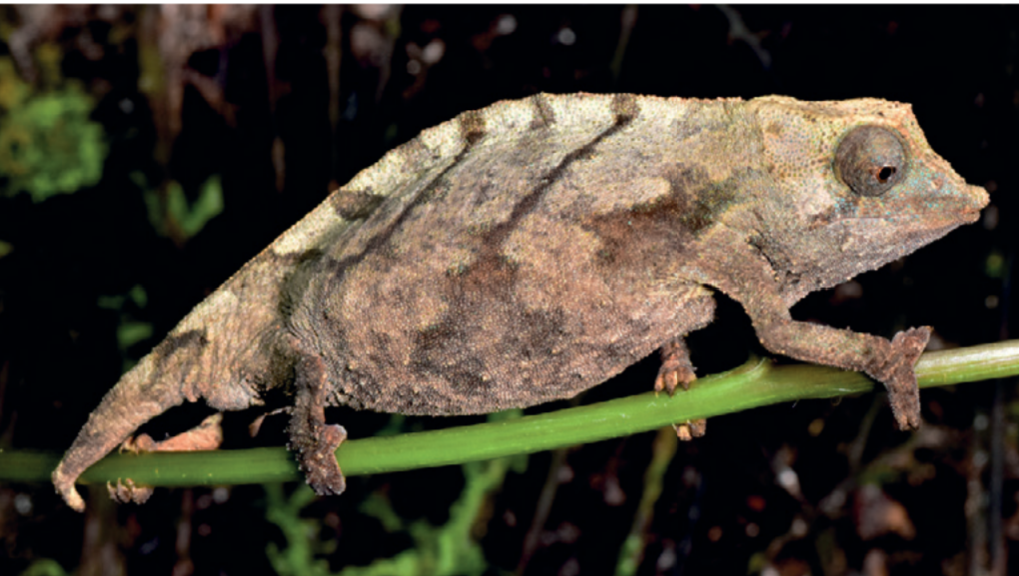
Foto: Brookesia bonsi in Namoroka, aus der genannten Publikation[:en]

The Tsingy de Namoroka are located in the hot west of Madagascar. They consist of needle-sharp karst rock with caves beneath and are surrounded by fragments of dry forest. Although the Tsingy are now a national park, access has so far been extremely difficult due to a complete lack of infrastructure and paths, and is even impossible during the rainy season.

The scientists carried out survey studies at three different locations within the national park. To do this, they used three 1,000 to 1,500 m transect lines at each site, along with pitfall traps. In addition, specific habitats such as caves were specifically targeted.

A total of 57 animal species were recorded in Namoroka, 41 of which were reptiles. Brookesia brygooi, Furcifer angeli and Furcifer oustaleti were recorded at all three sites surveyed. Brookesia bonsi, which is endemic to Namoroka, was found at only one site. This is an area situated at an altitude of 87 m, with trees ranging from 6 to 15 m in height and a relatively open canopy. The area is characterised by dense, virtually impenetrable undergrowth, particularly in the damp, rocky gorges between the Tsingy.

The scientists point out that slash-and-burn farming and the resulting uncontrollable bushfires continue to pose a major risk to the animals’ habitats in Namoroka. Logging, as well as the harvesting of wild honey, wild root tubers and medicinal plants, also ensures that the national park’s habitats are disturbed. Zebus are also driven into the national park to graze. Effective protection of the area is very difficult due to its remote location and the high levels of poverty among the local population.

Aperçu des amphibiens et des reptiles du Parc National de Namoroka: Diversité biologique, intérêt biogéographique et représentativité en matière de conservation
Hajaniaina Rasoloarison, Bernard Ranriamahatantsoa, Nirhy Rabibisoa, Christopher J. Raxworthy
Malagasy Nature 2026, 20: 30-46.
DOI: not available
Free article download

Picture: Brookesia bonsi in Namoroka, from the afore mentioned publication[:]

[:de]Chamaeleo africanus in Griechenland außerhalb Pylos nachgewiesen[:en]Chamaeleo africanus found in Greece outside Pylos[:]

[:de]Chamaeleo africanus in Griechenland außerhalb Pylos nachgewiesen[:en]Chamaeleo africanus found in Greece outside Pylos[:]

Verbreitung Wissenschaft

[:de]

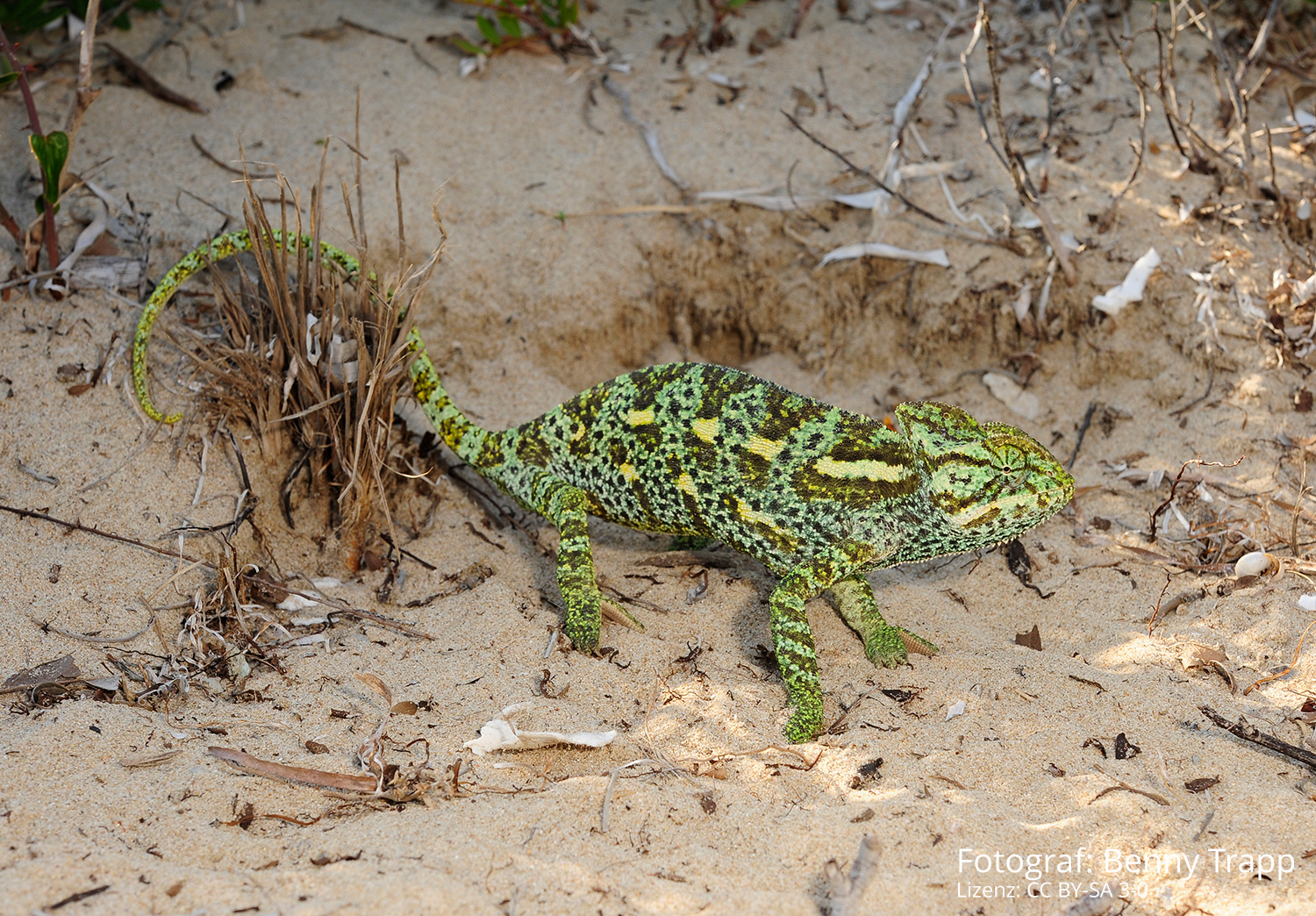
Dass Chamaeleo africanus in der Lagune von Gialova, Region Pylos (Griechenland) vorkommt, ist inzwischen lange bekannt. Es unterscheidet sich nicht nur optisch, sondern auch genetisch von den im südlichen Europa relativ weit verbreiteten Chamaeleo chameleon. Sporadische Berichte von weiteren Vorkommen von Chamaeleo africanus in Griechenland gibt es immer wieder, bisher fehlte jedoch ein wissenschaftlicher Nachweis der Art in anderen Gebieten als Pylos.

Wissenschaftler haben nun eine zweite Population der Art identifiziert. Sie konnten mindestens sieben Individuen der Art rund 130 km nördlich der Gialova-Laguna auf dem Peloponnes finden. Die Chamäleons leben in einem Natura 2000-Gebiet namens Limnothalassa Kalogrias /Dasos Strogylias Kai Elos Lamias. Ein Jungtier wurde per Backenabstrich beprobt, um genetisch die Art Chamaeleo africanus zu bestätigen.

Genetic evidence for the presence of Chamaeleo africanus in Greece outside the Pylos region
Erika Lego, Maria Koutsokali, Michael Valachas
Conservation Genetics Resourecs 18(5), 2026
DOI: 0.1007/s12686-026-01409-w
Kostenlose Vorschau des Artikels

Foto: Chamaeleo africanus, fotografiert von Benny Trapp, CC BY-SA 3.0[:en]

It has long been known that Chamaeleo africanus occurs in the lagoon of Gialova, in the Pylos region (Greece). It differs not only visually but also genetically from Chamaeleo chameleon, which is relatively widespread in southern Europe. There have been sporadic reports of other occurrences of Chamaeleo africanus in Greece, but until now there has been no scientific evidence of the species in areas other than Pylos.

Scientists have now identified a second population of the species. They found at least seven individuals of the species about 130 km north of the Gialova lagoon on the Peloponnese. The chameleons live in a Natura 2000 area called Limnothalassa Kalogrias /Dasos Strogylias Kai Elos Lamias. A young animal was sampled via cheek swab to genetically confirm the species Chamaeleo africanus.

Genetic evidence for the presence of Chamaeleo africanus in Greece outside the Pylos region
Erika Lego, Maria Koutsokali, Michael Valachas
Conservation Genetics Resourecs 18(5), 2026
DOI: 0.1007/s12686-026-01409-w
Free preview of the article

Photo: Chamaeleo africanus, photographed by Benny Trapp, CC BY-SA 3.0[:]

[:de]Vorkommen des Lappenchamäleons im Norden Mosambiks[:en]The flap-necked chameleon in northern Mozambique[:]

[:de]Vorkommen des Lappenchamäleons im Norden Mosambiks[:en]The flap-necked chameleon in northern Mozambique[:]

Verbreitung Wissenschaft

[:de]

Wissenschaftler haben kürzlich nach Reptilien in der Gemeinde Mocuba im Norden Mosambiks gesucht, um die vorkommenden Arten zu inventarisieren. Sie untersuchten dabei einen sogenannten Miombo-Trockenwald (eine Art weitständige Waldsavanne mit kaum Unterholz) sowie einen nahe gelegenen Granitfelsen namens Mount Morué, der nur insgesamt 361 m hoch ist.

Während mehrerer Monate in der Regen- und Trockenzeit wurde für jeweils sieben Tage (insgesamt 42) beide Habitate durchsucht. Die Wissenschaftler nutzten Grubenfallen und suchten mit dem bloßen Auge tagsüber entlang festgelegter Transekte. Reptilien wurden an Hand vorhandener Field Guides und mit Hilfe von Experten identifiziert. Zusätzlich wurden einige Tiere getötet und der Sammlung der Universtität Zambezi zugeführt.

Insgesamt wurden 23 verschiedene Reptilienarten beobachtet. Chamaeleo dilepis wurde sechs Mal gefunden. Alle Chamäleons wurden im Miombo woodland gefunden und kein einziges Chamäleon auf dem Granitfelsen Mount Morué. Zwei Chamäleons befanden sich zwei gerade auf Beutesuche, zwei andere befanden sich noch in Schlafposition bei Fund am frühen Morgen. Ein weiteres Lappenchamäleon war in einer Grubenfalle gelandet. Die Art ist in Mosambik bereits von vielen Funden bekannt. Von Mocuba standen Funde bisher jedoch noch aus.

Beyond the asymptote: a near-complete reptile inventory in the Miombo woodland and on Mount Morué, Mocuba Municipality, with a major range extension for the lizard Nucras boulengeri Neumann, 1900
Avelino R. Miguel, Berta I. Sitole, Nando A.M. Calonga, Celso H. Duarte, Dolescêncio Armando, Célia J.A. Nanvonamuquitxo, Hinrich Kaiser
Herpetology Notes 18: 1051-1071.
DOI: unbekannt
Kostenloser Download des Artikels

Foto: Chamaeleo dilepis an einer Fundstelle in den Miombo Woodlands, fotografiert von Miguel Avelino[:en]

Scientists recently searched for reptiles in the municipality of Mocuba in northern Mozambique to compile an inventory of the species found there. They examined a so-called miombo dry forest (a type of sparse forest savannah with hardly any undergrowth) and a nearby granite rock called Mount Morué, which is only 361 metres high.

Over several months during the rainy and dry seasons, both habitats were searched for seven days at a time (42 days in total). The scientists used pitfall traps and searched with the naked eye during the day along predetermined transects. Reptiles were identified using existing field guides and with the help of experts. In addition, some animals were killed and added to the Zambezi University collection.

A total of 23 different reptile species were observed. Chamaeleo dilepis was found six times. All chameleons were found in the Miombo woodland and not a single chameleon was found on the granite rock of Mount Morué. Two chameleons were hunting for prey, while two others were still in a sleeping position when found early in the morning. Another lappet chameleon had ended up in a pit trap. The species is already known from many finds in Mozambique. However, no finds had been made in Mocuba until now.

Beyond the asymptote: a near-complete reptile inventory in the Miombo woodland and on Mount Morué, Mocuba Municipality, with a major range extension for the lizard Nucras boulengeri Neumann, 1900
Avelino R. Miguel, Berta I. Sitole, Nando A.M. Calonga, Celso H. Duarte, Dolescêncio Armando, Célia J.A. Nanvonamuquitxo, Hinrich Kaiser
Herpetology Notes 18: 1051-1071.
DOI: not available
Free article download

Photo: Chamaeleo dilepis in the Miombo Woodlands, photographed by Miguel Avelino[:]

[:de]Neue Verbreitungsdaten zu Rieppeleon brachyurus in Mosambik[:en]New distribution data of Rieppeleon brachyurus in Mozambique[:]

[:de]Neue Verbreitungsdaten zu Rieppeleon brachyurus in Mosambik[:en]New distribution data of Rieppeleon brachyurus in Mozambique[:]

Beobachtungen Verbreitung Wissenschaft

[:de]

Rieppeleon brachyurus ist eine kleine Stummelschwanzchamäleon-Art, deren Erstbeschreibung vom Ende des 19. Jahhunderts von den Shire Highlands südlich des See Malawi berichtet. Die Art wurde seitdem in Malawi, Tansania und Mosambik gefunden. In Mosambik war sie bisher von Regen- und Galeriewäldern, sogenannten Miombo-Wäldern, bekannt. Bei Miombo-Wäldern handelt es sich um sehr offenenTrockenwälder, deren Boden nur spärlich von Gras bedeckt ist und daher einen eher savannenartigen Eindruck macht (daher auch der Begriff „Waldsavanne“). Der quer durch Mosambik verlaufende Fluss Sambesi galt bisher als natürliche Grenze für das Vorkommen von Rieppeleon brachyurus.

Herpetologen haben nun festgestellt, dass die Art auch südlich des Flusses vorkommt. Sie fanden zwei juvenile Individuen und zwei adulte Weibchen der Art in Coutada 11, einer 5000 km² großen Jagdkonzession im Herzen Mosambiks. Die Tiere wurden dort in einem Sandwald, einem seltenen tropischen Waldtyp auf Sanddünen, direkt neben einem flachen Feuchtgebiet. Diese Beobachtungen erweitern das bisher bekannte Verbreitungsgebiet der Art um rund 250 km weiter nach Süden.

Die Autoren berichten außerdem von zwei weiteren, neuen Fundorten von Rieppeleon brachyurus in Taratibu und Montepuez Rubi Mining Concession, wobei diese beiden Orte nördlich des Sambesi liegen. Bei beiden Beobachtungen wurden die Erdchamäleons in Miombo-Wald auf Höhen zwischen 250 und 400 m gefunden.

Rieppeleon brachyurus (Günther, 1893) Beardless Pygmy Chameleon First records south of the Zambezi River
W. Conradie, D. Botma, C. Nanvonnamuquitxo
African Herp News 88, 2025: 28-33
DOI: nicht verfügbar
Kostenloser Download des Artikels

Foto: Juveniles Rieppeleon brachyurus in Mosambik, fotografiert von Delport Botma, aus der oben genannten Publikation[:en]

Rieppeleon brachyurus is a small stump-tailed chameleon species, first described at the end of the 19th century from the Shire Highlands south of Lake Malawi. The species has since been found in Malawi, Tanzania and Mozambique. In Mozambique, it was previously known from rainforests and gallery forests, known as miombo forests. Miombo forests are very open dry forests with sparse grass cover, giving them a savannah-like appearance (hence the term ‘forest savannah’). The Zambezi River, which runs across Mozambique, was previously considered the natural boundary for the occurrence of Rieppeleon brachyurus.

Herpetologists have now discovered that the species also occurs south of the river. They found two juvenile individuals and two adult females of the species in Coutada 11, a 5000 km² hunting concession in the heart of Mozambique. The animals were found there in a sand forest, a rare type of tropical forest on sand dunes, right next to a shallow wetland. These observations extend the previously known range of the species by about 250 km further south.

The authors also report two further new locations where Rieppeleon brachyurus has been found, in Taratibu and Montepuez Rubi Mining Concession, both of which are located north of the Zambezi River. In both observations, the ground chameleons were found in miombo forest at altitudes between 250 and 400 m.

Rieppeleon brachyurus (Günther, 1893) Beardless Pygmy Chameleon First records south of the Zambezi River
W. Conradie, D. Botma, C. Nanvonnamuquitxo
African Herp News 88, 2025: 28-33
DOI: not available
Free download of the article

Photo: Juvenile Rieppeleon brachyurus in Mozambique, photographed by Delport Botma, from the above-mentioned publication[:]

[:de]Neuer Fundort von Calumma vencesi (Madagaskar)[:en]New locality record of Calumma vencesi (Madagascar)[:]

[:de]Neuer Fundort von Calumma vencesi (Madagaskar)[:en]New locality record of Calumma vencesi (Madagascar)[:]

Verbreitung Wissenschaft

[:de]

Calumma vencesi kommt im Norden Madagaskars vor und ist dort bisher von den Fundorten Betaolana, Besariaka und Tsararano bekannt. Ein madagassisches Forscherteam hat die Art nun noch in einem weiteren Regenwald entdecken können: In Sorata. Sorata gehört zum sogenannten COMATSA-Korridor, der vor allem aus den Regenwäldern Marojejy, Anjanaharibe Sud und Tsaratanana besteht. Sorata dagegen liegt noch etwas nördlicher in Richtung Vohémar. Der Regenwald wird derzeit vom WWF zusammen mit dem örtlichen Verein Ambodimandresy Miaro ny Ala (AMA) verwaltet.

Die Wissenschaftler verteilten zufällig 14 Transekte im Regenwald, die aus je drei parallel verlaufenden Linien von 50 m bestanden. Dann suchten sie nachts mit Taschenlampen entlang der Transekte nach schlafenden Chamäleons. Die Häufigkeit der Art pro 100 m wurde berechnet, die genutzten Pflanzen dokumentiert und die Schlafhöhe gemessen.

Insgesamt konnten acht Calumma vencesi gefunden werden. Sie schliefen auf einer durchschnittlichen Asthöhe vvon 1,43 m meist auf Blättern, wenige Individuen auf Ästen. Fünf Chamäleons wurden vertikal schlafend angetroffen, drei eher horizontal. Sieben von acht Calumma vencesi schliefen mit dem Kopf nach oben, nur eines kopfüber.

Das Vorkommen von nur 0,38 Individuen pro 100 m ist erstaunlich gering und unterschreitet sogar das von als vom Aussterben bedroht eingestuften Chamäleonarten wie Calumma tarzan. Bisher war Calumma vencesi außerdem ausschließlich unter 1000 m gefunden worden, das Studiengebiet in Sorata lag jedoch durchschnittlich auf 1326 m. Calumma vencesi kommt damit in Sorata im gleichen Verbreitungsgebiet wie Brookesia nana vor, was die Schutzbedürftigkeit dieses Regenwaldes noch dringender macht. Der Wald Brandrodung und illegalem Holzschlag sowie weidendem Vieh und Vanilleplantagen bedroht.

 A new locality for the endangered Vence’s Chamaeleon, Calumma vencesi Andreone et al., 2001, from Sorata Forest, northeastern Madagascar
Jeanneney Rabearivony, Andriatsitohaina Ranaivojaona, Moussaïna Jao, Achille P. Raselimanana
Herpetology Notes 18, 2025: 817-820.
DOI: nicht vorhanden
Kostenloser Download des Artikels

Foto: Calumma vencesi, fotografiert von Asméralie William, aus der genannten Publikation[:en]

Calumma vencesi occurs in northern Madagascar and has so far been found in Betaolana, Besariaka and Tsararano. A Madagascan research team has now discovered the species in another rainforest: Sorata. Sorata is part of the COMATSA corridor, which mainly consists of the Marojejy, Anjanaharibe Sud and Tsaratanana rainforests. Sorata, on the other hand, is located slightly further north towards Vohémar. The rainforest is currently managed by the WWF in collaboration with the local association Ambodimandresy Miaro ny Ala (AMA).

The scientists randomly distributed 14 transects in the rainforest, each consisting of three parallel lines of 50 m. Then, at night, they searched for sleeping chameleons along the transects with flashlights. The frequency of the species per 100 m was calculated, the plants used were documented and the sleeping height was measured.

A total of eight Calumma vencesi were found. They slept at an average branch height of 1.43 m, mostly on leaves, with a few individuals on branches. Five chameleons were found sleeping vertically, three more horizontally. Seven of the eight Calumma vencesi slept with their heads up, only one upside down.

The occurrence of only 0.38 individuals per 100 m is surprisingly low and even falls below that of chameleon species classified as critically endangered, such as Calumma tarzan. Until now, Calumma vencesi had only been found below 1000 m, but the study area in Sorata was at an average altitude of 1326 m. Calumma vencesi occurs in Sorata in the same distribution area as Brookesia nana, which makes the need to protect this rainforest even more urgent. The forest is threatened by slash-and-burn farming, illegal logging, grazing livestock and vanilla plantations.

 A new locality for the endangered Vence’s Chamaeleon, Calumma vencesi Andreone et al., 2001, from Sorata Forest, northeastern Madagascar
Jeanneney Rabearivony, Andriatsitohaina Ranaivojaona, Moussaïna Jao, Achille P. Raselimanana
Herpetology Notes 18, 2025: 817-820.
DOI: not available
Free article download

Photo: Calumma vencesi, photographed by Asméralie William, from the aforementioned publication[:]

[:de]Lappenchamäleons in Cabinda (Angola)[:en]Flap-necked chameleons in Cabinda (Angola)[:]

[:de]Lappenchamäleons in Cabinda (Angola)[:en]Flap-necked chameleons in Cabinda (Angola)[:]

Verbreitung Wissenschaft

[:de]

Die Provinz Cabinda, ein zu Angola gehörendes, 7064 km² großes Gebiet zwischen der Demokratischen Republik Kongo und der Republik Kongo, gehört zu den herpetologisch am wenigsten erforschten Gebieten Afrikas. Die Enklave liegt rund 50 km nördlich des übrigen Staatsgebietes Angola direkt an der Küste des Atlantiks. Sowohl ihr Enklavenstatus als auch die schwere Zugänglichkeit der vorhandenen Waldgebiete haben bisher dazu beigetragen, dass nur wenig Informationen über die hiesige Herpetofauna existieren. Der Nationalpark Mayombe macht rund ein Drittel des Gebiets von Cabinda aus. Mayombe teilt sich in einen höher gelegen Parkanteil mit Regenwald zwischen 500 und 900 m sowie einen niedrigen gelegenen Teil zwischen den Flüssen Inhuca und Chiloango. Daran an schließt sich eine Küstenebene mit Tälern und trockenere Vegetation direkt an der Küste.

Während zehn Expeditionen zwischen 2018 und 2024 wurden tageweise mittels Reptilien und Amphibien gesucht. Insgesamt wurden dabei 17 verschiedene Orte abgedeckt, wovon 10 innerhalb des Mayombe Nationalpark lagen. Fotos von allen Tieren wurden gemacht und Proben entnommen, um genetische Identifikationen zu ermöglichen.

Chamaeleo dilepis, das in Angola weit verbreitet ist, wurde in Mbongo Zimune im Mayombe Nationalpark in Flussnähe in einer Plantage von eingeschlepptem Bambus entdeckt. Die Bambusplantagen liegen auf rund 324 m ü.N.N. Außerdem wurde die Art in Nganzi auf 107 m in den Tälern gefunden, wo man die Art laut anderer Literatur häufiger antrifft. In den trockeneren Küstengebieten, wo Chamaeleo dilepis ebenfalls oft vorkommen soll, konnte in der vorliegenden Studie kein Chamäleon nachgewiesen werden.

Insgesamt konnten 76 verschiedene Arten nachgewiesen werden, davon 48 Amphibien- und 28 Reptilienarten. 33 in früherer Literatur erwähnte Amphibien- und Reptilienarten konnten nicht wiedergefunden werden.

Filling the gaps: herpetological checklist of Mayombe National Park and Cabinda Province (Angola) shed light on one of the most unexplored corners of tropical Central Africa
Javier Lobón-Rovira, Ninda L. Baptista, Tyron Clark, Luke Verburgt, Gregory F.M. Jongsma, Werner Conradie, Luis Verissimo, Pedro Vaz Pinto
African Journal of Herpetology 74(1): 1-59
DOI: 10.1080/21564574.2024.2421007[:en]

The province of Cabinda, a 7064 km² area belonging to Angola between the Democratic Republic of the Congo and the Republic of the Congo, is one of the least explored herpetological areas in Africa. The enclave is located around 50 kilometres north of the rest of Angola, directly on the Atlantic coast. Both its enclave status and the difficult accessibility of the existing forest areas have contributed to the fact that little information exists on the local herpetofauna. The Mayombe National Park makes up around a third of Cabinda’s territory. Mayombe is divided into a higher part of the park with rainforest between 500 and 900 metres and a lower part between the Inhuca and Chiloango rivers. This is followed by a coastal plain with valleys and drier vegetation directly on the coast.

During ten expeditions between 2018 and 2024, reptiles and amphibians were searched for on a daily basis. A total of 17 different locations were covered, 10 of which were within Mayombe National Park. Photos were taken of all animals and samples were taken to enable genetic identification.

Chamaeleo dilepis, which is widespread in Angola, was discovered in Mbongo Zimune in Mayombe National Park near the river in a plantation of introduced bamboo. The bamboo plantations are located at around 324 metres above sea level. The species was also found in Nganzi at 107 m in the valleys, where it is more common according to other literature. In the drier coastal areas, where Chamaeleo dilepis is also said to occur frequently, no chameleon could be detected in the present study.

A total of 76 different species were recorded, including 48 amphibian and 28 reptile species. 33 amphibian and reptile species mentioned in earlier literature could not be found again.

Filling the gaps: herpetological checklist of Mayombe National Park and Cabinda Province (Angola) shed light on one of the most unexplored corners of tropical Central Africa
Javier Lobón-Rovira, Ninda L. Baptista, Tyron Clark, Luke Verburgt, Gregory F.M. Jongsma, Werner Conradie, Luis Verissimo, Pedro Vaz Pinto
African Journal of Herpetology 74(1): 1-59
DOI: 10.1080/21564574.2024.2421007[:]

[:de]Chamäleons in Andrafiamena-Andavakoera (Madagaskar)[:en]Chameleons in Andrafiamena-Andavakoera (Madagascar)[:]

[:de]Chamäleons in Andrafiamena-Andavakoera (Madagaskar)[:en]Chameleons in Andrafiamena-Andavakoera (Madagascar)[:]

Verbreitung Wissenschaft

[:de]

Der Norden Madagaskars ist eine Schatztruhe der Artenvielfalt – das ist lange bekannt. Trotzdem sind auch noch im 21. Jahrhundert etliche Gebiete der Insel wenig erforscht. Eine Gruppe madagassischer und US-amerikanischer Biologen hat nun eine neue Übersichtsstudie vorgestellt, die sich mit einem solchen Gebiet befasst.

Das Schutzgebiet Andrafiamena-Andavakoera (Paysage Harmonieux Protége d’Andrafiamena-Andavakoera) liegt im Norden Madagaskars genau zwischen dem Nationalpark Ankarana und dem Schutzgebiet Analamerana. Es wird von der NGO Fanamby betreut und besteht unter anderem aus drei voneinander isolierten Trockenwäldern namens Binara, Antsahabe und Andrafiamena.

Während des Übergangs der der Trocken- zur Regenzeit wurden Beobachtungen tagsüber und nachts mit dem bloßen Auge entlang ausgewiesener Transekte unternommen und entlang dreier Transektlinien Eimerfallen in den Boden gegraben. Zusätzlich wurde unter möglichen Zufluchtsorten von Reptilien, beispielsweise unter Totholz, geschaut und Rufe von Fröschen aufgenommen.

Insgesamt konnten dadurch 13 Amphibien- und 39 Reptilienarten in den drei Wäldern nachgewiesen werden. Drei Arten von Chamäleons kamen häufig in allen drei Trockenwäldern vor: Brookesia stumpffi in der Laubschicht, Furcifer pardalis und Furcifer petteri auf Bäumen und Sträuchern. Erstaunlicherweise war ausgerechnet die häufigste Chamäleonart Madagaskars, Furcifer oustaleti, während des Studienzeitraums nur in Andrafiamena anzutreffen, in Binara und Antsahabe aber nicht. Brookesia stumpffi wurde stets auf dem Boden oder schlafend auf jungen Pflanzen unter 1 m Höhe gefunden. Furcifer petteri und Furcifer pardalis befanden sich eher im mittleren oder oberen Bereich der Bäume. Als mögliche Bedrohung des Schutzgebietes nennen die Autoren vor allem den Menschen und die damit verbundene Zerstörung von Lebensraum.

Herpetofaunal diversity in northern Madagascar: The Andrafiamena-Andavakoera protected area.
Fandresena Rakotoarimalala, Arianna Kuhn, Achille P. Raselimanana, Sara Ruane
Malagasy Nature 19, 2025: 160-174
DOI: nicht vorhanden

Foto: Männliches Furcifer petteri auf Madagaskar, fotografiert von Alex Negro[:en]

The north of Madagascar is a treasure trove of biodiversity – this has long been known. Nevertheless, even in the 21st century, many areas of the island are still little explored. A group of Malagasy and US biologists has now presented a new overview study that focuses on one such area.

The Andrafiamena-Andavakoera Protected Area (Paysage Harmonieux Protége d’Andrafiamena-Andavakoera) is located in the north of Madagascar, right between the Ankarana National Park and the Analamerana Protected Area. It is managed by the NGO Fanamby and consists of three isolated dry forests called Binara, Antsahabe and Andrafiamena.

During the transition from the dry to the wet season, observations were made by day and night with the naked eye along designated transects and pitfall traps were dug into the ground along three transect lines. In addition, possible reptile refuges, for example under dead wood, were examined and frog calls were recorded.

A total of 13 amphibian and 39 reptile species were recorded in the three forests. Three species of chameleons were frequently found in all three dry forests: Brookesia stumpffi in the deciduous layer, Furcifer pardalis and Furcifer petteri on trees and shrubs. Surprisingly, the most common chameleon species in Madagascar, Furcifer oustaleti, was only found in Andrafiamena during the study period, but not in Binara and Antsahabe. Brookesia stumpffi was always found on the ground or sleeping on young plants below 1 m height. Furcifer petteri and Furcifer pardalis tended to be found in the middle or upper part of the trees. The authors cite humans and the associated destruction of habitat as a possible threat to the protected area.

Herpetofaunal diversity in northern Madagascar: The Andrafiamena-Andavakoera protected area.
Fandresena Rakotoarimalala, Arianna Kuhn, Achille P. Raselimanana, Sara Ruane
Malagasy Nature 19, 2025: 160-174
DOI: not available

Photo: Male Furcifer petteri in Madagascar, photographed by Alex Negro[:]

[:de]Chamäleons in St. Luce (Madagaskar)[:en]Chameleons in St. Luce (Madagascar)[:]

[:de]Chamäleons in St. Luce (Madagaskar)[:en]Chameleons in St. Luce (Madagascar)[:]

Verbreitung Wissenschaft

[:de]

Das Schutzgebiet St. Luce liegt im Südosten Madagaskars, nur 34 km nördlich der Großstadt Tolagnaro (Fort Dauphin). Zum Schutzgebiet gehören Strände und Felsklippen an der Küste des Indischen Ozeans, Tieflandregenwald, Sumpfgebiet, savannenartige Ebenen, Flüsse und Lagunen. Der verbliebene Regenwald ist in viele kleine Fragmente zersplittert. In der Gegend gibt es außerdem ein sehr großes Minenprojekt zum Abbau seltener Erden. 12 von 17 Waldfragmente von St. Luce sind dabei von den Minenarbeiten betroffen. Eine Gruppe von Wissenschaftler hat nun die Herpetofauna des Gebiets näher untersucht.

Über einen Zeitraum von zwei Jahren wurden Reptilien und Amphibien in St. Luce gesucht und gefangen. Die Suchen wurden mit dem bloßen Auge entlang bestehender Transekte durchgeführt. Zusätzlich wurden Bodenfallen entlang vier je 100 m langer Linien über zwei Wochen genutzt. Fünf künstliche Unterschlupfmöglichkeiten und fünf Wellbleche wurden an insgesamt 12 Orten ausgelegt, um darunter nach einer gewissen Zeit nach Tieren zu sehen.  Proben von Schwanzspitzen und Zehen wurden entnommen und Vermessungen durchgeführt, danach wurden die Tiere wieder an ihren ursprünglichen Fundorten freigelassen. Mittels genetischer Untersuchungen wurden die Arten bestimmt.

Von 17 Regenwaldfragmenten in St. Luce fanden die Wissenschaftler nur eines intakt und ein weiteres zwar intakt, aber stark in sich fragmentiert vor. Alle anderen Waldfragmente wurden mit deutlichen Anzeichen von Habitatzerstörung vorgefunden. Insgesamt konnten 22 Amphibien- und 54 Reptilienarten nachgewiesen werden. Vier Arten von Chamäleons waren unter den Reptilien: Palleon sp. aff. Nasus, Calumma tjiasmantoi, Furcifer major und Furcifer verrucosus. Alle vier Chamäleonarten kamen ausschließlich in den noch verbliebenen intakten oder intakten Bereichen der Wälder Angalavinaky, Ambandrika und Andranangy/Amboronteny/Agnalaro vor. In den Wäldern, die durch die Mine bereits zerstört werden, kamen gar keine Chamäleons vor. Unter den insgesamt 76 gefundenen Amphibien- und Reptilienarten waren 13 candidate species, die vermutlich unbeschriebene neue Arten darstellen.

Die Autoren weisen darauf hin, dass die Artenvielfalt der Herpetofauna in St. Luce nach der vorliegenden Studie deutlich größer ist als früher angenommen. Sie schlagen vor, mehrere Waldfragmente in die “Mining Avoidance Zones“, also Gebiete, in denen nicht nach seltenen Erden gesucht werden soll, aufzunehmen und den Schutzstatus zu erhöhen.

A littoral treasure trove: a comprehensive assessment of the herpetofauna of Sainte Luce, southeastern Madagascar
Sam Hyde Roberts, Marco Sannolo, Hoby Tsimijaly Longosoa, Ryan Clark, Leo Jhaveri, Gonçalo M. Rosa, Walter Cocca, Franco Andreone, Angelica Crottini
Systematics and Biodiversity 23(1): 2513472
DOI: 10.1080/14772000.2025.2513472

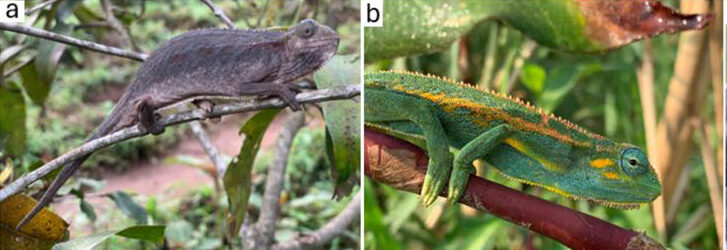
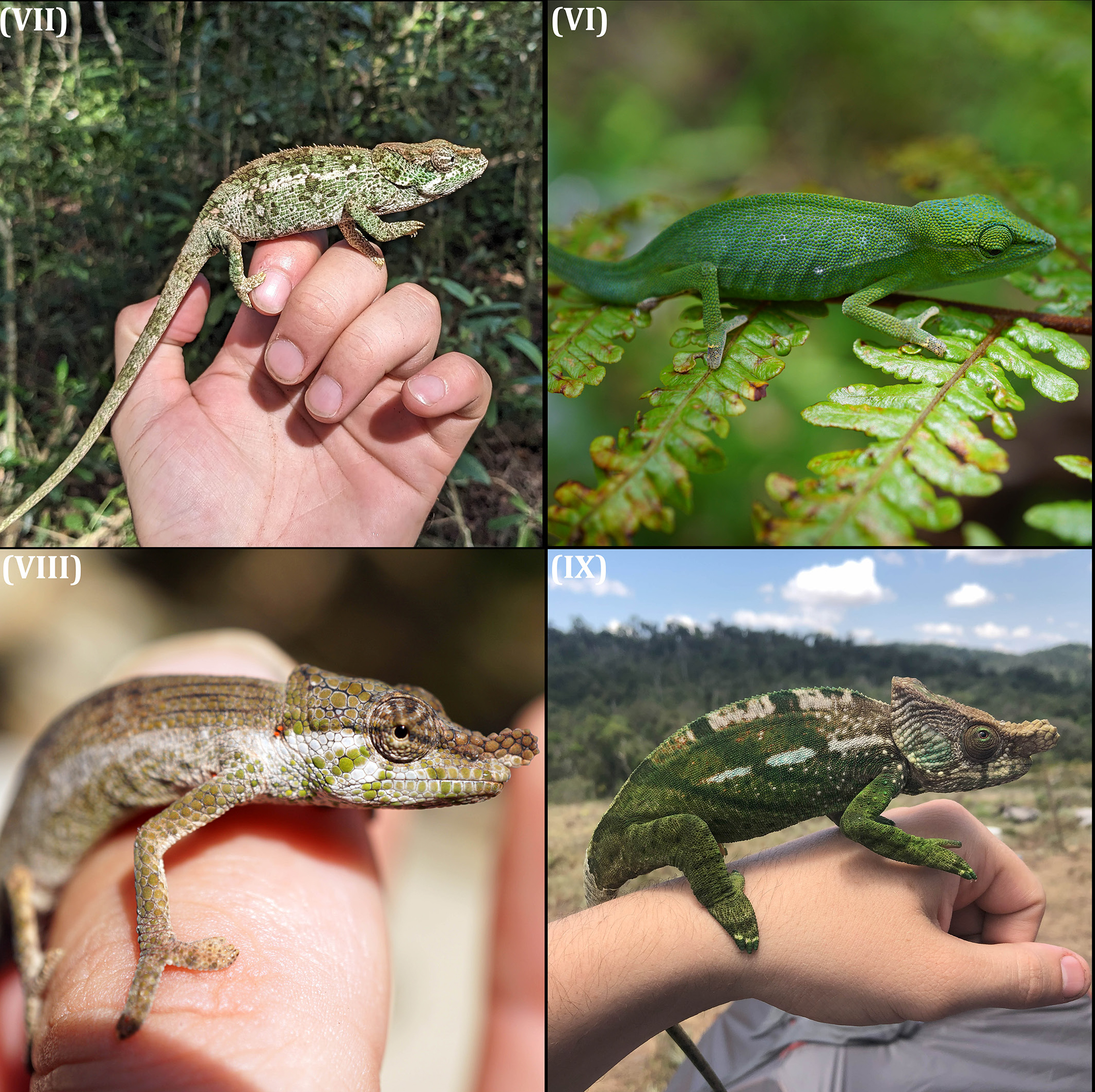
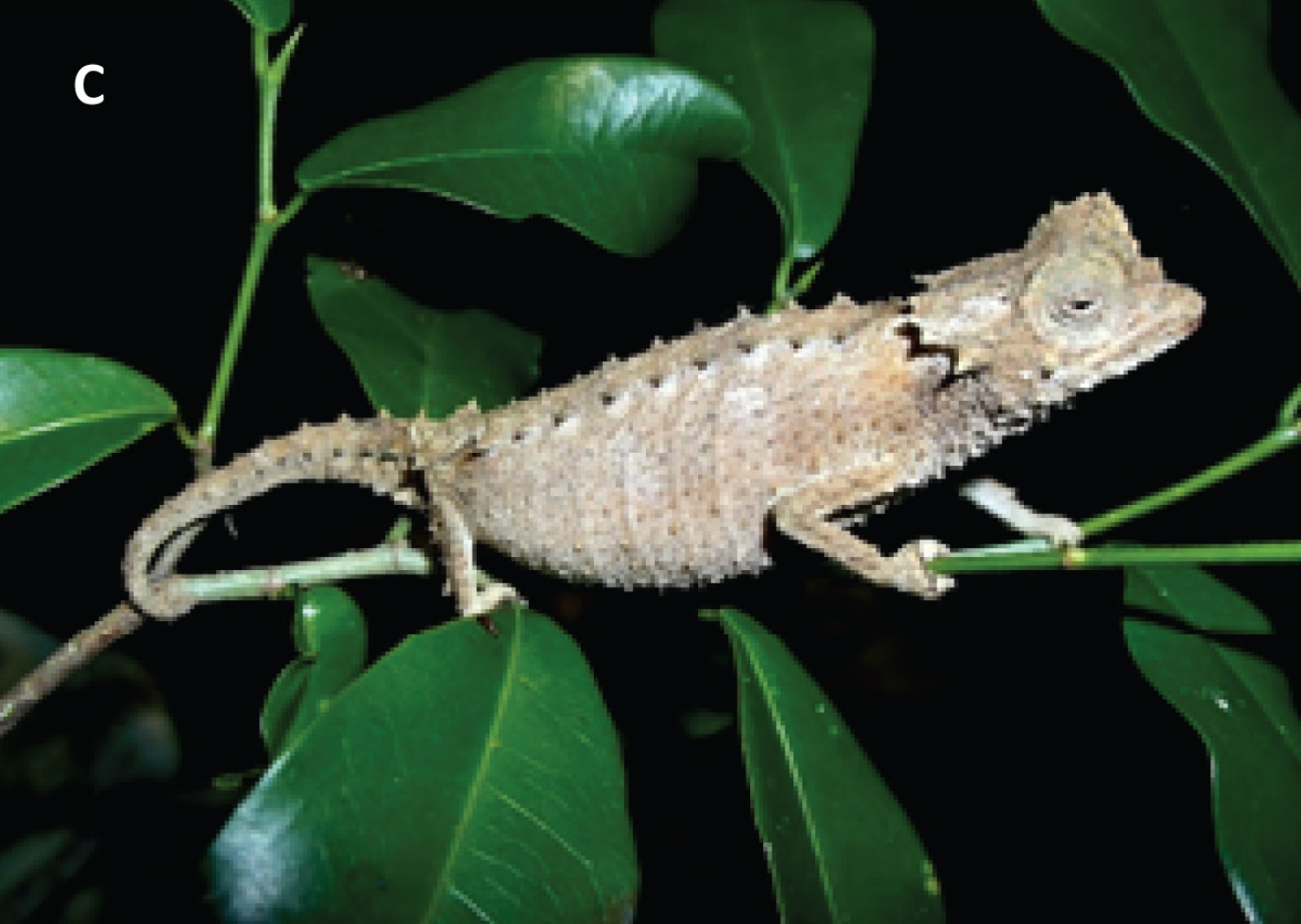
Fotos: Aufnahmen gefundener Chamäleon in St. Luce aus der genannten Publikation[:en]

The St. Luce reserve is located in the south-east of Madagascar, just 34 km north of the city of Tolagnaro (Fort Dauphin). The protected area includes beaches and rocky cliffs on the coast of the Indian Ocean, lowland rainforest, marshland, savannah-like plains, rivers and lagoons. The remaining rainforest is broken up into many small fragments. There is also a very large rare earth mining project in the area. 12 of the 17 forest fragments of St. Luce are affected by the mining work. A group of scientists has now studied the herpetofauna of the area in more detail.

Over a period of two years, reptiles and amphibians were searched for and captured in St. Luce. The searches were carried out with the naked eye along existing transects. In addition, ground traps were used for two weeks along four 100 m long lines. Five artificial shelters and five corrugated sheets were laid out at a total of 12 locations to check for animals after a certain period of time. Samples of tail tips and toes were taken and measurements taken, after which the animals were released back to their original locations. The species were identified by genetic analysis.

Of 17 rainforest fragments in St. Luce, the scientists found only one intact and another intact but heavily fragmented. All other forest fragments were found with clear signs of habitat destruction. A total of 22 amphibian and 54 reptile species were found. Four species of chameleons were among the reptiles: Palleon sp. aff. Nasus, Calumma tjiasmantoi, Furcifer major and Furcifer verrucosus. All four chameleon species occurred exclusively in the remaining intact or intact areas of the Angalavinaky, Ambandrika and Andranangy/Amboronteny/Agnalaro forests. In the forests already destroyed by the mine, no chameleons were found at all. Of the 76 amphibian and reptile species found, 13 were candidate species, which are presumably undescribed new species.

The authors point out that, according to the present study, the diversity of the herpetofauna in St. Luce is significantly greater than previously assumed. They suggest that several forest fragments should be included in the “Mining Avoidance Zones”, i.e. areas where rare earths should not be searched for, and that the protection status should be increased.

A littoral treasure trove: a comprehensive assessment of the herpetofauna of Sainte Luce, southeastern Madagascar
Sam Hyde Roberts, Marco Sannolo, Hoby Tsimijaly Longosoa, Ryan Clark, Leo Jhaveri, Gonçalo M. Rosa, Walter Cocca, Franco Andreone, Angelica Crottini
Systematics and Biodiversity 23(1): 2513472
DOI: 10.1080/14772000.2025.2513472

Photos: Chameleons found in St. Luce from the aforementioned publication[:]