
Die Tsingy de Namoroka liegen im heißen Westen Madagaskars. Sie bestehen aus nadelspitzem Karstgestein mit Grotten darunter und umgeben von Trockenwaldfragmenten. Obwohl die Tsingy inzwischen ein Nationalpark sind, ist der Zugang mangels jeglicher Infrastruktur und Wegen bisher nur äußerst schwierig und während der Regenzeit sogar überhaupt nicht möglich.
Die Wissenschaftler führten an drei verschiedenen Orten innerhalb des Nationalparks Übersichtsstudien durch. Dazu nutzten sie jeweils drei 1000 bis 1500 m Transektlinien an jedem Ort und Grubenfallen. Zusätzlich wurden spezielle Lebensräume wie Grotten gezielt aufgesucht.
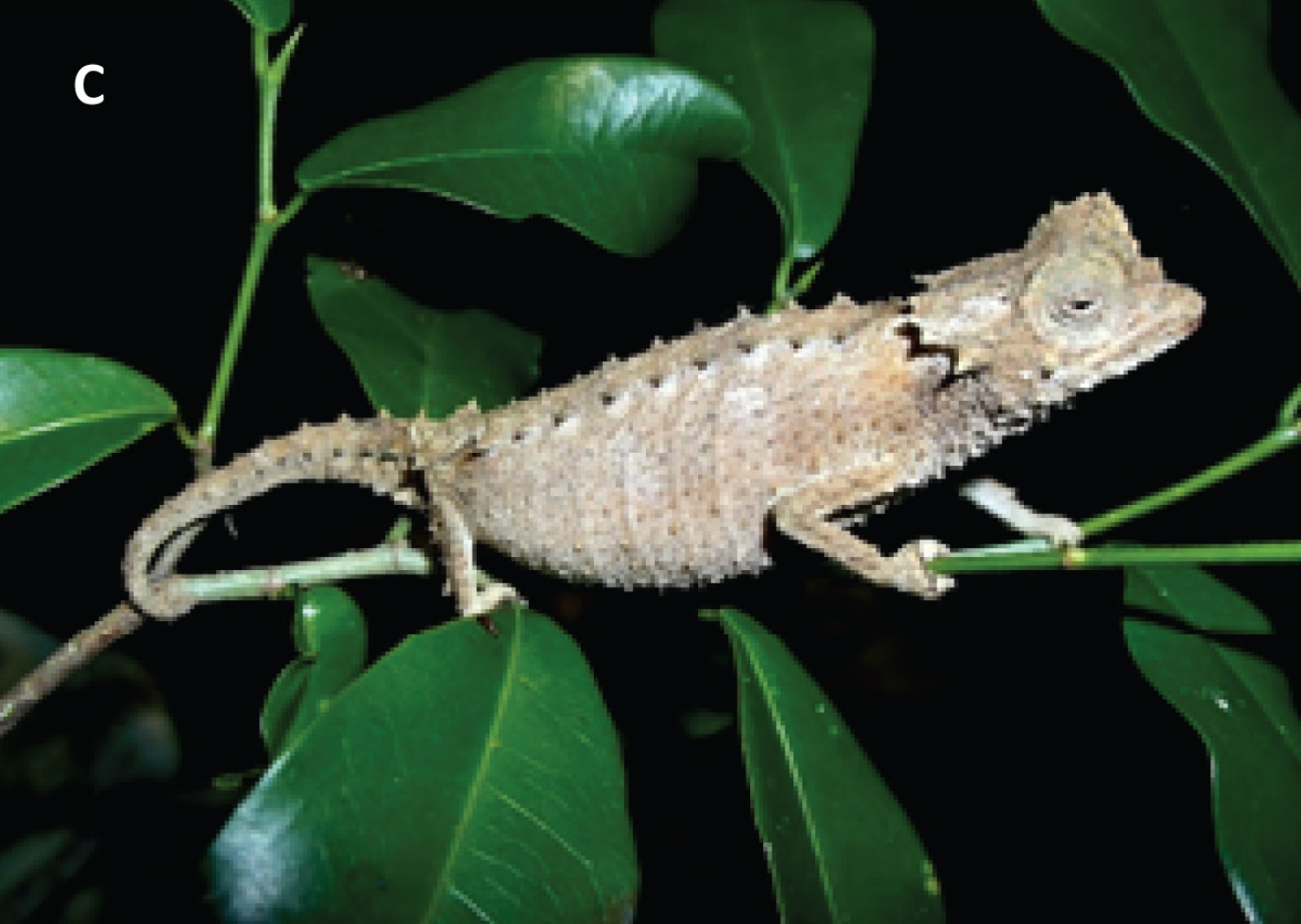
Insgesamt wurden 57 Tierarten in Namoroka nachgewiesen werden, davon 41 Reptilienarten. An allen drei untersuchten Standorten konnten Brookesia brygooi, Furcifer angeli und Furcifer oustaleti nachgewiesen werden. Das in Namoroka endemische Brookesia bonsi dagegen konnte nur an einem einzigen Standort gefunden werden. Es handelt sich dabei um ein 87 m „hoch“ gelegenes Gebiet mit Bäumen zwischen 6 und 15 m Höhe und relativ offenem Blätterdach. Das Gebiet zeichnet sich durch dichtes, nahezu undurchdringbares Unterholz vor allem in feuchten, felsigen Schluchten zwischen den Tsingy aus.
Die Wissenschaftler weisen darauf hin, dass Brandrodung und daraus resultierende, unkontrollierbare Buschfeuer nach wie vor ein großes Risiko für die Lebensräume der Tiere in Namoroka darstellt. Auch Holzschlag sowie das Ernten wilden Honigs, wilden Wurzelknollen und Heilpflanzen sorgt dafür, dass die Lebensräume des Nationalparks gestört werden. Auch Zebus werden zum Weiden in den Nationalpark getrieben. Der tatsächliche Schutz des Gebiets ist auf Grund der ablegenen Lage und der hohen Armut der Bevölkerung vor Ort sehr schwierig.
Aperçu des amphibiens et des reptiles du Parc National de Namoroka: Diversité biologique, intérêt biogéographique et représentativité en matière de conservation
Hajaniaina Rasoloarison, Bernard Ranriamahatantsoa, Nirhy Rabibisoa, Christopher J. Raxworthy
Malagasy Nature 2026, 20: 30-46.
DOI: nicht verfügbar
Kostenloser Download des Artikels
Foto: Brookesia bonsi in Namoroka, aus der genannten Publikation
![[:de]Chamaeleo gracilis in Nechisar (Äthiopien)[:en]Chamaeleo gracilis in Nechisar (Ethiopia)[:]](https://www.agchamaeleons.de/wp-content/uploads/2025/01/Chamaeleo-gracilis-public-domain.jpg "[:de]Chamaeleo gracilis in Nechisar (Äthiopien)[:en]Chamaeleo gracilis in Nechisar (Ethiopia)[:]")
![[:de]Vorkommen des Europäischen Chamäleons in Tlemcen (Algerien)[:en]Occurrence of the European chameleon in Tlemcen (Algeria)[:]](https://www.agchamaeleons.de/wp-content/uploads/2024/08/Chamaeleo-chameleon-Foto-Peter-Mansfeld-CC-BY-SA-3.0.jpg "[:de]Vorkommen des Europäischen Chamäleons in Tlemcen (Algerien)[:en]Occurrence of the European chameleon in Tlemcen (Algeria)[:]")
![[:de]Chamäleons in Bobaomby (Madagaskar)[:en]Chameleons in Bobaomby (Madagascar)[:]](https://www.agchamaeleons.de/wp-content/uploads/2024/01/Furcifer-petteri-maennlich-Foto-Alex-Laube.jpg "[:de]Chamäleons in Bobaomby (Madagaskar)[:en]Chameleons in Bobaomby (Madagascar)[:]")
![[:de]Unbekanntes Chamäleon im Wald von Ivohiboro (Madagaskar) entdeckt[:en]Unknown chameleon discovered in Ivohiboro forest (Madagascar)[:]](https://www.agchamaeleons.de/wp-content/uploads/2023/08/Ivohiboro-784x598.jpg "[:de]Unbekanntes Chamäleon im Wald von Ivohiboro (Madagaskar) entdeckt[:en]Unknown chameleon discovered in Ivohiboro forest (Madagascar)[:]")
![[:de]Chamäleons im Montagne des Français (Madagaskar)[:en]Chameleons in the Montagne des Français (Madagascar)[:]](https://www.agchamaeleons.de/wp-content/uploads/2023/07/Furcifer-petteri-weiblich-Foto-Alex-Laube-784x523.jpg "[:de]Chamäleons im Montagne des Français (Madagaskar)[:en]Chameleons in the Montagne des Français (Madagascar)[:]")