[:de]Die neue CHAMAELEO ist draußen![:en]The new CHAMAELEO is out now![:]

[:de]Die neue CHAMAELEO ist draußen![:en]The new CHAMAELEO is out now![:]

AG Interna Beobachtungen CHAMAELEO Haltungsberichte Wissenschaft

[:de]

Was lange währt, wird endlich gut: Soeben haben wir die aktuellen Hefte der CHAMAELEO 49 bekommen. Sie werden nun schnellstmöglich in die Post gehen und sind dann auf dem Weg zu allen AG-Mitgliedern. Die aktuellen Inhalte finden sich hier. Und wer noch nicht Mitglied der AG Chamäleons ist, möchte das vielleicht schnell noch werden! Wie gefällt euch die aktuelle Ausgabe? Gibt es Anmerkungen, Wünsche, Kritik? Zu dick, zu dünn, zu viel Englisch, zu wenig? ;) Wir freuen uns auf eure Rückmeldungen!

[:en]

Good things come to those who wait: we have just received the latest issues of CHAMAELEO 49. They will now go into the mail as soon as possible and will then be on their way to all AG members. The current contents can be found here. And if you are not yet a member of the AG Chameleons, you might want to become one soon! How do you like the current issue? Do you have any comments, wishes or criticism? Too thick, too thin, too much English, too little? ;) We look forward to your feedback!

[:]

[:de]Fünf neue Rhampholeon-Arten[:en]Five new Rhampholeon species[:]

[:de]Fünf neue Rhampholeon-Arten[:en]Five new Rhampholeon species[:]

Neubeschreibungen Wissenschaft

[:de]

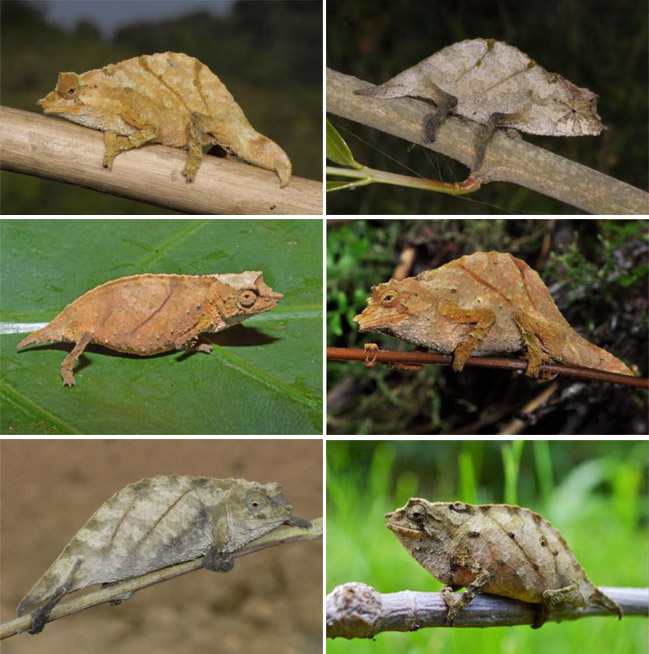
Bei den kleinen, braunen Erdchamäleons auf dem Festland Afrikas gibt es noch einiges zu entdecken. Nachdem vor zwei Jahren im Rhampholeon uluguruensis/moyeri-Komplex in Tansania neue Arten entdeckt werden konnten, haben internationale Wissenschaftler nun den Rhampholeon boulengeri Komplex genauer unter die Lupe genommen. Und wie erwartet tauchten auch dabei neue Arten auf!

Die Erdchamäleons aus diesem Komplex bewohnen verschiedenen Lebensräume entlang des Großen Afrikanischen Grabenbruchs (englisch Albertine Rift). Diese 6000 km lange Kette aus Gebirgen und Gräben reicht vom Albert-See in Uganda bis zum See Tanganyika. Dabei kreuzt sie die Demokratische Republik Kongo, Ruanda, Burundi und Tansania. In der Gattung Rhampholeon unterscheiden sich die Arten äußerlich kaum, leben jedoch oft in sehr unterschiedlichen Lebensräumen oder sind genetisch gut voneinander abzugrenzen. Die Autoren untersuchten über 130 Erdchamäleons von mehr als 20 verschiedenen Orten sowie die Lectotypen (den Holotypus gibt es nicht mehr) der Art Rhampholeon boulengeri. Dabei konnten sie mittels genetischer Untersuchungen gleich fünf neue Rhampholeon-Arten ausmachen.

Die bereits bekannte Art Rhampholeon boulengeri, beschrieben 1908 von Grauer, kommt nach den aktuellen Daten ausschließlich in seiner Typuslokalität vor. Diese ist das Itombwe Plateau in der Demokratischen Republik Kongo, auf Höhen zwischen 2100 und 2470 m.

Rhampholeon plumptrei erhielt seinen Namen zu Ehren des englischen Zoologen Andrew Plumptre. Er setzt sich seit fast 20 Jahren als Vorsitzender der Wildlife Conservation Society für den Artenschutz entlang des Afrikanischen Grabenbruchs ein. Die Art lebt in montanem und submontanem Regenwald auf Höhen von 1203-2269 m, wobei sie am häufigsten auf 1200 bis 1700 m zu finden sind. Die Verbreitung reicht dabei vom Osten der Demokratischen Republik Kongo mit dem Kahuzi-Biega Nationalpark bis in den Westen Kenias zum Kakamega Forest Nationalreservat. Dazwischen kommt Rhampoleon plumptrei im Bwindi Impenetrable Nationalpark, im Mabira sowie im Kalinzu Central Forest Reserve im Westen Ugandas vor. Es trägt einen deutlich sichtbaren Nasenfortsatz und einen nur etwas kürzeren Schwanz als Rhampholeon boulengeri.  Rhampholeon plumptrei wird bis zu 60 mm groß. Die Männchen tragen eine weiße Färbung an Kehle und Bauch und einen oder zwei diagonal verlaufende dunklen Streifen auf dem Körper. Die meisten Chamäleons dieser Art tragen einen dunkel gefärbten Tuberkel im Nacken.

Rhampholeon nalubaale wurde nach dem Luganda Wort für „Göttin“ benannt, das auch der einheimische Name des Viktoriasees ist, dem größten See Afrikas. Von dieser Art kennt man bisher nur die Weibchen, Männchen wurden noch nicht gefunden. Rhampholeon nalubaale kommt in submontanem Regenwald auf Höhen von 513 bis 1506 m vor. Am häufigsten ist es im Kibale Nationalpark in Uganda, man kann es aber auch im Budungo Central Forest Reserve im gleichen Land und im Kahuzi-Biega Nationalpark sowie dem Itombwe Natural Reserve in der Demokratischen Republik Kongo finden. Rhampholeon nalubaale wird bis zu 56 mm lang. Eins der aufgefundenen Tiere wurde mit UV-Licht angestrahlt und einige der Tuberkel im Gesicht fluoreszierten daraufhin blau, wie das schon von anderen Chamäleons bekannt ist – für die Gattung Rhampholeon ist es jedoch neu. Die Art kommt zusammen mit Trioceros johnstoni und Kinyongia tolleyae vor.

Rhampholeon bombayi wurde nach dem waYao Forscher Sidi Mubarak Bombay benannt. Er wurde 1820 auf der Grenze von Tansania zu Mosambik geboren und früh als Sklave nach Indien verkauft. Später kehrte er nach Afrika zurück und machte sich auf Expeditionen britischer Forscher in Ostafrika einen Namen. Rhampholeon bombayi wird bis zu 55 mm lang. Rhampholeon bombayi lebt in Montanwäldern auf Höhen von 1450 bis 2330 m in Ruanda und der Demokratischen Republik Kongo. Es wurde bisher im Kahuzi-Biega Nationalpark, im Kabobo Natural Reserve, im Itombwe Natural Reserve und dem Nyungwe Forest Nationalpark nachgewiesen. Im gleichen Wald leben ebenfalls Trioceros johnstoni und Trioceros schoutedeni. Die Tiere tragen zwei oder drei dunkle Linien diagonal auf dem Körper, Schwanz und Extremitäten sind häufig dunkler braun als der Körperstamm.

Rhampholeon msitugrabensis wurde nach dem großen Afrikanischen Grabenbruch benannt. Das Swahili Wort für Wald, msitu, und das deutsche Wort Graben wurden dabei kombiniert. Dieses Erdchamäleon wird bis zu 49 mm groß. Es bewohnt Waldränder bei Mpishi nahe dem Kibira Nationalpark in Burundi. Rhampholeon msitugrabensis ist außerdem vom Mount Bigugu im Nyungwe Forest Nationalpark in Ruanda beschrieben, so dass sein Vorkommen sich von 1986 bis 2699 m zieht. Im Nyungwe Forest kommt Rhampholeon msitugrabensis allopatrisch mit Rhampholeon bombayi vor, genauer im Kamiranzovu Sumpfgebiet auf 2000 bis 2330 m Höhe. Andere Chamäleons, die mit Rhampholeon msitugrabensis einen Lebensraum teilen, sind Trioceros ellioti, Chamaeleo dilepis und Kinyongia rugegensis.

Rhampholeon monteslunae wurde nach seinem Lebensraum benannt, dem Ruwenzori-Gebirge auf der Grenze der Demokratischen Republik Kongo und Uganda. Bereits 150 nach Christus wurde diese Gebirgskette, in der der Nil entspringt, von Ptolemäus als „Lunae Montes“, zu deutsch Mondberge beschrieben. Rhampholeon monteslunae kommt auf Höhen von 1655 bis 2360 m vor und ist am häufigsten im Ruwenzori Mountains Nationalpark nahe dem Nyakalengija-Eingang. Eine weitere Population findet sich im Bururi Forest Nature Reserve in Burundi. Dieses Erdchamäleon wird bis zu 47 mm lang. In den gleichen Wäldern kommen unter anderem Kinyongia carpenteri, Kinyongia xenorhina, Kinyongia tolleyae, Trioceros ellioti, Trioceros johnstoni und Trioceros rudis vor.


Taxonomy of the Rhampholeon boulengeri Complex (Sauria: Chamaeleonidae): Five new species from central Africa’s Albertine Rift
Daniel F. Hughes, Mathias Behangana, Wilber Lukwago, Michele Menegon, J. Maximilian Dehling, Philipp Wagner, Colin R. Tilbury, Trisan South, Chifundera Kusamba, Eli Greenbaum
Zootaxa Vol. 5458 4, 2024, pp. 451-494
DOI: 10.11646/zootaxa.5458.4.1

Foto: Von links oben nach rechts unten Rhampholeon boulengeri, Rhampholeon plumptrei, Rhampholeon nalubaale, Rhampholeon bombayi, Rhampholeon msitugrabensis und Rhampholeon monteslunae aus der oben genannten Publikation

[:en]

There is still a lot to discover about the small, brown pygmy chameleons on the African mainland. After new species were discovered in the Rhampholeon uluguruensis/moyeri complex in Tanzania two years ago, international scientists have now taken a closer look at the Rhampholeon boulengeri complex. And as expected, new species have been discovered!

The pygmy chameleons from this complex inhabit various habitats along the Albertine Rif). This 6000 km long chain of mountains and rifts stretches from Lake Albert in Uganda to Lake Tanganyika. It crosses the Democratic Republic of Congo, Rwanda, Burundi and Tanzania. In the genus Rhampholeon, the species hardly differ externally, but often live in very different habitats or can be easily distinguished from each other genetically. The authors analysed over 130 pygmy chameleons from more than 20 different locations as well as the lectotypes (the holotype no longer exists) of the species Rhampholeon boulengeri. Using genetic analyses, they were able to identify five new Rhampholeon species.

The already known species Rhampholeon boulengeri, described by Grauer in 1908, occurs exclusively in its type locality according to the current data. This is the Itombwe Plateau in the Democratic Republic of Congo, at altitudes between 2100 and 2470 metres.

Rhampholeon plumptrei was named in honour of the English zoologist Andrew Plumptre. As chairman of the Wildlife Conservation Society, he has been campaigning for species conservation along the African Rift Valley for almost 20 years. The species lives in montane and submontane rainforest at altitudes of 1203-2269 metres, although they are most commonly found at 1200 to 1700 metres. The distribution ranges from the east of the Democratic Republic of Congo with the Kahuzi-Biega National Park to the west of Kenya to the Kakamega Forest National Reserve. In between, Rhampoleon plumptrei can be found in Bwindi Impenetrable National Park, in Mabira and in Kalinzu Central Forest Reserve in western Uganda. It has a clearly visible nasal appendage and a slightly shorter tail than Rhampholeon boulengeri. Rhampholeon plumptrei grows up to 60 mm in size. The males have a white colouration on the throat and belly and one or two diagonal dark stripes on the body. Most chameleons of this species have a dark-coloured tubercle on the back of the neck.

Rhampholeon nalubaale was named after the Luganda word for ‘goddess’, which is also the native name of Lake Victoria, the largest lake in Africa. So far, only the females of this species are known, males have not yet been found. Rhampholeon nalubaale occurs in submontane rainforest at altitudes of 513 to 1506 metres. It is most common in the Kibale National Park in Uganda, but can also be found in the Budungo Central Forest Reserve in the same country and in the Kahuzi-Biega National Park and the Itombwe Natural Reserve in the Democratic Republic of Congo. Rhampholeon nalubaale grows up to 56 mm long. One of the animals found was illuminated with UV light and some of the tubercles in the face fluoresced blue, as is already known from other chameleons – but this is new for the genus Rhampholeon. The species occurs together with Trioceros johnstoni and Kinyongia tolleyae.

Rhampholeon bombayi was named after the waYao explorer Sidi Mubarak Bombay. He was born in 1820 on the border between Tanzania and Mozambique and was sold to India as a slave at an early age. He later returned to Africa and made a name for himself on expeditions by British explorers in East Africa. Rhampholeon bombayi grows up to 55 mm long. It lives in montane forests at altitudes of 1450 to 2330 metres in Rwanda and the Democratic Republic of Congo. It has so far been recorded in Kahuzi-Biega National Park, Kabobo Natural Reserve, Itombwe Natural Reserve and Nyungwe Forest National Park. Trioceros johnstoni and Trioceros schoutedeni also live in the same forest. The animals have two or three dark lines diagonally on the body, the tail and extremities are often darker brown than the trunk.

Rhampholeon msitugrabensis was named after the Albertine Rift. The Swahili word for forest, msitu, and the German word for rift, Graben, were combined. This ground chameleon grows up to 49 mm in size. It inhabits forest edges near Mpishi close to Kibira National Park in Burundi. Rhampholeon msitugrabensis is also described from Mount Bigugu in Nyungwe Forest National Park in Rwanda, so that its occurrence extends from 1986 to 2699 metres. In the Nyungwe Forest, Rhampholeon msitugrabensis occurs allopatrically with Rhampholeon bombayi, more precisely in the Kamiranzovu swamp area at 2000 to 2330 m altitude. Other chameleons that share a habitat with Rhampholeon msitugrabensis are Trioceros ellioti, Chamaeleo dilepis and Kinyongia rugegensis.

Rhampholeon monteslunae was named after its habitat, the Rwenzori Mountains on the border of the Democratic Republic of the Congo and Uganda. This mountain range, where the Nile rises, was described by Ptolemy as ‘Lunae Montes’ as early as 150 AD. Rhampholeon monteslunae occurs at altitudes of 1655 to 2360 metres and is most common in the Rwenzori Mountains National Park near the entrance to Nyakalengija. Another population can be found in the Bururi Forest Nature Reserve in Burundi. This ground chameleon grows up to 47 mm long. Kinyongia carpenteri, Kinyongia xenorhina, Kinyongia tolleyae, Trioceros ellioti, Trioceros johnstoni and Trioceros rudis are also found in the same forests.

Taxonomy of the Rhampholeon boulengeri Complex (Sauria: Chamaeleonidae): Five new species from central Africa’s Albertine Rift
Daniel F. Hughes, Mathias Behangana, Wilber Lukwago, Michele Menegon, J. Maximilian Dehling, Philipp Wagner, Colin R. Tilbury, Trisan South, Chifundera Kusamba, Eli Greenbaum
Zootaxa Vol. 5458 4, 2024, pp. 451-494
DOI: 10.11646/zootaxa.5458.4.1

Photo: From top left to bottom right Rhampholeon boulengeri, Rhampholeon plumptrei, Rhampholeon nalubaale, Rhampholeon bombayi, Rhampholeon msitugrabensis und Rhampholeon monteslunae from the mentioned publication[:]

[:de]Vortrag in Mönchengladbach / Krefeld über Uganda[:en]Presentation in Mönchengladbach/Krefeld about Uganda[:]

[:de]Vortrag in Mönchengladbach / Krefeld über Uganda[:en]Presentation in Mönchengladbach/Krefeld about Uganda[:]

Reiseberichte Vorträge

[:de]

Am Freitag, 12. Mai 2023, um 19.30 Uhr halt Sönke Frahm seinen Vortrag „Uganda –Perle Afrikas“. Er berichtete dabei über eine Reise ins ostafrikanische Uganda, das eingerahmt wird vom Südsudan, der demokratischen Republik Kongo, Ruanda, Tansania und Kenia. Los geht es in Entebbe am Victoriasee und von dort in den Mitjanja District auf der Suche nach Schlangen der Gattungen Bitis und Atheris. Anschließend nimmt Sönke den Besucher mit auf Safari in den einzigartigen Queen Elisabeth Nationalpark und zum Schimpansentrekking in den Kibale Nationalpark. Danach steht eine Visite der berühmten Berggorillas im Bwindi Nationalpark an. Die Reise findet ihren Abschluss in einem Sumpfgebiet am Victoriasee, um den charismatischen Abu Markub, den „Vater des Schuhes“, zu suchen. Sönke hat unterwegs einige Chamäleonarten getroffen – dreizehn verschiedene gibt es in Uganda – und natürlich auch fotografiert. Wer also einen Abend mit nicht nur herpetologischen Eindrücken genießen möchte, ist bei der Regionalgruppe Mönchengladbach/Krefeld bestens aufgehoben.

Sönke Frahm: Uganda – Perle Afrikas
DGHT Regionalgruppe Mönchengladbach/Krefeld
Gaststätte Hubertuseck
Hubertusstraße 27
47877 Willich-Schiefbahn
Vortragsbeginn 19.30 Uhr[:en]

On Friday, 12 May 2023, Sönke Frahm will hold his presentation „Uganda – Pearl of Africa“ in Mönchengladbach/Krefeld. He will report on a trip to the East African country of Uganda, which is framed by South Sudan, the Democratic Republic of Congo, Rwanda, Tanzania and Kenya. The journey starts in Entebbe on Lake Victoria and from there to the Mitjanja District in search of snakes of the species Bitis and Atheris. Sönke then takes the visitor on a safari to the unique Queen Elisabeth National Park and for chimpanzee trekking in Kibale National Park. Afterwards, a visit to the famous mountain gorillas in Bwindi National Park is scheduled. The trip concludes in a swamp area at Lake Victoria to look for the charismatic Abu Markub, the „father of the shoe“. Sönke met several species of chameleons on the way – there are thirteen different ones in Uganda – and of course, photographed them. So if you want to enjoy an evening with not only herpetological impressions, the regional group Mönchengladbach/Krefeld is the place to be. The presentation is in German.

Sönke Frahm: Uganda – Perle Afrikas
DGHT Regional group Mönchengladbach/Krefeld
Gaststätte Hubertuseck
Hubertusstraße 27
47877 Willich-Schiefbahn
Lecture begins at 7.30 p.m.[:]

[:de]Vortrag in Münster über Uganda[:en]Presentation in Münster about Uganda[:]

[:de]Vortrag in Münster über Uganda[:en]Presentation in Münster about Uganda[:]

Reiseberichte Vorträge

[:de]

Am Freitag, 21. Oktober 2022, um 19 Uhr halt Sönke Frahm seinen Vortrag „Uganda –Perle Afrikas“ in Münster. Er berichtete dabei über eine Reise ins ostafrikanische Uganda, das eingerahmt wird vom Südsudan, der demokratischen Republik Kongo, Ruanda, Tansania und Kenia. Los geht es in Entebbe am Victoriasee und von dort in den Mitjanja District auf der Suche nach Schlangen der Gattungen Bitis und Atheris. Anschließend nimmt Sönke den Besucher mit auf Safari in den einzigartigen Queen Elisabeth Nationalpark und zum Schimpansentrekking in den Kibale Nationalpark. Danach steht eine Visite der berühmten Berggorillas im Bwindi Nationalpark an. Die Reise findet ihren Abschluss in einem Sumpfgebiet am Victoriasee, um den charismatischen Abu Markub, den „Vater des Schuhes“, zu suchen. Sönke hat unterwegs einige Chamäleonarten getroffen – dreizehn verschiedene gibt es in Uganda – und natürlich auch fotografiert. Wer also einen Abend mit nicht nur herpetologischen Eindrücken genießen möchte, ist in Münster bestens aufgehoben.

Sönke Frahm: Uganda – Perle Afrikas
DGHT Stadtgruppe Münster
Zooschule des Allwetterzoos
Sentruper Str. 315
48161 Münster
Einlass ab 18.30 Uhr, Vortragsbeginn 19 Uhr[:en]

On Friday, 21 October 2022, Sönke Frahm will hold his presentation „Uganda – pearl of Africa“ in Münster. He will report on a trip to the East African country of Uganda, which is framed by South Sudan, the Democratic Republic of Congo, Rwanda, Tanzania and Kenya. The journey starts in Entebbe on Lake Victoria and from there to the Mitjanja District in search of snakes of the species Bitis and Atheris. Sönke then takes the visitor on a safari to the unique Queen Elisabeth National Park and for chimpanzee trekking in Kibale National Park. Afterwards, a visit to the famous mountain gorillas in Bwindi National Park is scheduled. The trip concludes in a swamp area at Lake Victoria to look for the charismatic Abu Markub, the „father of the shoe“. Sönke met several species of chameleons on the way – there are thirteen different ones in Uganda – and of course, photographed them. So if you want to enjoy an evening with not only herpetological impressions, Münster is the place to be. The presentation is in German.

Sönke Frahm: Uganda – Perle Afrikas
DGHT Stadtgruppe Münster
Zooschule des Allwetterzoos
Sentruper Str. 315
48161 Münster
Admission is from 6.30 p.m., lecture begins at 7 p.m.[:]

[:de]Vortrag in Frankfurt über Uganda[:en]Presentation in Frankfurt about Uganda[:]

[:de]Vortrag in Frankfurt über Uganda[:en]Presentation in Frankfurt about Uganda[:]

Reiseberichte Vorträge

[:de]

Am kommenden Freitag, 19.08.2022, um 19 Uhr halt Sönke Frahm seinen Vortrag „Uganda –Perle Afrikas“ in Frankfurt am Main. Er berichtete dabei über eine Reise ins ostafrikanische Uganda, das eingerahmt wird vom Südsudan, der demokratischen Republik Kongo, Ruanda, Tansania und Kenia. Los geht es in Entebbe am Victoriasee und von dort in den Mitjanja District auf der Suche nach Schlangen der Gattungen Bitis und Atheris. Anschließend nimmt Sönke den Besucher mit auf Safari in den einzigartigen Queen Elisabeth Nationalpark und zum Schimpansentrekking in den Kibale Nationalpark. Danach steht eine Visite der berühmten Berggorillas im Bwindi Nationalpark an. Die Reise findet ihren Abschluss in einem Sumpfgebiet am Victoriasee, um den charismatischen Abu Markub, den „Vater des Schuhes“, zu suchen. Sönke hat unterwegs einige Chamäleonarten getroffen – dreizehn verschiedene gibt es in Uganda – und natürlich auch fotografiert. Wer also einen Abend mit nicht nur herpetologischen Eindrücken genießen möchte, ist in Frankfurt bestens aufgehoben.

Sönke Frahm: Uganda – Perle Afrikas
DGHT Stadtgruppe Frankfurt am Main
Zooschule des Zoo Frankfurt
Bernhard-Grzimek-Allee 1
60316 Frankfurt am Main
Einlass ab 18.30 Uhr, Vortragsbeginn 19 Uhr[:en]Next Friday, 19.08.2022, at 7 pm, Sönke Frahm will hold his presentation „Uganda – pearl of Africa“ in Frankfurt am Main. He will report on a trip to the East African country of Uganda, which is framed by South Sudan, the Democratic Republic of Congo, Rwanda, Tanzania and Kenya. The journey starts in Entebbe on Lake Victoria and from there to the Mitjanja District in search of snakes of the species Bitis and Atheris. Sönke then takes the visitor on a safari to the unique Queen Elisabeth National Park and for chimpanzee trekking in Kibale National Park. Afterwards, a visit to the famous mountain gorillas in Bwindi National Park is scheduled. The trip concludes in a swamp area at Lake Victoria to look for the charismatic Abu Markub, the „father of the shoe“. Sönke met several species of chameleons on the way – there are thirteen different ones in Uganda – and of course, photographed them. So if you want to enjoy an evening with not only herpetological impressions, Frankfurt is the place to be. The presentation is in German.

Sönke Frahm: Uganda – Perle Afrikas
DGHT Stadtgruppe Frankfurt am Main
Zooschule des Zoo Frankfurt
Bernhard-Grzimek-Allee 1
60316 Frankfurt am Main
Admission from 18:30, beginning of the presentation at 19 o’clock[:]

[:de]Fieldguide zu den Chamäleons in Uganda[:en]Fieldguide to the Chameleons in Uganda[:]

[:de]Fieldguide zu den Chamäleons in Uganda[:en]Fieldguide to the Chameleons in Uganda[:]

Bucherscheinungen

[:de]

Kinyongia tolleyae, Rwenzori, Uganda

Was lange währt, wird endlich gut. Schon 2019 hatten die beiden Biologen Dr. Daniel Hughes und Dr. Mathias Behangana einen Fieldguide zu den Chamäleons in Uganda angefertigt. Hughes arbeitet im Naturhistorischen Museum von Carnegie (Pittsburgh, Pennsylvania, USA), Behangana ist einer der führenden Herpetologen Ugandas. Doch die weltweite Coronapandemie versetzte das Projekt in eine unfreiwillige Pause. Erst jetzt konnten 4000 Exemplare des Fieldguides in Uganda verteilt werden.

Der kleine Fieldguide hat 64 Seiten und ist im Taschenformat zum praktischen Mitnehmen in Regenwald und Savanne konzipiert. Die Sprache des Fieldguides ist Englisch, was in Uganda neben Swahili offizielle Amtssprache ist. Der Fieldguide enthält alle 13 Chamäleonarten, die in dem ostafrikanischen Binnenstaat vorkommen. Jede Art wird mit Fotos der Chamäleons in ihrem Lebensraum, Verbreitungskarte und detaillierter Beschreibung vorgestellt. Außerdem gibt es ein kurzes Vorwort mit Hinweisen zu Chamäleons allgemein, beispielsweise dass sie entgegen lokaler Mythen harmlos für den Menschen und nützliche Fliegenfänger sind. Unterstützt wurde das Projekt von Uganda Wildlife Authority, Wildlife Conservation Society (WCS), NatureUganda und US Agency for International Development (USAID). Ein Interview mit Dr. Daniel Hughes wird in Kürze in der CHAMAELEO erscheinen.

A pocket guide to the Chameleons of Uganda
Mathias Behangana, Daniel F. Hughes
64 Seiten, Eigenverlag
englische Sprache
Das PDF ist hier zum kostenlosen Download erhältlich.[:en]

Kinyongia tolleyae, Rwenzori, Uganda

Good things come to those who wait. Already in 2019, the two biologists Dr Daniel Hughes and Dr Mathias Behangana had produced a field guide to the chameleons in Uganda. Hughes works at the Carnegie Museum of Natural History (Pittsburgh, Pennsylvania, USA), Behangana is one of Uganda’s leading herpetologists. But the worldwide corona pandemic put the project on an involuntary hiatus. Only now could 4000 copies of the field guide be distributed in Uganda.

The small field guide has 64 pages and is designed in a pocket format to be handy to take with you into the rainforest and savannah. The language of the field guide is English, which is the official language in Uganda along with Swahili. The field guide includes all 13 species of chameleons found in the landlocked East African country. Each species is presented with photos of the chameleons in their habitat, a distribution map and a detailed description. There is also a short preface with information on chameleons in general, for example, that, contrary to local myths, they are harmless to humans and useful flycatchers. The project was supported by Uganda Wildlife Authority, Wildlife Conservation Society (WCS), NatureUganda and US Agency for International Development (USAID. Ein Interview mit Dr. Daniel Hughes wird in Kürze in der CHAMAELEO erscheinen.

A pocket guide to the Chameleons of Uganda
Mathias Behangana, Daniel F. Hughes
64 pages, self-published
The PDF is available for free download here.[:]