[:de]Eingeschleppte Chamäleons in Subsahara-Afrika[:en]Invasive chameleons in subsaharan Africa[:]

[:de]Eingeschleppte Chamäleons in Subsahara-Afrika[:en]Invasive chameleons in subsaharan Africa[:]

Verbreitung Wissenschaft

[:de]

Ein polnischer Biologe hat kürzlich ausgewertet, wie viele eingeschleppte Reptilien- und Amphibienarten es in Subsahara-Afrika gibt.

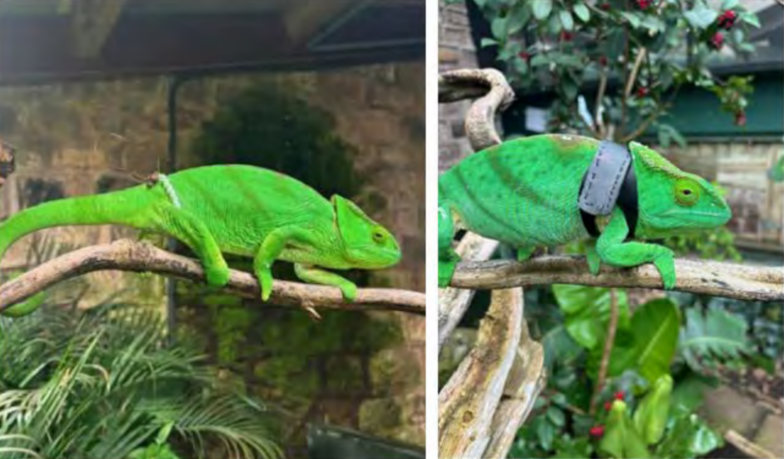
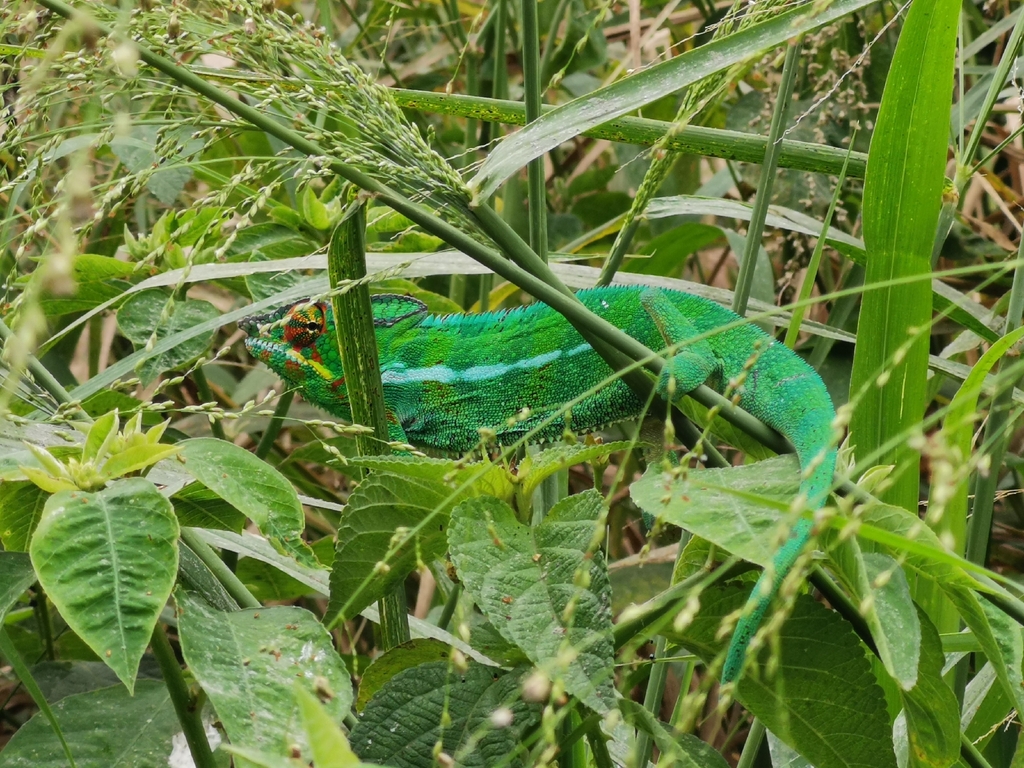
Unter den in andere Länder eingeschleppte Arten finden sich auch einige Chamäleons: Das Pantherchamäleon (Furcifer pardalis) wurde bereits vor 1830 in La Réunion eingeführt. Es kommt bis heute auf der Insel vor. Das Kap-Zwergchamäleon (Bradypodion pumilum) wurde in den 1990er Jahren in Namibia ausgesetzt und bildete kleine Populationen in Swakopmund, Walvis Bay, Lüderitz und Windhoek. Alle diese Populationen sind heute jedoch ausgestorben. Das Parsons Chamäleon (Calumma parsonii parsonii) wurde in den 1960er Jahren von Madagaskar nach Mauritius gebracht. Eine überlebensfähige Population wurde daraus jedoch nicht. Das Lappenchamäleon (Chamaeleo dilepis) wurde vor 1978 in die südafrikanische Provinz Freistaat verschleppt, scheint dort aber ebenfalls keine eigenständige Population gebildet zu haben. Und zuletzt wurden verschiedene Zwergchamäleon-Arten (Bradypodion ssp.) im Jahr 1939 in die Provinz Freistaat in Südafrika gebracht. Auch sie erzeugten keine bleibende Population.

Insgesamt sind vor allem Echsen in Subsahara-Afrika in fremde Länder eingeschleppt worden (23 Arten), direkt dahinter kommen Amphibien (21 Arten) und Schlangen (14 Arten). Die meisten eingeschleppten Arten werden in Südafrika beobachtet, außerdem aber auch in Madagaskar, den Maskarenen und umliegenden Inseln. Unklar ist, ob weiter nördlich gelegene afrikanische Länder eingeschleppte Arten geringer beobachten oder dort tatsächlich weniger vorhanden sind. Zwei Drittel der eingeschleppten Arten, die eigene Populationen etablierten konnten, kamen aus anderen Regionen Afrikas oder der umliegenden Inseln sowie dem Orient. Bei den Arten, die sich nach ihrer Verschleppung nicht vermehren konnten, sieht das deutlich anders aus.

Die frühesten Verschleppungen in Subsahara-Afrika sind aus dem 17. Jahrhundert bekannt, darunter der Vierkrallengecko (Gehyra mutilata) und der Maskarenenfrosch (Ptychadena mascareniensis). Mit dem Kolonialismus steigen die Zahlen verschleppter Arten stark an. Ein weiterer Peak liegt ab etwa 2000 mit steigendem internationalem Handel.

Die Gründe für die Verschleppungen sind vielfältig, zumeist aber passiert es unbeabsichtigt. Vor allem Geckos und Frösche werden häufig als blinde Passagiere mit Obsttransporten, Container auf Schiffen oder im Gepäck von Touristen verschleppt. Seltener werden Reptilien und Amphibien absichtlich ausgesetzt, wie im Fall des Kap-Zwerggecko (Lygodactylus capensis), der in einer Gärtnerei ausgesetzt wurde. Das Aussetzen von als Haustieren gehaltenen Reptilien und Amphibien führt meist nicht zur Etablierung von sich vermehrenden Populationen. Zwei Fälle von beabsichtigtem Aussetzen zur biologischen Kontrolle anderer Tierarten sind bekannt, ebenfalls drei beabsichtigte Freilassungen ohne Gründe.

Potenzielle Probleme der eingeschleppten Arten sind vor allem die Verdrängung anderer einheimischer Arten, aber auch das Fressen einheimischer Arten. Die Hybridisierung mit einheimischen Arten findet sehr selten statt. Die Verbreitung von Krankheiten, beispielsweise Parasitosen, ist ein häufiges Problem. Von verschleppten Chamäleons ist bisher keines dieser Probleme bekannt, allerdings gibt es auch vielerorts kaum Studien zum Thema.

Herping the African Continent: Alien Amphibians and Reptiles in Sub-Saharan Africa
Grzegorz Kopij
Biology 2026, 15: 639
DOI: 10.3390/biology15080639
Kostenloser Download des Artikels

Foto: Ein Furcifer pardalis auf La Réunion, fotografiert von Jason Berger, CC BY 4.0[:en]

A Polish biologist has recently assessed the number of introduced reptile and amphibian species in sub-Saharan Africa.

Among the species introduced into other countries are also a number of chameleons: the panther chameleon (Furcifer pardalis) was introduced to Réunion before 1830. It is still found on the island today. The Cape dwarf chameleon (Bradypodion pumilum) was released in Namibia in the 1990s and established small populations in Swakopmund, Walvis Bay, Lüderitz and Windhoek. However, all these populations are now extinct. The Parsons’ chameleon (Calumma parsonii parsonii) was introduced from Madagascar to Mauritius in the 1960s. However, this did not result in a viable population. The frilled chameleon (Chamaeleo dilepis) was introduced to the South African province of the Free State before 1978, but does not appear to have established a self-sustaining population there either. Finally, various species of dwarf chameleon (Bradypodion ssp.) were introduced to the Free State province in South Africa in 1939. They, too, failed to establish a permanent population.

Overall, lizards have been introduced into non-native countries in sub-Saharan Africa more than any other group (23 species), followed closely by amphibians (21 species) and snakes (14 species). Most introduced species are observed in South Africa, but also in Madagascar, the Mascarene Islands and surrounding islands. It is unclear whether introduced species are observed less frequently in African countries further north, or whether they are actually less prevalent there. Two-thirds of the introduced species that managed to establish their own populations originated from other regions of Africa or the surrounding islands, as well as the Middle East. The situation is quite different for species that were unable to reproduce after being introduced.

The earliest cases of species introduction in sub-Saharan Africa date back to the 17th century, including the four-clawed gecko (Gehyra mutilata) and the Mascarene frog (Ptychadena mascareniensis). With the advent of colonialism, the number of introduced species rose sharply. A further peak occurred from around the year 2000 onwards, coinciding with an increase in international trade.

There are many reasons why animals are transported unintentionally, but in most cases it happens by accident. Geckos and frogs, in particular, are frequently transported as stowaways in fruit shipments, in shipping containers, or in tourists’ luggage. Less commonly, reptiles and amphibians are deliberately released, as in the case of the Cape dwarf gecko (Lygodactylus capensis), which was released at a nursery. The release of reptiles and amphibians kept as pets does not usually lead to the establishment of breeding populations. Two cases of deliberate release for the purpose of biological control of other animal species are known, as are three deliberate releases for no apparent reason. The release of reptiles and amphibians kept as pets does not usually lead to the establishment of breeding populations. Two cases of deliberate release for the purpose of biological control of other animal species are known, as are three deliberate releases for no apparent reason.

The main potential problems posed by introduced species are the displacement of other native species, but also predation on native species. Hybridisation with native species occurs very rarely. The spread of diseases, such as parasitic infections, is a common problem. None of these problems have been reported in relation to introduced chameleons to date; however, there are very few studies on the subject in many places.

Herping the African Continent: Alien Amphibians and Reptiles in Sub-Saharan Africa
Grzegorz Kopij
Biology 2026, 15: 639
DOI: 10.3390/biology15080639
Free article download

Photo: A Furcifer pardalis on Réunion, photographed by Jason Berger, CC BY 4.0[:]

[:de]Das größte Chamäleon der Welt[:en]The largest chameleon[:]

[:de]Das größte Chamäleon der Welt[:en]The largest chameleon[:]

Internationaler Chamäleontag

[:de]

Das größte Chamäleon der Welt – naja, eigentlich streiten sich mehrere Arten um den Titel. Drei Anwärter gibt es: Das Mellers Chamäleon (Trioceros melleri) aus Festland-Afrika, das Parsons Chamäleon (Calumma parsonii parsonii) aus Madagaskar und das Madagaskar-Riesenchamäleon (Furcifer oustaleti).

Das Mellers Chamäleon kommt in den Bergen Tansanias, Nord-Mosambiks und Malawis vor. Als Hauptverbreitungsgebiet ist der Berg Zomba bekannt. Das größte bisher vermessene Chamäleons dieser Art soll 76 cm von der Nasen- bis zur Schwanzspitze gemessen und 600 g gewogen haben. Das Parsons Chamäleon dagegen kommt an verschiedenen Orten der zentralen und südlichen Ostküste Madagaskars vor. Hier soll das größte bisher gemessene Chamäleon 72 cm gehabt haben, aber beim Gewicht gibt es sogar Messungen über 700 g. Schwerer ist das Parsons Chamäleon also auf jeden Fall, die Größe kommt bei einigen Tieren gut an das Mellers Chamäleon heran. Bleibt noch das Madagaskar-Riesenchamäleon. Es kommt auf fast 70 cm und gewichtstechnisch bleibt es trotz teils beeindruckenden Größen fast immer unter 500 g. Es muss sich trotz seines Namens also wohl mit Platz drei begnügen.

#show your colours #internationalchameleonday #chameleonday #chameleondayMay9 #agchamaeleons

Fotos:
Trioceros melleri
Creative Commons Attribution 4.0 International, fotografiert von John Lyakurwa
Calumma parsonii parsonii, Creative Commons Attribution-Share Alike 4.0 International, fotografiert von Jialiang Gao
Furcifer oustaleti, Creative Commons Attribution-Share Alike 4.0 International, fotografiert von Sharp Photography

[:en]

The largest chameleon in the world – well, actually several species are fighting for the title. There are three contenders: the Meller’s chameleon (Trioceros melleri) from mainland Africa, the Parson’s Chameleon (Calumma parsonii parsonii) from Madagascar and the Madagascar giant chameleon (Furcifer oustaleti).

The Meller’s chameleon is found in the mountains of Tanzania, northern Mozambique and Malawi. The main distribution area is known to be Mount Zomba. The largest chameleon of this species measured to date is said to have measured 76 cm from the tip of its nose to the tip of its tail and weighed 600 g. The Parson’s chameleon, on the other hand, is found in various places on the central and southern east coast of Madagascar. Here, the largest chameleon measured so far is said to have been 72 cm long, but there are even measurements of over 700 g in weight. The Parson’s Chameleon is therefore definitely heavier, and the size of some animals comes close to that of the Meller’s chameleon. That leaves the Madagascar Giant Chameleon. It reaches almost 70 cm and, despite its sometimes impressive size, it almost always weighs less than 500 g. So despite its name, it will probably have to make do with third place.

#show your colours #internationalchameleonday #chameleonday #chameleondayMay9 #agchamaeleons

Pictures:
Trioceros melleri
Creative Commons Attribution 4.0 International, photographed by John Lyakurwa
Calumma parsonii parsonii, Creative Commons Attribution-Share Alike 4.0 International, photographed by von Jialiang Gao
Furcifer oustaleti, Creative Commons Attribution-Share Alike 4.0 International, photographed by Sharp Photography[:]

[:de]Vergleich von Beckengürteln verschiedener Chamäleons[:en]Comparison of pelvic girdles in chameleons[:]

[:de]Vergleich von Beckengürteln verschiedener Chamäleons[:en]Comparison of pelvic girdles in chameleons[:]

Wissenschaft

[:de]

Die Anatomie der Chamäleons ist stark an ihre Lebensweise angepasst. Baumbewohner unterscheiden sich dabei in vielen Aspekten von Bodenbewohnern. Der Beckengürtel ist anatomisch bei Chamäleons bisher wenig untersucht – eine Veröffentlichung aus den USA beschäftigt sich nun eingehender damit.

Zur Untersuchung wurden aus bereits vorhandenen Mikrocomputertomographie-Scans von insgesamt 22 Chamäleons jeweils die Beckengürtel isoliert in 3D dargestellt. Diese wurden mittels einer Software auf 16 verschiedene Längen und Winkel vermessen. Archaius tigris, Bradypodion damaranum, Calumma gallus, Calumma parsonii parsonii, Chamaeleo zeylanicus, Furcifer balteatus, Kinyongia matschiei, Kinyongia tavetana, Nadzikambia mlanjense und Trioceros quadricornis gracilior wurden den Baumbewohnern zugeteilt. Brookesia brygooi, Chamaeleo namaquensis, Palleon nasus nasus, Rhampholeon temporalis und Rieppeleon brachyurus wurden den Boden bewohnenden Arten zugeschrieben. Die Arten Bradypodion occidentale, Brookesia ebenaui, Chamaeleo anchietae, Furcifer campani, Rhampholeon spinosus, Rieppeleon kerstenii kerstenii und Trioceros goetzei goetzei wurden als semiarboreal eingestuft. Es wurden vorwiegend Männchen untersucht.

Die Auswertung ergab wie erwartet, dass Baum bewohnende Chamäleons schmalere, kürzere Hüftgürtel aufwiesen als Boden bewohnende. Der schmalere Beckengürtel vereinfacht es, sich hinter Ästen verstecken und den Körper maximal abflachen zu können. Außerdem sorgt er dafür, dass der Körperschwerpunkt näher am Ast ist und erhöht so die Stabilität beim Klettern. Boden bewohnende Chamäleons dagegen wiesen größere und breitere Beckengürtel auf. Diese ermöglichen ihnen eine schnellere Schrittfolge und höhere Stabilität beim Laufen auf Bodenflächen.

How phylogeny and arboreality affect pelvic girdle anatomy of chameleons
Dakota J. John
Honors Thesis 299 der Universität von South Dakota, 2023
DOI: nicht vorhanden[:en]

The anatomy of chameleons is strongly adapted to their way of life. Tree-dwellers differ in many aspects from ground-dwellers. The pelvic girdle has been little studied anatomically in chameleons so far – a publication from the USA now deals with it in more detail.

For the study, the pelvic girdles of 22 chameleons were isolated from existing microcomputer tomography scans and displayed in 3D. These were measured to 16 different lengths and angles using software. Archaius tigris, Bradypodion damaranum, Calumma gallus, Calumma parsonii parsonii, Chamaeleo zeylanicus, Furcifer balteatus, Kinyongia matschiei, Kinyongia tavetana, Nadzikambia mlanjense and Trioceros quadricornis gracilior were assigned to tree dwellers. Brookesia brygooi, Chamaeleo namaquensis, Palleon nasus nasus, Rhampholeon temporalis and Rieppeleon brachyurus were attributed to ground-dwelling species. The species Bradypodion occidentale, Brookesia ebenaui, Chamaeleo anchietae, Furcifer campani, Rhampholeon spinosus, Rieppeleon kerstenii kerstenii and Trioceros goetzei goetzei were classified as semiarboreal. Mainly males were examined.

As expected, the evaluation showed that tree-dwelling chameleons had narrower, shorter girdles than ground-dwelling ones. The narrower pelvic girdle makes it easier to hide behind branches and flatten the body to the maximum. It also ensures that the body’s centre of gravity is closer to the branch and thus increases stability when climbing. Ground-dwelling chameleons, on the other hand, had larger and wider pelvic girdles. These allow them to step more quickly and provide greater stability when walking on ground surfaces.

How phylogeny and arboreality affect pelvic girdle anatomy of chameleons
Dakota J. John
Honors Thesis 299, University of South Dakota, 2023
DOI: none

 [:]

[:de]Haltung und Zucht von Parsons Chamäleons[:en]Keeping and breeding Parson’s Chameleons[:]

[:de]Haltung und Zucht von Parsons Chamäleons[:en]Keeping and breeding Parson’s Chameleons[:]

Haltungsberichte Zeitungsartikel

[:de]

Die Haltung und Zucht von Calumma parsonii parsonii ist in den letzten Jahren in Deutschland recht erfolgreich geworden. Es gibt regelmäßig Nachzuchten und auch die Haltung erfreut sich wachsender Beliebtheit. In der aktuellen Elaphe, der Zeitschrift der DGHT e.V., findet sich ein ausführlicher Haltungsbericht zu dieser schönen, großen Chamäleonart. Geschrieben wurde er von drei Mitgliedern der AG Chamäleons.

Sie halten ihre Tiere in selbst gebauten Terrarien aus Aluminiumprofilen und Forex mit komplett belüftetem Deckel, Tür sowie einer vollständigen Seitenfläche oder in großzügigen Wintergärten. Lebende Pflanzen sorgen für ausreichend Deckungsmöglichkeiten. Beide Geschlechter werden einzeln gehalten. Beleuchtet wird mit Metalldampflampen von Reptiles Expert, Arcadia-UV-B-Röhren und HQIs. Die Beleuchtungszeit lieg im Sommer wie im Winter bei 10 bis 12 Stunden. Das enorme Trinkbedürfnis der Art wird über tägliches manuelles Tränken von Hand gestillt. Zusätzlich wird eher sparsam gefüttert mit nur einem adulten Futtertier, z.B. einer Heuschrecke, pro Chamäleon und Tag (oder dem Äquivalent mehrerer kleinerer Futtertiere). Eine kühlere Winterruhe, die die Trockenzeit auf Madagaskar imitiert, sorgt für eine höhere Lebenserwartung und wird daher von den Autoren empfohlen.

Die Verpaarung erfolgt im deutschen Hochsommer von Juli bis August. Die Chamäleons werden für wenige Tage zusammengesetzt, bis erfolgreiche Paarungen stattgefunden haben. Die Weibchen sind vier bis sechs Monate trächtig. Zwischen Ende Dezember und Anfang Februar gräbt das Weibchen eine längliche Röhre in die Erde und legt 20 bis 69 Eier.

Die Inkubation der Eier erfolgt auf Perlite bei 23 bis 24°C. Wöchentlich werden die Eier mit destilliertem Wasser beträufelt. Jeweils im Februar wird eine Diapause ohne weitere Wasserzufuhr bei 13 bis 14°C durchgeführt. Die Jungtiere schlüpfen nach 15 bis 24 Monaten und werden anschließend einzeln aufgezogen. Das Geschlecht lässt sich sicher leider erst im Alter von 9 bis 12 Monaten bestimmen.

Insgesamt ein sehr eingehender Artikel mit vielen Informationen für Chamäleonfreunde, die sich für die Haltung dieser tollen Art interessieren oder noch den ein oder anderen Tipp für die Zucht suchen. Zusätzlich geht der Artikel auf die Verbreitung und den Lebensraum der verschiedenen Farbvarianten von Calumma parsonii parsonii auf Madagaskar ein.

Parsons-Chamäleons (Calumma parsonii parsonii) – Die sanften Riesen Madagaskars
Alexandra Laube, Andreas Augustin und Thorsten Negro
Elaphe 3, 2023, pp. 12-25

Foto: Schlupf eines Parsons Chamäleons, fotografiert von Alex Laube

 [:en]

The keeping and breeding of Calumma parsonii parsonii has become quite successful in Germany in recent years. There are regular offspring and keeping is also becoming increasingly popular. In the current issue of Elaphe, the magazine of the DGHT e.V., there is a detailed report on keeping this beautiful, large chameleon species. It was written by three members of the AG Chamäleons.

They keep their animals in self-built terrariums made of aluminium profiles and Forex with a completely ventilated lid, and door as well as a full side area or in spacious winter gardens. Living plants provide sufficient cover. Both sexes are kept individually. Lighting is provided by Reptiles Expert metal halide lamps, Arcadia UV-B tubes, and HQIs. The lighting time is 10 to 12 hours in summer and winter. The enormous drinking needs of the species are satisfied by daily manual watering. In addition, feeding is rather sparse with only one adult food animal, e.g. a grasshopper, per chameleon per day (or the equivalent of several smaller food animals). A cooler winter hibernation, imitating the dry season in Madagascar, ensures a higher life expectancy and is therefore recommended by the authors.

Mating takes place in the German midsummer from July to August. The chameleons are put together for a few days until successful matings have taken place. The females are pregnant for four to six months. Between late December and early February, the female digs an elongated tube into the ground and lays 20 to 69 eggs. The incubation of the eggs takes place on perlite at 23 to 24°C. Weekly the eggs are sprinkled with distilled water. In February, a diapause is carried out at 13 to 14°C without further water supply. The young hatch after 15 to 24 months and are then raised individually. Unfortunately, the sex can only be determined at the age of 9 to 12 months.

All in all, this is a very detailed article with a lot of information for chameleon lovers who are interested in keeping this great species or are looking for one or two tips for breeding. In addition, the article discusses the distribution and habitat of the different colour varieties of Calumma parsonii parsonii on Madagascar.

Parsons-Chamäleons (Calumma parsonii parsonii) – Madagascar’s Gentle Giants
Alexandra Laube, Andreas Augustin und Thorsten Negro
Elaphe 3, 2023, pp. 12-25

Foto: Schlupf eines Parsons Chamäleons, fotografiert von Alex Laube

 [:]