[:de]Chamaeleo africanus in Griechenland außerhalb Pylos nachgewiesen[:en]Chamaeleo africanus found in Greece outside Pylos[:]

[:de]Chamaeleo africanus in Griechenland außerhalb Pylos nachgewiesen[:en]Chamaeleo africanus found in Greece outside Pylos[:]

Verbreitung Wissenschaft

[:de]

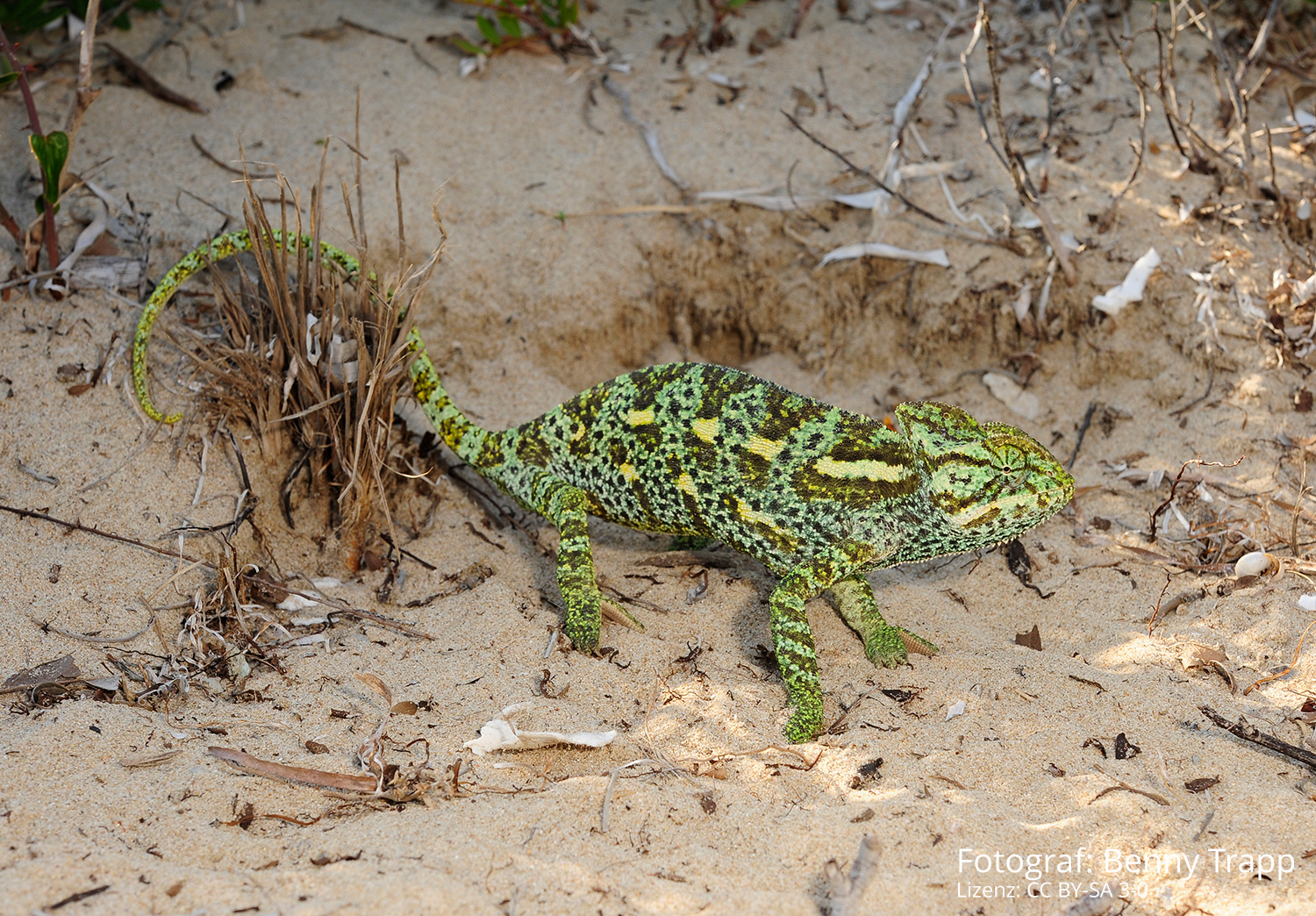
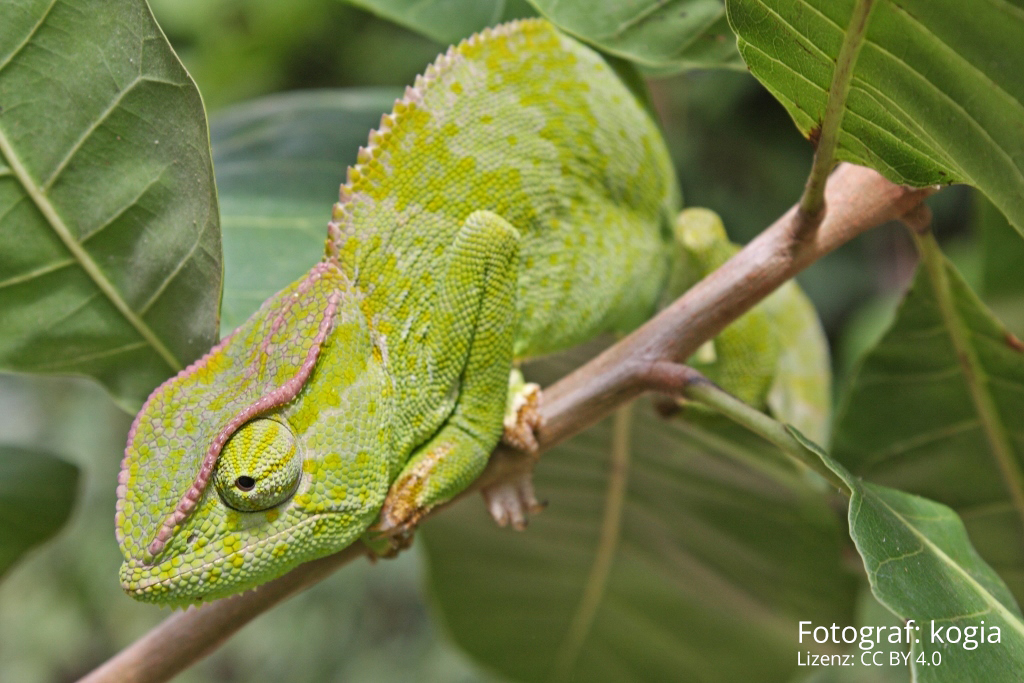
Dass Chamaeleo africanus in der Lagune von Gialova, Region Pylos (Griechenland) vorkommt, ist inzwischen lange bekannt. Es unterscheidet sich nicht nur optisch, sondern auch genetisch von den im südlichen Europa relativ weit verbreiteten Chamaeleo chameleon. Sporadische Berichte von weiteren Vorkommen von Chamaeleo africanus in Griechenland gibt es immer wieder, bisher fehlte jedoch ein wissenschaftlicher Nachweis der Art in anderen Gebieten als Pylos.

Wissenschaftler haben nun eine zweite Population der Art identifiziert. Sie konnten mindestens sieben Individuen der Art rund 130 km nördlich der Gialova-Laguna auf dem Peloponnes finden. Die Chamäleons leben in einem Natura 2000-Gebiet namens Limnothalassa Kalogrias /Dasos Strogylias Kai Elos Lamias. Ein Jungtier wurde per Backenabstrich beprobt, um genetisch die Art Chamaeleo africanus zu bestätigen.

Genetic evidence for the presence of Chamaeleo africanus in Greece outside the Pylos region
Erika Lego, Maria Koutsokali, Michael Valachas
Conservation Genetics Resourecs 18(5), 2026
DOI: 0.1007/s12686-026-01409-w
Kostenlose Vorschau des Artikels

Foto: Chamaeleo africanus, fotografiert von Benny Trapp, CC BY-SA 3.0[:en]

It has long been known that Chamaeleo africanus occurs in the lagoon of Gialova, in the Pylos region (Greece). It differs not only visually but also genetically from Chamaeleo chameleon, which is relatively widespread in southern Europe. There have been sporadic reports of other occurrences of Chamaeleo africanus in Greece, but until now there has been no scientific evidence of the species in areas other than Pylos.

Scientists have now identified a second population of the species. They found at least seven individuals of the species about 130 km north of the Gialova lagoon on the Peloponnese. The chameleons live in a Natura 2000 area called Limnothalassa Kalogrias /Dasos Strogylias Kai Elos Lamias. A young animal was sampled via cheek swab to genetically confirm the species Chamaeleo africanus.

Genetic evidence for the presence of Chamaeleo africanus in Greece outside the Pylos region
Erika Lego, Maria Koutsokali, Michael Valachas
Conservation Genetics Resourecs 18(5), 2026
DOI: 0.1007/s12686-026-01409-w
Free preview of the article

Photo: Chamaeleo africanus, photographed by Benny Trapp, CC BY-SA 3.0[:]

[:de]Erstmalig beobachtet: Uhu erbeutet Chamäleon[:en]Eagle owl captures chameleon[:]

[:de]Erstmalig beobachtet: Uhu erbeutet Chamäleon[:en]Eagle owl captures chameleon[:]

Beobachtungen Wissenschaft

[:de]

Der Uhu (Bubo bubo) ist die größte einheimische Eule Europas und hat ein großes Verbreitungsgebiet, das bis nach Griechenland reicht. Er ist nicht nur sehr anpassungsfähig, was genutzten Lebensraum angeht, sondern auch bei seiner Beute. Zu bekannten und üblichen Beutetieren zählen im Mittelmeerraum vor allem kleine bis mittlere Säugetiere und andere, kleinere Vögel. Ampihibien, Reptilien, Fische und Wirbellose wie Insekten werden zwar auch erbeutet, galten bisher aber stets eher als Notbehelf vor allem in Gegenden von Griechenland, wo ein Mangel an größeren Beutetieren herrscht.

Eine sehr spezielle Beobachtung zum Beutespektrum der Eulenart haben kürzlich griechische Autoren in der Gegend um Pylos in der westlichen Peloponnes gemacht. Im Juli 2024 beobachteten die Autoren am frühen Morgen einen Uhu bei der Jagd. Er erbeutete zu ihrer Überraschung ein Chamaeleo africanus. Dies ist die erste veröffentlichte Beobachtung, bei der ein Uhu ein Chamäleon erbeutete. Weitere Forschung darüber wäre wünschenswert, denn tatsächlich fehlt es insgesamt an Daten zum Beutespektrum von Uhus in der Peloponnes.

An exceptionally rare predation on a chameleon species (Squamata: Chamaeleonidae) by a Eurasian Eagle-Owl (Aves: Strigidae)
Apostolos Christopoulos, Luca Cornacchia, Christos Kotselis, Yiannis G. Zevgolis
Diversity 17, 2025: 333
DOI: 10.3390/d17050333

Foto: aus der genannten Publikation[:en]

The eagle owl (Bubo bubo) is the largest native owl in Europe and has a large range that extends as far as Greece. It is not only very adaptable in terms of the habitat it uses, but also in terms of its prey. Known and common prey in the Mediterranean region include small to medium-sized mammals and other smaller birds. Ampihibians, reptiles, fish and invertebrates such as insects are also preyed upon, but have always been considered more of a stopgap, especially in areas of Greece where there is a lack of larger prey.

Greek authors recently made a very special observation on the prey spectrum of the owl species in the area around Pylos in the western Peloponnese. In July 2024, the authors observed an eagle owl hunting in the early morning. To their surprise, it preyed on a Chamaeleo africanus. This is the first published observation of an eagle owl preying on a chameleon. Further research on this would be desirable, as there is a general lack of data on the prey spectrum of eagle owls in the Peloponnese.

An exceptionally rare predation on a chameleon species (Squamata: Chamaeleonidae) by a Eurasian Eagle-Owl (Aves: Strigidae)
Apostolos Christopoulos, Luca Cornacchia, Christos Kotselis, Yiannis G. Zevgolis
Diversity 17, 2025: 333
DOI: 10.3390/d17050333

Photo: from the publication mentioned[:]