[:de]Internationaler Chamäleontag[:en]International Chameleon Day[:]

[:de]Internationaler Chamäleontag[:en]International Chameleon Day[:]

Allgemeines Internationaler Chamäleontag

[:de]

Schon zum dritten Mal findet der internationale Chamäleontag weltweit statt! Wildlife Madagascar hat 2024 den 09. Mai dazu ausgerufen. Und die AG Chamäleons beteiligt sich selbstverständlich daran. Wir haben nur drei Wochen später übrigens ein ganzes Chamäleon-Wochenende: Nämlich die Jahrestagung der AG Chamäleons, die dieses Jahr in Hannover stattfindet. Kommt uns gerne besuchen! Ein ganzes Wochenende unter Chamäleonfreunden wird sicher gut!

Was habt ihr für den heutigen Tag vorbereitet?

#showyourcolors #internationalchameleonday #chameleonday #chameleondayMay9[:en]

International Chameleon Day is being celebrated worldwide for the third time! Wildlife Madagascar has designated 9 May 2024 as the date. And the Chameleon Working Group is, of course, taking part. Incidentally, just three weeks later we have a whole chameleon weekend: namely the Chameleon Working Group’s annual conference, which is taking place in Hanover this year. Do come and visit us! A whole weekend among fellow chameleon enthusiasts is sure to be great!

What have you got planned for today?

#showyourcolors #internationalchameleonday #chameleonday #chameleondayMay9[:]

[:de]Internationaler Chamäleontag[:en]International Chameleon Day[:]

[:de]Internationaler Chamäleontag[:en]International Chameleon Day[:]

Internationaler Chamäleontag

[:de]

Schon zum zweiten Mal findet der internationale Chamäleontag weltweit statt! Wildlife Madagascar hat letztes Jahr den 09. Mai dazu ausgerufen. Und die AG Chamäleons beteiligt sich selbstverständlich daran. Wir haben nur eine Woche später übrigens ein ganzes Chamäleon-Wochenende: Nämlich die Jahrestagung der AG Chamäleons, die dieses Jahr im UNESCO-Weltnaturerbe Mittelrheintal stattfindet. Kommt uns gerne besuchen! Ein ganzes Wochenende unter Chamäleonfreunden wird sicher gut!

Was habt ihr für den heutigen Tag vorbereitet?

#show your colors #internationalchameleonday #chameleonday #chameleondayMay9[:en]

International Chameleon Day is taking place worldwide for the second time! Wildlife Madagascar proclaimed 9 May last year. And the Chameleons Working Group is of course taking part. Incidentally, we have a whole chameleon weekend just one week later: Namely the annual conference of the AG Chameleons, which this year takes place in the UNESCO World Heritage Site Middle Rhine Valley. Come and visit us! A whole weekend among chameleon friends is sure to be good!

What have you prepared for today?

#show your colors #internationalchameleonday #chameleonday #chameleondayMay9[:]

[:de]Versteckte Arten[:en]Cryptic species[:]

[:de]Versteckte Arten[:en]Cryptic species[:]

Internationaler Chamäleontag

[:de]

Die Chamäleonwelt hat noch viel zu bieten. Unzählige Arten müssen noch beschrieben werden – und manchmal verstecken sich Arten an Stellen, wo man gar keine vermutet hat. Die zunehmenden Möglichkeiten der Genetik bescheren den Taxonomen heute immer speziellere Artbegriffe. Und viele neue Arten!

Über die ganze Ostküste Madagaskars verstreut findet man immer wieder kleine Chamäleons, die rein optisch Calumma radamanus oder Calumma nasutum zuzuschreiben wären, deren Populationen jedoch lokal limitiert sind. Genetisch untersucht sind davon viele Populationen noch nicht. Hier versteckt sich also mit Sicherheit noch die ein oder andere neue Chamäleonart. Auf dem Festland Afrikas könnte Chamaeleo dilepis noch einige Unterarten verstecken. Es kommt in Tansania und Ruanda vor, aber auch zwischen Angola und Kongo sowie von Südafrika bis Botswana, Sambia und Namibia. Und in Tansania wurden vor anderthalb Jahren gerade sechs neue Rhampholeon-Arten beschrieben, die man innerhalb bekannter Artkomplexe mittels Genetik identifizierte.  Das sind nur drei Beispiele von Artkomplexen, die noch versteckte Chamäleonarten beinhalten – noch viele andere warten noch auf weitere Forschung.

#showyourcolours #internationalchameleonday #chameleonday #chameleondayMay9 #agchamaeleons

Foto: Calumma cf. radamanus in Marojejy, Nord-Madagaskar, fotografiert von Alex Laube

Sechs neue Rhampholeon-Arten in Tansania


https://www.agchamaeleons.de/de/versteckte-arten-innerhalb-der-gattung-chamaeleo/[:en]

The chameleon world still has a lot to offer. Countless species have yet to be described – and sometimes species are hidden in places where none were expected. The increasing possibilities of genetics are providing taxonomists with ever more specialised species terms. And many new species!

Small chameleons can be found scattered all over the east coast of Madagascar, which could be attributed to Calumma radamanus or Calumma nasutum in purely visual terms, but whose populations are locally limited. Many of these populations have not yet been genetically analysed. This means that one or two new chameleon species are certainly still hiding here. On the African mainland, Chamaeleo dilepis could still be hiding some subspecies. It occurs in Tanzania and Rwanda, but also between Angola and Congo and from South Africa to Botswana, Zambia and Namibia. And in Tanzania, six new Rhampholeon species were just described a year and a half ago, which were identified within known species complexes using genetics. These are just three examples of species complexes that still contain hidden chameleon species – many more are still awaiting further research.

#showyourcolours #internationalchameleonday #chameleonday #chameleondayMay9 #agchamaeleons

Picture: Calumma cf. radamanus in Marojejy, north Madagascar, photographed by Alex Laube

Sechs neue Rhampholeon-Arten in Tansania


https://www.agchamaeleons.de/de/versteckte-arten-innerhalb-der-gattung-chamaeleo/[:]

Quiz time

Quiz time

Internationaler Chamäleontag

[:de]Weißt du jetzt schon viel mehr über Chamäleons als vorher? Hast du gut aufgepasst? Hier kannst du’s testen:

MadaMagazine – Was weißt du über Chamäleons?
PandaClub – Chamäleon Quiz für Kinder

#showyourcolours #internationalchameleonday #chameleonday #chameleondayMay9 #agchamaeleons[:en]

Do you know a lot more about chameleons now than you did before? Have you been paying attention? You can test it here:

MadaMagazine – What do you know about chameleons?
PandaClub – Chameleon Quiz for kids

#showyourcolours #internationalchameleonday #chameleonday #chameleondayMay9 #agchamaeleons[:]

[:de]Wo gibt es überall Chamäleons?[:en]Where can you find chameleons?[:]

[:de]Wo gibt es überall Chamäleons?[:en]Where can you find chameleons?[:]

Internationaler Chamäleontag

[:de]

Von den 228 Chamäleon-Arten, die es weltweit gibt, leben die allermeisten in Afrika. Allein 97 Arten sind auf Madagaskar heimisch – das entspricht über 40% der Chamäleonarten weltweit! Ein zweiter Chamäleon Hot Spot Afrikas sind die Länder Tansania, die Demokratische Republik Kongo und Kenia in Zentralafrika. Und als drittes spielt noch Südafrika an der Spitze der Chamäleonländer mit. Die übrigen Länder verfügen über im Verhältnis deutlich weniger verschiedene Arten, teils nur ein oder zwei, die dafür aber weit verbreitet oder lokal besonders häufig vorkommen. Sogar in Europa gibt es Chamäleons: Im Süden Spaniens und Portugals, in Italien und Griechenland kommt das europäische Chamäleon vor.

#showyourcolours #internationalchameleonday #chameleonday #chameleondayMay9 #agchamaeleons

Grafik: Jan Stipala, Mountain Dragons – In search of chameleons in the highlands of Kenya, Download[:en]

Of the 228 chameleon species that exist worldwide, the vast majority live in Africa. Madagascar alone is home to 97 species – that’s over 40% of the world’s chameleon species! A second chameleon hot spot in Africa is Tanzania, the Democratic Republic of Congo and Kenya in Central Africa. And thirdly, South Africa is at the top of the list of chameleon countries. The other countries have far fewer different species, sometimes only one or two, but they are widespread or particularly common locally. There are even chameleons in Europe: the European chameleon can be found in the south of Spain and Portugal, in Italy and Greece.

#showyourcolours #internationalchameleonday #chameleonday #chameleondayMay9 #agchamaeleons

Grafik: Jan Stipala, Mountain Dragons – In search of chameleons in the highlands of Kenya, Download[:]

[:de]Partner gesucht[:en]Partner wanted[:]

[:de]Partner gesucht[:en]Partner wanted[:]

Internationaler Chamäleontag

[:de]

Es gibt auch heute unter den Chamäleons noch Arten, von denen unglaublich viele Daten fehlen. Zum Beispiel, wie das Männchen oder Weibchen der Art überhaupt aussieht oder ob es denn ein Partnertier gibt. Zwei Beispiele für diesen Datenmangel sind Calumma juliae und Furcifer monoceras.

Calumma juliae wurde erst 2018 überhaupt entdeckt. Die Art lebt in einem winzigen Waldrest nahe Moramanga, einer Stadt im östlichen Hochland Madagaskars. Trotz intensiver Suche konnte kein Männchen der Art gefunden werden. Daraus lässt sich die Frage ableiten, ob die Art – was extrem ungewöhnlich für Chamäleons wäre – möglicherweise zur Parthenogenese (Jungfernzeugung) fähig sein könnte. Dann bräuchten diese Chamäleons gar keine Männchen. Besonders wahrscheinlich ist das aber nicht.

Bei unserem zweiten Beispiel ist es genau andersherum. Furcifer monoceras wurde zuletzt vor vielen, vielen Jahren – nämlich vor seiner Beschreibung, im Jahr 1905 – in der Nähe der Küstenstadt Mahajanga gesehen. Man hatte aber nur das Männchen entdeckt, das wegen seiner auffälligen, riesigen Nase auch kaum zu verwechseln ist. Das Weibchen dagegen ist unbekannt. Bis heute wurde die Art nicht wieder gefunden und gilt als verschollen. Erste Bemühungen, die Art wiederzufinden, waren leider noch ohne Erfolg. Viele Trockenwälder um Mahajanga existieren nicht mehr, es könnte also genauso gut sein, dass der Lebensraum von Furcifer monoceras längst verschwunden ist. Mit oder ohne dem Chamäleon, ist die große Frage. Es bleibt also spannend!

#showyourcolours #internationalchameleonday #chameleonday #chameleondayMay9 #agchamaeleons

Foto: Calumma juliae-Weibchen, fotografiert von Thorsten Negro

 [:en]

Even today, there are still species of chameleons for which an incredible amount of data is missing. For example, what the male or female of the species even looks like or whether there is a partner animal. Two examples of this lack of data are Calumma juliae and Furcifer monoceras.

Calumma juliae was only discovered in 2018. The species lives in a tiny forest remnant near Moramanga, a town in the eastern highlands of Madagascar. Despite an intensive search, no male of the species could be found. This raises the question of whether the species – which would be extremely unusual for chameleons – could possibly be capable of parthenogenesis (producing young). If so, these chameleons would not need males at all. However, this is not particularly likely.

In our second example, it is the other way round. Furcifer monoceras was last seen many, many years ago – namely before its description, in 1905 – near the coastal town of Mahajanga. However, only the male had been discovered, which is also hard to confuse due to its conspicuous, huge nose. The female, on the other hand, is unknown. To date, the species has not been found again and is considered lost. Initial efforts to find the species have unfortunately been unsuccessful. Many dry forests around Mahajanga no longer exist, so it could just as well be that the habitat of Furcifer monoceras has long since disappeared. With or without the chameleon, that is the big question. So it remains exciting!

#showyourcolours #internationalchameleonday #chameleonday #chameleondayMay9 #agchamaeleons

Photo: Calumma juliae female, photographed by Thorsten Negro[:]

[:de]Länger im Ei als am Leben[:en]Longer in the egg than alive[:]

[:de]Länger im Ei als am Leben[:en]Longer in the egg than alive[:]

Internationaler Chamäleontag

[:de]

Ein Chamäleon, das länger im Ei ist als am Leben? Das gibt es! Natürlich ist es nicht bei jedem Labords Chamäleon (Furcifer labordi) so. Aber tatsächlich handelt es sich dabei um das wahrscheinlich kurzlebigste Chamäleon der Welt. Sie leben im Westen Madagaskars, wo es die meiste Zeit des Jahres sehr heiß und trocken ist. In der kurzen, intensiven Regenzeit schlüpfen die Chamäleons, wachsen in Rekordgeschwindigkeit zum adulten Tier heran, paaren sich sofort und legen schnell Eier, bevor die meisten noch in der gleichen Saison sterben. Das durchschnittliche Labords Chamäleon lebt dadurch nur drei bis fünf Monate! Dagegen liegen die Eier bis zur nächsten Regenzeit zwischen acht und zehn Monaten im Boden. Je nachdem, wie eine Regenzeit im Westen Madagaskars ausfällt, kann es also beim Labords Chamäleon passieren, dass im schlechtesten Fall die gesamte Population dieser Art nur im Ei existiert. Eine faszinierende, aber auch etwas gruselige Vorstellung.

#showyourcolours #internationalchameleonday #chameleonday #chameleondayMay9 #agchamaeleons

Foto: Furcifer labordi Männchen, fotografiert von Lennart Hudel, Creative Commons Attribution 4.0 International[:en]

A chameleon that’s been in the egg longer than it’s been alive? It does exist! Of course, not every Labord’s chameleon (Furcifer labordi) is like this. But this is probably the shortest-lived chameleon in the world. They live in western Madagascar, where it is very hot and dry most of the year. During the short, intense rainy season, the chameleons hatch, grow to adulthood at record speed, mate immediately and lay eggs quickly before most of them die in the same season. The average Labord’s chameleon therefore only lives for three to five months! In contrast, the eggs lie in the ground for between eight and ten months until the next rainy season. Depending on how a rainy season turns out in western Madagascar, the Labord’s chameleon’s entire population may only exist in eggs in the worst-case scenario. A fascinating, but also somewhat creepy idea.

#showyourcolours #internationalchameleonday #chameleonday #chameleondayMay9 #agchamaeleons

Picture: Furcifer labordi male, photographed by Lennart Hudel, Creative Commons Attribution 4.0 International[:]

[:de]Über 100 Jahre verschollen[:en]Lost for more than 100 years[:]

[:de]Über 100 Jahre verschollen[:en]Lost for more than 100 years[:]

Internationaler Chamäleontag

[:de]

Wusstest du, dass es ein Chamäleon gibt, das über 100 Jahre als verschollen galt? Das Voeltzkows Chamäleon (Furcifer voeltzkowi) war zuletzt 1913 gesehen worden. Seitdem galt es als verschollen, weil man weder den genauen Fundort kannte noch wusste, wie die Weibchen aussehen. Tatsächlich lebte die Art im Westen Madagaskars auf einer Halbinsel direkt gegenüber der großen Küstenstadt Mahajanga völlig ungestört vor sich hin. Bis sich 2018 ein deutsch-madagassisches Forscherteam auf den Weg machte, um die lang verschollene Art wiederzuentdecken. Es gelang ihnen – in einem Hotelgarten! Weshalb die Art so lange nicht beobachtet worden war, liegt vermutlich vor allem an der schlechten Erreichbarkeit der Halbinsel, auf der sie leben, und der Kurzlebigkeit der Tiere. Man geht davon aus, dass sie wie Furcifer labordi, einer nah verwandten Art, nur wenige Monate leben. Man kann sie daher nur zu einer bestimmten Jahreszeit finden.

#showyourcolours #internationalchameleonday #chameleonday #chameleondayMay9 #agchamaeleons

Fotos: Furcifer voeltzkowi, Männchen und Weibchen, fotografiert von Alex Laube

[:en]

Did you know that there is a chameleon that was considered lost for over 100 years? Voeltzkow’s chameleon (Furcifer voeltzkowi) was last seen in 1913. Since then, it was considered lost because neither the exact location where it was found nor what the females looked like was known. In fact, the species lived completely undisturbed in western Madagascar on a peninsula directly opposite the large coastal town of Mahajanga. Until 2018, when a German-Madagascan research team set out to rediscover the long-lost species. They succeeded – in a hotel garden! The main reason why the species had not been observed for so long is probably due to the poor accessibility of the peninsula on which they live and the short lifespan of the animals. It is assumed that, like Furcifer labordi, a closely related species, they only live for a few months. They can therefore only be found at a certain time of year.

#showyourcolours #internationalchameleonday #chameleonday #chameleondayMay9 #agchamaeleons

Photos: Furcifer voeltzkowi, male and female, photographed by Alex Laube

[:]

[:de]Chamäleons zum Ausmalen[:en]Colouring chameleons[:]

[:de]Chamäleons zum Ausmalen[:en]Colouring chameleons[:]

Internationaler Chamäleontag

[:de]

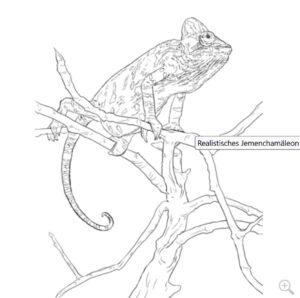
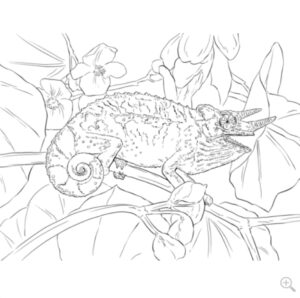
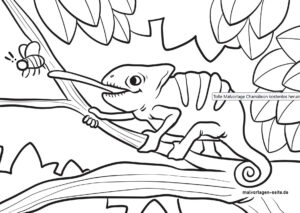
Zeit zum Malen! Wir haben mal jede Menge Ausmal-Bilder zusammengesucht, die alle möglichen Websites kostenlos zu bieten haben. Einfach draufklicken und du wirst zur anbietenden Website weitergeleitet. Und dann ausdrucken und los geht’s! Schnappt euch eure Buntstifte, Filzstifte oder was ihr sonst so nutzt und malt drauflos! Ausmalbilder sind übrigens nicht nur für Kinder – auch für Erwachsene sind geeignete, etwas schwierigere Vorlagen dabei. Eine kleine Auszeit am Feiertag ist sicher nicht verkehrt.

#show your colours #internationalchameleonday #chameleonday #chameleondayMay9 #agchamaeleons


[:en]

Time to colour! We’ve put together lots of colouring pictures that all kinds of websites have to offer for free. Just click on them and you’ll be redirected to the website offering them. Then print them out and off you go! Grab your coloured pencils, felt-tip pens or whatever else you use and get colouring! Incidentally, the colouring pictures are not just for children – there are also suitable, slightly more difficult templates for adults. A little time out on a holiday is certainly not a bad idea.

#show your colours #internationalchameleonday #chameleonday #chameleondayMay9 #agchamaeleons


[:]

[:de]Zeig her deine Zunge![:en]Show your tongue![:]

Internationaler Chamäleontag

[:de]

Die Zunge von Chamäleons ist etwas ganz Besonderes: Mit ihr fangen Chamäleons auf spektakuläre Art und Weise ihr Futter, indem sie damit schießen. Lange dachte man, dass einer der Zungenmuskeln für die Schusskraft verantwortlich sein müsste. Heute weiß man, dass ein Apparat aus vielen Schichten von Kollagenfasern für die notwendige Schussfähigkeit sorgt. Vereinfacht gesagt funktioniert die Chamäleonzunge wie eine Art Katapult mit Gummiband, nur in Millisekundenschnelle. Hier gibt es den Aufbau der Zunge genauer erklärt.

Die Chamäleonzunge schießt mit einer irren Beschleunigung aus dem Maul heraus, trifft das Futter und wird dann langsam wieder eingezogen. Dabei schließt das Chamäleon die Augen, um Verletzungen dieser wertvollen Sinnesorgane beim Zurückschnellen der Zunge samt Insekt zu vermeiden. Vollständig „ausgefahren“ ist die Zunge bei den meisten Chamäleons anderthalb mal so lang wie der Körper, bei sehr kleinen Arten wie Erdchamäleons sogar bis zu zweieinhalb mal so lang. Ein wirklich bemerkenswertes Organ!

#showyourcolours #internationalchameleonday #chameleonday #chameleondayMay9 #agchamaeleons

Video: Madcham.de[:en]

The tongue of chameleons is something very special: chameleons use it to catch their food in a spectacular way by shooting with it. For a long time, it was thought that one of the tongue muscles was responsible for the shooting power. Today we know that an apparatus consisting of many layers of collagen fibres provides the necessary shooting ability. Put simply, the chameleon tongue works like a kind of catapult with a rubber band, only in milliseconds. The structure of the tongue is explained in more detail here.

The chameleon’s tongue shoots out of its mouth with incredible acceleration, hits the food and is then slowly retracted again. The chameleon closes its eyes to prevent injury to these valuable sensory organs when the tongue and insect retract. When fully „extended“, the tongue of most chameleons is one and a half times as long as the body, and in very small species such as ground chameleons it can be up to two and a half times as long. A truly remarkable organ!


#showyourcolours #internationalchameleonday #chameleonday #chameleondayMay9 #agchamaeleons

Video: Madcham.de[:]