[:de]Vier neue Nadzikambia-Arten in Mosambik[:en]Four new species of Nadzikambia in Mozambique[:]

[:de]Vier neue Nadzikambia-Arten in Mosambik[:en]Four new species of Nadzikambia in Mozambique[:]

Neubeschreibungen Wissenschaft

[:de]

Das South East Africa Montane Archipelago (SEAMA) erstreckt sich quer über den Norden Mosambiks und bis ins südliche Malawi hinein. Es handelt sich dabei um eine Kette rund 30 sogenannter Inselberge, die durch Täler völlig voneinander isoliert liegen. Sie sind seit Längerem bekannt als Hot Spots der Artenvielfalt. Über Jahrzehnte war es auf Grund anhaltender Unruhen schwierig, die Inselberge herpetologisch zu erkunden. Und als schließlich die Möglichkeit wieder bestand, fand man prompt neue Chamäleon-Arten – je eine auf jedem der bisher untersuchten Inselberge. Inzwischen wurden die neuen Arten genetisch und morphologisch untersucht. Vier neue Nadzikambia-Arten wurden dabei beschrieben.

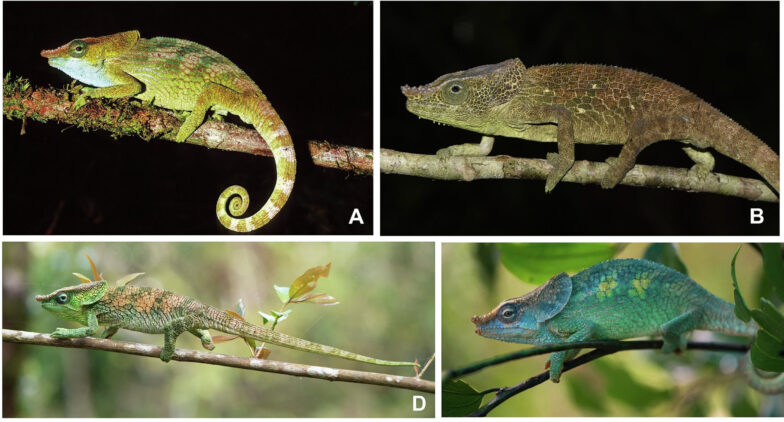
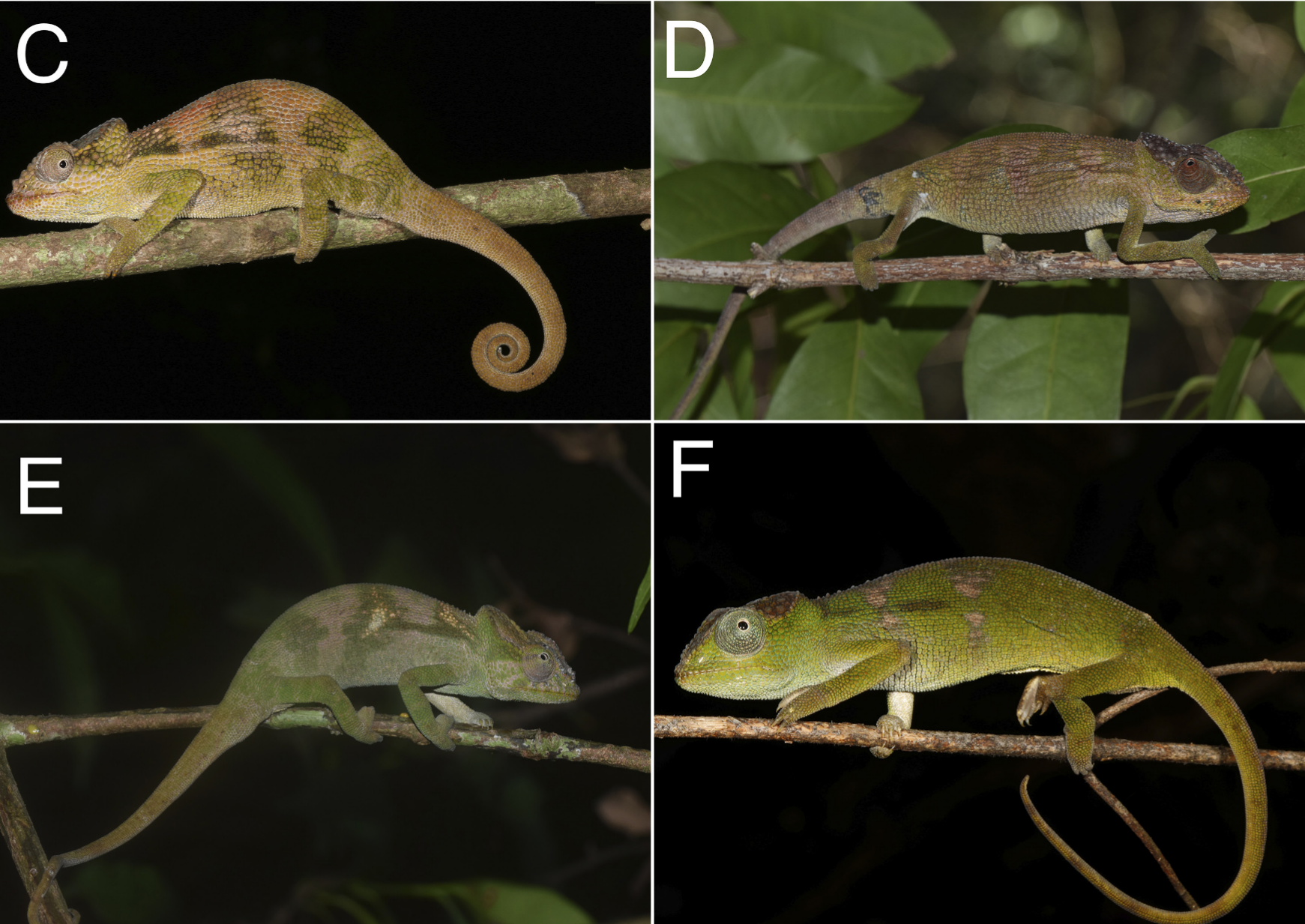
Nadzikambia franklinae erhielt seinen Namen zu Ehren der britischen Biochemikerin Rosalind Franklin. Die Art kommt in den Feuchtwäldern Mahno und Ukalini auf dem Mount Namuli in Mosambik vor. Sie wurde bisher auf Höhen zwischen 1618 und 1632 m gefunden. Die Männchen tragen einen höheren und runderen Helm mit glatteren Schuppenkämmen als andere Nadzikambia-Arten. Die drei verbliebenen Lebensräume der Art sind nur je rund 0,67 km² groß und massiv von der Gewinnung von Flächen für kleinbäuerliche Landwirtschaft, wie Mais- und Kartoffelanbau, bedroht.

Nadzikambia goodallae wurde nach der kürzlich verstorbenen Schimpansenforscherin Jane Goodall benannt. Die Art lebt im Feuchtwald am Westhang des Mount Ribáuè in Mosambik.  Sie wurde bisher auf eng begrenzten Höhen zwischen 1052 und 1142 m entdeckt. Auch diese Art wird sehr stark von Brandrodung und Abholzung ihres Lebensraumes bedroht. Nur noch 4,8 km² Waldfläche sind aktuell übrig. Die Männchen von Nadzikambia goodallae tragen einen flachen, breiten Helm mit rauen Schuppen.

Nadzikambia evanescens wurde benannt nach dem lateinischen Wort für Vergänglichkeit. Es soll auf den extremen Bedrohungsstatus der Art hinweisen. Die Chamäleonart kommt nur noch in einem einzigen Feuchtwaldfragment auf dem Mount Inago in Mosambik vor. Allein seit 2009 wurden 85% der damals vorhandenen Waldfläche gerodet. Aktuell sind gerade einmal 2,3 km² noch vorhanden. Der kleine Lebensraum liegt auf 1235 bis 1281 m. Die Männchen der Art tragen einen hohen, runden Helm mit glatten Schuppenkämmen.

Nadzikambia nubila wurde benannt nach dem lateinischen Wort für Wolken. Ihr Lebensraum, der Mount Chaperone, sorgt für mit seinen umgebenden Wolkenformationen den für das Überleben der Region notwendigen Niederschlag. Von Nadzikambia nubila sind bisher nur Weibchen bekannt, Männchen hat man noch keine gefunden. Die Chamäleons bewohnen Feuchtwald in Höhen zwischen 1017 und 1053 m, wobei sich die vorhandene Waldfläche seit 2009 vor allem durch Brandrodung und Abholzung mehr als halbiert hat. Aktuell sind gerade einmal 7 km² noch vorhanden. Zusätzlich scheinen sich die höchsten Lagen des Mount Chaperone, die weniger von menschlichem Zutun bedroht sind, von geschlossenen Waldflächen zu mehr Granitflächen zu wandeln. Die Autoren vermuten, dass dies auf den Klimawandel zurückgehen könnte.

Die bereits bekannte Art Nadzikambia mlanjensis steht leider in Sachen Bedrohung den neuen Arten in nichts nach. Und das, obwohl sie auf Höhen zwischen 600 und fast 2000 m vorkommt, womit sie deutlich variablere Lebensräume bewohnt. Die vor Jahrzehnten auf dem Mount Mlanje in Malawi geschlossene Waldfläche besteht heute nur noch aus winzigen, voneinander isolierten Waldfragmenten. Insgesamt sind vielleicht noch 12 km² übrig, der Rest wurde bereits abgeholzt. Auch vom Ruo Gorge Forest, dem ersten Fundort der Art, ist nicht mehr viel über. Ob Nadzikambia mlanjensis auch auf dem nahe gelegenen Mount Mchese vorkommt, ist noch ungeklärt.

Etwas besser scheint es noch die sechste und letzte Art der Gattung getroffen zu haben, Nadzikambia baylissi. Die Art kommt in Feuchtwäldern zwischen 1000 und 1400 m auf dem Mount Mabu in Mosambik vor. Hier ist der Wald noch weitestgehend intakt, auch wenn die Waldränder mit Brandrodung zu kämpfen haben. Ob die angenommenen 48 km² Lebensraum für diese Chamäleonart noch aktuell sind, ist jedoch nicht vollständig geklärt.

Sky islands of Mozambique harbour cryptic species of chameleons: Description of four new species of sylvan chameleons (Squamat: Chamaeleonidae: Nadzikambia Tilbury, Tolley & Branch, 2006)
Krystal A. Tolley, Werner Conradie
Vertebrate Zoology 76, 2026: 207-246
DOI: 10.3897/vz.76.e178403
Kostenloser Download des Artikels

Fotos: Von links oben nach rechts unten Nadzikambia franklinae, Nadzikambia goodallae, Nadzikambia avanescens und Nadzikambia nubila[:en]

The South East Africa Montane Archipelago (SEAMA) stretches across northern Mozambique and into southern Malawi. It consists of a chain of around 30 so-called inselbergs, which are completely isolated from one another by valleys. They have long been recognised as biodiversity hotspots. For decades, ongoing unrest made it difficult to conduct herpetological surveys of the insular mountains. And when the opportunity finally arose again, new species of chameleon were promptly discovered – one on each of the insular mountains surveyed to date. The new species have since been studied genetically and morphologically. Four new species of Nadzikambia were described in the process.

Nadzikambia franklinae was named in honour of the British biochemist Rosalind Franklin. The species is found in the Mahno and Ukalini wet forests on Mount Namuli in Mozambique. It has so far been found at altitudes between 1,618 and 1,632 metres. The males have a taller and rounder casque with smoother crests than other Nadzikambia species. The species’ three remaining habitats are each only around 0.67 km² in size and are under massive pressure from land clearance for small-scale farming, such as maize and potato cultivation.

Nadzikambia goodallae was named after the recently deceased chimpanzee researcher Jane Goodall. The species inhabits the wet forest on the western slope of Mount Ribáuè in Mozambique.  It has so far been found at very specific altitudes between 1,052 and 1,142 metres. This species, too, is under severe threat from slash-and-burn farming and deforestation of its habitat. Only 4.8 km² of forest area currently remains. The males of Nadzikambia goodallae have a flat, broad casque with rough scales.

Nadzikambia evanescens was named after the Latin word for transience. This is intended to highlight the species’ critically endangered status. This chameleon species now survives in just a single fragment of wet forest on Mount Inago in Mozambique. Since 2009 alone, 85% of the forest area that existed at that time has been cleared. Currently, just 2.3 km² remains. The small habitat lies at an altitude of 1,235 to 1,281 m. The males of the species have a tall, round casque with smooth crest scales.

Nadzikambia nubila was named after the Latin word for clouds. Its habitat, Mount Chaperone, provides the rainfall essential for the region’s survival through its surrounding cloud formations. To date, only females of Nadzikambia nubila have been recorded; no males have yet been found. The chameleons inhabit wet forest at altitudes between 1,017 and 1,053 metres, although the existing forest area has more than halved since 2009, mainly due to slash-and-burn farming and illegal logging. Currently, only 7 km² remain. Furthermore, the highest elevations of Mount Chaperone, which are less threatened by human activity, appear to be changing from dense woodland to more exposed granite outcrops. The authors suspect that this may be due to climate change.

Unfortunately, the already known species Nadzikambia mlanjensis is just as threatened as the four new species. And this is despite the fact that it occurs at altitudes ranging from 600 to almost 2,000 metres, meaning it inhabits significantly more varied habitats. The forest area that once covered Mount Mlanje in Malawi decades ago now consists only of tiny, isolated forest fragments. In total, perhaps 12 km² remain; the rest has already been cleared. Nor is much left of Ruo Gorge Forest, the site where the species was first discovered. It is not yet clear whether Nadzikambia mlanjensis also occurs on nearby Mount Mchese.

The sixth and final species of the genus, Nadzikambia baylissi, appears to have fared slightly better. The species is found in wet forests at altitudes of between 1,000 and 1,400 metres on Mount Mabu in Mozambique. Here, the forest is still largely intact, even though the forest edges are struggling with slash-and-burn farming. However, it is not entirely clear whether the estimated 48 km² of habitat for this chameleon species is still accurate.

Sky islands of Mozambique harbour cryptic species of chameleons: Description of four new species of sylvan chameleons (Squamat: Chamaeleonidae: Nadzikambia Tilbury, Tolley & Branch, 2006)
Krystal A. Tolley, Werner Conradie
Vertebrate Zoology 76, 2026: 207-246
DOI: 10.3897/vz.76.e178403
Download the article for free

Photos: From top left to bottom right Nadzikambia franklinae, Nadzikambia goodallae, Nadzikambia avanescens and Nadzikambia nubila[:]

[:de]Artbeschreibung von Chamaeleo incognitus für ungültig erklärt[:en]Description of Chamaeleo incognitus has been declared invalid[:]

[:de]Artbeschreibung von Chamaeleo incognitus für ungültig erklärt[:en]Description of Chamaeleo incognitus has been declared invalid[:]

Neubeschreibungen Wissenschaft

[:de]

Der Chamaeleo dilepis-Komplex wirft nach wie vor sehr viele Fragen auf. Eine weite Teile Afrikas übergreifende Untersuchung der Genetik und der Morphologie steht noch aus. 2025 beschrieb Nečas im von ihm selbst veröffentlichten Magazin Archaius die Art Chamaeleo incognitus. Außerdem erhob er die Unterarten Chamaeleo dilepis roperi sowie Chamaeleo dilepis martensi in den Artstatus. Südafrikanische Forscher haben sich nun noch einmal eingehender mit dem Thema beschäftigt und festgestellt, dass sowohl die Neubeschreibung als auch die Artstatusänderungen ungültig sind.

Die Autoren des aktuellen Papers weisen auf mehrere Probleme hin, die dieser Artbeschreibung zugrunde liegen. Einmal geht Nečas davon aus, dass ein konserviertes Chamäleon aus Mombasa (Kenia) das „echte“ Chamaeleo dilepis ist. Die Typuslokalität von Chamaeleo dilepis ist jedoch Gabun, rund 3300 km von den ostafrikanischen Chamaeleo dilepis entfernt. Des Weiteren existieren vom Holotyp, also dem zuerst unter dem Namen Chamaeleo dilepis beschriebenen Tier, gar keine ausführliche Beschreibung der Hemipenes. Lediglich eine Publikation aus 2007 erwähnt die Hemipenes von Chamaeleo dilepis kurz in neun Worten. Trotzdem nutzt Nečas diese paar Worte als feststehende Beschreibung und erklärt, dass die Hemipenes von Chamaeleo incognitus davon abwichen. Was er dann sehr knapp beschreibt, entspricht jedoch den Hemipenes von Chamaeleo dilepis roperi. In den Fotos der Hemipenes von Chamaeleo incognitus erkennen die südafrikanischen Wissenschaftler – nur um die Verwirrung noch zu erhöhen – jedoch die gleichen Merkmale wie die an den Hemipenes der Chamaeleo dilepis aus Mombasa.

Dazu kommt, dass bereits eine Veröffentlichung 2022 mittels genetischer Untersuchungen feststellte, dass die Chamaeleo dilepis Ostafrikas sich deutlich von den Chamaeleo dilepis Westafrikas unterscheiden. Dabei bilden sowohl die Tiefland- als auch die Hochlandarten Ostafrikas eine zusammengehörige Clade. Rein äußerlich sind die Chamaeleo dilepis roperi aus dem Küstengebiet und die aus dem Hochland dabei nicht sicher zu unterscheiden. Würde man also eine der beiden Populationen als eigene Art – hier die im Hochand als Chamaeleo incognitus – beschreiben wollen, bräuchte es dafür genetische Beweise. Diese fehlen in der Veröffentlichung von Nečas. Es bleibt als einziger Artunterschied der unterschiedliche Lebensraum bzw. die Höhenlage – das ist für die südafrikanischen Wissenschaftler nicht ausreichend, um eine eigene Art zu beschreiben. Chamaeleo incognitus ist daher als Synonym zu Chamaeleo dilepis roperi zu sehen.

Die Beschreibung erfolgte außerdem nicht nach den Regeln des ICZN (international code of zoological nomenclature).  Gängige „best practice“-Regeln wie beispielsweise ein Hinweis auf den Interessenskonflikt wurden nicht beachtet. Dazu zählt beispielsweise, einen Artikel ohne Begutachtung durch Fachkundige (sogenanntes Peer Review) im eigenen Magazin zu veröffentlichen.

Chamaeleo incognitus or Chamaeleo ignotus? Questioning the taxonomic validity of a new chameleon species
Devon C. Main, Colin R. Tilbury
African Journal of Herpetology, April 2026
DOI: 0.1080/21564574.2025.2595158
Kostenloser Download des Artikels

Foto: Chamaeleo dilepis aus Botswana[:en]

The Chamaeleo dilepis complex continues to raise a great many questions. A comprehensive study of its genetics and morphology across large parts of Africa has yet to be carried out. In 2025, Nečas described the species Chamaeleo incognitus in the journal Archaius, which he himself edited, managed and published. He also elevated the subspecies Chamaeleo dilepis roperi and Chamaeleo dilepis martensi to species status. South African researchers have now examined the issue in greater detail and concluded that both the new description and the changes to the species’ status are invalid.

The authors of the current paper highlight several issues underlying this species description. Firstly, Nečas assumes that a preserved chameleon from Mombasa (Kenya) is the ‘true’ Chamaeleo dilepis. However, the type locality of Chamaeleo dilepis is Gabon, some 3,300 km away from the East African Chamaeleo dilepis. Furthermore, there exists no detailed description of the hemipenes from the holotype – that is, the specimen first described under the name Chamaeleo dilepis. Only a publication from 2007 mentions the hemipenes of Chamaeleo dilepis briefly, in nine words. Nevertheless, Nečas uses these few words as an established description and states that the hemipenes of Chamaeleo incognitus differed from them. What he then describes very briefly, corresponds to the hemipenes of Chamaeleo dilepis roperi. In the photographs of the hemipenes of Chamaeleo incognitus, however – just to add to the confusion – the South African scientists recognise the same characteristics as those found on the hemipenes of Chamaeleo dilepis from Mombasa.

Furthermore, a 2022 study using phylogenetic analysis stated that the Chamaeleo dilepis of East Africa differ significantly from those of West Africa. Both the lowland and highland species of East Africa form a single clade. Purely in terms of appearance, it is not possible to reliably distinguish between the Chamaeleo dilepis roperi from the coastal region and those from the highlands. If one were to describe one of the two populations as a separate species – in this case, the one in the highlands as Chamaeleo incognitus – genetic evidence would be required. This is lacking in Nečas’s publication. The only remaining difference between the species is the different habitat or altitude – which is not sufficient for the South African scientists to describe a separate species. Chamaeleo incognitus should therefore be regarded as a synonym of Chamaeleo dilepis roperi.

Furthermore, the description did not comply with the rules of the ICZN (International Code of Zoological Nomenclature). Common ‘best practice’ guidelines, such as disclosing a conflict of interest, were not followed. This includes, for example, publishing an article in one’s own journal without expert review (known as peer review).

Chamaeleo incognitus or Chamaeleo ignotus? Questioning the taxonomic validity of a new chameleon species
Devon C. Main, Colin R. Tilbury
African Journal of Herpetology, April 2026
DOI: 0.1080/21564574.2025.2595158
Free article download

Picture: Chamaeleo dilepis from Botswana[:]

[:de]Zwei „neue alte“ Chamäleonarten aus Madagaskar[:en]Two „new old“ chameleon species from Madagascar[:]

[:de]Zwei „neue alte“ Chamäleonarten aus Madagaskar[:en]Two „new old“ chameleon species from Madagascar[:]

Neubeschreibungen Wissenschaft

[:de]

Schon länger weiß man, dass es sich bei Calumma gallus aus dem Osten Madagaskars eher nicht nur um eine Art handelt, sondern um einen ganzen Art-Komplex. Wissenschaftler haben sich nun näher mit dem Komplex beschäftigt und neue genetische Untersuchungen veranlasst – und dabei einige Arten völlig über den Haufen geworfen.

Die Kurzfassung:

Das, was man bisher für Calumma nasutum aus Andasibe, Anosibe An’Ala und Tarzanville hielt, heißt jetzt Calumma hofreiteri. Die Weibchen sind nach wie vor nicht sicher von Calumma emelinae zu unterscheiden. Das „echte“ Calumma nasutum kommt in Regenwäldern nahe Ranomafana und Mananjary vor. Die Männchen von Calumma nasutum tragen einen deutlich größeren Nasenfortsatz, der häufig gelb gefärbt ist während die Weibchen nur eine rote Stupsnase haben. Calumma nasutum gehört übrigens zum gallus-Komplex.

Das, was man bisher für Calumma gallus hielt und im Schutzgebiet Vohimana und Umgebung vorkommt, heißt nun Calumma pinocchio. Das „echte“ Calumma gallus kommt in einem Waldfragment nahe Tarzanville, in Tsinjoarivo und mehreren kleinen Gebieten nahe Toamasina an der Ostküste Madagaskars vor. Sein Nasenfortsatz ist oben gezahnt, während der Nasenfortsatz von Calumma pinocchio glatt ist.

Towards a revision of the Malagasy chameleons of the Calumma gallus complex: Redefinition of Calumma nasutum based on a museomics approach and descriptions of two new species
Frank Glaw, Stefanie Agne, David Prötzel, Philip-Sebastian Gehring, Jörn Köhler, Michaela Preick, Fanomezana M. Ratsoavina, Nicolas Straube, Katharina Wollenberg Valero, Angelica Crottini, Miguel Vences
Salamandra 61(4): 442-466, 2025.
DOI: nicht verfügbar
Kostenloser Download des Artikels

Foto: aus der oben genannten Veröffentlichung, Calumma nasutum [:en]

It has long been known that Calumma gallus from eastern Madagascar is not just one species, but rather an entire species complex. Scientists have now taken a closer look at the complex and conducted new genetic studies – completely overturning some species classifications in the process.

The short version:

What was previously thought to be Calumma nasutum from Andasibe, Anosibe An’Ala and Tarzanville is now called Calumma hofreiteri. The females still cannot be reliably distinguished from Calumma emelinae. The ‘real’ Calumma nasutum occurs in rainforests near Ranomafana and Mananjary. The males of Calumma nasutum have a significantly larger rostral appendage, which is often yellow in colour, while the females only have a red snub nose. Calumma nasutum belongs to the gallus complex.

What was previously thought to be Calumma gallus and occurs in the Vohimana reserve and surrounding area is now called Calumma pinocchio. The ‘real’ Calumma gallus occurs in a forest fragment near Tarzanville, in Tsinjoarivo and several small areas near Toamasina on the east coast of Madagascar. Its rostral appendage is serrated at the top, while the rostral appendage of Calumma pinocchio is smooth.

Towards a revision of the Malagasy chameleons of the Calumma gallus complex: Redefinition of Calumma nasutum based on a museomics approach and descriptions of two new species
Frank Glaw, Stefanie Agne, David Prötzel, Philip-Sebastian Gehring, Jörn Köhler, Michaela Preick, Fanomezana M. Ratsoavina, Nicolas Straube, Katharina Wollenberg Valero, Angelica Crottini, Miguel Vences
Salamandra 61(4): 442-466, 2025.
DOI: not available
Free download of the article

Photo: from the above publication, Calumma nasutum [:]

[:de]Neues Erdchamäleon aus Madagaskar beschrieben[:en]New leaf chameleon in Madagascar[:]

[:de]Neues Erdchamäleon aus Madagaskar beschrieben[:en]New leaf chameleon in Madagascar[:]

Neubeschreibungen

[:de]

An vielen Orten Madagaskars gibt es winzige Chamäleons, darunter sogar die kleinsten der Welt. Nun wurde von madagassischen und deutschen Wissenschaftlern ein weiteres winziges Erdchamäleon beschrieben: Brookesia nofy.

Brookesia nofy lebt in einem kleinen Rest von Tieflandregenwald an der zentralen Ostküste Madagaskars, im Reservat Akanin’ny Nofy. Es kommt wahrscheinlich auch im benachbarten Reservat Vohibola vor. Die neue Art ist verwandt mit Brookesia ramanantsoai, die aber im östlichen Hochland und nicht ganz so küstennah vorkommt. Die Tieflandregenwälder Madagaskars sind extrem von Abholzung bedroht. Umso schöner ist es, dass dieses kleine Chamäleon bereits in zwei Schutzgebieten lebt. Der Name nofy ist übrigens das madagassische Wort für Traum und passt somit in zweierlei Hinsicht: Einmal, weil es im „Nest der Träume“ gefunden wurde, und zum zweiten, weil es in seinem eigenen Schutzgebiet lebt und damit sein Überleben erstmal gesichert ist.

A new miniaturized species of leaf chameleon, genus Brookesia, from a littoral forest fragment in eastern Madagascar
Andolalao Rakotoarison, Alida Frankline Hasiniaina, Frank Glaw, Miguel Vences
Zootaxa Vol. 5506(4):533-547
DOI: 10.11646/zootaxa.5506.4.3

Foto: Brookesia nofy in Akanin’ny Nofy, fotografiert von Alex Negro[:en]

There are tiny chameleons in many places in Madagascar, including the smallest in the world. Now another tiny terrestrial chameleon has been described by Malagasy and German scientists: Brookesia nofy.

Brookesia nofy lives in a small remnant of lowland rainforest on the central east coast of Madagascar, in the Akanin’ny Nofy reserve. It probably also occurs in the neighbouring Vohibola reserve. The new species is related to Brookesia ramanantsoai, which occurs in the eastern highlands and not quite as close to the coast. Madagascar’s lowland rainforests are extremely threatened by deforestation. It is therefore all the better that this small chameleon already lives in two protected areas. Incidentally, the name nofy is the Malagasy word for dream and is therefore appropriate in two respects: firstly, because it was found in the ‘nest of dreams’ and secondly, because it lives in its own protected area, thus ensuring its survival for the time being.

A new miniaturized species of leaf chameleon, genus Brookesia, from a littoral forest fragment in eastern Madagascar
Andolalao Rakotoarison, Alida Frankline Hasiniaina, Frank Glaw, Miguel Vences
Zootaxa Vol. 5506(4):533-547
DOI: 10.11646/zootaxa.5506.4.3

Picture: Brookesia nofy in Akanin’ny Nofy, photographed by Alex Negro[:]

[:de]Fünf neue Rhampholeon-Arten[:en]Five new Rhampholeon species[:]

[:de]Fünf neue Rhampholeon-Arten[:en]Five new Rhampholeon species[:]

Neubeschreibungen Wissenschaft

[:de]

Bei den kleinen, braunen Erdchamäleons auf dem Festland Afrikas gibt es noch einiges zu entdecken. Nachdem vor zwei Jahren im Rhampholeon uluguruensis/moyeri-Komplex in Tansania neue Arten entdeckt werden konnten, haben internationale Wissenschaftler nun den Rhampholeon boulengeri Komplex genauer unter die Lupe genommen. Und wie erwartet tauchten auch dabei neue Arten auf!

Die Erdchamäleons aus diesem Komplex bewohnen verschiedenen Lebensräume entlang des Großen Afrikanischen Grabenbruchs (englisch Albertine Rift). Diese 6000 km lange Kette aus Gebirgen und Gräben reicht vom Albert-See in Uganda bis zum See Tanganyika. Dabei kreuzt sie die Demokratische Republik Kongo, Ruanda, Burundi und Tansania. In der Gattung Rhampholeon unterscheiden sich die Arten äußerlich kaum, leben jedoch oft in sehr unterschiedlichen Lebensräumen oder sind genetisch gut voneinander abzugrenzen. Die Autoren untersuchten über 130 Erdchamäleons von mehr als 20 verschiedenen Orten sowie die Lectotypen (den Holotypus gibt es nicht mehr) der Art Rhampholeon boulengeri. Dabei konnten sie mittels genetischer Untersuchungen gleich fünf neue Rhampholeon-Arten ausmachen.

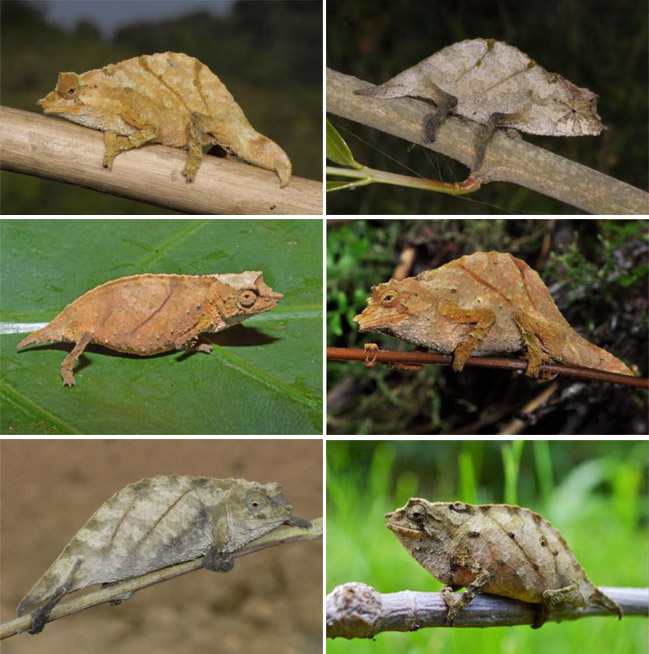
Die bereits bekannte Art Rhampholeon boulengeri, beschrieben 1908 von Grauer, kommt nach den aktuellen Daten ausschließlich in seiner Typuslokalität vor. Diese ist das Itombwe Plateau in der Demokratischen Republik Kongo, auf Höhen zwischen 2100 und 2470 m.

Rhampholeon plumptrei erhielt seinen Namen zu Ehren des englischen Zoologen Andrew Plumptre. Er setzt sich seit fast 20 Jahren als Vorsitzender der Wildlife Conservation Society für den Artenschutz entlang des Afrikanischen Grabenbruchs ein. Die Art lebt in montanem und submontanem Regenwald auf Höhen von 1203-2269 m, wobei sie am häufigsten auf 1200 bis 1700 m zu finden sind. Die Verbreitung reicht dabei vom Osten der Demokratischen Republik Kongo mit dem Kahuzi-Biega Nationalpark bis in den Westen Kenias zum Kakamega Forest Nationalreservat. Dazwischen kommt Rhampoleon plumptrei im Bwindi Impenetrable Nationalpark, im Mabira sowie im Kalinzu Central Forest Reserve im Westen Ugandas vor. Es trägt einen deutlich sichtbaren Nasenfortsatz und einen nur etwas kürzeren Schwanz als Rhampholeon boulengeri.  Rhampholeon plumptrei wird bis zu 60 mm groß. Die Männchen tragen eine weiße Färbung an Kehle und Bauch und einen oder zwei diagonal verlaufende dunklen Streifen auf dem Körper. Die meisten Chamäleons dieser Art tragen einen dunkel gefärbten Tuberkel im Nacken.

Rhampholeon nalubaale wurde nach dem Luganda Wort für „Göttin“ benannt, das auch der einheimische Name des Viktoriasees ist, dem größten See Afrikas. Von dieser Art kennt man bisher nur die Weibchen, Männchen wurden noch nicht gefunden. Rhampholeon nalubaale kommt in submontanem Regenwald auf Höhen von 513 bis 1506 m vor. Am häufigsten ist es im Kibale Nationalpark in Uganda, man kann es aber auch im Budungo Central Forest Reserve im gleichen Land und im Kahuzi-Biega Nationalpark sowie dem Itombwe Natural Reserve in der Demokratischen Republik Kongo finden. Rhampholeon nalubaale wird bis zu 56 mm lang. Eins der aufgefundenen Tiere wurde mit UV-Licht angestrahlt und einige der Tuberkel im Gesicht fluoreszierten daraufhin blau, wie das schon von anderen Chamäleons bekannt ist – für die Gattung Rhampholeon ist es jedoch neu. Die Art kommt zusammen mit Trioceros johnstoni und Kinyongia tolleyae vor.

Rhampholeon bombayi wurde nach dem waYao Forscher Sidi Mubarak Bombay benannt. Er wurde 1820 auf der Grenze von Tansania zu Mosambik geboren und früh als Sklave nach Indien verkauft. Später kehrte er nach Afrika zurück und machte sich auf Expeditionen britischer Forscher in Ostafrika einen Namen. Rhampholeon bombayi wird bis zu 55 mm lang. Rhampholeon bombayi lebt in Montanwäldern auf Höhen von 1450 bis 2330 m in Ruanda und der Demokratischen Republik Kongo. Es wurde bisher im Kahuzi-Biega Nationalpark, im Kabobo Natural Reserve, im Itombwe Natural Reserve und dem Nyungwe Forest Nationalpark nachgewiesen. Im gleichen Wald leben ebenfalls Trioceros johnstoni und Trioceros schoutedeni. Die Tiere tragen zwei oder drei dunkle Linien diagonal auf dem Körper, Schwanz und Extremitäten sind häufig dunkler braun als der Körperstamm.

Rhampholeon msitugrabensis wurde nach dem großen Afrikanischen Grabenbruch benannt. Das Swahili Wort für Wald, msitu, und das deutsche Wort Graben wurden dabei kombiniert. Dieses Erdchamäleon wird bis zu 49 mm groß. Es bewohnt Waldränder bei Mpishi nahe dem Kibira Nationalpark in Burundi. Rhampholeon msitugrabensis ist außerdem vom Mount Bigugu im Nyungwe Forest Nationalpark in Ruanda beschrieben, so dass sein Vorkommen sich von 1986 bis 2699 m zieht. Im Nyungwe Forest kommt Rhampholeon msitugrabensis allopatrisch mit Rhampholeon bombayi vor, genauer im Kamiranzovu Sumpfgebiet auf 2000 bis 2330 m Höhe. Andere Chamäleons, die mit Rhampholeon msitugrabensis einen Lebensraum teilen, sind Trioceros ellioti, Chamaeleo dilepis und Kinyongia rugegensis.

Rhampholeon monteslunae wurde nach seinem Lebensraum benannt, dem Ruwenzori-Gebirge auf der Grenze der Demokratischen Republik Kongo und Uganda. Bereits 150 nach Christus wurde diese Gebirgskette, in der der Nil entspringt, von Ptolemäus als „Lunae Montes“, zu deutsch Mondberge beschrieben. Rhampholeon monteslunae kommt auf Höhen von 1655 bis 2360 m vor und ist am häufigsten im Ruwenzori Mountains Nationalpark nahe dem Nyakalengija-Eingang. Eine weitere Population findet sich im Bururi Forest Nature Reserve in Burundi. Dieses Erdchamäleon wird bis zu 47 mm lang. In den gleichen Wäldern kommen unter anderem Kinyongia carpenteri, Kinyongia xenorhina, Kinyongia tolleyae, Trioceros ellioti, Trioceros johnstoni und Trioceros rudis vor.


Taxonomy of the Rhampholeon boulengeri Complex (Sauria: Chamaeleonidae): Five new species from central Africa’s Albertine Rift
Daniel F. Hughes, Mathias Behangana, Wilber Lukwago, Michele Menegon, J. Maximilian Dehling, Philipp Wagner, Colin R. Tilbury, Trisan South, Chifundera Kusamba, Eli Greenbaum
Zootaxa Vol. 5458 4, 2024, pp. 451-494
DOI: 10.11646/zootaxa.5458.4.1

Foto: Von links oben nach rechts unten Rhampholeon boulengeri, Rhampholeon plumptrei, Rhampholeon nalubaale, Rhampholeon bombayi, Rhampholeon msitugrabensis und Rhampholeon monteslunae aus der oben genannten Publikation

[:en]

There is still a lot to discover about the small, brown pygmy chameleons on the African mainland. After new species were discovered in the Rhampholeon uluguruensis/moyeri complex in Tanzania two years ago, international scientists have now taken a closer look at the Rhampholeon boulengeri complex. And as expected, new species have been discovered!

The pygmy chameleons from this complex inhabit various habitats along the Albertine Rif). This 6000 km long chain of mountains and rifts stretches from Lake Albert in Uganda to Lake Tanganyika. It crosses the Democratic Republic of Congo, Rwanda, Burundi and Tanzania. In the genus Rhampholeon, the species hardly differ externally, but often live in very different habitats or can be easily distinguished from each other genetically. The authors analysed over 130 pygmy chameleons from more than 20 different locations as well as the lectotypes (the holotype no longer exists) of the species Rhampholeon boulengeri. Using genetic analyses, they were able to identify five new Rhampholeon species.

The already known species Rhampholeon boulengeri, described by Grauer in 1908, occurs exclusively in its type locality according to the current data. This is the Itombwe Plateau in the Democratic Republic of Congo, at altitudes between 2100 and 2470 metres.

Rhampholeon plumptrei was named in honour of the English zoologist Andrew Plumptre. As chairman of the Wildlife Conservation Society, he has been campaigning for species conservation along the African Rift Valley for almost 20 years. The species lives in montane and submontane rainforest at altitudes of 1203-2269 metres, although they are most commonly found at 1200 to 1700 metres. The distribution ranges from the east of the Democratic Republic of Congo with the Kahuzi-Biega National Park to the west of Kenya to the Kakamega Forest National Reserve. In between, Rhampoleon plumptrei can be found in Bwindi Impenetrable National Park, in Mabira and in Kalinzu Central Forest Reserve in western Uganda. It has a clearly visible nasal appendage and a slightly shorter tail than Rhampholeon boulengeri. Rhampholeon plumptrei grows up to 60 mm in size. The males have a white colouration on the throat and belly and one or two diagonal dark stripes on the body. Most chameleons of this species have a dark-coloured tubercle on the back of the neck.

Rhampholeon nalubaale was named after the Luganda word for ‘goddess’, which is also the native name of Lake Victoria, the largest lake in Africa. So far, only the females of this species are known, males have not yet been found. Rhampholeon nalubaale occurs in submontane rainforest at altitudes of 513 to 1506 metres. It is most common in the Kibale National Park in Uganda, but can also be found in the Budungo Central Forest Reserve in the same country and in the Kahuzi-Biega National Park and the Itombwe Natural Reserve in the Democratic Republic of Congo. Rhampholeon nalubaale grows up to 56 mm long. One of the animals found was illuminated with UV light and some of the tubercles in the face fluoresced blue, as is already known from other chameleons – but this is new for the genus Rhampholeon. The species occurs together with Trioceros johnstoni and Kinyongia tolleyae.

Rhampholeon bombayi was named after the waYao explorer Sidi Mubarak Bombay. He was born in 1820 on the border between Tanzania and Mozambique and was sold to India as a slave at an early age. He later returned to Africa and made a name for himself on expeditions by British explorers in East Africa. Rhampholeon bombayi grows up to 55 mm long. It lives in montane forests at altitudes of 1450 to 2330 metres in Rwanda and the Democratic Republic of Congo. It has so far been recorded in Kahuzi-Biega National Park, Kabobo Natural Reserve, Itombwe Natural Reserve and Nyungwe Forest National Park. Trioceros johnstoni and Trioceros schoutedeni also live in the same forest. The animals have two or three dark lines diagonally on the body, the tail and extremities are often darker brown than the trunk.

Rhampholeon msitugrabensis was named after the Albertine Rift. The Swahili word for forest, msitu, and the German word for rift, Graben, were combined. This ground chameleon grows up to 49 mm in size. It inhabits forest edges near Mpishi close to Kibira National Park in Burundi. Rhampholeon msitugrabensis is also described from Mount Bigugu in Nyungwe Forest National Park in Rwanda, so that its occurrence extends from 1986 to 2699 metres. In the Nyungwe Forest, Rhampholeon msitugrabensis occurs allopatrically with Rhampholeon bombayi, more precisely in the Kamiranzovu swamp area at 2000 to 2330 m altitude. Other chameleons that share a habitat with Rhampholeon msitugrabensis are Trioceros ellioti, Chamaeleo dilepis and Kinyongia rugegensis.

Rhampholeon monteslunae was named after its habitat, the Rwenzori Mountains on the border of the Democratic Republic of the Congo and Uganda. This mountain range, where the Nile rises, was described by Ptolemy as ‘Lunae Montes’ as early as 150 AD. Rhampholeon monteslunae occurs at altitudes of 1655 to 2360 metres and is most common in the Rwenzori Mountains National Park near the entrance to Nyakalengija. Another population can be found in the Bururi Forest Nature Reserve in Burundi. This ground chameleon grows up to 47 mm long. Kinyongia carpenteri, Kinyongia xenorhina, Kinyongia tolleyae, Trioceros ellioti, Trioceros johnstoni and Trioceros rudis are also found in the same forests.

Taxonomy of the Rhampholeon boulengeri Complex (Sauria: Chamaeleonidae): Five new species from central Africa’s Albertine Rift
Daniel F. Hughes, Mathias Behangana, Wilber Lukwago, Michele Menegon, J. Maximilian Dehling, Philipp Wagner, Colin R. Tilbury, Trisan South, Chifundera Kusamba, Eli Greenbaum
Zootaxa Vol. 5458 4, 2024, pp. 451-494
DOI: 10.11646/zootaxa.5458.4.1

Photo: From top left to bottom right Rhampholeon boulengeri, Rhampholeon plumptrei, Rhampholeon nalubaale, Rhampholeon bombayi, Rhampholeon msitugrabensis und Rhampholeon monteslunae from the mentioned publication[:]

[:de]Sechs neue Rhampholeon-Arten in Tansania[:en]Six new Rhampholeon species in Tanzania[:]

[:de]Sechs neue Rhampholeon-Arten in Tansania[:en]Six new Rhampholeon species in Tanzania[:]

Neubeschreibungen Wissenschaft

[:de]

In den letzten 15 Jahren hat sich die Zahl der bekannten Rhampholeon-Arten verdoppelt – nicht zuletzt, weil sich in einigen Artkomplexe zahlreiche unbeschriebene Arten „versteckten“. Genau einen solchen Fall beleuchteten nun Wissenschaftler aus Großbritannien, Tansania und Südafrika: Den Rhampholeon uluguruensis/moyeri-Komplex. Die Erdchamäleons aus diesem Komplex bewohnen verschiedenen Lebensräume in den Eastern Arc Mountains, einer 600 km langen Gebirgskette, die von Kenia bis nach Tansania reicht. Bei der Gattung Rhampholeon ist bisher vor allem auffällig, dass die beschriebenen Arten sich äußerlich nur wenig unterscheiden, jedoch in eng begrenzten, voneinander meist völlig isolierten Lebensräumen vorkommen. Die Autoren untersuchten Erdchamäleons von sieben verschiedenen Orten in Tansania. Dabei konnten sie mittels genetischer Untersuchungen gleich sechs neue Rhampholeon-Arten ausmachen.

Rhampholeon colemani wurde benannt nach dem Artenschützer Carter Coleman. Die Art kommt im Kitolomero-Tal auf rund 1200 m üNN vor. Das Tal liegt im Uzungwa Scarp Nature Reserve in den Udzungwa Bergen mitten in Tansania, rund 350 km südöstlich der Hauptstadt Dodoma. Besonders an diesem Verbreitungsgebiet ist, dass in diesem Reservat ebenfalls das schon bekannte Rhampholeon moyeri vorkommt. Unklar ist noch, ob die beiden Arten möglicherweise auf unterschiedlichen Höhenstufen leben. Rhampholeon colemani wird bis zu 44 mm (TL) groß und ist damit das zweitkleinste der bisher beschriebenen Rhampholeon-Arten. Die Hemipenes der Männchen dieser Arten konnten ausführlich beschrieben werden. Ein charakteristisches Merkmal von Rhampholeon colemani ist der Nasenfortsatz, der in einem Winkel von bis zu 59°C zur Schnauze steht bzw. etwas nach unten zeigt. Bei allen anderen Erdchamäleons der Gattung ist der Winkel deutlich geringer, der Nasenfortsatz steht also eher gerade ab.

Rhampholeon sabini erhielt seinen Namen zu Ehren Andy Sabin für finanzielle Unterstützung und weltweitem Engagement im Umweltschutz. Die Art lebt in Tansania im submontanen Regenwald zweier benachbarter Reservate, die im Nordosten des Landes rund 250 km von der Küstenstadt Daressalaam liegen. Einer der Lebensräume ist das Nguu North Forest Reserve, das andere das Kilindi Forest Reserve, beide auf gut 1200 m üNN. Rhampholeon sabini wird bis zu 54 mm groß, wobei die relative Größe von Kopf und Schwanz im Verhältnis zum übrigen Körper größer als bei den anderen Arten erscheinen.

Rhampholeon rubeho kommt auf den gleichnamigen Bergen, den Rubeho Mountains, auf rund 1870 m üNN vor, die sich rund 150 km östlich der Hauptstadt Dodoma befinden. Der von dieser Art bewohnte Regenwald liegt vorwiegend im Mafwomero Forest Reserve. Rhampholeon rubeho wird bis zu 63 mm lang. Zusätzlich zählen die Wissenschaftler derzeit eine Population von Erdchamäleons im Ilole Forest Reserve in 50 km Entfernung, am südlichen Ausläufer der Rubeho Mountains, zu dieser Art. Diese Population ist jedoch genetisch noch nicht untersucht.

Rhampholeon nicolai wurde benannt nach dem verstorbenen Nicola Colangelo, einem Unternehmer aus Tansania, der sich für den Artenschutz und nachhaltige Ressourcennutzung einsetzte. Rhampholeon nicolai wird bis zu 60 mm lang, wobei ähnlich wie bei R. sabini die relative Größe von Kopf und Schwanz im Verhältnis zum übrigen Körper größer als bei den anderen Arten erscheint. Rhampholeon nicolai lebt auf den Ukaguru Mountains, die sich nur wenig nördlich der Rubeho Mountains befinden. Es wurde in den drei aneinander liegenden Schutzgebieten Mamiwa Kisara North Forest Reserve, Mamiwa Kisara South Forest Reserve und dem Ikwamba Forest Reserve auf 1970 m Höhe nachgewiesen. Eine Population von Erdchamäleons im nahen Mikuvi Forest wird zunächst zur Art gezählt, ihr genauer Status muss jedoch noch untersucht werden.

Rhampholeon waynelotteri bekam seinen Namen zu Ehren des ermordeten südafrikanischen Naturschutzaktivisten Wayne Lotter, der sich vor allem im Kampf gegen die Wilderei von Elefanten engagierte. Dieses Erdchamäleon wird bis zu 55 m groß. Es bewohnt den Mount Kanga, etwa 120 km von der Küste des Indischen Ozeans entfernt. Mount Kanga zählt zu den Nguru Mountains, obwohl der Berg vom Hauptmassiv durch einen 8 km breiten Tieflandkorridor und einen Fluss getrennt ist. Rhampholeon waynelotteri ist vom Kanga Forest Reserve auf etwa 1280 m Höhe sowie de Mkingu Nature Reserve beschrieben. Im Letzteren kommt es gemeinsam mit Rhampholeon acuminatus vor, von dem es aber durch seinen anders geformten Nasenfortsatz sowie kleine Fortsätze über den Augen gut unterschieden werden kann. Eine Erdchamäleon-Population auf dem Mount Nguru wurde zunächst Rhampholeon waynelotteri zugeschrieben, weitere Forschung steht jedoch noch aus.

Rhampholeon princeeai wurde benannt nach dem amerikanischen Künstler und YouTuber Prince Ea. Rhampholein princeeai lebt auf Höhen von 1870 m im Mkingu Nature Reserve auf den Nguru Bergen. Dort kommen auch Rhampholeon waynelotteri und Rhampholeon acuminatus vor. Die Art wird bis zu 46 mm lang und hat eine Besonderheit: Der Nasenfortsatz weist, von oben betrachtet, eine dreieckige Form auf. Außerdem hat die Art eine kleine Vertiefung in der Leistengegend, die die anderen bisher untersuchten Arten nicht aufweisen.

Die bereits bekannte Art Rhampholeon uluguruensis wurde ausschließlich im namensgebenden Uluguru Nature Reserve und dem Mkungwe Forest Reserve gefunden. Rhampholeon moyeri kommt lediglich im Uzungwa Scarp Nature Reserve in den Udzungwa Bergen vor. Rhampholeon beraduccii ist auf das Sali Forest Reserve in den Mahenge Bergen begrenzt und Rhampholeon acuminatus, wie schon vorweggenommen, lebt ausschließlich im Mingu Nature Reserve in den Nguru Bergen.

Cryptic diversity in pygmy chameleons (Chamaeleonidae: Rhampholeon) of the Eastern Arc Mountains of Tanzania, with description of six new species
Michelle Menegon, John V. Lyakurwa, Simon P. Loader, Krystal A. Tolley
Acta Herpetologica 17 (2): 85-113, 2022
DOI: 10.36253/a_h-12978

Foto: Rhampholeon rubeho, aus der oben genannten Publikation[:en]

In the last 15 years, the number of known Rhampholeon species has doubled – not least because some species complexes „hid“ numerous undescribed species. Scientists from Great Britain, Tanzania, and South Africa have now shed light on exactly such a case: the Rhampholeon uluguruensis/moyeri complex. The pygmy chameleons from this complex inhabit different habitats in the Eastern Arc Mountains, a 600 km long mountain range stretching from Kenya to Tanzania. The most striking feature of the genus Rhampholeon so far is that the described species differ only slightly in appearance, but occur in narrowly defined habitats that are usually completely isolated from each other. The authors studied pygmy chameleons from seven different locations in Tanzania. In the process, they were able to identify six new Rhampholeon species by means of genetic studies.

Rhampholeon colemani was named after the conservationist Carter Coleman. The species occurs in the Kitolomero Valley at about 1200 m a.s.l.. The valley is located in the Uzungwa Scarp Nature Reserve in the Udzungwa Mountains in the middle of Tanzania, about 350 km south-east of the capital Dodoma. What is special about this distribution area is that the already-known Rhampholeon moyeri also occurs in this reserve. It is still unclear whether the two species possibly live at different altitudes. Rhampholeon colemani grows up to 44 mm (TL) and is thus the second smallest of the Rhampholeon species described so far. The hemipenes of the males of these species could be described in detail. A characteristic feature of Rhampholeon colemani is the rostral appendage, which is at an angle of up to 59° to the snout or points slightly downwards. In all other terrestrial chameleons of the genus, the angle is much smaller, so the rostral appendage is rather straightforward.

Rhampholeon sabini was named in honour of Andy Sabin for his financial support and worldwide commitment to conservation. The species lives in Tanzania in the sub-montane rainforest of two neighbouring reserves, which are located in the north-east of the country about 250 km from the coastal city of Dar es Salaam. One of the habitats is the Nguu North Forest Reserve, the other the Kilindi Forest Reserve, both at an altitude of just over 1200 m above sea level. Rhampholeon sabini grows up to 54 mm, with the relative size of the head and tail appearing larger in relation to the rest of the body than in the other species.

Rhampholeon rubeho occurs on the mountains of the same name, the Rubeho Mountains, at about 1870 m a.s.l., located about 150 km east of the capital Dodoma. The rainforest inhabited by this species is mainly in the Mafwomero Forest Reserve. Rhampholeon rubeho grows up to 63 mm long. In addition, scientists currently count a population of earth chameleons in the Ilole Forest Reserve 50 km away, on the southern foothills of the Rubeho Mountains, as belonging to this species. However, this population has not yet been genetically studied.

Rhampholeon nicolai was named after the late Nicola Colangelo, a Tanzanian entrepreneur who promoted species conservation and sustainable resource use. Rhampholeon nicolai grows up to 60 mm long, and similar to R. sabini, the relative size of the head and tail in relation to the rest of the body appears larger than in the other species. Rhampholeon nicolai lives in the Ukaguru Mountains, just north of the Rubeho Mountains. It has been recorded in the three contiguous protected areas of Mamiwa Kisara North Forest Reserve, Mamiwa Kisara South Forest Reserve and the Ikwamba Forest Reserve at 1970 m altitude. A population of ground chameleons in nearby Mikuvi Forest is initially counted as part of the species, but its exact status has yet to be investigated.

Rhampholeon waynelotteri was given its name in honour of the murdered South African conservation activist Wayne Lotter, who was particularly active in the fight against elephant poaching. This pgymy chameleon grows up to 55 m tall. It inhabits Mount Kanga, about 120 km from the Indian Ocean coast. Mount Kanga is part of the Nguru Mountains, although the mountain is separated from the main massif by an 8 km wide lowland corridor and a river. Rhampholeon waynelotteri is described from the Kanga Forest Reserve at about 1280 m as well as de Mkingu Nature Reserve. In the latter, it occurs together with Rhampholeon acuminatus, from which it can be easily distinguished by its differently shaped rostral appendage and small appendages above the eyes. A pygmy chameleon population on Mount Nguru was initially attributed to Rhampholeon waynelotteri, but further research is pending.

Rhampholeon princeeai was named after the American artist and YouTuber Prince Ea. Rhampholeon princeeai lives at altitudes of 1870 m in the Mkingu Nature Reserve on the Nguru Mountains. Rhampholeon waynelotteri and Rhampholeon acuminatus also occur there. The species grows up to 46 mm long and has a special feature: the rostral appendage has a triangular shape when viewed from above. In addition, the species has a small depression in the inguinal region, which the other species studied so far do not have.

The already known species Rhampholeon uluguruensis was found exclusively in the Uluguru Nature Reserve and the Mkungwe Forest Reserve. Rhampholeon moyeri is found only in the Uzungwa Scarp Nature Reserve in the Udzungwa Mountains. Rhampholeon beraduccii is restricted to the Sali Forest Reserve in the Mahenge Mountains and Rhampholeon acuminatus, as anticipated, lives exclusively in the Mingu Nature Reserve in the Nguru Mountains.

Cryptic diversity in pygmy chameleons (Chamaeleonidae: Rhampholeon) of the Eastern Arc Mountains of Tanzania, with description of six new species
Michelle Menegon, John V. Lyakurwa, Simon P. Loader, Krystal A. Tolley
Acta Herpetologica 17 (2): 85-113, 2022
DOI: 10.36253/a_h-12978

Photo: Rhampholeon rubeho, from the above-mentioned publication[:]