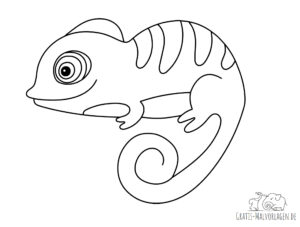
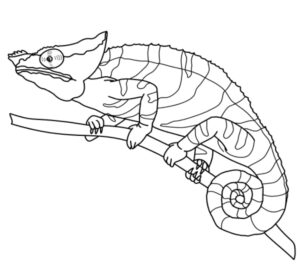
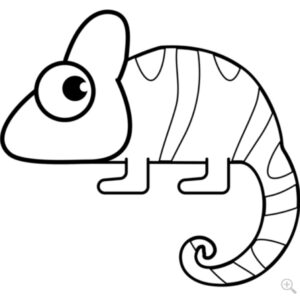
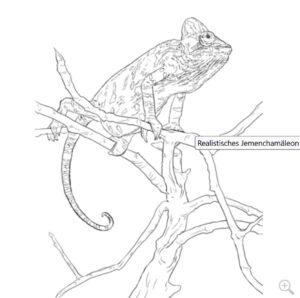
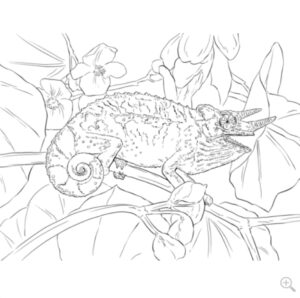
Zeit zum Malen! Wir haben mal jede Menge Ausmal-Bilder zusammengesucht, die alle möglichen Websites kostenlos zu bieten haben. Einfach draufklicken und du wirst zur anbietenden Website weitergeleitet. Und dann ausdrucken und los geht’s! Schnappt euch eure Buntstifte, Filzstifte oder was ihr sonst so nutzt und malt drauflos! Ausmalbilder sind übrigens nicht nur für Kinder – auch für Erwachsene sind geeignete, etwas schwierigere Vorlagen dabei. Eine kleine Auszeit am Feiertag ist sicher nicht verkehrt.
#show your colours #internationalchameleonday #chameleonday #chameleondayMay9 #agchamaeleons
[:en]
Time to colour! We’ve put together lots of colouring pictures that all kinds of websites have to offer for free. Just click on them and you’ll be redirected to the website offering them. Then print them out and off you go! Grab your coloured pencils, felt-tip pens or whatever else you use and get colouring! Incidentally, the colouring pictures are not just for children – there are also suitable, slightly more difficult templates for adults. A little time out on a holiday is certainly not a bad idea.
#show your colours #internationalchameleonday #chameleonday #chameleondayMay9 #agchamaeleons
Die Zunge von Chamäleons ist etwas ganz Besonderes: Mit ihr fangen Chamäleons auf spektakuläre Art und Weise ihr Futter, indem sie damit schießen. Lange dachte man, dass einer der Zungenmuskeln für die Schusskraft verantwortlich sein müsste. Heute weiß man, dass ein Apparat aus vielen Schichten von Kollagenfasern für die notwendige Schussfähigkeit sorgt. Vereinfacht gesagt funktioniert die Chamäleonzunge wie eine Art Katapult mit Gummiband, nur in Millisekundenschnelle. Hier gibt es den Aufbau der Zunge genauer erklärt.
Die Chamäleonzunge schießt mit einer irren Beschleunigung aus dem Maul heraus, trifft das Futter und wird dann langsam wieder eingezogen. Dabei schließt das Chamäleon die Augen, um Verletzungen dieser wertvollen Sinnesorgane beim Zurückschnellen der Zunge samt Insekt zu vermeiden. Vollständig „ausgefahren“ ist die Zunge bei den meisten Chamäleons anderthalb mal so lang wie der Körper, bei sehr kleinen Arten wie Erdchamäleons sogar bis zu zweieinhalb mal so lang. Ein wirklich bemerkenswertes Organ!
The tongue of chameleons is something very special: chameleons use it to catch their food in a spectacular way by shooting with it. For a long time, it was thought that one of the tongue muscles was responsible for the shooting power. Today we know that an apparatus consisting of many layers of collagen fibres provides the necessary shooting ability. Put simply, the chameleon tongue works like a kind of catapult with a rubber band, only in milliseconds. The structure of the tongue is explained in more detail here.
The chameleon’s tongue shoots out of its mouth with incredible acceleration, hits the food and is then slowly retracted again. The chameleon closes its eyes to prevent injury to these valuable sensory organs when the tongue and insect retract. When fully „extended“, the tongue of most chameleons is one and a half times as long as the body, and in very small species such as ground chameleons it can be up to two and a half times as long. A truly remarkable organ!
Und wer auf den Geschmack gekommen ist und gar nicht genug von Chamäleons bekommen kann: Es gibt dieses Jahr nicht nur einen Internationalen Chamäleontag, sondern auch ein ganzes Wochenende mit dem Thema Chamäleons! Auf unserer Tagung 2024 bist du dafür genau richtig. Vom 24. Bis 26. Mai 2024 treffen sich Chamäleonfreunde aus aller Welt in Fulda, um Erfahrungen auszutauschen, Tipps und Tricks zu lernen und dem gemeinsamen Hobby nachzugehen, der Welt der Chamäleons. Wir haben eine bunte Vortragsreihe und einen Fotowettbewerb vorbereitet. Wer Lust hat, kann sich unverbindlich über unsere Website anmelden. Wir freuen uns auf „alte Bekannte“, aber gerne auch auf neue Gesichter!
And for those who have acquired a taste for chameleons and can’t get enough of them: There is not only an International Chameleon Day this year, but also a whole weekend dedicated to chameleons! Our 2024 conference is the right place for you. From 24 to 26 May 2024, chameleon friends from all over the world will meet in Fulda, Germany, to exchange experiences, learn tips and tricks and pursue their shared hobby, the world of chameleons. We have prepared a colourful series of lectures and a photo competition. Anyone who is interested can register without obligation via our website. We look forward to seeing „old friends“, but also new faces!
Über viele, viele Jahre galten Chamäleons als „unhaltbar“. Während Hunde und Katzen schon Jahrhunderte den Menschen begleiteten, wurden vermeintlich „exotischere“ Arten erst später als mögliche Haustiere entdeckt. Wegen ihrer doch nicht ganz niedrigen Haltungsansprüche standen Chamäleons jedoch über Jahrzehnte immer ein wenig abseits. Erst mit großen Weiterentwicklung in der Terrarientechnik ab den 1990er Jahren gelang es immer mehr Haltern, verschiedene Arten von Chamäleons erfolgreich zu halten und zu vermehren. Heute gibt es sogar mehrere Arten, die man selbst Anfängern in der Terraristik guten Gewissens empfehlen kann. Es hat sich also sehr viel getan in der Terraristik. Galten Chamäleons oder einzelne Arten vor ein paar Jahrzehnten noch als „unhaltbar“, haben wir heute eine Vielzahl positiver Haltungsberichte von den verschiedensten Arten aus aller Welt. Das Magazin der AG Chamäleons, die CHAMAELEO, veröffentlicht solche Haltungsberichte seit vielen Jahren. Nach Arten sortiert findest du über hundert Haltungsberichte davon hier: Übersicht Haltungsberichte.
#show your colours #internationalchameleonday #chameleonday #chameleondayMay9 #agchamaeleons
For many, many years, chameleons were considered „untenable“. While dogs and cats have accompanied humans for centuries, supposedly more „exotic“ species were only later discovered as potential pets. However, due to their not entirely low husbandry requirements, chameleons were always somewhat marginalised for decades. It wasn’t until the 1990s that more and more keepers were able to successfully keep and breed different species of chameleons thanks to major developments in terrarium technology. Today, there are even several species that can be recommended with a clear conscience even to beginners in the herpetoculture hobby. So a lot has happened in the hobby. A few decades ago, chameleons or individual species were still considered „untenable“, but today we have a large number of positive husbandry reports on a wide variety of species from all over the world. The magazine of the AG Chameleons, CHAMAELEO, has been publishing such husbandry reports for many years. Sorted by species, you can find over a hundred of them here: Overview of husbandry reports.
#show your colours #internationalchameleonday #chameleonday #chameleondayMay9 #agchamaeleons
Chamäleons haben einen einzigartigen, beweglichen Schwanz. Er ist die Verlängerung der Wirbelsäule und kann komplett eingerollt werden, damit das Chamäleon größer wirkt. Davon machen die Tiere z.B. Gebrauch, wenn sie Artgenossen drohen. Durch die Form der Wirbel bedingt kann der Schwanz ausschließlich nach unten eingerollt werden – auch wenn Disney das irgendwie nicht mitbekommen hat. Baum bewohnende Chamäleons haben meist einen Schwanz, der ungefähr nochmal so lang ist wie ihr Körper. Eine Ausnahme ist Furcifer balteatus, das verhältnismäßig wohl den längsten Schwanz hat. Baum bewohnende Chamäleons nutzen ihren Schwanz beim Klettern zum Greifen und können daran problemlos ihr gesamtes Körpergewicht herunterhängen lassen. Boden bewohnende Chamäleons verfügen in der Regel nur über einen kurzen Stummelschwanz, der lediglich beim Laufen stabilisierend auf den Untergrund aufgesetzt wird.
#show your colours #internationalchameleonday #chameleonday #chameleondayMay9 #agchamaeleons
Foto: Schwanz eines Parsons Chamäleons, fotografiert von Alex Laube[:en]
Chameleons have a unique, movable tail. It is an extension of the spine and can be completely curled up to make the chameleon appear larger. The animals make use of this, for example, when they threaten conspecifics. Due to the shape of the vertebrae, the tail can only be curled downwards – even if Disney somehow didn’t realise this. Tree-dwelling chameleons usually have a tail that is about as long as their body. One exception is Furcifer balteatus, which has proportionally the longest tail. Tree-dwelling chameleons use their tails for gripping when climbing and can easily hang their entire body weight from them. Ground-dwelling chameleons usually only have a short stumpy tail, which is only placed on the ground for stabilisation when walking.
#show your colours #internationalchameleonday #chameleonday #chameleondayMay9 #agchamaeleons
Photo: Tail of a Parson’s chameleon, photographed by Alex Laube[:]
Chamäleons sind bekannt dafür, dass sie ihre Augen unabhängig voneinander bewegen können. Sie stehen weit aus dem Gesichtsschädel heraus und sind bis auf eine schmale Iris und die Pupile komplett mit schuppiger Lidhaut bedeckt. Diese anatomische Besonderheit verschafft Chamäleons den Effekt einer Lochkamera auf beiden Augen: Sie sehen dadurch viel schärfer. Bis zu einen Kilometer (!) weit können Chamäleons scharf sehen. Die Fokussiergeschwindigeit beträgt etwa 60 Dioptrien pro Sekunde – das vierfache dessen, wozu ein Mensch fähig ist. Chamäleons sehen vor allem Farben und wenig Kontraste, was sie nachts praktisch blind macht. Kleine Öltröpfchen, die sich auf den Zapfen anlagern, verschaffen Chamäleons außerdem eine Art „eingebaute Sonnenbrille“. Chamäleon-Augen können aber noch viel mehr! Das Chamäleon hat ein unglaublich großes Sehfeld von 90° vertikal und 180° horizontal. Insgesamt beträgt das Sichtfeld fantastische 342°! Nur über dem Rücken direkt hinter dem Kopf gibt es einen toten Winkel von 18°, in denen ein Chamäleon nichts sehen kann. Zum Vergleich: Der Mensch hat nur läppische 189° als Sehfeld zur Verfügung. Zusätzlich verfügen Chamäleons noch über ganz spezielle Linsen. Die Akkomodationsbreite liegt beim Chamäleon bei unglaublichen 45 Dioptrien. Der Mensch kann als Jugendlicher gerade mal 15 Dioptrien akkomodieren, im Alter sogar noch deutlich weniger. Ob die Sehschärfe beim Chamäleon im Alter abnimmt, ist dagegen nicht bekannt.
#show your colours #internationalchameleonday #chameleonday #chameleondayMay9 #agchamaeleons
Chameleons are known for being able to move their eyes independently of each other. They protrude far from the skull and are completely covered with scaly eyelid skin except for a narrow iris and the pupil. This anatomical peculiarity gives chameleons the effect of a pinhole camera in both eyes, allowing them to see much more clearly. Chameleons can see up to one kilometre (!) away. The focusing speed is around 60 dioptres per second – four times what a human is capable of. Chameleons mainly see colours and little contrast, which makes them practically blind at night. Small oil droplets that accumulate on the cones also provide chameleons with a kind of „built-in sunglasses“. But chameleon eyes can do much more! The chameleon has an incredibly large field of vision of 90° vertically and 180° horizontally. The total field of vision is a fantastic 342°! Only over the back directly behind the head is there a blind spot of 18°, in which a chameleon can see nothing. By comparison, humans only have a paltry 189° field of vision. Chameleons also have very special lenses. The chameleon’s range of accommodation is an incredible 45 dioptres. Humans can accommodate just 15 dioptres when they are young, and even less when they are older. However, it is not known whether the chameleon’s visual acuity decreases with age.
#show your colours #internationalchameleonday #chameleonday #chameleondayMay9 #agchamaeleons
Chamäleons können sich perfekt auf dünnen und dickeren Ästen bewegen. Dazu befähigen sie ihre umgebauten Hände und Füße. Von den Knochen her sind sowohl Hände als auch Füße sehr ähnlich aufgebaut wie bei uns Menschen. Nur sind sie in kleine Greifzangen geteilt, damit dass Chamäleon sich besser an Ästen festhalten kann. Damit fällt ihm das Klettern wesentlich leichter als uns! An den Händen sind zwei Finger nach außen und drei nach innen gerichtet. An den Füßen ist es genau andersherum. Man nennt diese „zusammen gewachsenen“ Finger Syndaktile. An jedem Finger und jeder Zehe befindet sich eine kleine, spitze Kralle. Diese Krallen ermöglichen es den Weibchen, effektiv zu graben, um später ihre Eier ablegen zu können. Deshalb werden bei einigen Arten die Krallen während der Fortpflanzungssaison auch länger als sonst.
#show your colours #internationalchameleonday #chameleonday #chameleondayMay9 #agchamaeleons
Chameleons can move perfectly on thin and thick branches. Their modified hands and feet enable them to do this. The bones of both hands and feet are very similar to those of humans. The only difference is that they are divided into small grasping pincers so that the chameleon can hold on to branches better. This makes climbing much easier for them than for us! On the hands, two fingers point outwards and three inwards. On the feet it is the other way round. This situation of „grown together“ fingers is called syndactyly. There is a small, pointed claw on each finger and each toe. These claws enable the females to dig effectively so that they can later lay their eggs. This is why the claws of some species become longer than usual during the breeding season.
#show your colours #internationalchameleonday #chameleonday #chameleondayMay9 #agchamaeleons
Chamäleons legen Eier! Aber nicht alle. Es gibt bei den Chamäleons zwei Varianten der Fortpflanzung. Die allermeisten Chamäleons legen tatsächlich Eier. Die Eier sind meistens weiß bis beigefarben, weichschalig und klein. Zu den Ei legenden Arten gehören die Gattungen Brookesia, Calumma, Chamaeleo, Furcifer, Kinyongia, Nadzikambia, Palleon, Rhampholeon und Rieppeleon. Die kleinsten Eier legt ein kleines, braunes Erdchamäleon aus Madagaskar, Brookesia nana. Sie sind wenige als 10 mm groß! Die größten Eier dagegen legt das Parsons Chamäleon, Calumma parsonii parsonii, das ebenfalls aus Madagaskar kommt. Seine Eier sind zum Ende der unglaublich langen Inkubationsphase von anderthalb Jahren mehrere Zentimeter lang. Die meisten Eier legen übrigens die großen Mellers Chamäleons (Trioceros melleri) und Jemenchamäleons (Chamaeleo calyptratus), obwohl letztere wesentlich kleiner sind. Bei starker Fütterung in der Terraristik schaffen Jemenchamäleon-Weibchen über 50 Eier, was ungaublich viel für so ein kleines Tier ist. Vom Mellers Chamäleon sind sogar Gelege mit über 80 Eiern bekannt.
Dagegen sind die Gattungen Archaius, Bradypodion und viele Arten der Gattung Trioceros eilebendgebärend oder ovovivipar. Das bedeutet, dass diese Chamäleons lebende Jungtiere gebären, die bei der Geburt noch von einer dünnen Eihaut umgeben sind. Man vermutet, dass es sich dabei um eine Anpassung an kühlere Temperaturen handelt. Denn die eilebendgebärenden Chamäleons leben hoch oben auf Bergen, wo es nicht so warm wird wie weiter unten im Land.
#show your colours #internationalchameleonday #chameleonday #chameleondayMay9 #agchamaeleons
Video: BBC Earth, Frozen Planet II[:en]
Chameleons lay eggs! But not all of them. There are two ways in which chameleons reproduce. The vast majority of chameleons actually lay eggs. The eggs are usually white to beige in colour, soft-shelled and small. Egg-laying species include the genera Brookesia, Calumma, Chamaeleo, Furcifer, Kinyongia, Nadzikambia, Palleon, Rhampholeon and Rieppeleon. The smallest eggs are laid by a small, brown ground chameleon from Madagascar, Brookesia nana. They are less than 10 mm in size! The largest eggs are laid by the Parson’s chameleon, Calumma parsonii parsonii, which also comes from Madagascar. Its eggs are several centimetres long at the end of the incredibly long incubation phase of one and a half years. Incidentally, most eggs are laid by the large Meller’s chameleons (Trioceros melleri) and Veiled chameleons (Chamaeleo calyptratus), although the latter are considerably smaller. With heavy feeding in captivity, Veiled chameleon females can produce over 50 eggs, which is an incredible number for such a small animal. The Meller’s chameleon has even been known to lay over 80 eggs.
In contrast, the genera Archaius, Bradypodion and many species of the genus Trioceros are ovoviviparous. This means that these chameleons give birth to live young that are still surrounded by a thin egg membrane at birth. It is assumed that this is an adaptation to cooler temperatures. This is because the egg-bearing chameleons live high up on mountains, where it does not get as warm as further down in the country.
#show your colours #internationalchameleonday #chameleonday #chameleondayMay9 #agchamaeleons
Viele Chamäleons tragen Hörner oder andere Nasenfortsätze. Doch wer hat die meisten? Regulär ist das das Vierhorn-Chamäleon, Trioceros quadricornis. Es kommt aus Kamerun und Nigeria. Vor allem die Männchen dieser Art tragen meistens gleich vier echte Hörner auf der Nase. Die Unterart Trioceros quadricornis gracilior kann sogar vereinzelt bis zu sechs Hörner haben – häufig ist dieser Hornrekord aber nicht. Übrigens können sogar die Weibchen dieser Art behornt sein – das ist bei vielen anderen Arten nicht der Fall.
Man unterscheidet bei Chamäleons übrigens echte Hörner von unechten. Chamäleons mit echten Hörnern haben einen Knochenfortsatz auf der Nase, der von einer dünnen Keratinschicht bedeckt ist. Diese Keratinschicht entwickelt sich aus einer einzigen Schuppe. Vor allem in der Gattung Trioceros kommen diese echten Hörner vor. Unechte Hörner dagegen haben zwar auch eine knöcherne Grundlage, sind aber mit normaler, schuppiger Haut bedeckt. Unechte Hörner kommen bei vielen madagassischen Chamäleons vor. Und zuletzt gibt es noch dermale Hörner, die nur aus Haut bestehen. Sie sind weich, biegsam und haben keinen Knochen darunter. Auch diese Hörner kommen vor allem bei madagassischen Chamäleons vor.
#show your colours #internationalchameleonday #chameleonday #chameleondayMay9 #agchamaeleons
Many chameleons have horns or other rostral appendages. But who has the most? The regular one is the four-horned chameleon, Trioceros quadricornis. It occurs in Cameroon and Nigeria. The males of this species in particular usually have four real horns on their nose. The subspecies Trioceros quadricornis gracilior can even occasionally have up to six horns – but this horn record is not common. Incidentally, even the females of this species can be horned – this is not the case with many other species.
Incidentally, a distinction is made between true horns and false horns in chameleons. Chameleons with true horns have a bony process on their nose that is covered by a thin layer of keratin. This keratin layer develops from a single scale. These true horns are mainly found in the genus Trioceros. In contrast, false horns also have a bony base, but are covered with normal, scaly skin. False horns are found in many Malagasy chameleons. Finally, there are dermal horns, which consist only of skin. They are soft, flexible and have no bone underneath. These horns are also mainly found in Malagasy chameleons.
#show your colours #internationalchameleonday #chameleonday #chameleondayMay9 #agchamaeleons
Das älteste Chamäleon der Welt kommt aus Myanmar. Genauer wurde es eher zufällig entdeckt. Seit über einem Jahrhundert verfügt Myanmar – vermutlich als einzigstes Land der Welt – über kommerzielle Bernsteinminen aus der Kreidezeit. Die ergiebigsten Minen dieses „Burmit“ genannten Bernsteins liegen im Tal von Hukawng in Kachin im Norden Myanmars. Diese bedienen vor allem den chinesischen Markt, ein Teil wird auch direkt vor Ort an interessierte Privatleute verkauft. Wissenschaftler haben unter den verkauften Bernsteinen seit Jahren immer wieder paläontologisch hochinteressante Funde gemacht.
Das besagte Chamäleon wurde zusammen mit anderen in Bernstein eingeschlossenen Fossilien an Schmuckhändler verkauft, die die Steine zu sogenannten Cabochons, einer Schmucksteinform, schliffen. Von dort wurden die Stücke an Privatleute verkauft, darunter James Zigras und Scott Anderson, private Sammler. Wissenschaftler durften die Bernsteine untersuchen und steckten sie unter anderem ins CT. Heraus kam, dass das kleine Chamäleon wohl ein Jungtier sein musste. Fast das gesamte Skelett und nahezu die gesamte Haut sind erhalten. Es ist nur 10,6 mm lang und besonders die Krallen sind sehr gut erhalten. Der gesamte Habitus des Tieres lässt auf ein Chamäleon schließen, lediglich die Zähne und die Anordnung der Finger und Zehen passt nicht ganz zu den heutigen Chamäleons. Man geht heute aus, dass dieses Chamäleon über 99 Millionen Jahre alt ist und solange schon im Bernstein steckt. Eine heute existierende Art Chamäleon ist es natürlich nicht, aber ein Verwandter. Man nennt es „Protochamäleon“, es ist also ein Vorläufer unserer heutigen Chamäleons. Im Bild oben ist das Chamäleon übrigens ganz rechts unten zu sehen, im viereckigen Bernstein mit dem 1 cm-Maß darunter. Dieser Bernstein befindet sich heute nach wie vor in einer privaten Sammlung und nicht im Museum.
…um noch eine Frage zu klären, die du dir sicher auch gestellt hast, die aber noch nicht beantwortet wurde: Soweit man bisher weiß, werden Parsons Chamäleon aus Madagaskar am ältesten von allen Chamäleons. Aus der Terraristik sind einzelne Männchen bekannt, die über 20 Jahre alt sind.
#show your colours #internationalchameleonday #chameleonday #chameleondayMay9 #agchamaeleons
Foto: Verschiedene Fossilien in Bernstein, Quelle: Juan D. Daza,Edward L. Stanley,Philipp Wagner, Aaron M. Bauer,David A. Grimald; Mid-Cretaceous amber fossils illuminate the pastdiversity of tropical lizards, Download
Nachtrag: Leider hat sich inzwischen herausgestellt, dass es sich bei der kleinen Kreatur im Bernstein gar nicht um ein Chamäleon handelt. Das älteste Chamäleon stammt folglich doch nicht aus Myanmar!
[:en]
The oldest chameleon in the world comes from Myanmar. More precisely, it was discovered by chance. Myanmar has had commercial amber mines from the Cretaceous period for over a century – probably the only country in the world to do so. The most productive mines of this amber, known as „Burmite“, are located in the Hukawng valley in Kachin in northern Myanmar. These mainly supply the Chinese market, but some are also sold directly to interested private individuals. For years, scientists have repeatedly made highly interesting palaeontological finds among the amber sold.
The chameleon in question, along with other fossils encased in amber, was sold to jewellers who cut the stones into cabochons, a type of gemstone. From there, the pieces were sold to private individuals, including James Zigras and Scott Anderson, private collectors. Scientists were allowed to analyse the ambers and put them in a CT scanner, among other things. It turned out that the little chameleon must have been a juvenile. Almost the entire skeleton and almost the entire skin are preserved. It is only 10.6 mm long and the claws in particular are very well preserved. The overall habitus of the animal suggests that it was a chameleon, only the teeth and the arrangement of the fingers and toes do not quite match today’s chameleons. It is now assumed that this chameleon is over 99 million years old and has been in amber for this long. Of course, it is not a species of chameleon that exists today, but it is a relative. It is called a „protochameleon“, which means it is a precursor to our modern chameleons. In the picture above, the chameleon can be seen at the bottom right, in the amber measuring 1 cm below. This amber is still in a private collection and not in a museum.
…to clarify another question that you have probably asked yourself, but which has not yet been answered: As far as we know, Parson’s Chameleons from Madagascar are the oldest of all chameleons. Individual males that are over 20 years old are known from herpetoculture.
#show your colours #internationalchameleonday #chameleonday #chameleondayMay9 #agchamaeleons
Photo: Various fossils in amber, source: Juan D. Daza,Edward L. Stanley,Philipp Wagner, Aaron M. Bauer,David A. Grimald; Mid-Cretaceous amber fossils illuminate the pastdiversity of tropical lizards, Download
Addendum: Unfortunately, it has since emerged that the little creature in the amber is not a chameleon at all. The oldest chameleon is therefore not from Myanmar after all!
[:]
[:de]Wir benötigen deine Zustimmung! [:en]We need your consent![:]
[:de]Um dir eine optimale Website präsentieren zu können, verwenden wir Cookies und vergleichbare Technologien. Cookies sorgen für eine bessere Performance der Website und sind für die Nutzung sozialer Medien notwendig. Um den vollen Funktionsumfang der Website zu erhalten, empfehlen wir, alle Cookies zu akzeptieren. Alternativ kannst du deine Cookie-Einstellungen selbst konfigurieren und auswählen, welche Cookies du akzeptieren möchtest und welche nicht. [:en]
In order to present you with an optimal website, we use cookies and similar technologies. Cookies ensure better performance of the website and are necessary for the use of social media. To get the full functionality of the website, we recommend that you accept all cookies. Alternatively, you can configure your cookie settings yourself by clicking on "cookie settings". [:]
[:de]Informationen zu Cookies[:en]Privay overview[:]
[:de]Diese Website verwendet Cookies, um die Website möglichst benutzerfreundlich zu machen. "Funktionale Cookies" werden in Deinem Browser gespeichert, da ohne sie die Website nicht nutzbar ist. Wir verwenden auch Cookies von Dritten, die uns helfen zu analysieren und zu verstehen, wie Du diese Website nutzt. Diese Cookies werden nur mit Deiner Zustimmung in Deinem Browser gespeichert.[:en]This website uses cookies to improve your experience while you navigate through the website. Out of these, the cookies that are categorized as necessary are stored on your browser as they are essential for the working of basic functionalities of the website. We also use third-party cookies that help us analyze and understand how you use this website. These cookies will be stored in your browser only with your consent. You also have the option to opt-out of these cookies. But opting out of some of these cookies may affect your browsing experience.[:]
Functional cookies help to perform certain functionalities like sharing the content of the website on social media platforms, collect feedbacks, and other third-party features.
Cookie
Dauer
Beschreibung
Cookie Consent
[:de]ein Jahr[:en]one year[:]
[:de]Dieser Cookie merkt sich, was du in deinen Cookie-Einstellungen auswählst.[:en]Records the default button state of the corresponding category & the status of CCPA. It works only in coordination with the primary cookie.[:]
qTranslate-X
[:de]ein Jahr[:en]one year[:]
[:de]Dieses Plugin ist notwendig, damit die Seite in mehreren Sprachen gelesen werden kann. Schaltest du dieses Plugin aus, bekommst du alle Sprachen nebeneinander angezeigt. Damit wird die Website unlesbar.[:en]This plugin is necessary so that the page can be read in several languages. If you switch off this plugin, all languages will be displayed next to each other. This makes the website unreadable.[:]
Analytical cookies are used to understand how visitors interact with the website. These cookies help provide information on metrics the number of visitors, bounce rate, traffic source, etc.
[:de]Diese Cookies wurden noch keiner Kategorie zugewiesen.
[:en]Other uncategorized cookies are those that are being analyzed and have not been classified into a category as yet.
[:]

![[:de]Chamäleons zum Ausmalen[:en]Colouring chameleons[:]](https://www.agchamaeleons.de/wp-content/uploads/2024/05/Ausmalbild-1.jpg "[:de]Chamäleons zum Ausmalen[:en]Colouring chameleons[:]")







 [:en]
[:en]![[:de]ChamäleonTAG? Chamäleon-WOCHENENDE![:en]Chameleon DAY? Chameleon WEEKEND![:]](https://www.agchamaeleons.de/wp-content/uploads/2024/05/international-chameleon-day-corrected-weekend.jpg "[:de]ChamäleonTAG? Chamäleon-WOCHENENDE![:en]Chameleon DAY? Chameleon WEEKEND![:]")
 [:en]
[:en]![[:de]Kann man Chamäleons als Haustier halten?[:en]Can you keep chameleons as a pet?[:]](https://www.agchamaeleons.de/wp-content/uploads/2024/05/Furcifer-pardalis-captive-in-Peyrierasi-reserve.jpg "[:de]Kann man Chamäleons als Haustier halten?[:en]Can you keep chameleons as a pet?[:]")
![[:de]Schwanzvergleich[:en]Tail comparison[:]](https://www.agchamaeleons.de/wp-content/uploads/2024/05/Schwanz-von-Calumma-parsonii-parsonii-Alex-Laube.jpg "[:de]Schwanzvergleich[:en]Tail comparison[:]")
![[:de]Der Panoramablick[:en]The panoramic view[:]](https://www.agchamaeleons.de/wp-content/uploads/2024/05/Chameleon_eye.jpg "[:de]Der Panoramablick[:en]The panoramic view[:]")
![[:de]Die Hände und Füße des Chamäleons[:en]The hands and feet of chameleons[:]](https://www.agchamaeleons.de/wp-content/uploads/2024/05/Indian-Chameleon-running-away.jpg "[:de]Die Hände und Füße des Chamäleons[:en]The hands and feet of chameleons[:]")

![[:de]Wer hat die meisten Hörner?[:en]Who has the most horns?[:]](https://www.agchamaeleons.de/wp-content/uploads/2024/05/Trioceros-jacksonii-CC-30-Benjamin-Wikimedia-Commons.jpg "[:de]Wer hat die meisten Hörner?[:en]Who has the most horns?[:]")
![[:de]Das älteste Chamäleon der Welt[:en]The oldest chameleon in the World[:]](https://www.agchamaeleons.de/wp-content/uploads/2024/05/Urzeittiere-in-Bernstein.jpg "[:de]Das älteste Chamäleon der Welt[:en]The oldest chameleon in the World[:]")