A thank you to Ines

A thank you to Ines

General topics

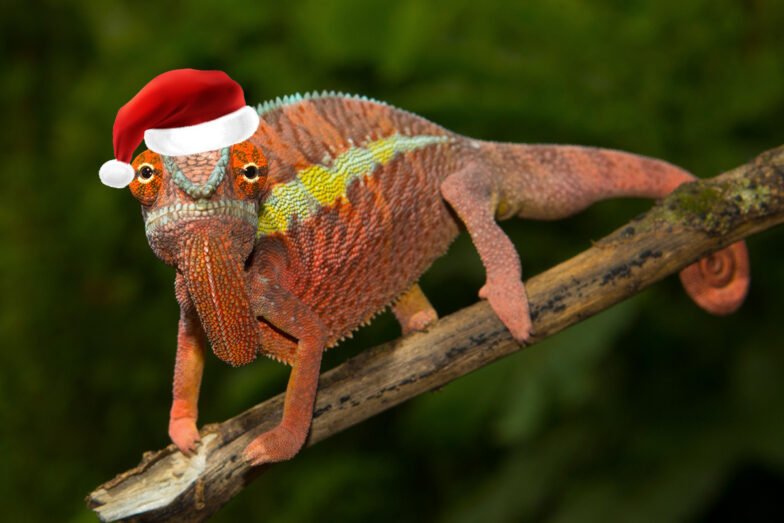
Just in time for the fourth Advent, we sent a little Chameleon thank-you on its way to Hamburg this weekend. For more than ten years, Ines Opifanti has made her private web space available for hosting the website of AG Chamäleons. And she also looked after the website on the side. Both are now in new hands. As this commitment cannot be taken for granted, we would like to thank Ines very much. Thank you for your time, effort, and work! We hope you will think back to the AG while enjoying a glass or two of gin ;)

Keeping and breeding Brookesia thieli

Keeping and breeding Brookesia thieli

Haltungsberichte

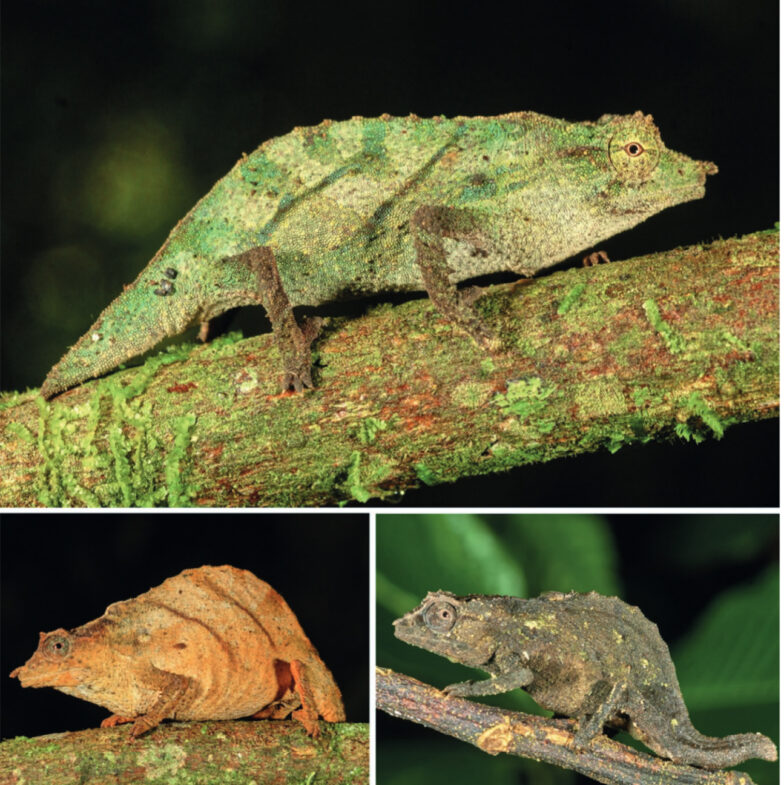
The breeding of leaf chameleons outside Madagascar has been successful since the 1990s. Nevertheless, there are only a few keepers who can prove breeding success in the long term or who have been dealing with individual leaf chameleon species for years. Michael Nash from the USA has now published a detailed husbandry and breeding report on Brookesia thieli.

He keeps his animals in the terrariums we commonly use with completely ventilated lids and either vent in the front bottom or the entire front as ventilation area, living plants, and bioactive substrate. T5 HO and halogen spotlights are used for lighting. The best breeding results were achieved by keeping two or three males together with four females. The author was able to make exciting observations on the defensive behaviour of males, where the animals not only open their mouths but actually protrude their mouth cavities. For food, the author uses Zelus renardii, a type of predatory beetle from North America, in addition to the usual small food such as micro crickets, bean beetles, and various flies. This is sold as a beneficial insect and is used, for example, in the Mediterranean region to control certain pests in olive plantations. In addition, Brookesia thieli particularly liked winged termites offered by the author, which might also be an interesting food animal that has hardly been used by chameleon keepers so far.

To trigger mating behaviour, dry and rainy seasons are imitated. The dry season is characterised above all by a massive night-time drop in temperature to 13°C and less irrigation. During the imitated rainy season, temperatures rise to around 26°C during the day and 19-21°C at night, and there is also increased irrigation during the day. Females lay 3-5 eggs after an average gestation of 30-60 days, with up to three clutches per female per season. The best incubation success was achieved at 21-23°C during the day and 19-20°C at night. The author notes that hatching rates increased after supplementing the diet with preformed vitamin A every two months.

Overall, this is a very readable husbandry report with many interesting details. Hopefully that the data will support keepers in the breeding and long-term conservation of this exciting leaf chameleon species.

Keeping and breeding Brookesia thieli
Michael Nash
Responsible Herpetoculture Journal 5, 2022
keine DOI vorhanden

Fossil finds of Chamaeleo chamaeleon in Morocco

Fossil finds of Chamaeleo chamaeleon in Morocco

Science

There have only been a few fossil finds of reptiles from Morocco so far, especially concerning Agama bibronii and Chamaeleo chamaeleon. Archaeologists from the National Institute of Archaeology and Cultural Heritage (Institut National des Sciences de l’Archéologie et du Patrimoine, INSAP) in Rabat, Morocco, have now published an overview of Moroccan finds.

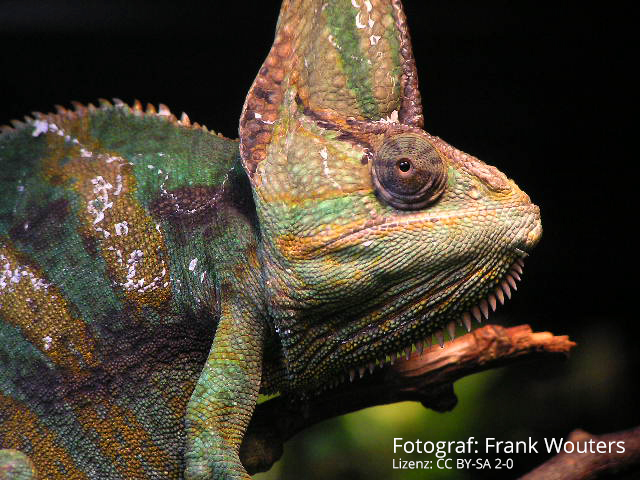
The rock cave of Ifri n’Ammar belongs to the Rif mountain range, which runs about 50 km away from the northeast coast of Morocco and is part of the Atlas Mountains. Ifri n’Ammar is located in a valley south of the town of Afso, on the border of two wadis. Since 1997, excavations have been led there by INSAP and the German Commission for Archaeology of Non-European Cultures (KAAK). Two Os prefrontale, two Os postorbitofrontale, three Os maxillare (upper jaw), six pieces of bone with acrodont teeth, and three vertebrae could be assigned to the family Chamaeleonidae so far. The distinction from fossil remains of agamas was quite clear: agamas have pleurodont teeth in the anterior region of the maxilla, whereas chameleons have only acrodont teeth. In addition, the shape and position of the nostrils differ. Agamas also do not have the bony tubercles and “crests” typical of chameleons. Since Chamaeleo chamaeleo is the only representative of the chameleons found in the Maghreb today, the fossils were attributed to this species.

The fossils were all found in a layer at a depth of three meters, which is assigned to the Middle Stone Age. The fossil remains are therefore between 83,000 and 171,000 years old, which is considerably older than the remains discovered so far for chameleons in Morocco (Tarofalt, Guenfouda) and Algeria (Gueldaman). The archaeologists assume that at that time the area around the site must have still been tree-covered.

It is partly questionable how the pieces of bone from Ifri n’Ammar arrived at the finding sites. Traces on some bones indicate digestion processes and thus that the associated chameleons were consumed as prey. So not all of the chameleons found there died a natural death. According to the traces, birds of prey and small carnivores such as the gundi (a North African rodent) or simply rats could be possible predators.

Agama bibronii (Sauria: Agamidae) et Chamaeleo chamaeleon (Sauria: Chamaeleonidae) d’Ifri n’Ammar (Rif oriental, Maroc)
Touria Moushine, Fethi Amani, Abdeslam Mikdad
Quaternaire 33 (03), 2022
DOI: 10.4000/quaternaire.16948

Parasite treatment in leaf chameleons

Parasite treatment in leaf chameleons

Tiermedizin

Last weekend, the autumn meeting of the AG Amphibien- und Reptilienkrankheiten (working group on amphibian and reptile diseases) took place. With over 500 members, the AG ARK is one of the strongest sub-groups of the DGHT and at the same time the largest association of veterinarians for amphibians and reptiles in Europe. Accordingly, the autumn meeting in Münster was fully booked as usual. Besides the main topic of the meeting, Asian turtles, one veterinarian presented a case report on parasite treatment in leaf chameleons.

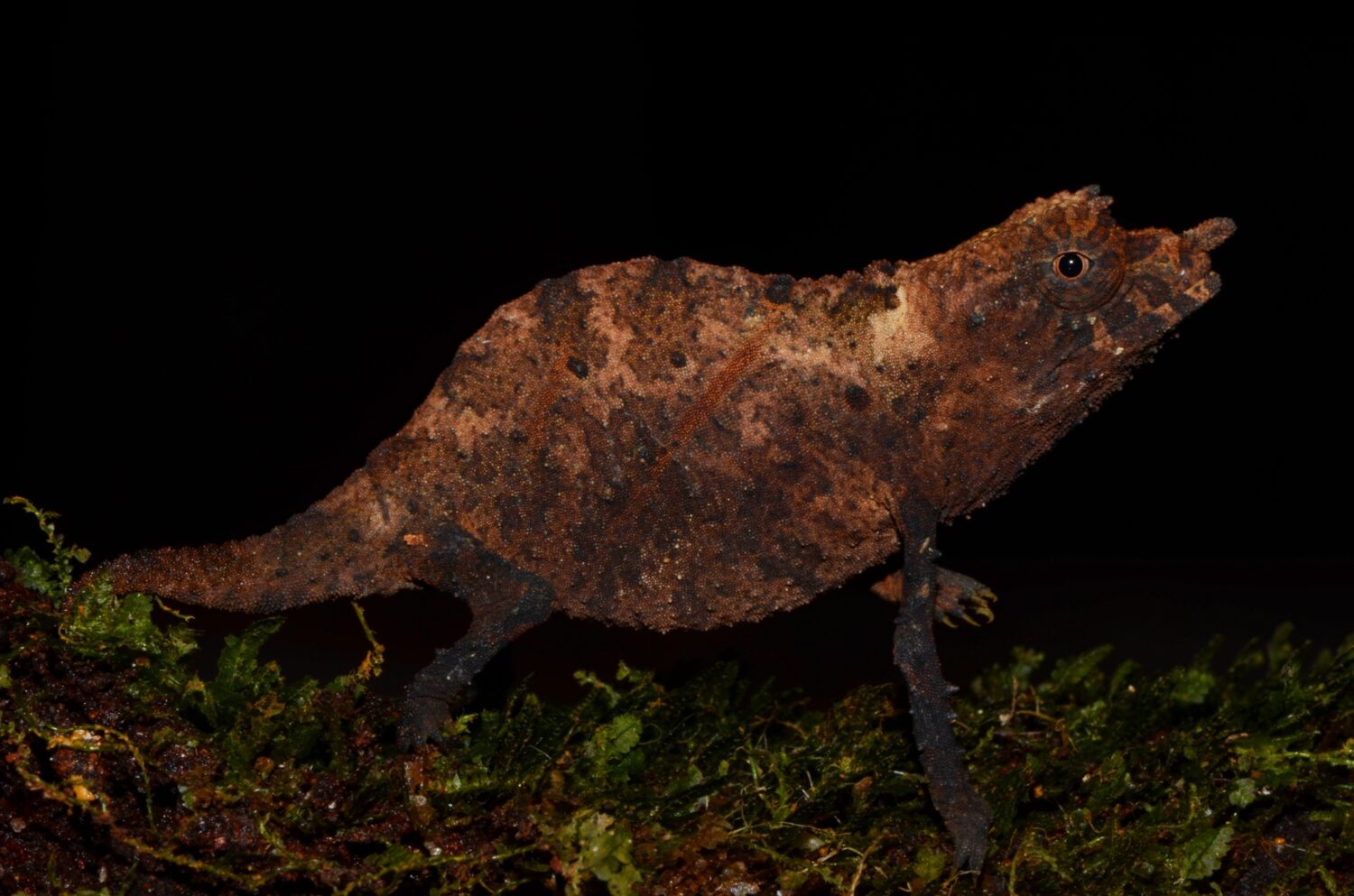
In this case, 7.5 subadult and adult Brookesia stumpffi (5 wild-caught, 7 German offspring from different husbandries) were acquired for a breeding project. Fecal examinations of all terrestrial chameleons were carried out. Masses of Choleoeimeria spp., presumably Choleoeimeria brookesiae, were found in flotation and native preparations of almost all terrestrial chameleons. In addition, there were isolated co-infections with Heterakis spp. and trematodes. Strongylid-like eggs with thin shells and larvae as well as adult nematodes were found in the feces of several animals. A treatment protocol with Baycox 50 mg/ml (Elanco Animal Health, Rathausplatz 12, 61352 Bad Homburg, Germany, active ingredient toltrazuril) on days 1, 7, and 14 and Panacur 10% (Intervet Germany, Feldstraße 1a, 85716 Unterschleissheim, Germany, active ingredient fenbendazole) on day 3 and 13 proved successful. The diluted solutions were given into the mouth with a 100 µl pipette. Fecal examinations at the beginning of quarantine and on days 14, 28, and 42 after treatment were suggested as a practical protocol for veterinarians.

The biggest problem during treatment was reinfection with coccidial oocysts from the environment. The leaf chameleons reinfected themselves, among other things, via left feeders and fecal remains on climbed gauze and living plants. Successful quarantine was finally achieved under the following parameters: individual keeping without visual contact in separate terrariums, daily exchange of kitchen paper on the floor and a freshly cut elder branch, use of new gloves for each chameleon, slow-moving food from bowls disinfected daily in boiling water, weekly disinfection with ready-to-use Interkokask® (Albert Kerbl GmbH, Felizenzell 9, 84428 Buchbach, active ingredient chlorocresol). Extremely strict compliance with all cleaning and disinfection measures was necessary.

Parasite treatment in leaf chameleons (Brookesia stumpffi)
Dr. Alexandra Laube
Proceedings of the 57th Workshop of the WG Amphibian and Reptile Diseases, Focus: Asian Turtles
Münster, 04 – 06 November 2022

Chamaeleo gracilis in Taï National Park (Côte d’Ivoire)

Chamaeleo gracilis in Taï National Park (Côte d’Ivoire)

Science

Little is known about chameleons in the Republic of Côte d’Ivoire. Ivorian biologists have now confirmed the presence of various reptile species in one of the country’s national parks. For the first time, they have found Chamaeleo gracilis in Taï National Park, which matches its known range in West Africa.

Taï National Park is located in the southwest of Côte d’Ivoire in western Africa. The climate changes four times a year. From March to June there is a rainy season, in August it is dry, followed by a second rainy season in September and October and a second dry season from November to March. 40 areas, each 50 x 50 m in size, were surveyed. Of these, 18 were in primary forest (rainforest), seven in secondary vegetation with more shrubby growth, five in coffee or cocoa plantations, five in rubber tree plantations and five in rice fields. On each of 40 days, three researchers were in the demarcated areas for more than eight hours and visually scanned the surroundings for reptiles.

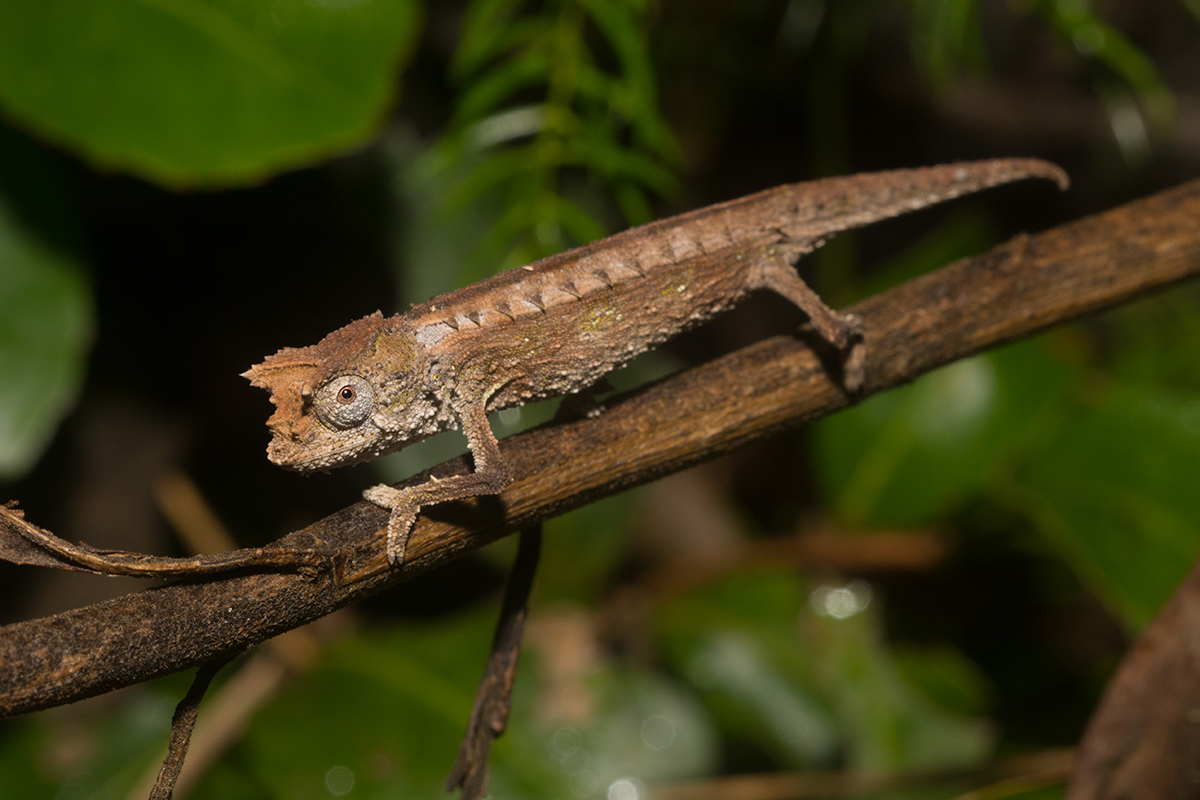
Chamaeleo gracilis was the only reptile observed exclusively in the rainforest. As is often the case with chameleons, a female was discovered laying eggs on the ground. The species was not found in secondary vegetation or agricultural landscapes.

First record of seven species of lizards in Taï National Park (South West, Côte d’Ivoire)
Kouadio Atta Léonard, Assemian N’guessan Emmanuel, Goly N’guessan Simplice, Keita Gaoussou, Tiédoué Manouhin Roland
International Journal of Zoological and Entomological Letters 2022, 2(2): 36-41
DOI: not available

Chamaeleo dilepis in traditional south african medicine

Chamaeleo dilepis in traditional south african medicine

Science

Researchers from North-West University in South Africa have investigated which reptiles are used by traditional healers and how much they actually know about the species used. They visited six medical shops and markets (muthi shops/markets) in Polokwane, Pretoria, Johannesburg, Pietermaritzburg and Durban. Twelve traditional healers were also visited, two each in Limpopo and Gautend and seven in KwaZulu-Natal. Healers who agreed to be interviewed were asked about the species and origin of reptiles they use. Samples were taken for genetic testing from 111 carcasses and tissue remains (some only bones with meat remains) offered for sale.

Of the 34 reptile species known so far from the literature to have been traditionally used in South African medicine, nine could be confirmed. The healers reported that they partly hunted the reptiles themselves and partly bought them from specialised hunters. To the astonishment of the researchers, reptiles killed in road traffic (“roadkills”) were also used by healers. For sale and use, the reptiles were preserved. Fat and internal organs were removed manually. The fat was kept in bottles as it could be sold individually. The organs were not used further. The carcasses of the reptiles were then rubbed with ash and salt and dried in the sun. All healers agreed that whole carcasses were rarely sold – usually customers only wanted to purchase certain body parts, as only these were known for their effects.

The flap-necked chameleon was already known to be an occasional species at traditional South African healer markets. Several Chamaeleo dilepis were also identified in this study, but they were only marketed with an umbrella term in isiZulu. Unwabu refers to any species of chameleon, not specifically Chamaeleo dilepis. For other reptile species, some of the healers’ names matched the identified species down to the species level. However, there were also quite a few misidentified specimens where completely different reptiles were identified by the healers than turned out to be the case in the genetics.

Barcoding and traditional health practitioner perspectives are informative to monitor and conserve frogs and reptiles traded for traditional medicine in urban South Africa
Fortunate Phaka, Edward Netherlands, Maarten van Steenberge, Erik Verheyen, Gontran Sonet, Jean Hugé, Louis du Preez, Maarten Vanhove
Molecular Ecology Resources [Preprint], 2022
DOI: 10.22541/au.166487945.53921162/v1

Lecture in Frankfurt about Madagascar

Lecture in Frankfurt about Madagascar

Reiseberichte Live lectures

The spokeswoman of the AG Chamäleons will be giving a visually stunning talk about not only, but also a great many chameleons on 21 October 2022 in Frankfurt am Main. Madagascar, located in the Indian Ocean a good 400 km east of mainland Africa, is known for its extremely high biodiversity. But the wild west of Madagascar is one thing above all: hot and dry. Nothing can really survive there – can it? The end of the rainy season is the best time to go herping in Madagascar: time to go where the pepper grows and see what the dry wild west is all about. A herpetological adventure!

The journey leads from the capital Antananarivo through the highlands to Ankarafantsika National Park, which, contrary to popular belief, has more to offer than just birds. Then it continues to the west coast town of Mahajanga on the Bay of Bombetoka. The opposite headland of Katsepy revealed one of its greatest secrets only two years ago with a chameleon thought to be extinct. Morondava, further south by the sea, is home to the famous Baobab Avenue. Not far from there is the Kirindy forest, where probably no animal is quite normal: a cathameral predator with clitoris bones, the world’s smallest mouse maki, a kangaroo rat, the shortest-lived chameleon on earth and a turtle called Kapidolo are just some of Kirindy’s strange inhabitants. From there, the journey continues off-road in the sand to the south, past the baobab forests of Andavadoaka to the beaches of Ifaty. In two spiny forests north and south of Toliara, day geckos, even more turtles and snakes can be found.

Dr Alexandra Laube The Wild West of Madagascar
DGHT City Group Frankfurt am Main
Zoo School of Frankfurt Zoo
Bernhard-Grzimek-Allee 1
60316 Frankfurt am Main
Admission is from 6.30 p.m., lecture begins at 7 p.m.

Photo: Furcifer voeltzkowi in Katsepy, photographed by Dr Alexandra Laube

Species diversification in chameleons

Species diversification in chameleons

Science

From earlier studies, we know that the first chameleons evolved in the late Cretaceous, about 90 million years ago, on mainland of Africa. Around the border between the Cretaceous and Tertiary periods, about 65 million years ago, different species began to evolve. It is still unclear today which factors contributed to the diversity of species. Two researchers from Swansea University in Wales have now used various computational models of phylogenetics to investigate what might have influenced diversification (the splitting of chameleons into many different species).

First, they studied the diversification of chameleon species in Madagascar. In terms of evolutionary history, there are two points in time when chameleons apparently spread across the sea from mainland Africa to Madagascar. One is about 65 million years in the past, the other 45 million years. You could now think that the climatically extremely different habitats in Madagascar could have driven the evolution of the species very quickly after the spread across the sea. To the surprise of the researchers, however, no evidence of this was found. The species richness of chameleons on Madagascar must therefore come from the fact that chameleons spread there very early and thus simply had much more time to develop into different species than elsewhere.

Furthermore, the researchers investigated whether switching between two ecomorphs – from ground-dwelling stub-tailed chameleons to tree-dwelling chameleons with longer tails – had an impact on species diversity. Rather surprisingly, this did not seem to be the case. The evolution to tree-dwellers with longer tails occurred relatively early on one or two occasions. No evidence could be found that different ecomorphs accelerated diversification. Instead, speciation rates were found to slow down progressively over the last 60 million years. Only a very early dispersal event of the genus Bradypodion in South Africa around 10 million years ago was accompanied by a two- to fourfold diversification rate.

As a third focus of the study, the researchers examined the genus Bradypodion. During the climate change in the Miocene around 10 million years ago, South Africa changed a lot. Forests disappeared, leaving behind isolated forest habitats and, in between, savannahs, some of which are now so-called hot spots of biodiversity. Two of them, the Cape Floristic Region at the southwestern tip of South Africa and Maputuland-Pondoland-Albany on the east coast of South Africa, are home to a particularly large number of Bradypodion species. Each species is limited to a geographically very clearly defined area. The researchers, therefore, suspect that Bradypodion species have actually evolved faster under the influence of habitat change. It should be noted that the diversification rate of the genus Bradypodion is probably rather underestimated, as there are still many hidden species to be assumed.

Diversification dynamics of chameleons (Chamaeleonidae)
Stephen Giles, Kevin Arbuckle
Journal of Zoology, 2022
DOI: 10.1111/jzo.13019

Presentation in Münster about Uganda

Presentation in Münster about Uganda

Reiseberichte Live lectures

On Friday, 21 October 2022, Sönke Frahm will hold his presentation “Uganda – pearl of Africa” in Münster. He will report on a trip to the East African country of Uganda, which is framed by South Sudan, the Democratic Republic of Congo, Rwanda, Tanzania and Kenya. The journey starts in Entebbe on Lake Victoria and from there to the Mitjanja District in search of snakes of the species Bitis and Atheris. Sönke then takes the visitor on a safari to the unique Queen Elisabeth National Park and for chimpanzee trekking in Kibale National Park. Afterwards, a visit to the famous mountain gorillas in Bwindi National Park is scheduled. The trip concludes in a swamp area at Lake Victoria to look for the charismatic Abu Markub, the “father of the shoe”. Sönke met several species of chameleons on the way – there are thirteen different ones in Uganda – and of course, photographed them. So if you want to enjoy an evening with not only herpetological impressions, Münster is the place to be. The presentation is in German.

Sönke Frahm: Uganda – Perle Afrikas
DGHT Stadtgruppe Münster
Zooschule des Allwetterzoos
Sentruper Str. 315
48161 Münster
Admission is from 6.30 p.m., lecture begins at 7 p.m.