Invasive chameleons in subsaharan Africa

Invasive chameleons in subsaharan Africa

Verbreitung Science

A Polish biologist has recently assessed the number of introduced reptile and amphibian species in sub-Saharan Africa.

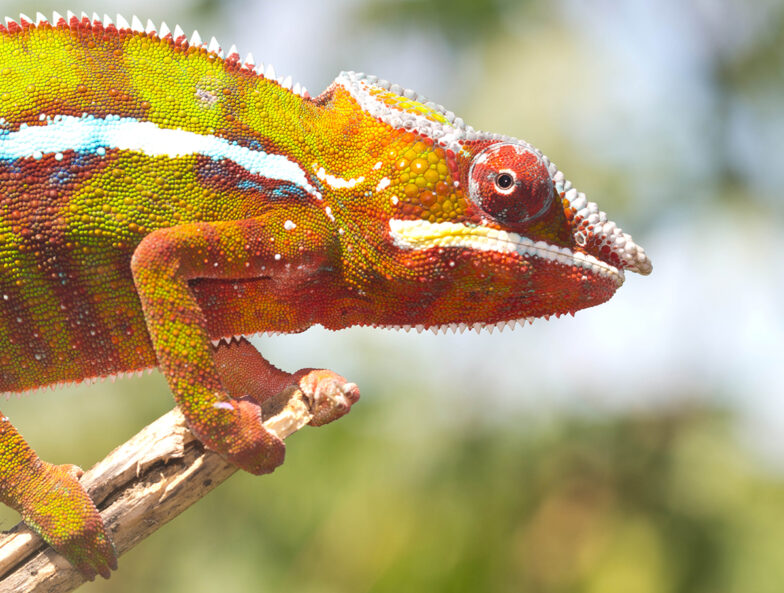
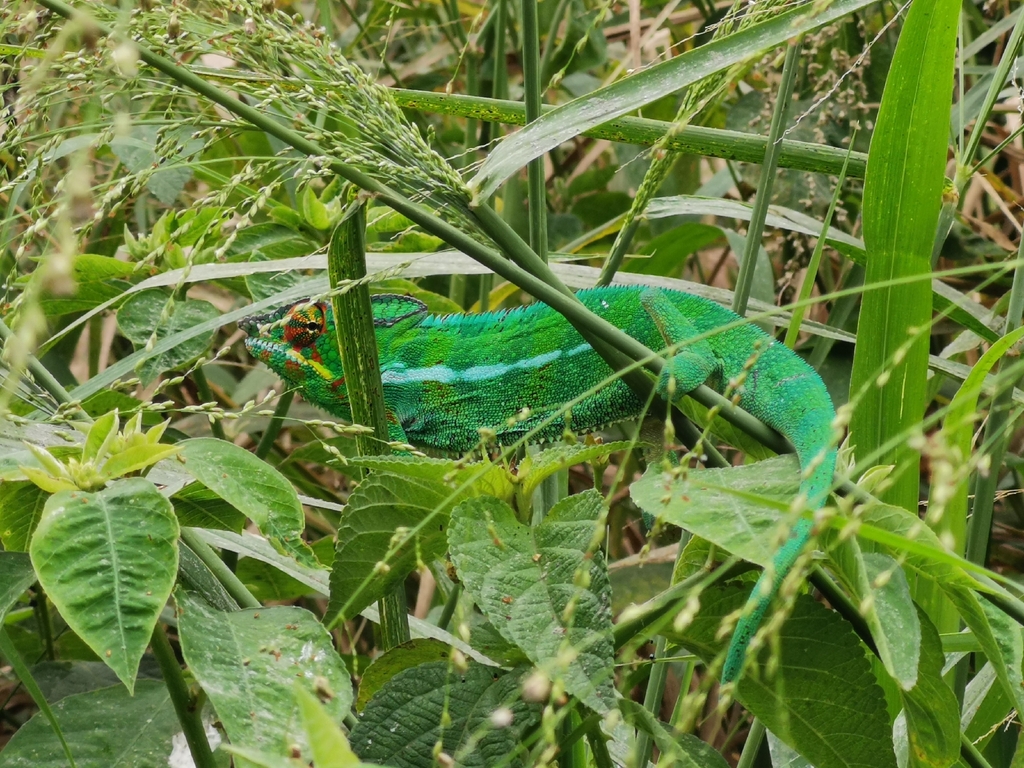
Among the species introduced into other countries are also a number of chameleons: the panther chameleon (Furcifer pardalis) was introduced to Réunion before 1830. It is still found on the island today. The Cape dwarf chameleon (Bradypodion pumilum) was released in Namibia in the 1990s and established small populations in Swakopmund, Walvis Bay, Lüderitz and Windhoek. However, all these populations are now extinct. The Parsons’ chameleon (Calumma parsonii parsonii) was introduced from Madagascar to Mauritius in the 1960s. However, this did not result in a viable population. The frilled chameleon (Chamaeleo dilepis) was introduced to the South African province of the Free State before 1978, but does not appear to have established a self-sustaining population there either. Finally, various species of dwarf chameleon (Bradypodion ssp.) were introduced to the Free State province in South Africa in 1939. They, too, failed to establish a permanent population.

Overall, lizards have been introduced into non-native countries in sub-Saharan Africa more than any other group (23 species), followed closely by amphibians (21 species) and snakes (14 species). Most introduced species are observed in South Africa, but also in Madagascar, the Mascarene Islands and surrounding islands. It is unclear whether introduced species are observed less frequently in African countries further north, or whether they are actually less prevalent there. Two-thirds of the introduced species that managed to establish their own populations originated from other regions of Africa or the surrounding islands, as well as the Middle East. The situation is quite different for species that were unable to reproduce after being introduced.

The earliest cases of species introduction in sub-Saharan Africa date back to the 17th century, including the four-clawed gecko (Gehyra mutilata) and the Mascarene frog (Ptychadena mascareniensis). With the advent of colonialism, the number of introduced species rose sharply. A further peak occurred from around the year 2000 onwards, coinciding with an increase in international trade.

There are many reasons why animals are transported unintentionally, but in most cases it happens by accident. Geckos and frogs, in particular, are frequently transported as stowaways in fruit shipments, in shipping containers, or in tourists’ luggage. Less commonly, reptiles and amphibians are deliberately released, as in the case of the Cape dwarf gecko (Lygodactylus capensis), which was released at a nursery. The release of reptiles and amphibians kept as pets does not usually lead to the establishment of breeding populations. Two cases of deliberate release for the purpose of biological control of other animal species are known, as are three deliberate releases for no apparent reason. The release of reptiles and amphibians kept as pets does not usually lead to the establishment of breeding populations. Two cases of deliberate release for the purpose of biological control of other animal species are known, as are three deliberate releases for no apparent reason.

The main potential problems posed by introduced species are the displacement of other native species, but also predation on native species. Hybridisation with native species occurs very rarely. The spread of diseases, such as parasitic infections, is a common problem. None of these problems have been reported in relation to introduced chameleons to date; however, there are very few studies on the subject in many places.

Herping the African Continent: Alien Amphibians and Reptiles in Sub-Saharan Africa
Grzegorz Kopij
Biology 2026, 15: 639
DOI: 10.3390/biology15080639
Free article download

Photo: A Furcifer pardalis on Réunion, photographed by Jason Berger, CC BY 4.0
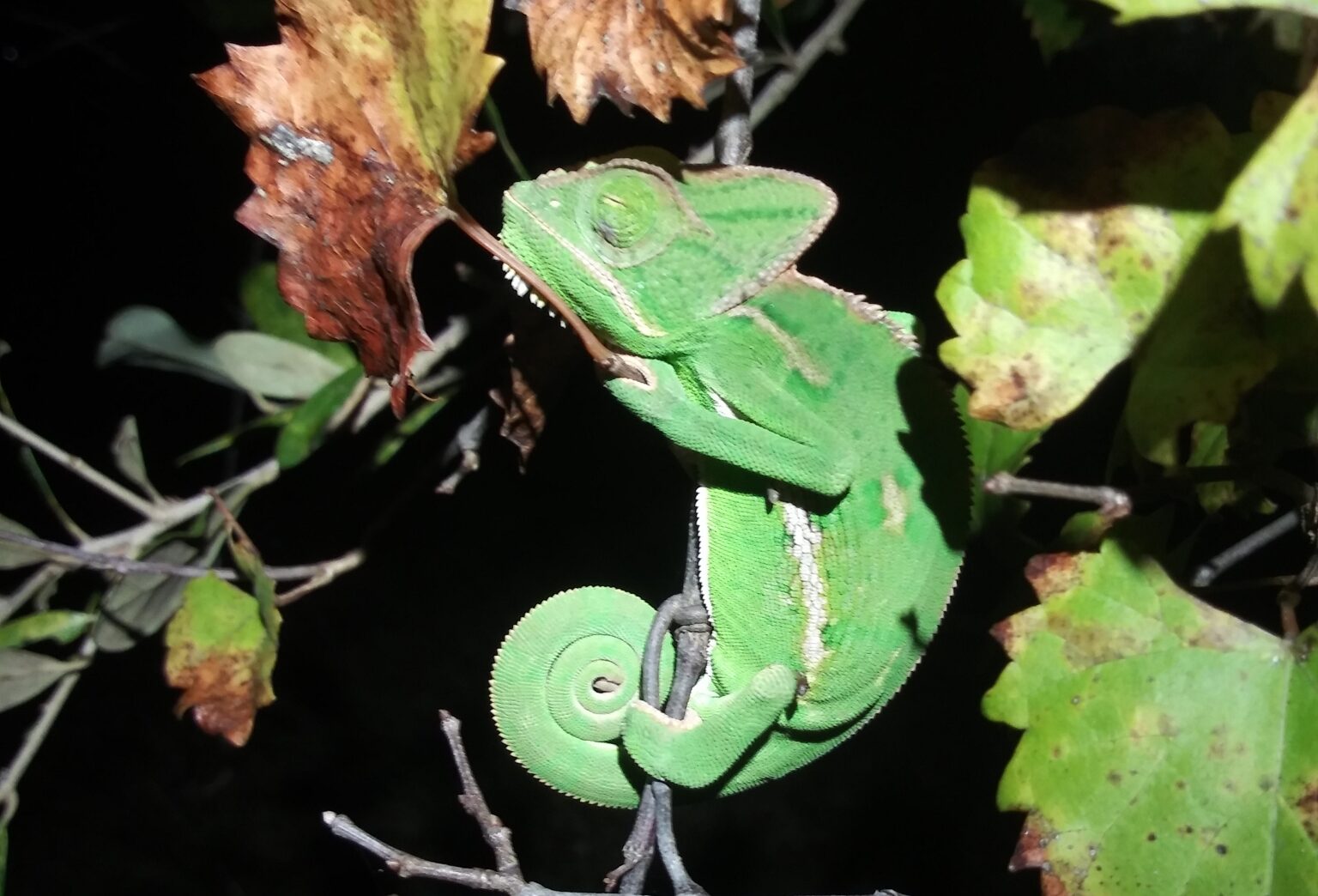
Veiled chameleon distributed over 12 new counties in Florida (USA)

Veiled chameleon distributed over 12 new counties in Florida (USA)

Verbreitung Science

Introduced Veiled chameleons (Chamaeleo calyptratus) have been living in Florida (USA) since at least 2002. The first wild Veiled chameleons were found in Collier County, two years later animals were observed in Fort Myers in Lee County. This was followed by findings in Hendry, Miamia-Dade, Broward, St. Lucie, Palm Beach, Monroe, Alachua and Hillsborough County. Now an author in the Herpetological Review reports on 12 further populations in Florida: in Brevard, Charlotte, De Soto, Glades, Indian River, Lake, Manatee, Osceola, Pinellas, Polk, Sarasota and Seminole County.

He used data from iNaturalist and EDDMapS. The author suspects that most of the new finds could be due to so-called chameleon ranching. Chameleons are deliberately released into other habitats in order to later collect and sell the resulting juveniles. But even without prior release, collecting (‘harvesting’) animals for sale has become a source of income in Florida, which has also led to the fact that distribution data on new populations is rarely published. It is now a common recreational activity in Florida to search for Veiled chameleons at night. There are even commercial operators offering guided tours.

One problem is increasingly the owners of private property who feel disturbed by ‘chameleon tourism’. The impact on native wildlife in the USA is still unclear. Theoretically, Veiled chameleons could eat smaller mammals or young birds, but there have been no reports of such incidents in Florida to date.

It seems increasingly unlikely that it will be possible to get rid of the introduced Veiled chameleons. A one-year trial in Lake Worth Beach (Palm Beach) resulted in 1043 chameleons being caught during 71 collection campaigns, but not in the elimination of the population living there.

New County Records for the Veiled Chameleon (Chamaeleo calyptratus) in Florida, USA
Kevin M. Enge
Herpetological Review 55 (2), 2025: 223-226.
DOI: not available

Photo: Chamaeleo calyptratus, found and photographed in Fort Myers (USA) by Andrew Durso, CC-BY

Concerning Florida’s introduced panther chameleons

Concerning Florida’s introduced panther chameleons

Verbreitung Science

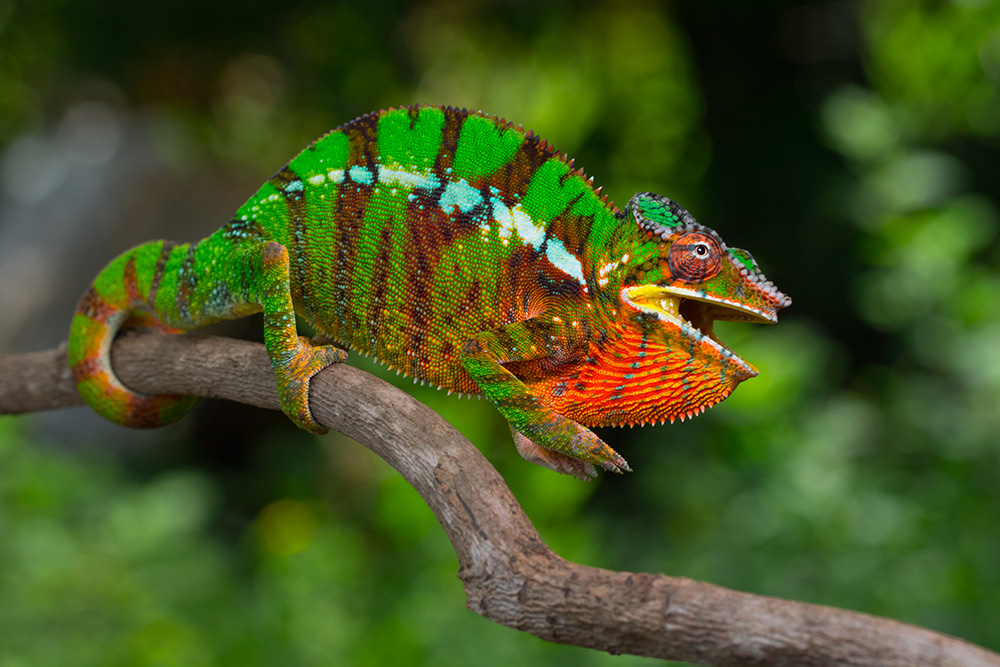
The “Sunshine State” Florida in the USA has the largest number of non-native species of reptiles in the world because of its warm climate. The panther chameleon (Furcifer pardalis) is one of the invasive species, i.e. those that do not actually belong in Florida but are now reproducing there. A study has now investigated the question of what the human inhabitants of Florida actually think of the chameleons.

It has been discussed for a long time whether panther chameleons belong to the species that were deliberately released for the purpose of “ranching”, i.e. to collect the offspring of the released chameleons for sale. That private individuals collect panther chameleons is not in dispute. According to the authors, ranching populations in Florida are mostly kept secret. They became aware of a small population in Orange County via social media in 2019. They then searched for the animals at night with torches and actually found 26 panther chameleons during several walks. They encountered private individuals on several occasions who were also looking for chameleons.

In 2020, questionnaires were distributed in person and via flyers with QR codes to 248 households located within the presumed 0.9 km² distribution area of the panther chameleon population. They were asked about concerns regarding the occurrence of panther chameleons, but also about existing knowledge about invasive species in general. The residents were also divided into three areas: A core region where chameleons had been observed several times, a peripheral region with few findings, and an outer region where no chameleons had been sighted at all.

44 households answered the questionnaire.  In fact, all 11 interviewed residents in the outer region had not sighted any chameleons. Of the 33 residents interviewed in the core and peripheral region, about a third said they had already observed panther chameleons. The same number had seen the light of torches at night. 86% of the residents surveyed knew that panther chameleons are not actually native to Florida. Only a few residents said they were concerned about the occurrence. Seven residents had approached collectors with torches and said the collectors had all said they were looking for chameleons for research purposes. Only one of the collectors had said he/she was looking for animals to sell, according to the residents. One resident reported an altercation after strangers entered his property several times looking for chameleons. Another resident called the police because of a whole group of collectors on the neighbouring property.

Unfortunately, the questionnaire was given out after the search efforts of the authors themselves, so it is not apparent from the responses how many of the encounters were indeed with people looking for chameleons for sale purposes. The publication is also a preprint, so no review process has taken place yet. Addendum: The paper was published in Human-Wildlife Interactions 2024 as a case report.

Colorful lizards and the conflict of collection
Colin M. Goodman, Natalie M. Claunch, Zachary T. Steele, Diane J. Episcopio-Sturgeon, Christina M. Romagosa
Preprint, 2023
DOI: 10.1101/2023.08.10.552819

Colorful lizards and the conflict of collection
Colin M. Goodman, Natalie M. Claunch, Zachary T. Steele, Diane J. Episcopio-Sturgeon, Christina M. Romagosa
Human-Wildlife Interactions 18(1), 2024

Picture: Alex Laube

Introduced chameleons in Florida

Introduced chameleons in Florida

Science

The “Sunshine State” Florida in the southeast of the USA has long been known for a variety of introduced reptiles. Students at the University of Florida recently published a small brochure on the current status of chameleon species introduced there.

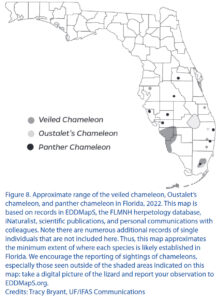
As early as the late 1800s, a non-native reptile was documented to have found its way to Florida by ship: an anole. Since then, some 150 introduced species have been documented in the US state, including eight species of chameleons. Three of them are now spread over the entire southern half of the peninsula and even reproduce: the Yemen chameleon Chamaeleo calyptratus, the Malagasy Giant chameleon Furcifer oustaleti, and the panther chameleon Furcifer pardalis.

Current known distribution of Panther, Veiled, and Malagasy Giant Chameleons in Florida.

All three species are thought to have come into the country with increasing pet trade and private keeping of chameleons. Furcifer oustaleti has been in Florida since at least the year 2000. At that time, the first findings became known in an avocado plantation located in the immediate vicinity of the buildings of a former importer in Miami – Dade County. Chamaeleo calyptratus was first recorded in Fort Myers on a vacant lot only a little later, in 2002. Furcifer pardalis followed in 2008.

The question of whether any of the three species mentioned should be considered invasive is difficult to answer so far due to a lack of data. A species is considered invasive if it is non-native, has been introduced by humans, and has been proven to cause damage to native flora and fauna. The last point, however, is debatable. While Jackson’s chameleons in Hawaii have been shown to consume endangered native snail species, among others, the same is not yet known from Florida. There, the animals are currently considered more of a nuisance, but with the potential to threaten the native invertebrate fauna.

The problem is that chameleons are still being released – sometimes they escape unintentionally, but sometimes they are deliberately released in order to collect and sell the offspring later. For the latter, you need a permit in Florida. Interesting to note: Anyone is allowed to kill introduced chameleons on their own property “in a humane way”. In some places, chameleons are already being collected to be sold to private owners.

The students call for observations of chameleons in Florida to be reported on the internet via IveGot1.org or via the app of the same name. So far, not all populations are known, as much information is only passed on by hand. Furthermore, they ask that chameleons that have become a nuisance should not be abandoned, but handed into the Exotic Pet Amnesty Program of the Florida Fish and Wildlife Conservation Commission. The surrender there is free of charge, and the EPAP is ultimately looking for new keepers for the animals.

Florida’s introduced reptiles: Veiled Chameleon (Chamaeleo calyptratus), Oustalet’s chameleon (Furcifer oustaleti), and panther chameleon (Furcifer pardalis)
Max Maddox, Karissa Beloyan, Natalie M. Claunch, Steve A. Johnson
Veröffentlichung des Wildlife Ecology and Conservation Department, Universität of Florida
DOI: 10.32473/edis-UW501-2022