Long-term study on sperm collection in chameleons

Long-term study on sperm collection in chameleons

Tiermedizin Science

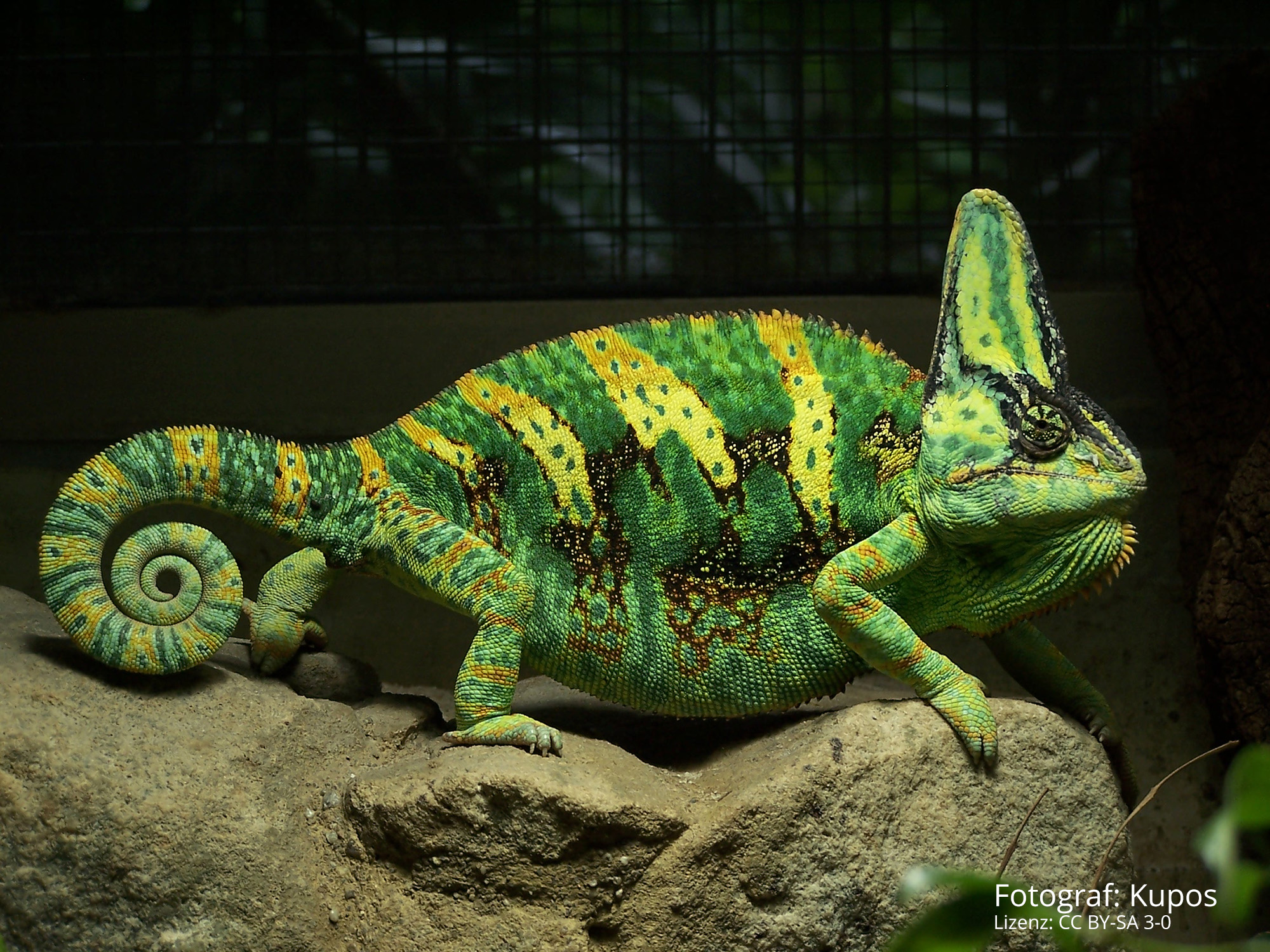
Assisted reproduction has become increasingly common in the conservation of extremely rare animals such as the Spix’s macaw or northern white rhinoceros in recent years. In reptiles, on the other hand, there have only been a few studies on assisted reproduction, and only a few on chameleons in particular. Scientists from the USA have now conducted a study on male Veiled and Panther Chameleons (Chamaeleo calyptratus and Furcifer pardalis).

At Louisiana State University, 16 males of each species were kept under standardised conditions for over a year. The panther chameleons were purchased from a US breeder, the Yemen chameleons from a dealer who had taken them from the introduced wild chameleon population in Florida. All males were kept individually in ZooMed screen cages, equipped with automatic sprinklers and artificial plants. Temperatures were around 28-29°C during the day with spots to seek higher values. 12 h UV-B irradiation per day was offered. They were fed with crickets and zophobas.

Before the start of the study, all 32 chameleons were clinically examined and parasites were treated. Only after a month of acclimatisation did the actual study begin. During the study year, all chameleons were put under anaesthesia twice a month. Each time, blood was taken from the ventral tail vein or the jugular vein to determine the testosterone concentration. Ultrasound was used to measure the size of the testicles. In addition, each time an attempt was made to obtain sperm by electroejaculation. Electroejaculation involved inserting a small metal probe into the cleaned cloaca. Each chameleon was then treated up to three times in succession with up to 15 electric shocks of 0.1/0.2/0.3 mAs. The semen collection experiments were stopped as soon as the animal ejaculated. The sperm collected was preserved and examined for ejaculate volume, presence of sperm, sperm motility, concentration, and morphology.

The results suggest that Veiled Chameleons follow a so-called prenuptial reproductive strategy under constant husbandry conditions. The testosterone concentration in the blood already increased before the sperm volume of the males had reached its maximum. The months of May, April, and June brought the best sperm volumes, the most sperm was produced by electroejaculations in the third attempt. Testicle sizes also varied throughout the year, with the largest measurements from August to December.

Panther chameleons, on the other hand, seem to follow a postnuptial reproductive strategy. In them, most sperm could only be obtained well after the highest point of testosterone concentration. The electroejaculations worked best in March, April, May and June. Much more often than in Yemen chameleons, electroejaculation in panther chameleons worked already in the first attempt. The size of the testicles also varied throughout the year, but most were largest in the months mentioned above. Together with the factors mentioned above, the volume of ejaculate, sperm concentration, sperm motility and sperm morphology also changed during the year.

The authors recommend that electroejaculation in chameleons should generally only be performed under anaesthesia. The success rate for spermatozoa in the two highest cases was 82 and 88%, which is similar to the success in other reptiles during their reproductive season. The mortality rate among the 32 animals was only 0.12% over the whole year. One panther chameleon died after 10 months during the 20th anaesthesia, after death kidney damage was detected. From the low mortality rate, the authors conclude that electroejaculation rather does not play a role in the development of kidney disease, as was suspected in other studies. However, an examination of the blood for kidney values was not carried out on any of the surviving chameleons after the study. It also remains unclear what role the lack of imitation of rainy and dry seasons during the year plays for both species and their reproductive cycle.

Characterizing the annual reproductive cycles of captive male veiled chameleons (Chamaeleo calyptratus) and panther chameleons (Furcifer pardalis)
Sean M. Perry, Sarah R. Camlic, Ian Konsker, Michael Lierz, Mark A. Mitchell
Journal of Herpetological Medicine and Surgery 33 (1), 2023, pp. 45-60
DOI: 10.5818/JHMS-D-22-00037
Presentation in Hamburg about Namibia

Presentation in Hamburg about Namibia

Reiseberichte Live lectures

The first chairman of the DGHT Landesverband Hamburg will give a lecture full of pictures about a journey to Namibia and western South Africa on 31 March 2023 in Hamburg. The travel goes from Cape Town to the Etosha National Park. Namibia, also called the “Land of Red Silence”, is one of the most fascinating and multifaceted countries on earth. Stops on Rüdiger’s journey included Namaqualand, which welcomed him in glorious blossom, several Namibian mountain ranges, the Namib around Swakopmund with a great reptile tour and a drive through the Welwitschia area, as well as the dune areas near Sossusvlei and the Fish River Canyon. Besides the large mammals of Etosha National Park, Rüdiger’s main focus on this breathtaking trip was, of course, the reptiles – and there were also a few chameleons to see. A firework for nature lovers!

Rüdiger Schlepper Namibia – In 22 days through the Southwest of Africa
DGHT Landesverband Hamburg
Vereinsgaststätte “Am Sportplatzring”
Sportplatzring 47
22527 Hamburg
Presentation starts at 8 pm

Photo: Flower carpet in Namaqualand, photographed by Rüdiger Schlepper

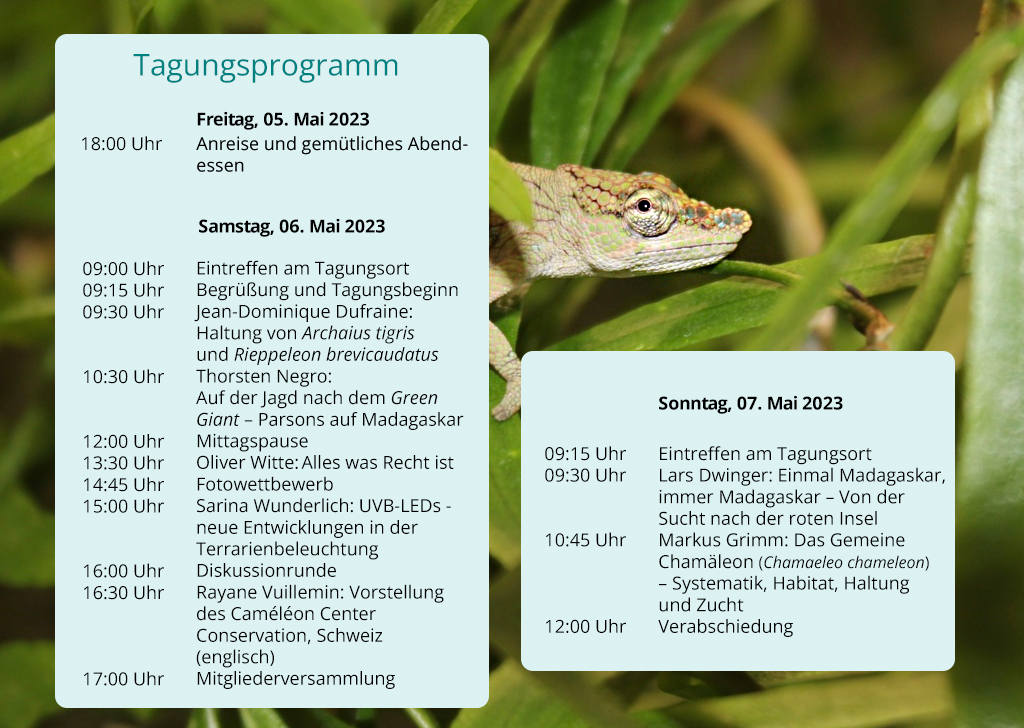
Our conference programme for May 2023

Our conference programme for May 2023

AG Interna

After we were able to publish a preview of the conference programme in December last year, we now have the final conference programme. This year’s conference will take place from 05 to 07 May 2023 in the tranquil town of Boppard am Rhein. As experience shows that the weekends in Boppard are booked up quickly, we recommend that you look for a hotel or guesthouse soon. Our programme has become a nice mixture of keeping reports, general terraristics and travel reports. Friday is the traditional day for arrival and a pleasant dinner in the local restaurants.

Saturday starts with a classic husbandry and breeding report. Jean-Dominique Dufraine has been keeping Rieppeleon brevicaudatus and Archaius tigris for several years. He talks about his experiences in breeding, but also in the everyday keeping of the two species. Afterwards, Thorsten Negro will take us on a search for Parson’s Chameleons in their natural habitat in Madagascar.

In the afternoon, Oliver Witte will give us an exciting insight into law, legislation and terrarium keeping – don’t worry, it won’t be as dry as it sounds, but very interesting for chameleon keepers. As a highlight, the physicist Sarina Wunderlich from www.lichtimterrarium.de has also agreed to join us. LEDs are becoming increasingly popular in terrarium keeping, not least because they can save a lot of electricity. Sarina will show us the advantages and risks of LEDs and discuss the latest development, UV LEDs. After these two presentations, we have planned plenty of time for discussion and questions, because there will certainly be plenty to talk about. At the end of Saturday, Rayana Vuillemain will introduce us to the Association Caméléon Centre Conservation (Switzerland) – this is the only presentation in English.

Sunday will be another colourful day: Lars Dwinger will report on a Madagascar trip to the southern highlands and the central east of the island. He travelled between carpet chameleons and rice fields as well as in the rainforest of Ranomafana, where he met a variety of small and large chameleons. Markus Grimm will conclude with an overview of Chamaeleo chamaeleon in its natural habitat in Europe as well as keeping and breeding them in terrariums.

We are very much looking forward to a nice meeting and many chameleon friends!

Chamaeleo namaquensis offspring in the AG

Chamaeleo namaquensis offspring in the AG

AG Interna Nachzuchten

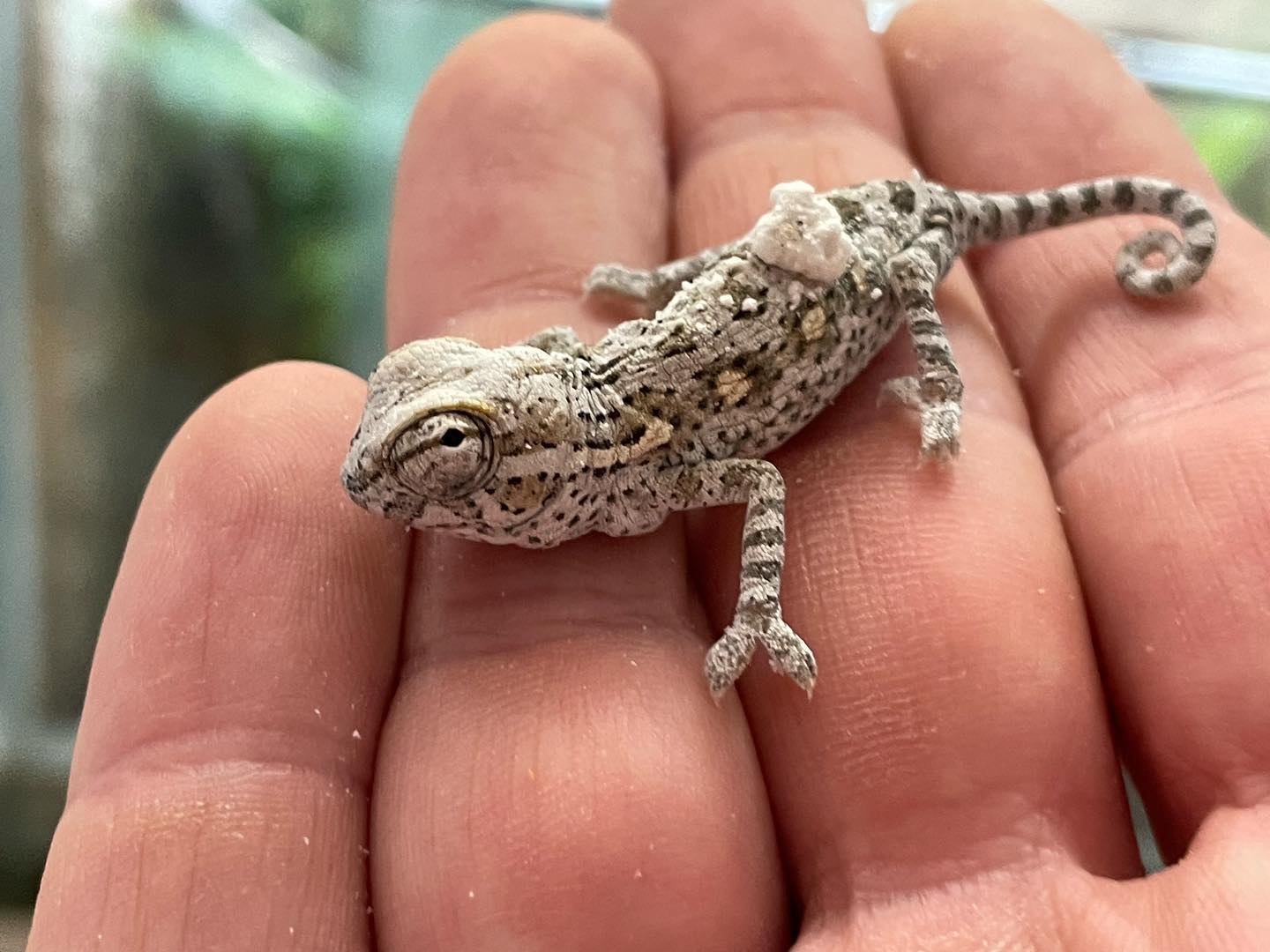
A great breeding success was achieved by AG-member and former AG-speaker Timo Weiß this week: His Chamaeleo namaquensis offspring hatched successfully. Congratulations!

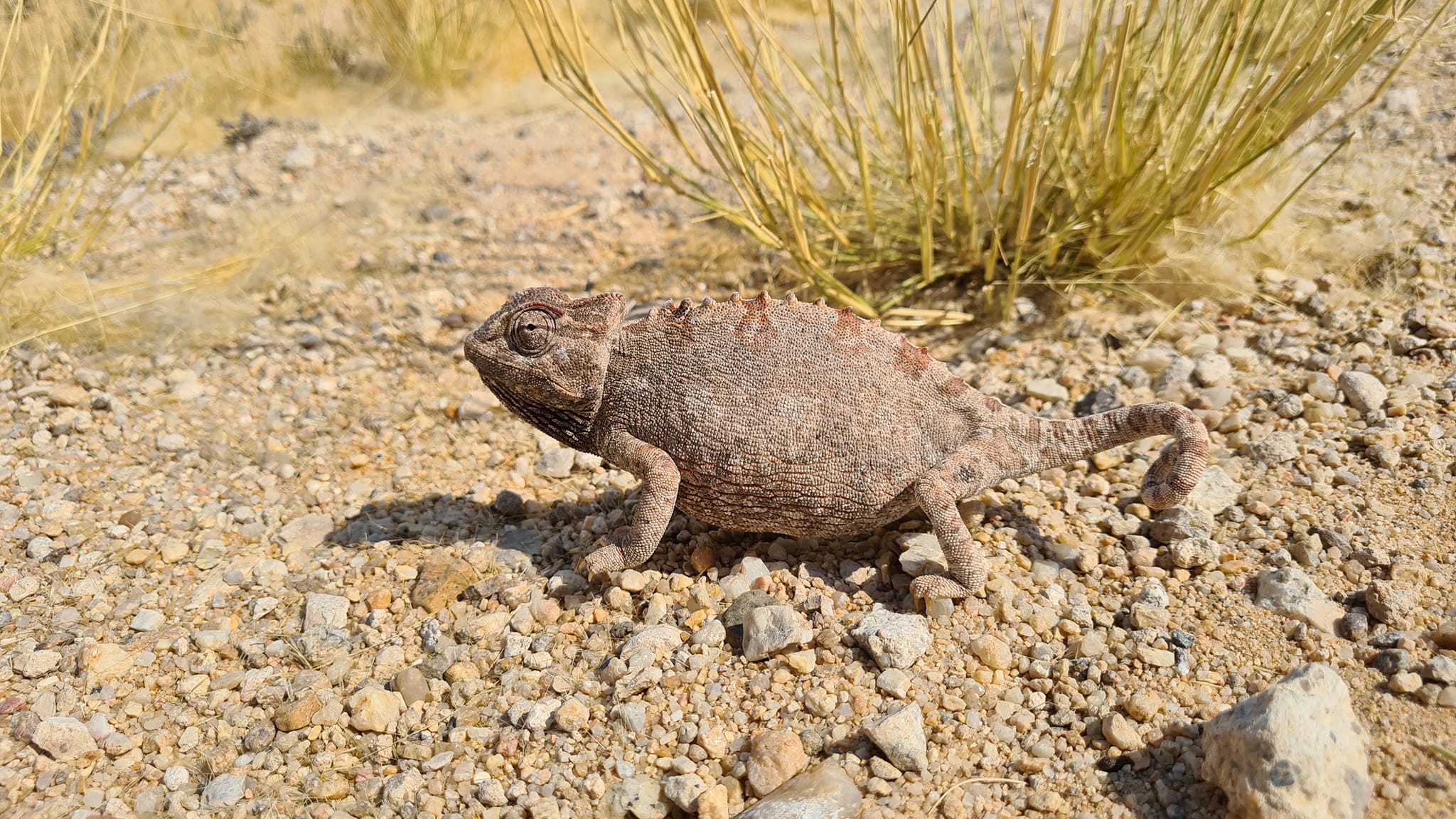
The Namaqua chameleon is one of the few existing chameleons that actually occur in real deserts. It lives in the wild in Namibia, South Africa and Angola on the African continent. Unlike many other chameleon species, it inhabits mainly the ground and low shrubs.

Photo: One-day-old juvenile on the hand of the successful keeper

Comparisons on limbs of Hadramaut agama and Veiled Chameleon

Comparisons on limbs of Hadramaut agama and Veiled Chameleon

Science

A Yemeni biologist at Al Saeed University recently took measurements on two different reptile species to compare their forelimbs and hindlimbs structurally and functionally. Both the Hadramaut Agama (Acantocercus adramitanus) and the Veiled Chameleon (Chamaeleo calyptratus) occur in the same habitats in Yemen, but they inhabit different microhabitats and move differently. While the agama lives mainly on the ground and in low bushes, the Veiled Chameleon is a pure tree dweller.

For the study, 10 specimens of each species were taken from the wild in Taiz. The head-torso length of the agamas ranged from 52 to 125 mm, and that of the chameleons from 90 to 200 mm. The animals were killed and the limbs were removed, stained, and then measured.

The structure of the limbs was basically the same in both species, but the hands and feet were clearly different. The Hadramaut Agama has five carpal bones, whereas, in the Veiled Chameleon, the distal carpal bones 2,3, and 4 are fused. Both species lack distal tarsal bones 2 and 5. The Veiled Chameleon lacks the sesamoid ossicles, which are variable in the agama. As expected, the long bones of the Veiled Chameleons were almost equally long on the forelimbs and hindlimbs, while in the agamas the forelimbs were significantly shorter than the hindlimbs. Overall, all long tubular bones were longer in the chameleon than in the Hadramaut Agama.

The skeletal characteristics of limb of two endemic lizard species (Acantocercus adramitanus and Chamaeleo calyptratus) in Yemen
Yaser H.A. Obady
Al-Saeed University Journal of Humanities and Applied Sciences 06 (1) 2023: pp. 188-210
DOI: 10.17161/randa.v30i1.18614

New distribution data on Chamaeleo zeylanicus

New distribution data on Chamaeleo zeylanicus

Verbreitung Science

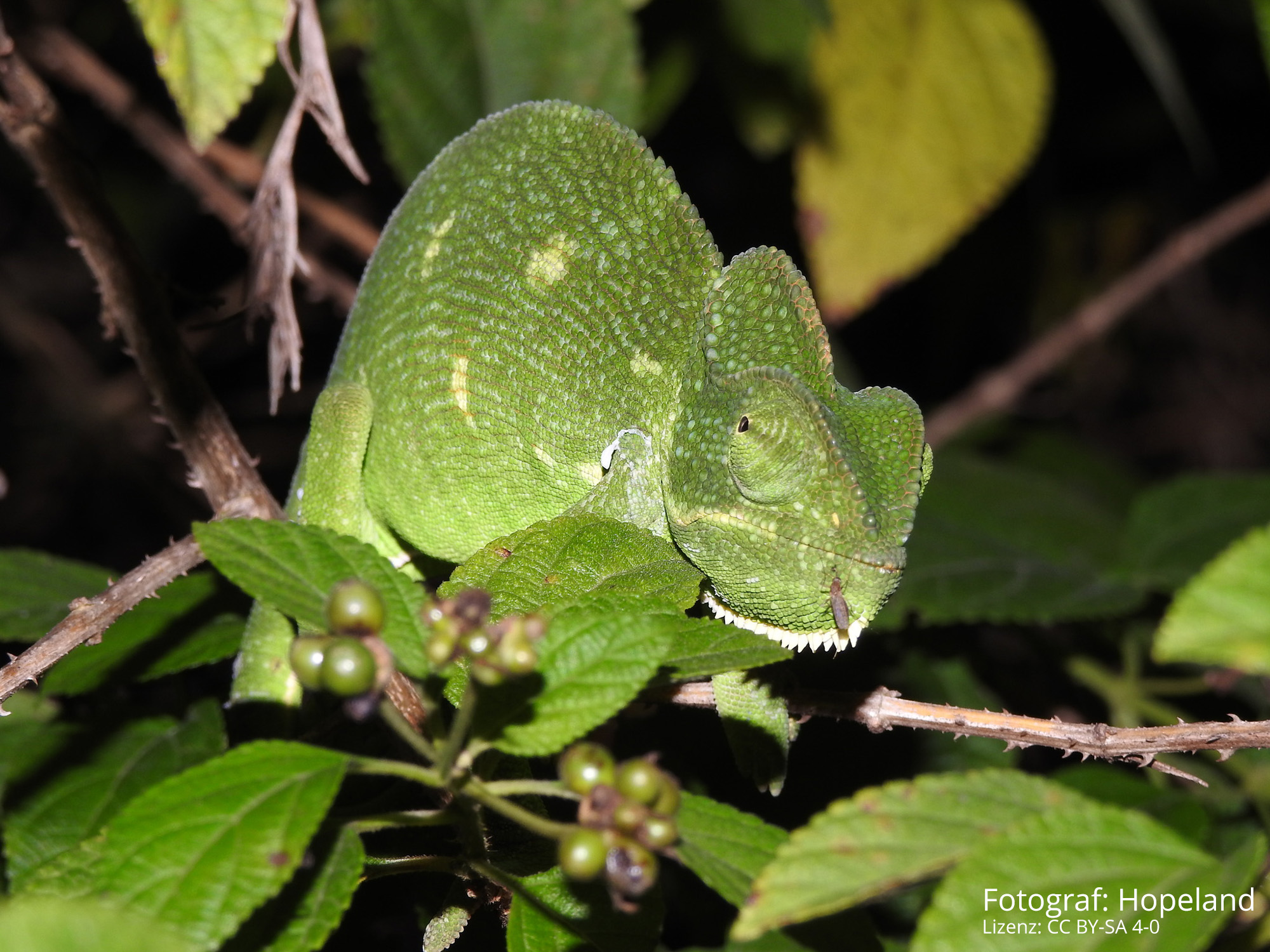
A biologist from India has published findings of the Indian Chameleon (Chamaeleo zeylanicus) that narrow down the distribution of the species more precisely. The Aravalli Mountains are located about 150 km west of the Indian capital New Delhi in northwest India. It runs for 670 km in a south-westerly direction, passing through three different states: Haryana, Rajasthan, and Gujarat. Until now, the Indian chameleon was thought to occur in the south and centre of Rajasthan, but was not common in the north, east, or west. So far, no findings had been documented from Haryana at all.

The biologist describes six observations of the Indian Chameleon between 2015 and 2022, during which Chamaeleo zeylanicus was seen four times in the Sariska Tiger Reserve and once each at Manesar and Damdama lakes, at altitudes between 223 and 476 m asl. The former is in northern Rajasthan, the two lakes not far from it in southern Haryana. The forest of the site in the Sariska Tiger Reserve is dominated by Indian lungwort (Adhatoda vasica), prairie mugwort (Parthenium integrifolium) and mesquite tree (Prosopis juliflora). The chameleons found in Haryana were found on roadsides with carira (Capparis decidua) and mesquite trees.

New distributional records of Asian Chameleons (Chamaeleo zeylanicus Laurenti 1768), from the Northern Aravali Hill range, India
Debaprasad Sengupta
Reptiles & Amphibians 30 (1), 2023: pp. 1-2
DOI: 10.17161/randa.v30i1.18614

Keeping and breeding Calumma linotum

Keeping and breeding Calumma linotum

Haltungsberichte

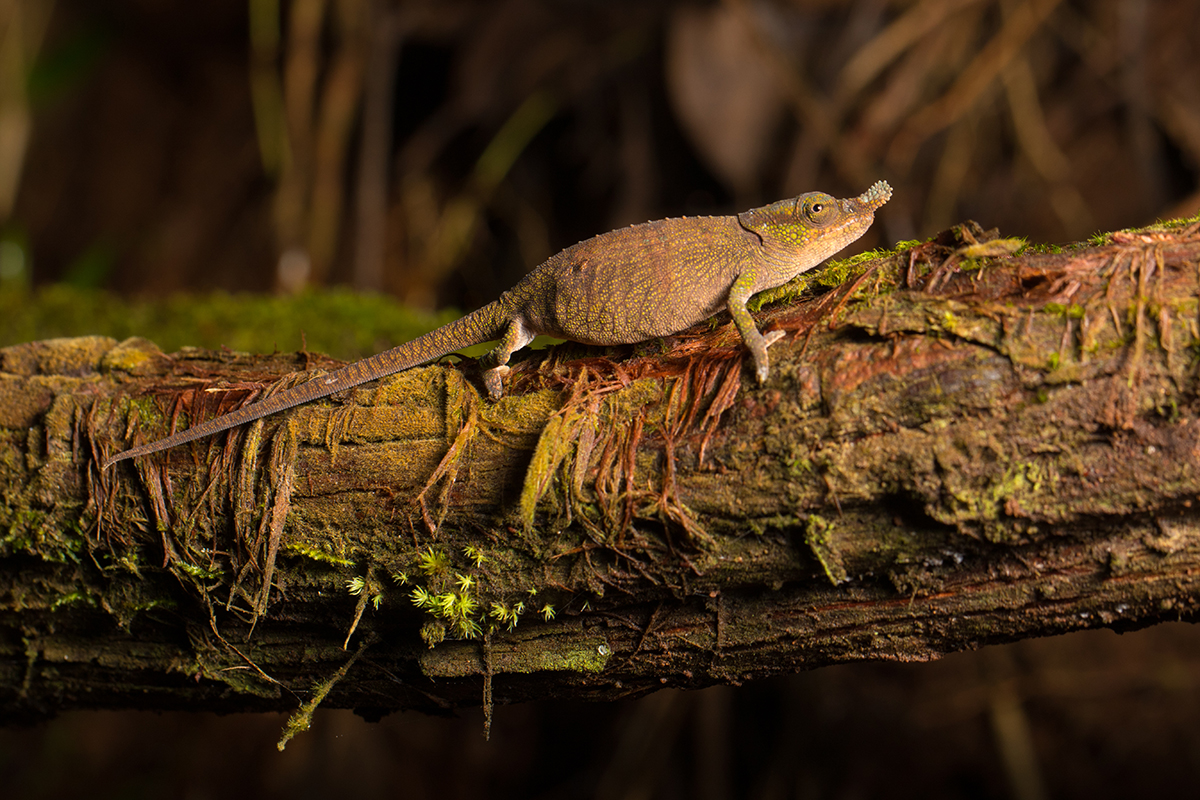
The keeping and breeding of small chameleons of the genus Calumma has so far, apparently, only found enthusiasts on a rather small scale. So it is all the nicer that a new report on the keeping and especially the successful breeding of Calumma linotum has just been published. Michael Nash from the USA has been keeping the species for over three years and gives a detailed account of his experiences.

He keeps his animals in the terrariums commonly used over here with a completely ventilated lid and either vents in the front bottom or the entire front as ventilation, living plants, and living substrate. T5 tubes with and without UV-B are used for lighting. For food he uses fruit flies (Drosophila spp.) to a good 50%, and otherwise among other things small crickets, house crickets, blowflies, and mantid nymphs.

The best breeding successes are achieved by keeping them individually and putting them together for a few days to mate during the imitation rainy season. To induce mating behaviour, dry and rainy seasons are imitated. The dry season is mainly characterised by a massive night-time drop in temperature to 10°C and less irrigation. During the imitated rainy season, temperatures rise to around 26°C during the day and 18-21°C at night, and there is also increased irrigation during the day.

The females lay 2-3 eggs after an average of 22 to 40 days of gestation. So far, it has been noticed that mated females of the species are capable of fertilisation for an unusually long time, namely up to five clutches. The eggs are first incubated at 16 to 21°C for two to four weeks. This is followed by a diapause of 30 to 45 days at 10 to 15°C. The eggs then lie in daytime conditions. Afterwards, the eggs lie at 22°C during the day and between 16.7 and 19.5°C at night. If the eggs do not show any embryonic and vascular development during shearing after the diapause, it is possible to imitate a second diapause – at the latest, after this, the first egg development should be visible. After 5 to 7 months, active young hatched under these incubation conditions. The author has successfully hatched eleven clutches so far.

All in all, a very readable husbandry report, which hopefully supports other keepers in breeding and long-term conservation of this interesting, small species in the terrarium.

Keeping and breeding Calumma linotum
Michael Nash
Responsible Herpetoculture Journal 7, 2023
keine DOI vorhanden

Unusual parasite discovered in Furcifer campani

Unusual parasite discovered in Furcifer campani

Tiermedizin Science

Physiologists, microbiologists and veterinarians from the USA recently described an unusual case of a parasite infestation in Furcifer campani. This is probably the new discovery of an as-yet-undescribed chameleon parasite.

In 2021, 11 Furcifer campani had been imported from Madagascar as wild-caught specimens and were kept privately. Two months after importation, unusual behaviour was noticed in one male and one female of the group. The two animals basked in the sun for unusually long periods of time, specifically seeking out temperatures of 29-30°C as well as places with enormously high UV indices compared to the other chameleons. Within the next three months, both Furcifer campani visibly lost weight, although the food supply was increased and a good food intake could be observed. At the same time, a lighter skin colouration was noticed. Faecal examinations by flotation were negative. Finally, both chameleons became lethargic, and closed their eyes during the day. A bloated abdomen and increased watery faeces were observed. Both Furcifer campani died.

Histological examination confirmed muscle atrophy and cachexia. Massive infiltration of the liver and gastrointestinal tract with large amounts of spores could be detected in both chameleons. The spores proved positive in Grocott’s methenamine-based silver stain and the PAS stain. Morphologically, the spores were classified as Dermocystidium-like. Investigations by PCR revealed a high similarity with Dermocystidium salmonis, but the exact pathogen could not be determined with certainty.

The genus Dermocystidum is a parasitic microorganism that is classified as a protist (it is neither a fungus nor an animal or plant). It is interesting that they have so far been known mainly from fish and amphibians, occasionally also from mammals. So far, not a single case of infestation with Dermocystidium has been described from reptiles. It could therefore be an undescribed, new species that is possibly even chameleon-specific. Effective therapy is not yet known.

A unique disease presentation associated with a mesomycetozoean-like organism in the jeweled chameleon (Furcifer campani)
Michael Nash, Emily A. McDermott, Ashley K. McGrew, Juan Muñoz, Dayna Willems
Journal of Herpetological Medicine and Surgery, February 2023
DOI: 10.5818/JHMS-D-22-00033