Lecture for vets on prophylaxis for chameleons

Lecture for vets on prophylaxis for chameleons

Tiermedizin Webinars

On 18 November 2023, the spokesperson of the AG Chameleons will give a lecture for veterinary colleagues on which prophylactic measures are possible and useful in veterinary practice. To a large extent, prophylaxis includes keeping the chameleons in the terrarium itself, so a large part of the lecture will deal with what needs to be considered when keeping chameleons and which common mistakes still lead to husbandry-related diseases or injuries in chameleons. She will also discuss the collection of the so-called minimum database during the annual check-up in the veterinary practice and show examples of diseases recognised early and late. A Q&A session directly after the respective presentations rounds off the short excursion into prophylaxis in chameleons.

Registration for the conference is also possible for non-DGHT members who are veterinarians – see the link below to the mVet conference platform.

Dr. Alexandra Laube Prophylaxis for chameleons – is it possible and if so, how?
59. Conference of DGHT working group amphibian and reptile diseases (AG ARK)
Online

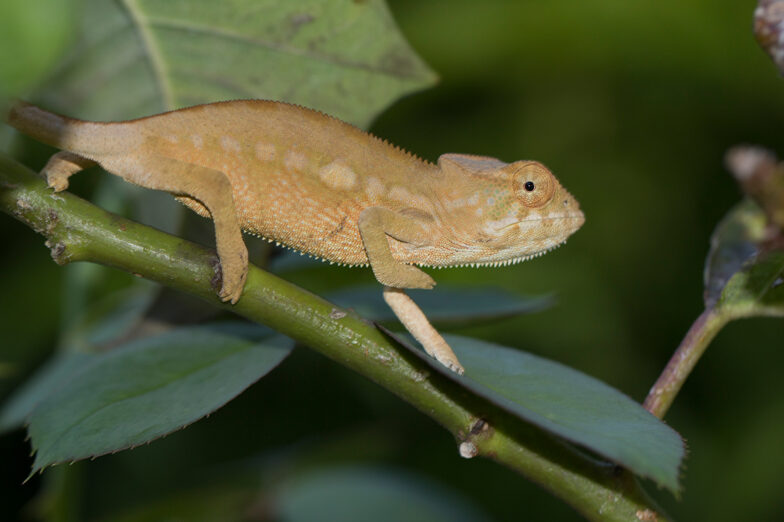
Photo: Calumma amber in the Montagne d’Ambre, Madagascar, photographed by A. Laube

Lecture in Ulm about Spain

Lecture in Ulm about Spain

Reiseberichte Live lectures

Heiko Werning, known as the editor of Reptilia and columnist for the taz, will be giving an illustrated lecture on 18 November 2023 in Neu-Ulm (Bavaria) about not only, but also chameleons in Spain.

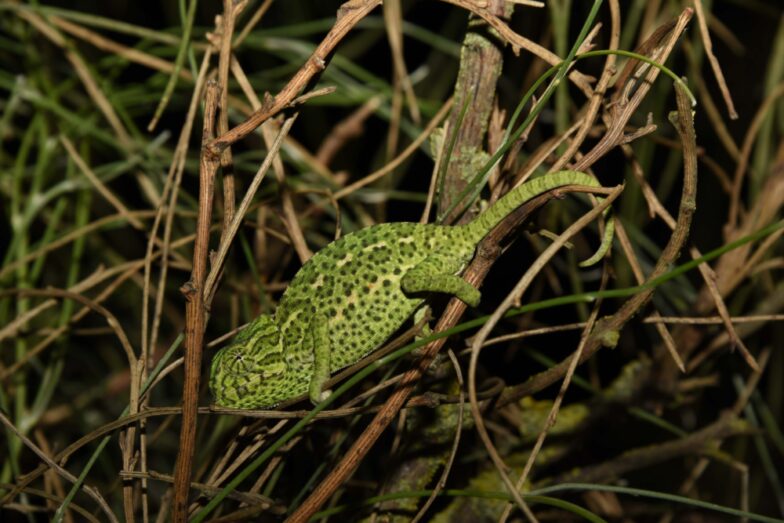
On an exciting journey across Spain, he will show how many reptiles and amphibians the European country has to offer. And the diversity is impressive! Heiko’s journey begins in the Basque Country and then leads through Galicia to northern Castile with its beautiful salamanders. In the central Spanish mountain ranges, the herpetologist encounters the quaint mountain lizards. A few hours’ drive west of Madrid, in Extremadura, Heiko finds himself among vultures in the truest sense of the word. And on the southern Spanish Atlantic coast, he finally encounters the European chameleon and its habitat. Finally, Heiko takes his viewers to south-east Spain, where he has found, among other things, Moorish tortoises and the European fringed finger in the only desert in Europe. All in all, a colourful firework display of images and entertaining anecdotes – every reptile lover should get their money’s worth here!

Heiko Werning The Spanish mainland – A destination (also) for herpetological gourmets
DGHT City Group Ulm
Il Mio Ristorante
Europastraße 15
89231 Neu-Ulm
Meeting from 6.30 pm

Histology of the chameleon liver

Histology of the chameleon liver

Tiermedizin Science

Histological examinations of organ tissue are part of every pathological examination in veterinary medicine. They are also frequently carried out in reptiles, but there are few studies on the histology of healthy organ tissue. An Arabic publication now deals with histological sections of chameleon livers.

Seven adult Yemen chameleons were captured in Abha City in the Aseer region and then killed with ether inhalation. The livers were placed in formalin and then poured into paraffin to make sections.

Morphologically, the liver was found to be a two-lobed, dark brown organ approximately 3.7 x 2 cm in size, which lies in the coelomic cavity in front of the stomach and surrounds the gall bladder. As in other animals, a capsule of connective tissue surrounds the liver.

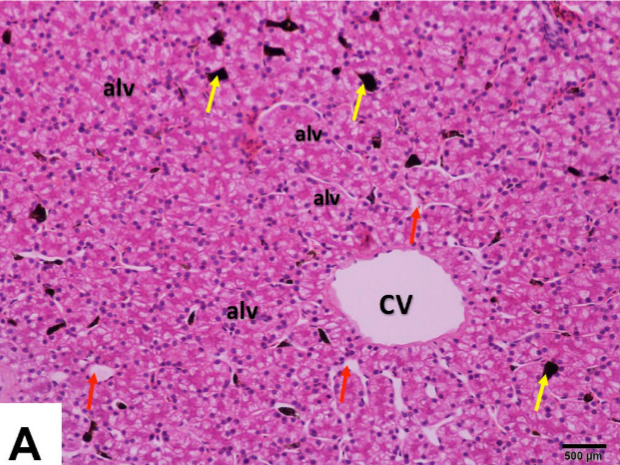
Histologically, the liver of Yemen chameleons resembles that of other vertebrates in many respects. The liver capsule consists of closely spaced collagenous fibres and smooth muscle fibres. Normally, trabecular connective tissue divides the liver itself into many small lobules, but such a structure does not appear to be present in Yemen chameleons. In contrast to mammals, the liver cells (hepatocytes) are not arranged radially around a vein, but rather irregularly in follicles or alveoli. The hepatocytes are surrounded by capillary blood vessels. So-called melanoma macrophages, which are not found in birds and mammals, can be seen in the blood vessels. The hepatocytes in the Yemen chameleon are polyhedral or pyramid-shaped and usually contain several large, round cell nuclei in the periphery. The nuclei contain conspicuously dark nucleoli. Occasionally nuclei are central. Under haematoxylin-eosin (HE) staining, the hepatocytes appear very eosinophilic. In the connective tissue, branches of the portal vein, hepatic artery, small bile ducts and lymphatic vessels could be visualised. Haematopoietic tissue was found in the area directly under the liver capsule.

In addition to the histological examination, several pieces of liver were also examined using transmission electron microscopy. Images of both examination methods can be found in the publication.

Histomorphological, histochemical and ultrastructural studies on the healthy liver of Yemen Veiled Chameleon (Chamaeleo calyptratus) in Southern Saudi Arabia
Amin A. Al-Doaiss, Mohammed A. Alshehri, Ali A. Shati, Mohammad Y. Alfaifi, Mohammed A. Al-Kahtani, Ahmed Ezzat Ahmed, Refaat A. Eid, Laila A. Al-Shuraym, Fahd A. Al-Mekhlafi, Mohammed Al Zahrani, Mohammed Mubarak
International Journal of Morphology 41(5), 2023: pp. 1513-1526.
DOI: none

Image: Histological section of the liver of a Yemen chameleon from the above-mentioned publication

Presentation in Bern about Samos (Greece)

Presentation in Bern about Samos (Greece)

Live lectures

Markus Grimm, long-time member of AG Chamäleons and entrusted for many years in Switzerland with conducting expert courses for chameleon keeping, will show a detailed lecture on the island of Samos (Greece) on 08 November 2023 in Bern (Switzerland).

The Greek island of Samos is located in the Eastern Aegean Sea and is only 1.2 km away from the Turkish mainland. It is precisely this geographical location that makes the island with its flora and fauna extremely diverse and exciting. A pinch of culture, integrated into the nature of the plants, with a bouquet of orchids, surrounded by countless animals such as birds, insects, spiders, scorpions, amphibians and reptiles make up the recipe for this lecture. Markus Grimm has been visiting the island of Samos for more than 25 years, always discovering something new. His first visit to Samos was to see the European Chameleon. But it didn’t stop there and so the fauna and flora of this unique island became a part of his life.

Markus Grimm Samos – Die griechische Natur hautnah
SIGS Sektion Bern
Restaurant Kreuz
Jegenstorf (Schweiz)
Vortragsbeginn 20.00 Uhr

Foto: Markus Grimm

Genome of South African dwarf chameleons decoded

Genome of South African dwarf chameleons decoded

Science

After a reference genome for the panther chameleon (Furcifer pardalis) was recently published for the first time in China, scientists from South Africa have now followed with the genome of two dwarf chameleon species.

For the analyses, a male Bradypodion pumilum from Cape Town and a male Bradypodion ventrale from an introduced population in Johannesburg were taken. Muscle and liver tissue was used for long sequencing (HiC). The genome size of Bradypodion pumilum is 2.43 gigabase pairs (Gb), that of Bradypodion ventrale 2.40 Gb. The BUSCO analysis demonstrated a high completeness with about 97% of all existing coding genes in vertebrates. Furthermore, the current publication confirms the six macrochromosomes already found from the karyotype in Bradypodion thamnobates 2017. Various comparisons with Anolis sagrei were made. It remains open which chromosomes in Bradypodion are sex chromosomes.

The genomes can be viewed in the NCBI BioProject under the number PRJNA9861319 and under the BioSample numbers SAMN35825189 and SAMN35825190 respectively.

De novo whole genome assemblies for two Southern African Dwarf Chameleons (Bradypodion, Chamaeleonidae)
Jody M. Taft, Krystal A. Tolley, Graham J. Alexander, Anthony J. Geneva
Genome Biology and Evolution 15 (10), 2023, pp. 1-8
DOI: 10.1093/gbe/evad182

Presentation in Mönchengladbach about South Africa

Presentation in Mönchengladbach about South Africa

Reiseberichte Live lectures

On Friday, 3 November 2023, Reinhard Münzer will give a lecture on a trip to South Africa that is not just about herpetology. The country, which is 3.4 times the size of Germany and has a diverse natural environment, offers the best conditions for exciting and varied discoveries. The lecture will not only show reptiles, but of course also the Big Five.

Reinhard Münzer Travel impressions South Africa
DGHT regional group Mönchengladbach/Krefeld
Vereinsheim SC 08 Schiefbahn
Siedlerallee 27
47877 Willich-Schiefbahn
Meeting from 7.30 pm, presentation starts at 8.00 pm

Picture: Reinhard Münzer

Presentation in Basel about the European Chameleon

Presentation in Basel about the European Chameleon

Haltungsberichte Live lectures

Markus Grimm, long-time member of the AG Chameleons and for many years entrusted in Switzerland with the implementation of expert courses for chameleon keeping, will give a detailed lecture on the European chameleon on 01 November 2023 in Basel (Switzerland).

The European chameleon (Chamaeleo chamaeleon) describes the archetype of the chameleon as such and thus has status character for the human conception of chameleons. The rather seldom kept chameleon species makes some demands on keeping and breeding, which Markus was able to fathom during trips to the habitat as well as during keeping in the terrarium. After a short introduction, which includes systematics, Markus gives insights into the habitat of this chameleon in nature. In addition, the audience will learn the most important parameters for successful keeping and breeding in the terrarium. So it will definitely be very exciting – anyone interested in chameleons should definitely watch this lecture!

Markus Grimm The European Chameleon – Habitat, husbandry and breeding
The presentation will be held in German language!
DGHT City group Basel
Restaurant Schiff
4102 Binningen (Schweiz)
Presentation starts at 8 p.m.

Picture: Markus Grimm

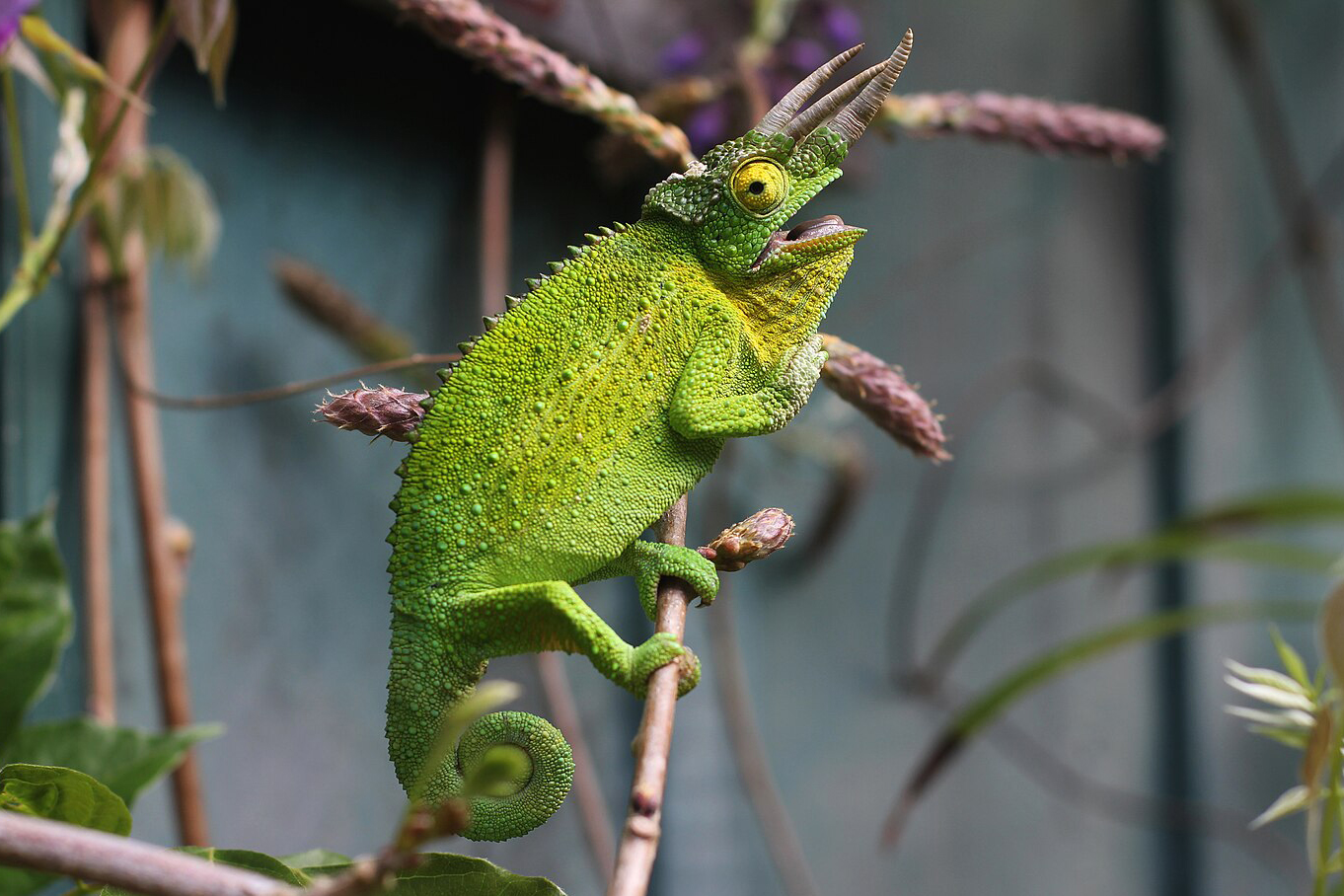
Findings on the synonyms of Trioceros ituriensis

Findings on the synonyms of Trioceros ituriensis

Verbreitung Science

Synonyms for the Congolese Ituri chameleon (Trioceros ituriensis) have existed for several decades. A recent publication by the herpetologist Wolfgang Böhme questions whether two of them could be separate species.

The US herpetologist Karl Patterson Schmidt described the chameleon as Chamaeleon ituriensis in 1919. At that time, Schmidt gave Medje, Ituri Forest, in the Democratic Republic of Congo as the type locality. He already noticed the external similarity to Chamaeleon johnstoni affinis, which is why he gave exactly that as a synonym of his Chamaeleon ituriensis. At the same time, Chamaeleon johnstoni affinis must not be confused with today’s Trioceros affinis, a separate species from Ethiopia that had already been described in 1845. In the course of the 20th century, Chamaeleo johnstoni affinis was placed in the genus Trioceros, sometimes thought to be a subspecies of its own, sometimes not. Böhme states that Trioceros johnstoni affinis is definitely a synonym of Trioceros ituriensis. Differences between Trioceros johnstoni and Trioceros ituriensis are the body size, the “reversed” sexual dimorphism (in T. ituriensis the females are larger than the males), a white line along the belly, several rows of enlarged scales along the side of the body, conical scales on the sides of the throat and the absence of rostral and preocular horns in male T. ituriensis.

However, the author is not sure about the species status of Chamaeleo laevigularis. The species was originally described from South Africa in 1926, then considered a synonym of Trioceros johnstoni and last identified as T. ituriensis by Tilbury in 2010. Böhme considers, because of different scaling of the throat, whether either a wrong locality was noted in the first description or it is a separate species, but could be extinct or lost.

Böhme also comes to the conclusion that Trioceros tremperi, which was described by Neĉas in 1994, could possibly also represent an already extinct species or a lost species and that the locality simply corresponded to incorrect information. Trioceros tremperi was last given as a synonym of Trioceros ituriensis by Tilbury 2010 and Spawls 2018. The chameleons had not been found in the type locality in Kenya before.

Documenting synonymies in Trioceros ituriensis (Schmidt, 1929) with remarks on sexual dimorphism in chameleons (Squamata: Chamaeleonidae)
Wolfgang Böhme
Revue Suisse de Zoologie 130(2), 2023: pp. 521-264
Correction from 2024
DOI: 10.35929/RSZ.0099

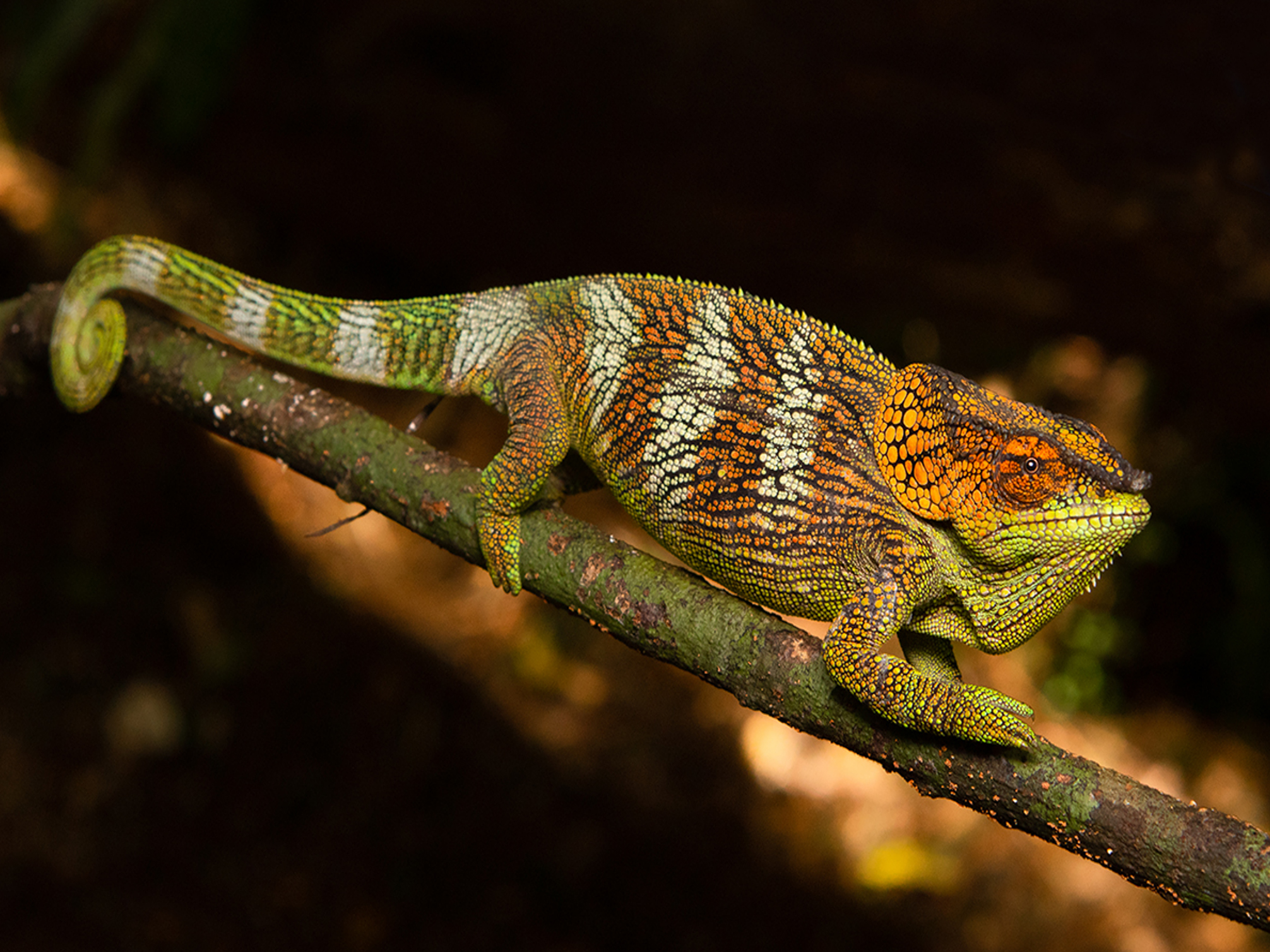
Photo: Trioceros ituriensis in the Budongo forest, Uganda, photographed by Katja Rembold