The optic nerve of chameleons is highly specialised

The optic nerve of chameleons is highly specialised

Tiermedizin Science

It has long been known that chameleons have very special eyes. What is particularly fascinating is that they can move their eyes independently of each other in almost any direction. A team of US scientists has now discovered that the optic nerve in chameleons is also extremely specialised.

They examined adult reptiles of 34 different species using CT models. Brookesia superciliaris, Rieppeleon brevicaudatus and Chamaeleo calyptratus represented the chameleon family. They found that in all three chameleon species, the optic nerve was extremely curled. This anatomical feature means that the optic nerve in chameleons is much longer than would be necessary for an eye looking straight ahead. It probably enables the animals to have extremely mobile eyes without compromising their vision. Put simply, the optic nerve functions a bit like a flexi leash: when the eye moves sharply, part of the optic nerve is ‘unrolled’. When the eye moves back, the optic nerve curls back to its original position without overstretching the nerve fibres.

A new twist in the evolution of chameleons uncovers an extremely specialized optic nerve morphology
Emily Collins, Aaron M. Bauer, Raul E. Diaz Junior, Alexandra Herrera-Martínez, Esteban Lavilla, Edward L. Stanley, Monte L. Thies, Juan D. Daza
Scientific Reports 15, 2025: 38270.
DOI: 10.1038/s41598-025-20357-3
Download the article for free

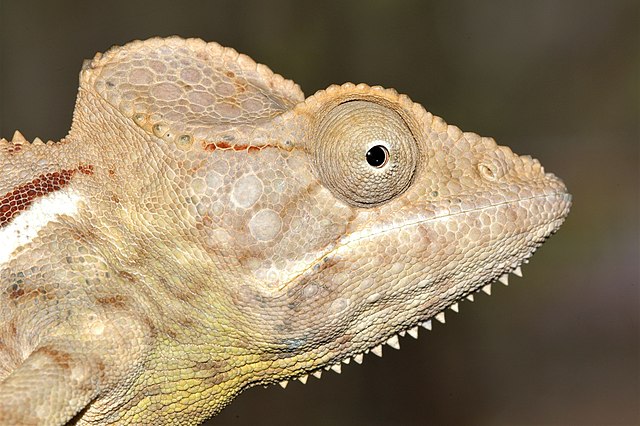
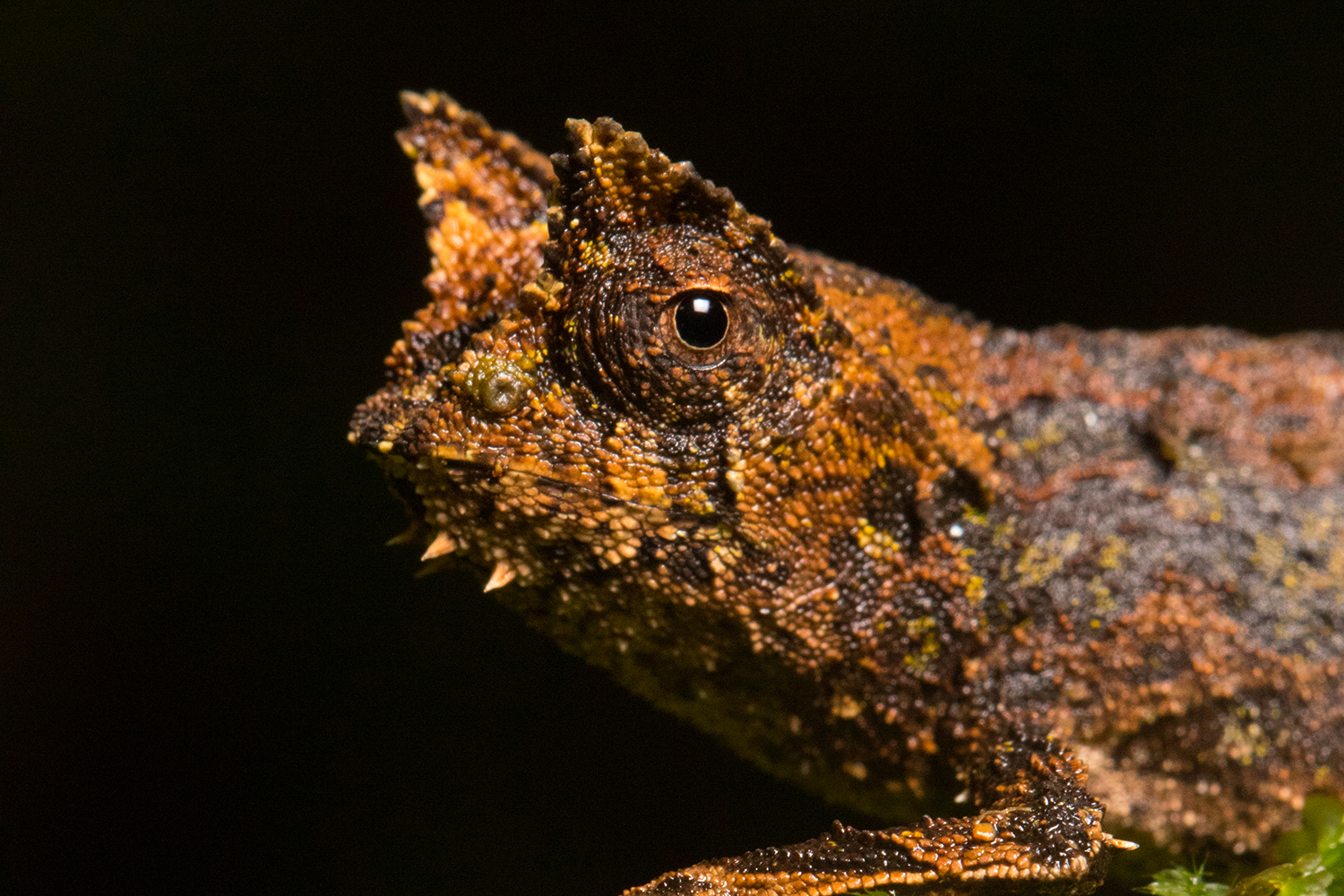
Photo: Portrait of Brookesia superciliaris, photographed by Alex Negro
Ultrasound of the urogenital tract in chameleons

Ultrasound of the urogenital tract in chameleons

Tiermedizin Science

In recent years, initial studies have been conducted on imaging in the diagnosis of diseases specifically in chameleons. A further study by veterinarians at the University of Leipzig (Germany) now presents additional comparative data on the urogenital tract of chameleons.

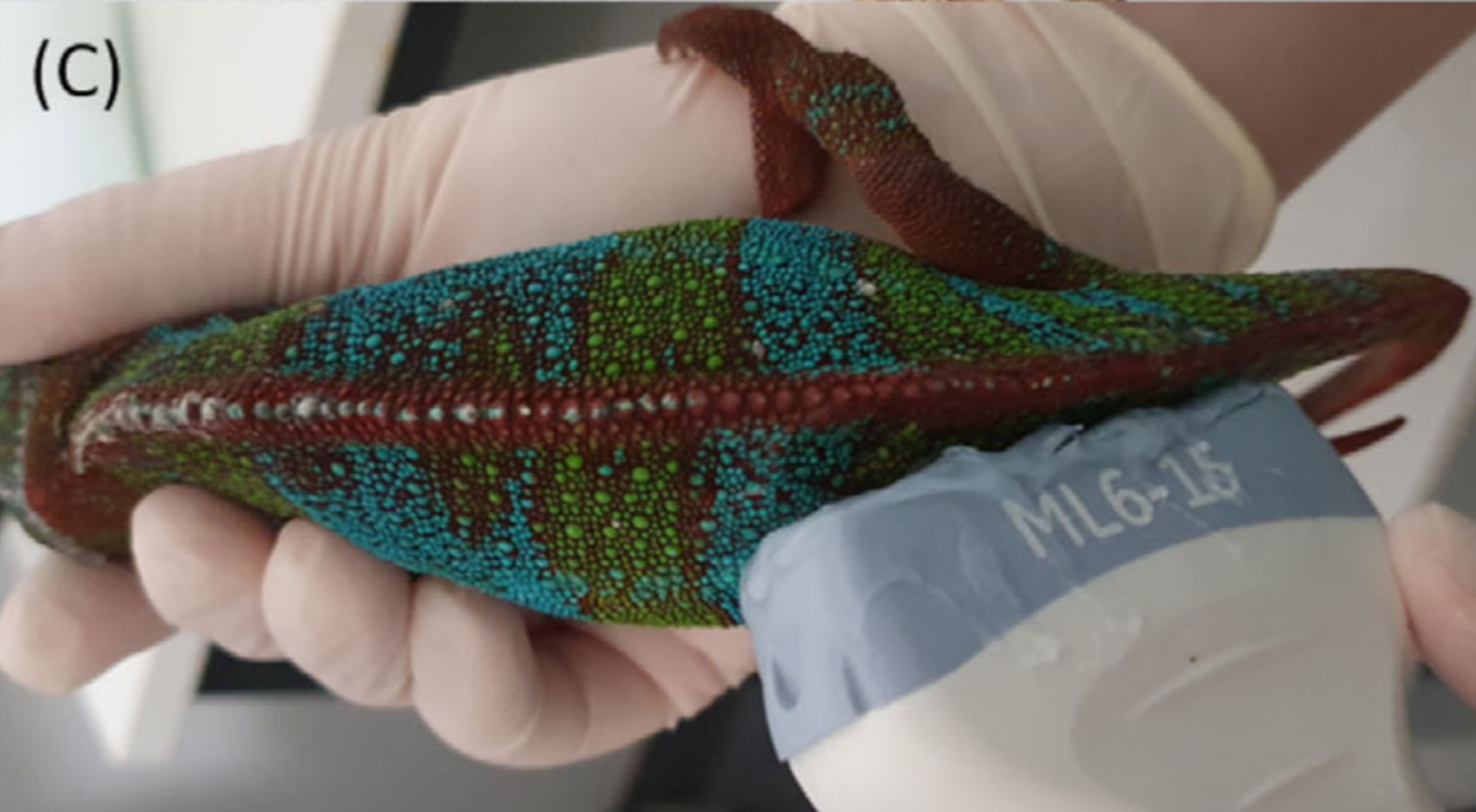
They examined the kidneys, bladder and reproductive organs of 42 lizards brought to the university hospital by private owners using ultrasound. Among the patients were seven Chamaeleo calyptratus and five Furcifer pardalis. Of these 12 chameleons, six were male and six were female. All organs were measured, described and sample images were saved.

Unfortunately, the sex organs of none of the female chameleons could be assessed for the study, as they were either pathologically altered or had already been removed during previous surgery. The most suitable location for coupling the ultrasound probe to the kidneys of the chameleons was found to be approximately one centimetre in front of the hip. The postpelvic portion of the kidneys was always smaller than the prepelvic portion. The kidneys of all male chameleons showed heterogeneous stripes, while the kidneys of the females were always homogeneous. This striping is probably due to sexual segments in the kidneys of males. The kidney tissue was isoechogenic to muscle tissue and more hypoechoic than adipose tissue. The testes of the male chameleons were located in the posterior third of the coelomic cavity, directly below the spine and in front of the kidneys. The right testicle was slightly further forward than the left. The capsule was hyperechoic in all males, while the testicular structure was always homogeneous. The study also provides average measurements of the kidneys and testicles of Yemen and panther chameleons.

The data largely correspond to the data already compiled by Aßmann in 2015 on ultrasound of the urogenital tract of chameleons. Only the kidney length differed significantly (longer) from previous studies.

Comparative sonographic studies of the urogenital tract of lizards
Nils B. Klützow, Volker Schmidt
Veterinary Radiology & Ultrasound 2025, 66:e70075
DOI: 10.1111/vru.70075
Free download of the article

Gene evolution in chameleon teeth

Gene evolution in chameleon teeth

Science

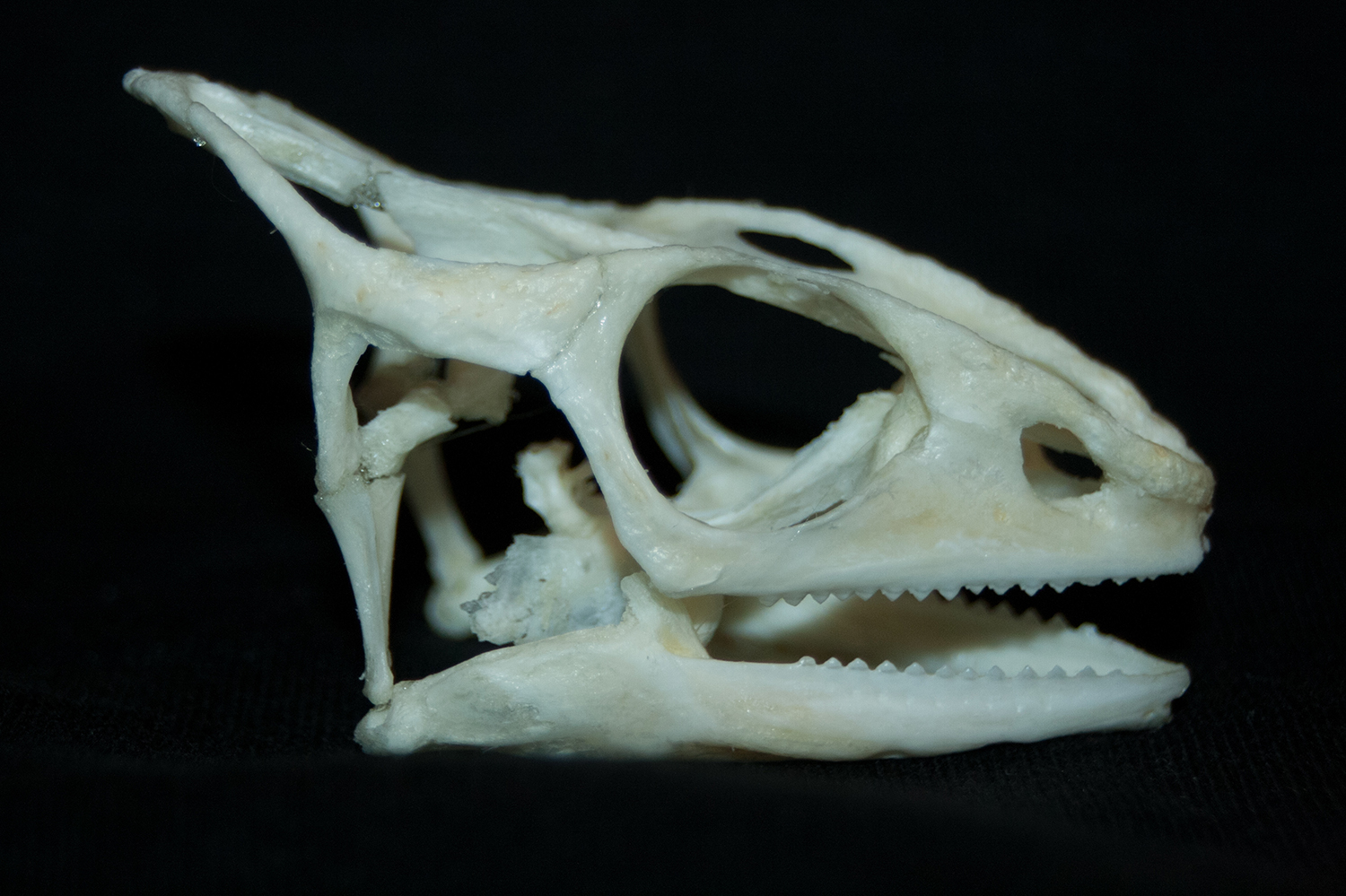
Chameleons have acrodont teeth, which means that their teeth are directly attached to the bone. Mammals, on the other hand, have so-called alveoli in which the teeth are seated. Scientists from Michigan (USA) have now investigated the genetic evolutionary development of tooth structures by comparing mammals with acrodont reptiles.

To do this, they compared the genomes of 24 acrodont reptiles and 12 mammal species. The acrodont reptiles included the chameleon species Furcifer pardalis, Trioceros harennae and Chamaeleo calyptratus, as well as chameleons of the genera Chamaeleo, Bradypodion and Trioceros that were not identified at the species level. The genes for amino acids, from which certain proteins in tooth enamel are built, were compared using various calculations and analyses.

The results showed that the loss of tooth replacement in acrodont reptiles did indeed lead to changes in the genes responsible for tooth enamel formation.

Reduction of tooth replacement disproportionately affects the evolution of enamel matrix proteins
John Abramyan, Gengxin Li, Hannah Khansa
Journal of Molecular Evolution 93, 2025: 494-510.
DOI: 10.1007/s00239-025-10258-4
Kostenloser Download des Artikels

Photo: Specimen of a panther chameleon skull with acrodont teeth, photographed by Alex Negro

Scientists discover second ‘super muscle’ in chameleon tongues

Scientists discover second ‘super muscle’ in chameleon tongues

Science

Scientists have been investigating how chameleons’ tongues can shoot out of their mouths to such an extreme length for as long as anyone can remember. US biologists have now been able to solve another piece of the chameleon tongue puzzle.

In the study, experiments were carried out on 15 Veiled chameleons (Chamaeleo calyptratus). All 15 animals were first anaesthetised using overdosed gas anaesthesia and then killed by decapitation. The four tongue muscles were then dissected out and clamped in measuring devices. The muscles were stimulated with an electric current and the passive/active forces and various muscle lengths were measured. A series of calculations were then carried out and muscles were examined histologically. In addition, embryos previously obtained from eggs were analysed immunohistochemically to determine whether the tongue muscles develop from the same or two different muscle systems.

The results of the study are very interesting and focus primarily on the so-called sarcomeres of the muscles. A sarcomere is the smallest contractile unit of the muscle – i.e. the part that is responsible for the expansion and contraction of the muscles. At both ends of each sarcomere are the so-called intermediate discs (German “Zwischenscheibe”), abbreviated as Z-discs. Transverse striated muscles, i.e. the muscles that move the arms, legs and trunk of a vertebrate, can shorten to about half their resting length. In chameleons, however, there is a very special type of muscle, the so-called supercontracting muscle. By definition, this is a striated muscle that is able to shorten to less than half its resting length. The rectractor of the tongue, the hyoglossus muscle, is just such a muscle. In this muscle, perforated Z-discs on the sarcomeres ensure that it can stretch far better than normal striated muscles.

In the present study, it was found that a second supercontracting muscle is involved in the tongue shot: the sternohyoid superficialis muscle. In its counterpart, the sternohyoid profundus muscle, surprisingly, no perforated Z-discs could be detected at the sarcomeres. However, its length-tension ratio corresponded to the two supercontracting tongue muscles. This could be compensated for by the very broad attachment of the muscle to the hyoid bone. During tongue shooting, these areas of the hyoid bone are rapidly rotated, which could mechanically alter the sarcomeres.

Using immunohistochemistry, the biologists were also able to show in chameleon embryos that the two muscles develop from different origins, which is consistent with the different sarcomeres. Both the hyoglossus muscle and the sternohyoid muscles form a muscular unit, with one of the muscles even extending to the sternum. This means that the maximum length of the chameleon tongue when shooting is not only made possible by the special properties of the tongue muscles, but also by the overall length of the muscular unit. No other vertebrate in the world has ever been found to have two supercontracting muscles.

Feats of supercontractile strength: functional convergence of supercontracting muscle properties among hyoid musculature in chameleons
Nikole G. Schneider, Nicholas A. Henchal, Raul E. Diaz Jr., Christopher V. Anderson
Proceedings B of Royal Society Publishing, 2025
DOI: 10.1098/rspb.2025.0078

Figure: Schematic representation of the tongue muscles and hyoid bone in the Veiled chameleon from the aforementioned publication

Veiled chameleon distributed over 12 new counties in Florida (USA)

Veiled chameleon distributed over 12 new counties in Florida (USA)

Verbreitung Science

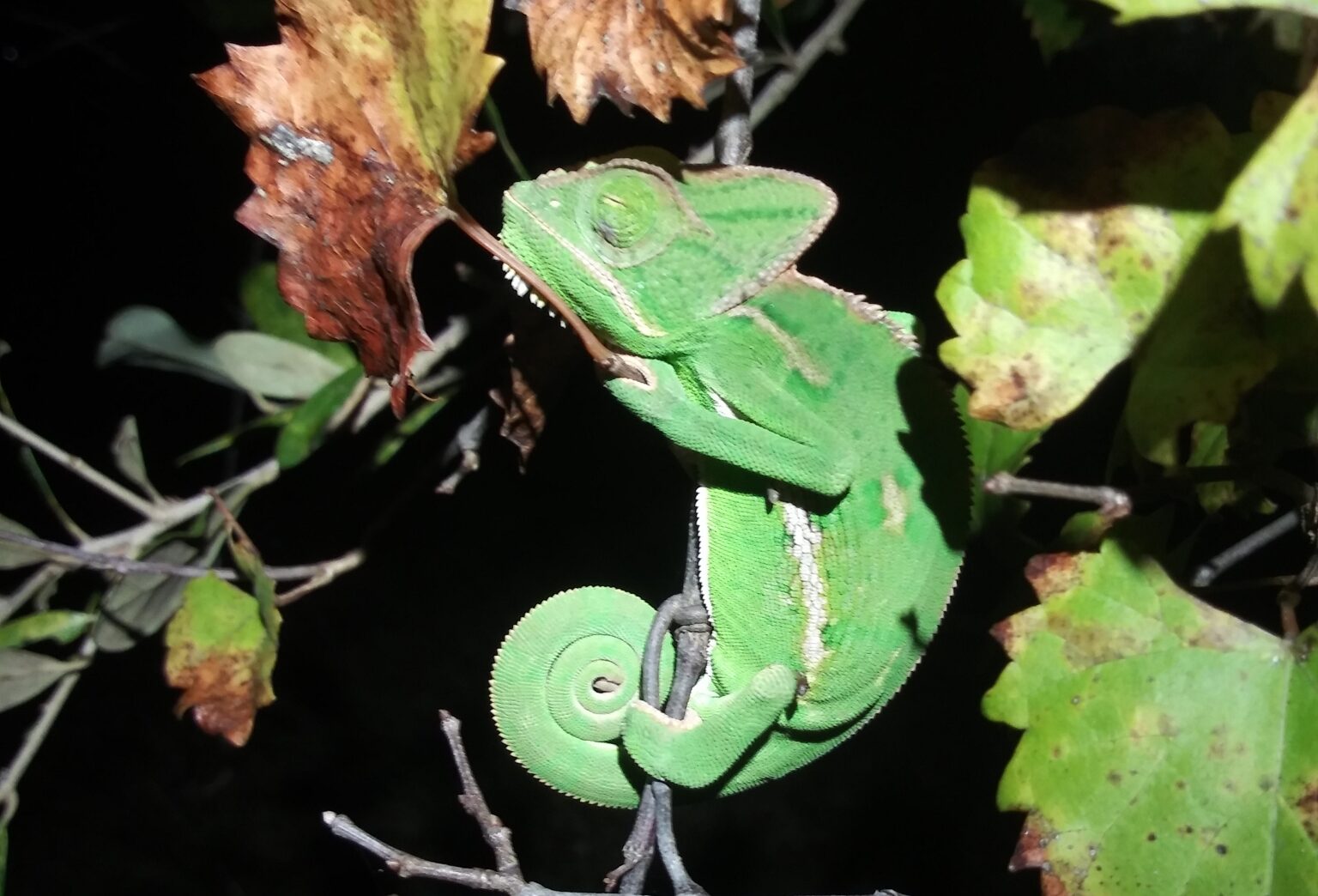
Introduced Veiled chameleons (Chamaeleo calyptratus) have been living in Florida (USA) since at least 2002. The first wild Veiled chameleons were found in Collier County, two years later animals were observed in Fort Myers in Lee County. This was followed by findings in Hendry, Miamia-Dade, Broward, St. Lucie, Palm Beach, Monroe, Alachua and Hillsborough County. Now an author in the Herpetological Review reports on 12 further populations in Florida: in Brevard, Charlotte, De Soto, Glades, Indian River, Lake, Manatee, Osceola, Pinellas, Polk, Sarasota and Seminole County.

He used data from iNaturalist and EDDMapS. The author suspects that most of the new finds could be due to so-called chameleon ranching. Chameleons are deliberately released into other habitats in order to later collect and sell the resulting juveniles. But even without prior release, collecting (‘harvesting’) animals for sale has become a source of income in Florida, which has also led to the fact that distribution data on new populations is rarely published. It is now a common recreational activity in Florida to search for Veiled chameleons at night. There are even commercial operators offering guided tours.

One problem is increasingly the owners of private property who feel disturbed by ‘chameleon tourism’. The impact on native wildlife in the USA is still unclear. Theoretically, Veiled chameleons could eat smaller mammals or young birds, but there have been no reports of such incidents in Florida to date.

It seems increasingly unlikely that it will be possible to get rid of the introduced Veiled chameleons. A one-year trial in Lake Worth Beach (Palm Beach) resulted in 1043 chameleons being caught during 71 collection campaigns, but not in the elimination of the population living there.

New County Records for the Veiled Chameleon (Chamaeleo calyptratus) in Florida, USA
Kevin M. Enge
Herpetological Review 55 (2), 2025: 223-226.
DOI: not available

Photo: Chamaeleo calyptratus, found and photographed in Fort Myers (USA) by Andrew Durso, CC-BY

Interested parties wanted for breeding project with Chamaeleo calyptratus calcarifer

Interested parties wanted for breeding project with Chamaeleo calyptratus calcarifer

Abzugeben Projects

The larger subspecies of the Veiled Chameleon, Chamaeleo calyptratus calcarifer, from the Tihama on the Arabian Peninsula has received little attention in the herpetoculture hobby in recent years. It is therefore not surprising that notes on this subspecies are not particularly frequent in the current literature and that there is also a lack of husbandry and breeding reports. Sophie Obermaier, a member of AG Chamäleons from Berlin, would like to change this and breed the species in the long term. She herself has several adults of the species and already has over 50 eggs that are currently being incubated. Anyone who has had experience with the subspecies, would like to participate by keeping a few animals themselves or would like to take on young animals for scientific work is cordially invited to contact Sophie by email at chartar.0702@gmail.com.

(Deutsch) Jemenchamäleons suchen neue Halter

(Deutsch) Jemenchamäleons suchen neue Halter

Abzugeben

Two Veiled Chameleons arrived at the reptile rescue centre in Munich yesterday. Both animals were confiscated and will not be returned to their original owners, so they will probably be released for rehoming shortly. They are two adult females who so far appear to be healthy. The results of the blood check-up and the quarantine at the rescue centre are still pending. However, anyone who is already interested in the two or one of the females is welcome to contact the rescue centre now. A questionnaire for interested parties can be found on their website.

Photo: One of the female Veiled Chameleons, photographed at the reptile rescue centre, Munich

Sex chromosomes in chameleons

Sex chromosomes in chameleons

Science

Which sex chromosomes are present in chameleons has so far been studied rather sparsely. The Madagascan chameleon genus Furcifer is known to have Z and W chromosomes, although sometimes several Z chromosomes occur, so-called neo-sex chromosomes. Recently in the Czech Republic, scientists examined this deeper.

Blood and tissue samples were taken from 13 chameleons to isolate DNA. The animals sampled included one male and one female each of the species Brookesia therezieni, Calumma glawi, Calumma parsonii, Chamaeleo calyptratus, Furcifer campani, Furcifer labordi, Furcifer lateralis, Furcifer oustaleti, Furcifer pardalis, Furcifer rhinoceratus, Furcifer viridis, Kinyongia boehmei and Trioceros johnstoni. Only in Furcifer oustaleti were two females sampled. Subsequently, the Z1 chromosomes of the panther chameleons and the Z and W chromosomes were analysed by microdissection. Gene coverage analyses were performed for carpet and panther chameleons. In addition, qPCRs were performed to compare the homology of the Z chromosomes.

The results show that the morphology of the Z1 chromosomes of panther chameleons corresponds to the Z chromosome of the entire genus Furcifer. The Z1 chromosome of panther chameleons thus corresponds to the Z chromosome of Furcifer oustaleti. The Z2 chromosome of panther chameleons, on the other hand, is a neo-sex chromosome. Both the Z and W chromosomes in Furcifer oustaleti are probably pseudautosomal. 42 genes have been described as specific for the W chromosome.

A total of 16,947 genes were identified in Furcifer lateralis and 16,909 genes in Furcifer pardalis. The ratio of the number of genes between females and males is 0.35 and 0.65 for the two species. In panther and carpet chameleons, most of the genes on the W and Z chromosomes were found to be the same, with relatively few genes found only on the W chromosome. This finding is surprising, as the researchers had actually expected that the heterochromatic W in Furcifer species would have lost most of its genes compared to the Z chromosome.

The sex chromosomes of the genus Furcifer probably evolved at least 20 million years ago, which roughly corresponds to the time when the species Furcifer campani split off from the other Furcifer species.

Heteromorphic ZZ/ZW sex chromosomes sharing gene content with mammalian XX/XY are conserved in Madagascan chameleons of the genus Furcifer
Michail Rovatsos, Sofia Mazzoleni, Barbora Augstenová, Marie Altmanová, Petr Velenský, Frank Glaw, Antonio Sanchez, Lukáš Kratochvíl
Scientific Reports 14, 2024: 4898.
DOI: 10.1038/s41598-024-55431-9

New case reports on hemipenes amputation

New case reports on hemipenes amputation

Tiermedizin

The University of Sofia (Bulgaria) has published a new paper with several case reports involving chameleons. The authors describe 16 cases of different lizards that suffered a hemipenis prolapse and their treatment.

The lizards included a panther chameleon (Furcifer pardalis) and two Veiled Chameleons (Chamaeleo calyptratus). All three patients were presented to the veterinarians with bilateral hemipenes prolapse. Initially, the prolapses were bathed in 20% dextrose solution, after which the hemipenes were manually repositioned. However, the prolapses then recurred, so surgery was the final solution. Under general and local anaesthesia administered intramuscularly, the hemipenes were removed, the wound sutured and the remaining small stump repositioned in the respective hemipenes pocket. Meloxicam was administered as an analgesic once a day for 5 days after the operation. Only lizards in which the surgical field appeared to be dying off during the follow-up examinations were given antibiotics for 10 days.

Hemipenectomy in leopard geckos, chameleons and bearded dragons
Seven Mustafa & Iliana Ruzhanova-Gospodinova
Tradition and Modernity in Veterinary Medicine, 2024
DOI: nicht vorhanden

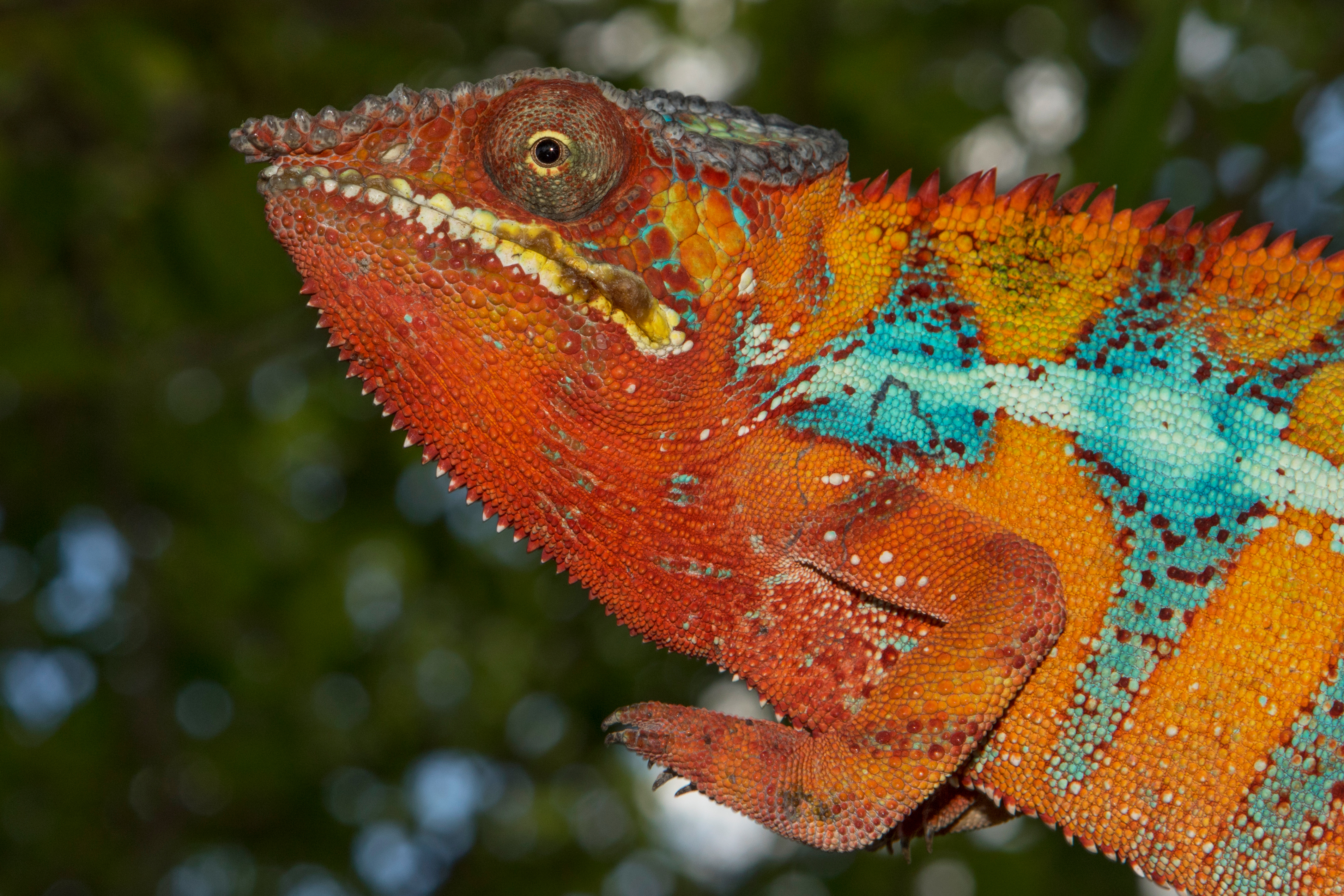
Photo: Panther chameleon, photographed by Alex Laube in Madagascar

Mosquito bites may induce skin colour change

Mosquito bites may induce skin colour change

Tiermedizin Science

Sometimes science starts small: last year, someone posted a photo of a Calumma globifer with a mosquito sitting on it on the online platform iNaturalist. Right there you could see a black discoloration of the scales. I wonder if there was a connection?

A handful of curious people searched for more photos of mosquitoes on chameleons and found what they were looking for: On Facebook there were some of Veiled chameleons, on iNaturalist more of Furcifer minor and Furcifer nicosiai. However, there were also six observations of mosquitoes on chameleons that did not appear to have black spots.

To test the connection, scientists in Madagascar placed two Furcifer oustaleti and four carpet chameleons alone in an enclosure with 25 female Asian tiger mosquitoes (Aedes albopictus), which had not been fed for 24 hours beforehand. At the same time, all six chameleons were pricked in the skin with a needle to test whether this “trauma” would also trigger a color change in the skin. The results were surprising: in the four Furcifer lateralis, numerous black skin discolorations developed after mosquito bites, in the two Furcifer outaleti not a single one. The punctures with the needle remained without consequences in all six.

The authors of the recently published article propose three possible theories as to how the color change in the chameleon’s skin could come about: The mosquito saliva could contain a type of local anesthetic, nitric oxide or other proteins that cause the skin’s melanophores to become exclusively visible. Further research in this field would certainly be exciting!

Mosqito bite-induced color change in chameleon skin
Pablo Garcia, Raul E. Diaz Junior, Christopher V. Anderson, Tovo M. Andrianjafy, Len de Beer, Devin A. Edmonds, Ryan M. Carney
Herpetological Review 54(3), 2023, pp.353-358