New genomes of six chameleon species from Ethiopia

New genomes of six chameleon species from Ethiopia

Science

A very brief publication by three scientists deals with the genome sequences of reptiles. Wild reptiles from a total of 101 different species were sampled in Ethiopia, Guyana, Mexico and the USA. Unfortunately, the authors do not state exactly how the sampling was carried out and whether whole animals or only tissue samples were taken. DNA was extracted using the Qiagen DNAeasy Kit and Illumina TruSeq kits were used for sequencing.

All genomes were deposited at Genbank. Genomes of one Chamaeleo dilepis (JBHLFC00000000000), one Chamaeleo laevigatus (JBIELG00000000000), one Trioceros affinis (JBHUPM00000000000), one Trioceros balebicornutus (JBHZFU00000000000), one Trioceros harennae (JBHRFO00000000000) and one Chamaeleo gracilis (JBINKK00000000000) were deposited. Several entries of these species already existed in GenBank.

The complete genome sequences of 101 species of reptiles
Timothy J. Colston, Stacy Pirro, R. Alexander Pyron
Biodiversity Genomes, 2025
DOI: 10.56179/001c.129597

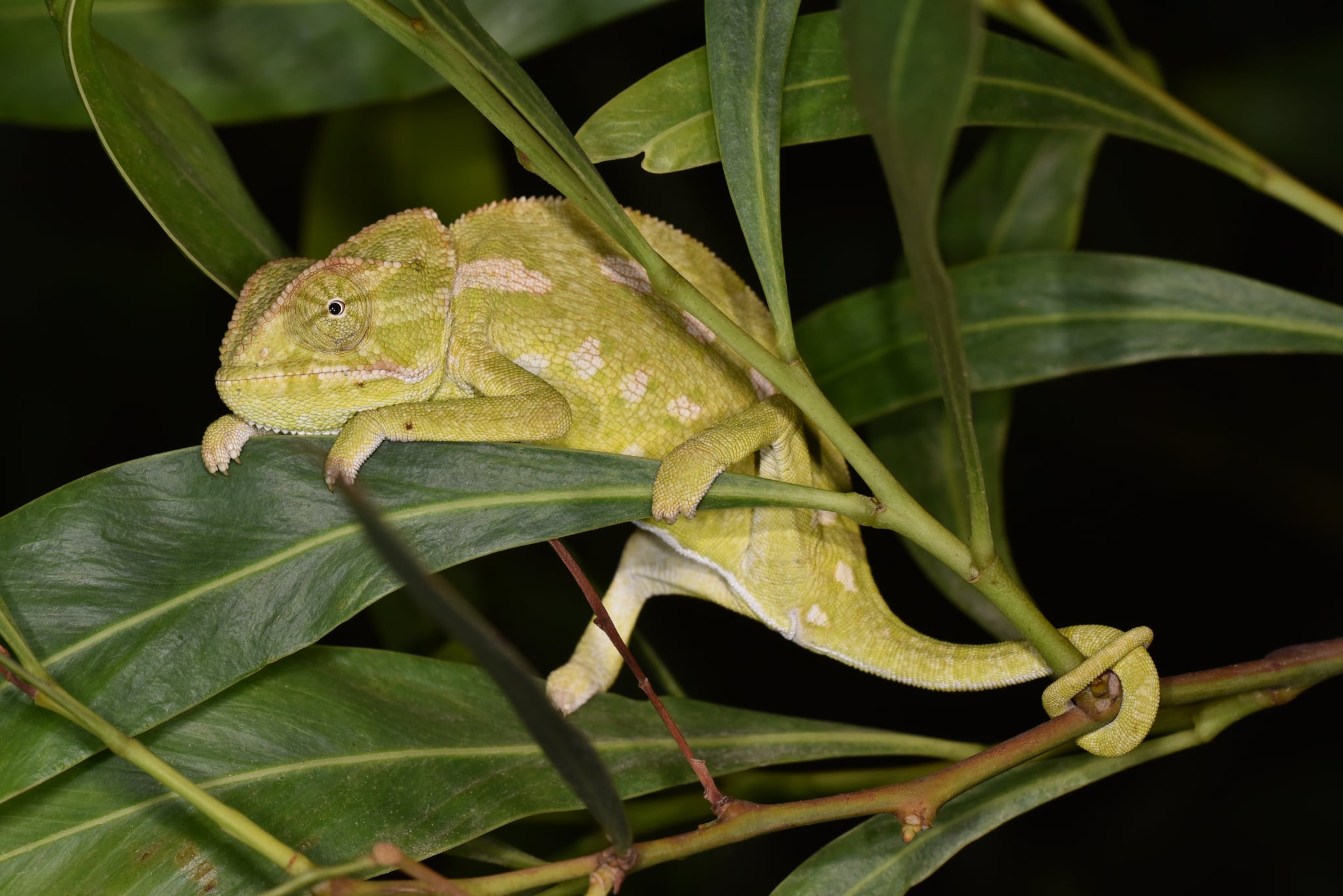
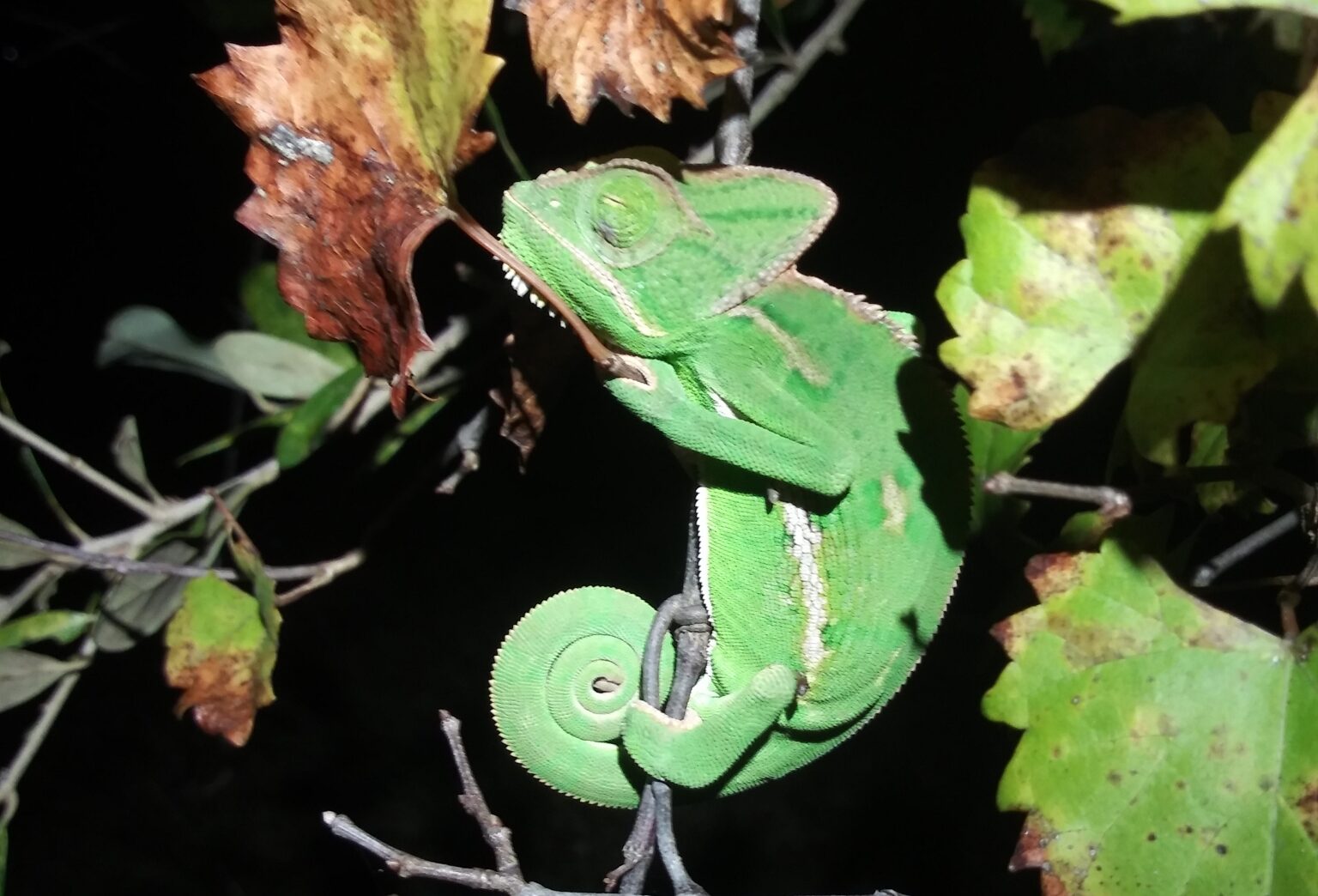
Picture: Chamaeleo laevigatus, photographed by John Lyakurwa, Creative Commons Attribution 4.0 International

Chameleons in Marsa El Brega (Lybia)

Chameleons in Marsa El Brega (Lybia)

Verbreitung Science

While other areas of Africa are regularly the subject of publications and expeditions, the herpetofauna of Libya has not been fully researched. Little is known about the reptiles of the coastal region of Marsa El Brega in particular. Marsa El Brega is located in the north of Libya directly on the Mediterranean Sea and therefore has a Mediterranean climate. The vegetation consists mainly of a desert-like landscape with low shrubs such as Nitraria retusa and small date palm oases in between.

A Hungarian herpetologist has investigated the reptile populations in Marsa El Brega during two expeditions. Unfortunately, the exact procedure for finding animals is not mentioned in the article. All animals found were photographed and species phenotyped according to existing field guides.

The author found a total of 25 reptile species in the Marsa El Brega region, including two Chamaeleo chameleons, one each two days apart. The coordinates given for the find site are in the outskirts of the town of Brega, right next to the garden of a bed’n’breakfast facing the beach. The author cites stray dogs and cats as the greatest potential threat to the local herpetofauna. In addition, the coastal area investigated was heavily littered.

Some reptiles from Marsa El Brega, Libya (Reptilia: Chamaeleonidae, Gekkonidae, Phyllodactylidae, Lacertidae and Scincidae)
Attila Haris
Natura Somogyiensis 45: 17-26, 2025
DOI: 10.24394/NatSom.2025.45.17

The microbiome in the gut of South African dwarf chameleons

The microbiome in the gut of South African dwarf chameleons

Science

The term microbiome has been on everyone’s lips for some years now. In the intestine, this refers to the entirety of all microorganisms, especially bacteria, that colonise the mucous membrane. Now a group of researchers in South Africa has for the first time studied the gut microbiome in chameleons and how it changes in different habitats.

Three species of dwarf chameleons were searched for at night in the province of KwaZulu Natal with the help of torches: Bradypodion melanocephalum, Bradypodion thamnobates and Bradypodion setaroi. All animals were kept in containers for 24 hours and then released at the site. For each species, 10 buccal swabs and 10 faecal samples were collected in a natural and an urban habitat, resulting in a total of 120 samples. In the laboratory, DNA was extracted from the samples, amplified by PCR and then sequenced. Phylogenetic trees were created and statistical comparisons were made between the samples.

The samples were also analysed for zoonotic pathogens such as salmonella. However, only Campylobacter, Escherichia and Serratia were detected in human pathogens in the faeces. The authors conclude that the zoonotic potential of the microbiome of dwarf chameleons is very low.

In total, almost 350 different bacterial species were detected in the microbiome of the dwarf chameleons, which corresponds to other reptiles such as anoles and turtles. Proteobacteria, Firmicutes and Bacteroidota were most abundant in all samples. Overall, the microbiome was very similar in both buccal swab and faecal samples with only a few exceptions and slightly different depending on the species. The differences in the microbiome between natural and urban habitats were much smaller than expected. The microbiome of the buccal swab of Bradypodion melanocephalum living in urban environments showed more Caulobacteraceae and less Enterococcaceae than that in natural habitats, and Desulfovibrionaceae were more common in the faeces of urban animals. The microbiome of Bradypodion thamnobates showed more Ruminococcaceae and Akkermanisaceae in the faecal samples of urban chameleons. A striking feature of dwarf chameleons is the difference between the microbiota in the mouth and rectum, which has not yet been observed in other vertebrates. It remains to be seen whether chameleons in the animal kingdom have a specialized microbiome that could explain these differences.

Anthropogenic reverberations on the gut microbiome of dwarf chameleons (Bradypodion)
Matthew G. Adair, Krystal A. Tolley, Bettine Jansen van Vuuren, Jessica Marie da Silva
PeerJ 13, 2025
DOI: 10.7717/peerj.18811

Photo: Bradypodion melanocephalum, photographed by Marius Burger

Namaqua chameleons discovered in Namibe (Angola)

Namaqua chameleons discovered in Namibe (Angola)

Verbreitung Science

Western Angola has increasingly become the focus of herpetologists in recent years. However, the reptile population of the Iona National Park on the border with Namibia still raises some questions. Whilst searching for the dwarf puff adder Bitis peringueyi, an international research team also found Chamaeleo namaquensis. The survey of reptile populations was carried out in the coastal area, in the sand sea and in the shifting sand dunes of the gravel plains.

A total of 27 reptile species were discovered – although the dwarf puff adder was not among them. Chamaeleo namaquensis was found along the EN100 road about 50 kilometres south of Moçamedes. A second site was found around 10 km north of Salondjmba, the entrance to the Iona National Park in Ponta Albina.

Noteworthy herpetological notes from Naimbe Province, Angola
Javier Lobón-Rovira, Pablo Sierra, Rubén Portas, Pedro Vaz Pinto, Fernando Martínez-Freiría
Herpetology Notes Vol 18: 99-105
DOI: nicht vorhanden

Picture: Daniel S. Katz, Creative Commons Attribution 4.0 International

Utilisation of flap-necked chameleons at urban markets in South Africa

Utilisation of flap-necked chameleons at urban markets in South Africa

Science

Scientists from the African Amphibian Conservation Research Group have analysed the existing literature on the subject. Fortunate M. Phaka also visited six municipal markets in Durban, Johannesburg, Petermaritzburg, Polokwane and Pretoria. At the markets, he searched for amphibians and reptiles sold for medicinal purposes and the names given to them by the vendors. He was able to interview 11 traditional health practitioners in Limpopo, Gauteng and KwaZulu-Natal in detail, from nine of whom he was allowed to take samples of the amphibians and reptiles sold for species identification.

In total, 33 species of reptiles and one species of amphibian used for traditional medicine were identified. Nine of these were found and identified on site during the market visits. The traditional healers interviewed stated that they had either hunted the animal parts themselves, bought them from hunters or taken them from roadkill. Fat and internal organs are removed, the carcasses are rubbed with ash or salt and dried in the sun. Usually, the healers’ customers do not buy complete carcasses, but only small parts of the reptiles on offer. Of the 111 animal samples taken, sufficient DNA to identify the species was obtained from 90 of them. 23% of the samples tested were incorrectly named by the healers.

Chamaeleo dilepis was among the reptile species utilised. No complete chameleon could be found at the markets visited. At the Warwick Muthi Market in KwaZulu-Natal, however, several reptile parts were sampled which, according to DNA comparisons, came from lobed chameleons. Chameleons in general were not identified to species level by the healers. The IsiZulu word unwabu stands for any chameleon.

Barcoding and traditional health practitioner perspectives are informative to monitor and conserve frogs and reptiles traded for traditional medicine in urban South Africa
Fortunate M. Phaka, Edward C. Netherlands, Maarten Van Steenberge, Erik Verheyen, Gontran Sonet, Jean Hugé, Louis H. du Preez, Maarten P.M. Vanhove
Molecular Ecology Resources Vol 25(2), 2025
DOI: 10.1111/1755-0998.13873

Chamaeleo gracilis in Nechisar (Ethiopia)

Chamaeleo gracilis in Nechisar (Ethiopia)

Verbreitung Science

Over the last hundred years, humans have reduced Ethiopia’s forest cover from around 40% to just 2.36%. Despite this, little is still known about the country’s herpetological fauna in some places. Scientists from Egypt, the USA and Ethiopia recently carried out a survey study in a national park.

Necisar National Park is located in south-west Ethiopia on the line of the Great Rift Valley, more than 500 kilometres south of the capital Addis Ababa. Necisar covers an area of 514 square kilometres, bordered to the north and south by two lakes, to the east by the Amarao Mountains and to the west by the town of Arbaminch. Nechisar is very hot all year round with very little rainfall.

A total of two expeditions were carried out during the rainy season and two during the dry season. Transects with a total length of 290 km and a width of nine metres were covered, 230 km of which were in grassland and stony terrain, 60 km in the forest and along the lakeshore. In addition to manual searches with the naked eye, small pitfall traps and cover plates were used.

A total of 34 species of reptiles were found, including Chamaeleo gracilis. The species was discovered twice. Both chameleons were found near different rivers, one in the scrubland and one in the forest.

Survey of reptiles in Nechisar National Park, Southern Ethiopia
Samy A. Saber, Fikirte Gebresenbet, Afework Bekele, Eman N. Salama
Russian Journal of Herpetology 31(5): 291-301
DOI: 10.30906/1026-2296-2024-31-5-293-301

What kills chameleons in zoos?

What kills chameleons in zoos?

Tiermedizin Science

Scientists at the University of Veterinary Medicine Montréal (France) recently analysed the causes of death in chameleons kept in zoos between 2011 and 2022. The Zoological Information Management System (ZIMS) was used to search for zoos that currently keep chameleons or have kept them since 2011. Questionnaires were sent to a total of 245 zoos. The questionnaires asked about the number, species and sex of chameleons kept, as well as selected husbandry conditions (coolest and warmest temperatures, humidity, feeding) and dissection results.

Around 1000 chameleons of 36 different species are currently kept in zoos worldwide. 65 of the zoos surveyed took part in the study, 48 of which regularly carried out dissections on chameleons. However, only 29 of the participating zoos were able to provide dissection results. A total of 412 pathological findings from 14 different chameleon species were analysed. Among the species kept were Brookesia stumpffi, Brookesia superciliaris, chameleons of the genus Brookesia without species identification, Calumma parsonii, Chamaeleo calyptratus, Chamaeleo chamaeleon, Furcifer lateralis, Furcifer oustaleti, Furcifer pardalis, Rieppeleon brevicaudatus, Trioceros melleri, Trioceros montium and Trioceros quadricornis. Panther chameleons were kept most frequently (226 specimens).

The statistical analysis showed that most of the chameleons in the participating zoos died of infectious diseases (46.8%). Infectious diseases included septicaemia, but also inflammation of the oral cavity, lungs, liver, kidneys and intestines. Almost 20% of the infectious diseases were in the area of the oral cavity. The most common bacteria were Enterococcus and Pseudomonas. Among the fungi, Nannizziopsis including CANV, Fusarium and Metarhizium were represented. A good third of the necropsy reports also indicated parasitoses, with these occurring both as a cause of death and as an incidental finding. Coccidia and trematodes as well as various nematodes were often present. The second most common cause of death in the participating zoos was non-infectious kidney diseases (11.4%). This was closely followed by diseases of the reproductive tract, including egg loss and egg yolk coelomitis, which accounted for 10.7% of cases.

Contrary to the authors’ initial assumption, there was no correlation between the surveyed husbandry parameters in the cages and the incidence of kidney disease. Basically, there was a tendency towards an increased incidence of kidney disease in countries where the average humidity was generally lower.

Evaluation of mortality causes and prevalence of renal lesions in zoo-housed chameleons: 2011-2022
Amélie Aduriz, Isabelle Lanthier, Stéphane Lair, Claire Vergnau-Grosset
Journal of Zoo and Wildlife Medicine 55(2), 2024
DOI: 10.1638/2023-0023

Photo: Panther chameleon in Madagascar, photographed by Alex Negro

The Common Chameleon in Belezma (Algeria)

The Common Chameleon in Belezma (Algeria)

Verbreitung Science

The Belezma Biosphere Reserve was only established in 2015 and is located in the province of Batna in northern Algeria. It covers an area of 262 km² in the Belezma Mountains and lies at altitudes between 915 and 2136 metres above sea level. The terrain consists of Mediterranean cedar, pine and oak forests, typical scrubland (so-called maquis), cliffs and only seasonal watercourses (so-called oueds); around 53 km² consist of cedar forest. So far, there have only been a few publications on the herpetofauna there. A recent overview study of the amphibians and reptiles found there has now been compiled by biologists from the University of Batna.

Maquis in Belezma Biosphere Reserve

The animals were searched for visually only. Various people walked transects unsystematically both during the day and at night, for a total of 500 hours at 28 locations within the reserve. The animals found were either identified directly or photographed and released.

A total of 23 amphibian and reptile species were found and identified. Chamaeleo chamaeleon was identified for the first time in Belezma. The chameleons were found at around 1040 metres in the characteristic shrublands and at 1280 metres in open terrain. The maquis in Belezma consists mainly of oak and olive trees as well as mastic bushes and Phoenician juniper.

Herpetofauna of Belezma Biosphere Reserve, province of Batna, northeastern Algeria
Messaoud Saoudi, Mohamed Bensaci, Abdeldjabar Necer, Houria Baazi, Zohra Nemili, Farouk Khelfaoui
African Journal of Biological Sciences 6 (15), 2024
DOI: 10.48047/AFJBS.6.15.2024.10672-10700

Dwarf chameleons in South Africa larger in urban environments than in the wild

Dwarf chameleons in South Africa larger in urban environments than in the wild

Science

Dwarf chameleons of the genus Bradypodion from South Africa have long been known to adapt very well to urban habitats. Two scientists from Cape Town and Johannesburg have now investigated how different populations differ in body size, body weight and body condition score within urban and natural environments.

A total of 1107 individuals of five different dwarf chameleon species were studied over a period of four years. Bradypodion damaranum in George (Western Cape), Bradypodion melanocephalum in Durban (KwaZulu-Natal), Bradypodion setaroi in St Lucia (KwaZulu-Natal), Bradypodion thamnobates in Howick (KwaZulu-Natal) and Bradypodion ventrale in Jeffrey’s Bay (Eastern Cape) were each searched at night at three to eight locations. Forest fragments, grass savannahs or coastal bushland less than 15 km from the centre of the nearest town were classified as ‘natural sites’. All sites located within a city and consisting of both introduced and native flora regularly cut back by humans (gardens, public parks and green spaces, roadsides) were categorised as ‘urban’. The dwarf chameleons found were measured, weighed, sexed and marked with a felt-tip pen to avoid duplicate measurements on the same animals. Obviously pregnant females were not measured.

Statistical analyses and comparisons revealed that the chameleons at natural sites were always smaller and lighter on average than the populations of the same species at urban sites. Significantly larger and heavier in the city were both sexes in Bradypodion damaranum, the males in Bradypodion melanocephalum, ventrale and setaroi and the females in Bradypodion thamnobates. The body condition score was higher in urban areas for both sexes of Bradypodion damaranum and setaroi and males of Bradypodion melanocephalum than for the chameleons in natural habitats. In Bradypodion ventrale and thamnobates, there were no differences in body condition score between the different populations.

Research into exactly how these exciting differences come about is still pending.

Big cities, big bodies: urbanisation correlates with large body sizes and enhanced body condition in African dwarf chameleons (Genus: Bradypodion)
Jody M. Barends, Krystal A. Tolley
African Zoology 2024, 59(3)
DOI: 10.1080/15627020.2024.2402256

Photo: Bradypodion melanocephalum, photographed by suncana, licence Creative Commons Attribution 4.0 International