
A Polish biologist has recently assessed the number of introduced reptile and amphibian species in sub-Saharan Africa.
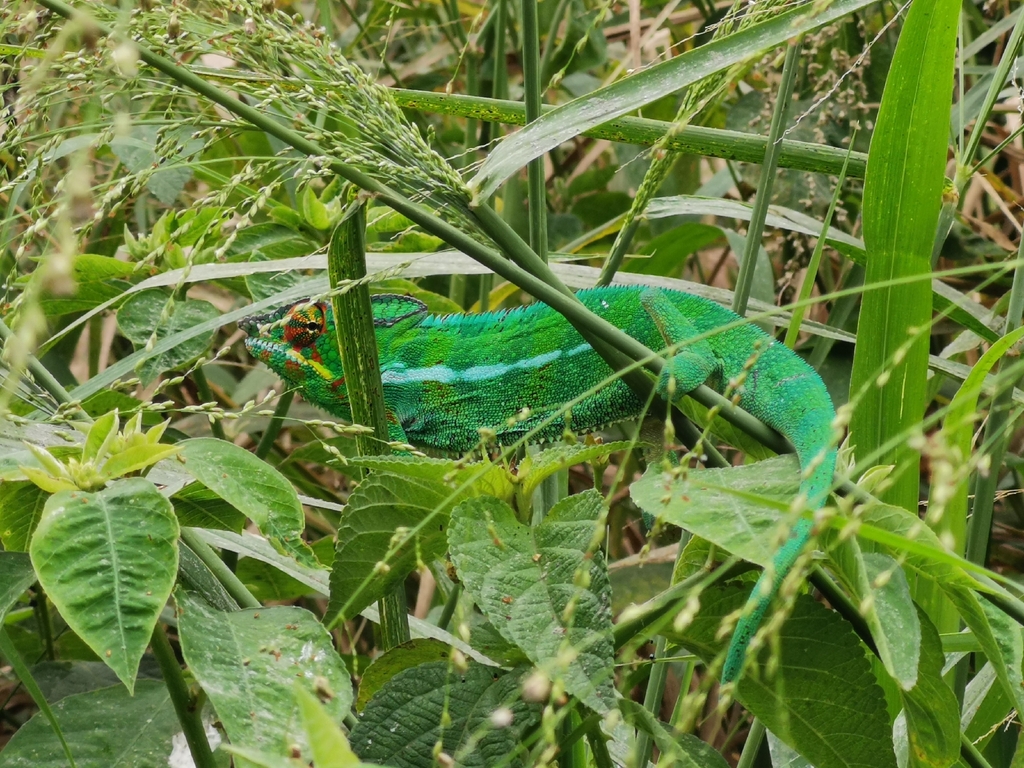
Among the species introduced into other countries are also a number of chameleons: the panther chameleon (Furcifer pardalis) was introduced to Réunion before 1830. It is still found on the island today. The Cape dwarf chameleon (Bradypodion pumilum) was released in Namibia in the 1990s and established small populations in Swakopmund, Walvis Bay, Lüderitz and Windhoek. However, all these populations are now extinct. The Parsons’ chameleon (Calumma parsonii parsonii) was introduced from Madagascar to Mauritius in the 1960s. However, this did not result in a viable population. The frilled chameleon (Chamaeleo dilepis) was introduced to the South African province of the Free State before 1978, but does not appear to have established a self-sustaining population there either. Finally, various species of dwarf chameleon (Bradypodion ssp.) were introduced to the Free State province in South Africa in 1939. They, too, failed to establish a permanent population.
Overall, lizards have been introduced into non-native countries in sub-Saharan Africa more than any other group (23 species), followed closely by amphibians (21 species) and snakes (14 species). Most introduced species are observed in South Africa, but also in Madagascar, the Mascarene Islands and surrounding islands. It is unclear whether introduced species are observed less frequently in African countries further north, or whether they are actually less prevalent there. Two-thirds of the introduced species that managed to establish their own populations originated from other regions of Africa or the surrounding islands, as well as the Middle East. The situation is quite different for species that were unable to reproduce after being introduced.
The earliest cases of species introduction in sub-Saharan Africa date back to the 17th century, including the four-clawed gecko (Gehyra mutilata) and the Mascarene frog (Ptychadena mascareniensis). With the advent of colonialism, the number of introduced species rose sharply. A further peak occurred from around the year 2000 onwards, coinciding with an increase in international trade.
There are many reasons why animals are transported unintentionally, but in most cases it happens by accident. Geckos and frogs, in particular, are frequently transported as stowaways in fruit shipments, in shipping containers, or in tourists’ luggage. Less commonly, reptiles and amphibians are deliberately released, as in the case of the Cape dwarf gecko (Lygodactylus capensis), which was released at a nursery. The release of reptiles and amphibians kept as pets does not usually lead to the establishment of breeding populations. Two cases of deliberate release for the purpose of biological control of other animal species are known, as are three deliberate releases for no apparent reason. The release of reptiles and amphibians kept as pets does not usually lead to the establishment of breeding populations. Two cases of deliberate release for the purpose of biological control of other animal species are known, as are three deliberate releases for no apparent reason.
The main potential problems posed by introduced species are the displacement of other native species, but also predation on native species. Hybridisation with native species occurs very rarely. The spread of diseases, such as parasitic infections, is a common problem. None of these problems have been reported in relation to introduced chameleons to date; however, there are very few studies on the subject in many places.
Herping the African Continent: Alien Amphibians and Reptiles in Sub-Saharan Africa
Grzegorz Kopij
Biology 2026, 15: 639
DOI: 10.3390/biology15080639
Free article download
Photo: A Furcifer pardalis on Réunion, photographed by Jason Berger, CC BY 4.0