The optic nerve of chameleons is highly specialised

The optic nerve of chameleons is highly specialised

Tiermedizin Science

It has long been known that chameleons have very special eyes. What is particularly fascinating is that they can move their eyes independently of each other in almost any direction. A team of US scientists has now discovered that the optic nerve in chameleons is also extremely specialised.

They examined adult reptiles of 34 different species using CT models. Brookesia superciliaris, Rieppeleon brevicaudatus and Chamaeleo calyptratus represented the chameleon family. They found that in all three chameleon species, the optic nerve was extremely curled. This anatomical feature means that the optic nerve in chameleons is much longer than would be necessary for an eye looking straight ahead. It probably enables the animals to have extremely mobile eyes without compromising their vision. Put simply, the optic nerve functions a bit like a flexi leash: when the eye moves sharply, part of the optic nerve is ‘unrolled’. When the eye moves back, the optic nerve curls back to its original position without overstretching the nerve fibres.

A new twist in the evolution of chameleons uncovers an extremely specialized optic nerve morphology
Emily Collins, Aaron M. Bauer, Raul E. Diaz Junior, Alexandra Herrera-Martínez, Esteban Lavilla, Edward L. Stanley, Monte L. Thies, Juan D. Daza
Scientific Reports 15, 2025: 38270.
DOI: 10.1038/s41598-025-20357-3
Download the article for free

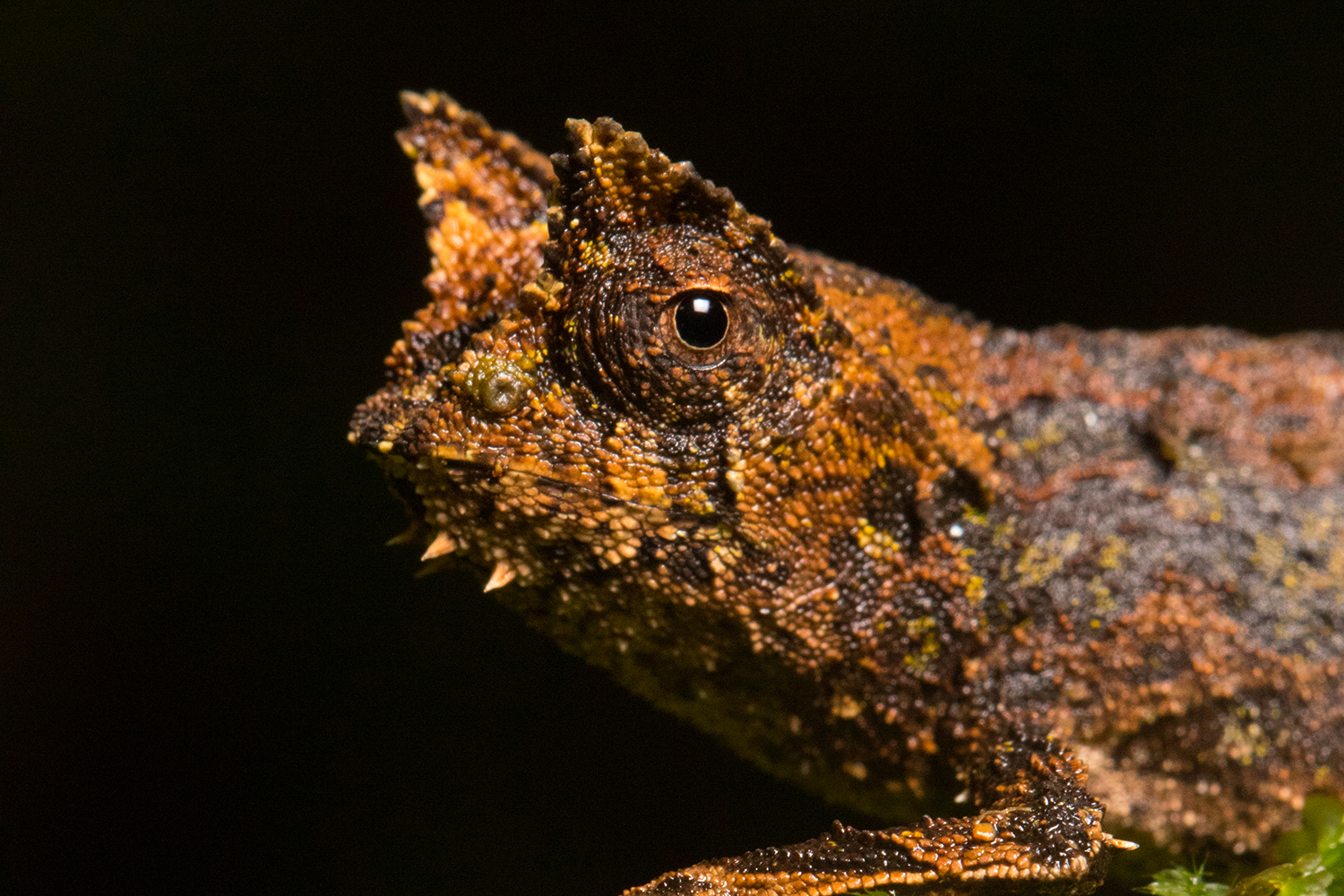
Photo: Portrait of Brookesia superciliaris, photographed by Alex Negro

First digital atlas of the head anatomy of the veiled chameleon

First digital atlas of the head anatomy of the veiled chameleon

Tiermedizin Science

The anatomy of chameleons has been discussed in many publications, primarily older ones. Scientists at University College London (UK), in collaboration with Belgian, French and Swiss colleagues, have now created the first digital atlas of the head anatomy of the Veiled chameleon (Chamaeleo calyptratus).

To do this, they performed micro-CT scans of two dead adult Chamaeleo calyptratus specimens preserved in ethanol. One male and one female were examined. A few weeks later, they repeated the CT scans using special stains. The skulls of both chameleons were then digitally reconstructed using various programmes, including Dragonfly 3D World and UNet3D. Bone parts, muscles and other soft tissue were distinguished and named. In addition, estimates of muscle strength, bite force, muscle volume and muscle length were made.

As expected, the authors found that the male veiled chameleon differed from the female primarily in terms of its facial skull and higher casque. The muscle responsible for moving the lower jaw is significantly larger in males than in females. All of the micro-CT scans can be viewed here free of charge.

3D anatomical atlas of the heads of male and female adult Chamaeleo calyptratus
Alice Leavey, Eloy Gálvez-López, Anthony Herrel, Laura B. Porro
The Anatomical Record, 2025: 1-33.
DOI: 10.1002/ar.70077
Download the article for free

Graphic: Colour representation of the various bone parts of the skull and lower jaw of the veiled chameleon

Ultrasound of the urogenital tract in chameleons

Ultrasound of the urogenital tract in chameleons

Tiermedizin Science

In recent years, initial studies have been conducted on imaging in the diagnosis of diseases specifically in chameleons. A further study by veterinarians at the University of Leipzig (Germany) now presents additional comparative data on the urogenital tract of chameleons.

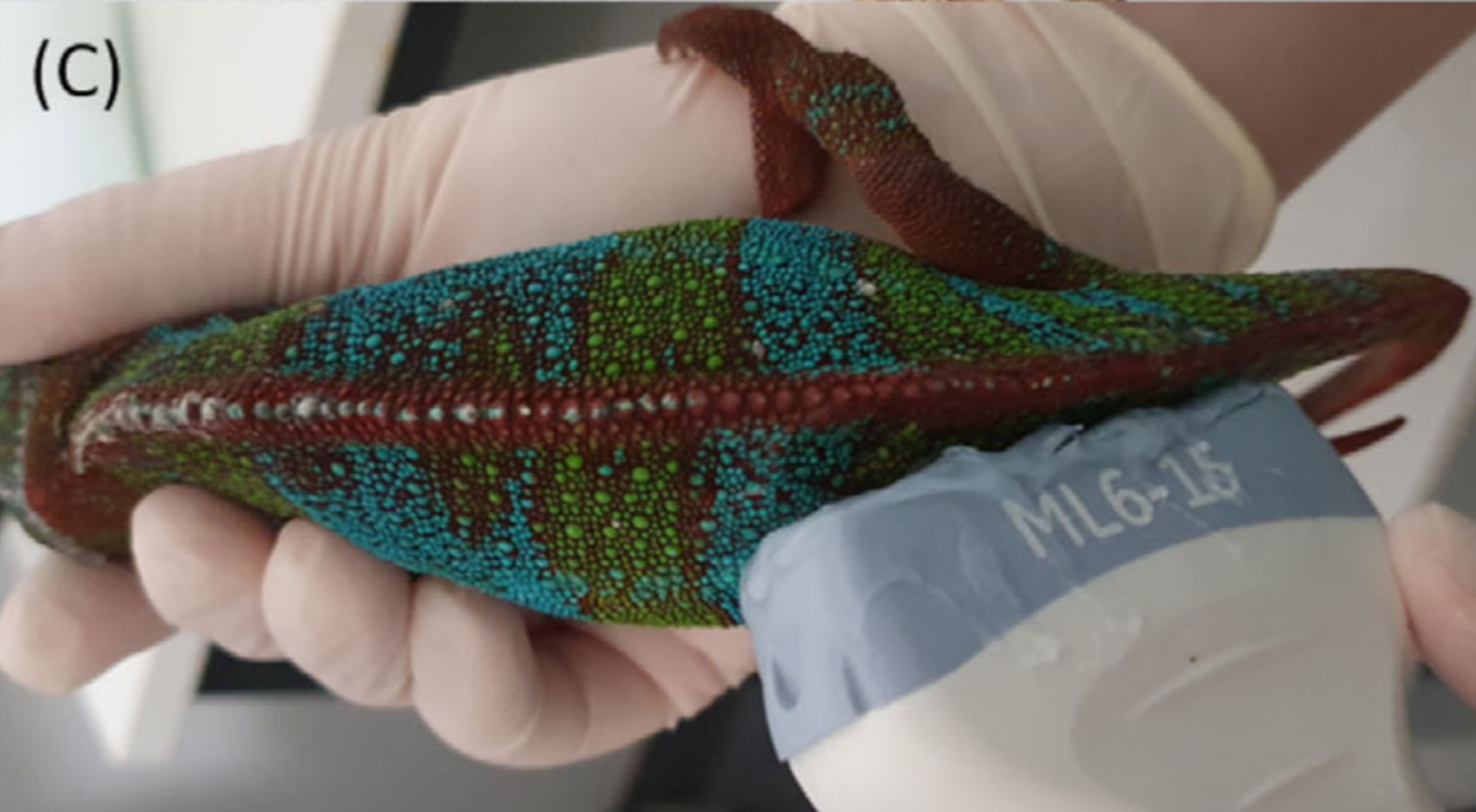
They examined the kidneys, bladder and reproductive organs of 42 lizards brought to the university hospital by private owners using ultrasound. Among the patients were seven Chamaeleo calyptratus and five Furcifer pardalis. Of these 12 chameleons, six were male and six were female. All organs were measured, described and sample images were saved.

Unfortunately, the sex organs of none of the female chameleons could be assessed for the study, as they were either pathologically altered or had already been removed during previous surgery. The most suitable location for coupling the ultrasound probe to the kidneys of the chameleons was found to be approximately one centimetre in front of the hip. The postpelvic portion of the kidneys was always smaller than the prepelvic portion. The kidneys of all male chameleons showed heterogeneous stripes, while the kidneys of the females were always homogeneous. This striping is probably due to sexual segments in the kidneys of males. The kidney tissue was isoechogenic to muscle tissue and more hypoechoic than adipose tissue. The testes of the male chameleons were located in the posterior third of the coelomic cavity, directly below the spine and in front of the kidneys. The right testicle was slightly further forward than the left. The capsule was hyperechoic in all males, while the testicular structure was always homogeneous. The study also provides average measurements of the kidneys and testicles of Yemen and panther chameleons.

The data largely correspond to the data already compiled by Aßmann in 2015 on ultrasound of the urogenital tract of chameleons. Only the kidney length differed significantly (longer) from previous studies.

Comparative sonographic studies of the urogenital tract of lizards
Nils B. Klützow, Volker Schmidt
Veterinary Radiology & Ultrasound 2025, 66:e70075
DOI: 10.1111/vru.70075
Free download of the article

Tick species detected on chameleon for the first time

Tick species detected on chameleon for the first time

Beobachtungen Tiermedizin

Ticks are a relatively rare parasite in chameleons. A recent case report of tick infestation in a chameleon comes from southern Turkey.

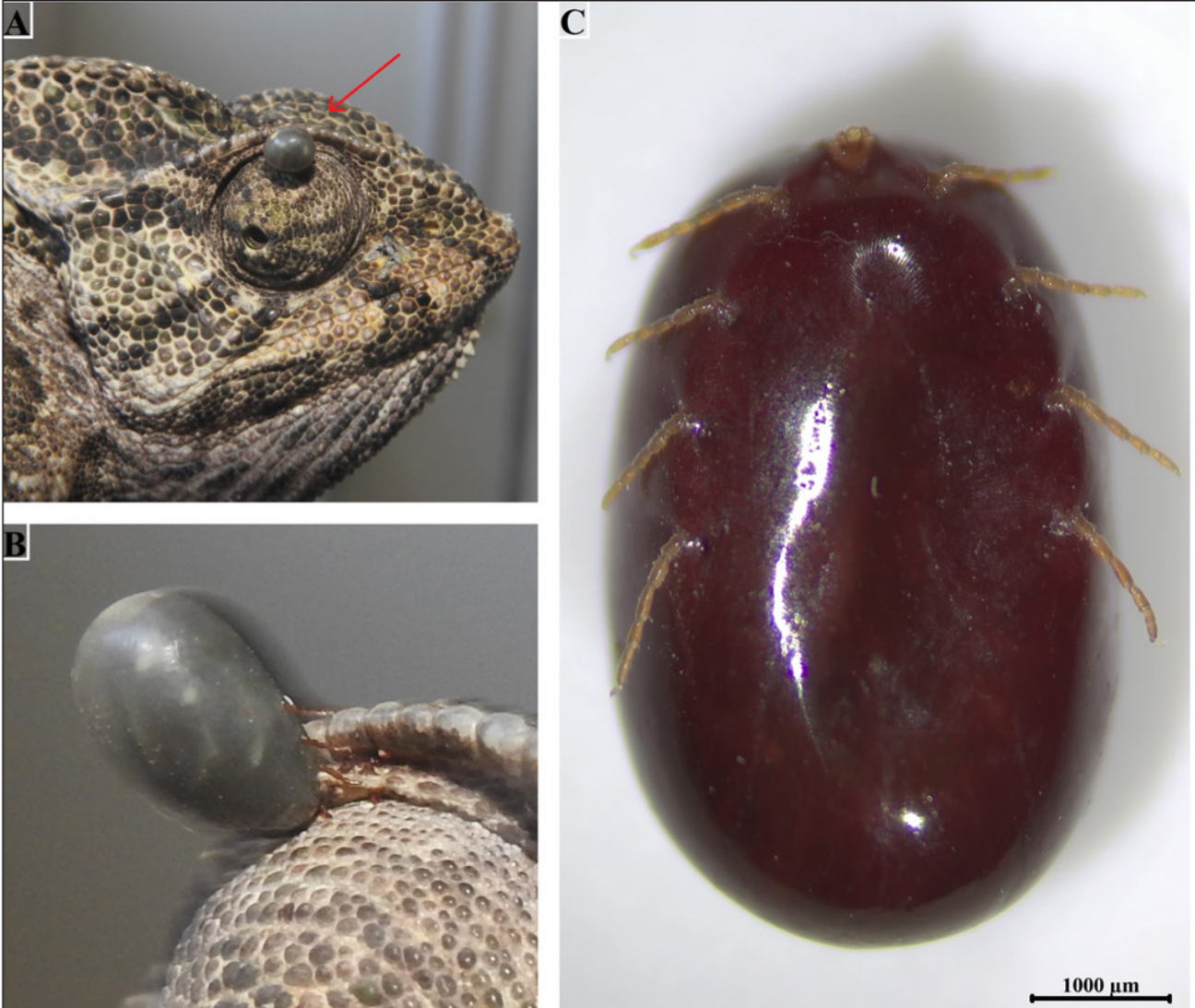
A Chamaeleo chamaeleon with an engorged tick above its right eye was noticed by a veterinarian right next to a path on the campus of a department of the Agricultural Research and Policy Authority in Demre. He removed the tick and had it examined further. Under the microscope, it turned out to be a nymph of the species Hyalomma aegypticum. Hyalomma aegypticum is known to date in reptiles, especially tortoises of the genus Testudo, but the spectrum of possible hosts also includes numerous mammals. Chameleons were not previously known as hosts, so this is the first case worldwide.

Incidentally, ticks of the genus Hyalomma have also been present in Germany for about ten years. Unlike many other tick species, they can ‘actively hunt’, i.e. pursue their host, and have become ‘notorious’ thanks to media exaggeration. In addition, some species transmit Crimean-Congo haemorrhagic fever (CCHF) to humans, while others transmit spotted fever. With reference to the current publication, it would be interesting to know whether other Hyalomma species native to this country are potentially hosts for chameleons in outdoor enclosures.

A novel host record: Hyalomma aegypticum (Linnaeus, 1758) infestation on the Mediterranean Chameleon, Chamaeleo chamaeleon (Linnaeus, 1758) in Türkiye
Gokhan Eren
Eurasian Journal of Veterinary Sciences 2025: 41:e0454
DOI: 10.63673/eurasianjvetsci.454

Photo: The tick found, together with the host chameleon, from the publication mentioned above.

What kills chameleons in zoos?

What kills chameleons in zoos?

Tiermedizin Science

Scientists at the University of Veterinary Medicine Montréal (France) recently analysed the causes of death in chameleons kept in zoos between 2011 and 2022. The Zoological Information Management System (ZIMS) was used to search for zoos that currently keep chameleons or have kept them since 2011. Questionnaires were sent to a total of 245 zoos. The questionnaires asked about the number, species and sex of chameleons kept, as well as selected husbandry conditions (coolest and warmest temperatures, humidity, feeding) and dissection results.

Around 1000 chameleons of 36 different species are currently kept in zoos worldwide. 65 of the zoos surveyed took part in the study, 48 of which regularly carried out dissections on chameleons. However, only 29 of the participating zoos were able to provide dissection results. A total of 412 pathological findings from 14 different chameleon species were analysed. Among the species kept were Brookesia stumpffi, Brookesia superciliaris, chameleons of the genus Brookesia without species identification, Calumma parsonii, Chamaeleo calyptratus, Chamaeleo chamaeleon, Furcifer lateralis, Furcifer oustaleti, Furcifer pardalis, Rieppeleon brevicaudatus, Trioceros melleri, Trioceros montium and Trioceros quadricornis. Panther chameleons were kept most frequently (226 specimens).

The statistical analysis showed that most of the chameleons in the participating zoos died of infectious diseases (46.8%). Infectious diseases included septicaemia, but also inflammation of the oral cavity, lungs, liver, kidneys and intestines. Almost 20% of the infectious diseases were in the area of the oral cavity. The most common bacteria were Enterococcus and Pseudomonas. Among the fungi, Nannizziopsis including CANV, Fusarium and Metarhizium were represented. A good third of the necropsy reports also indicated parasitoses, with these occurring both as a cause of death and as an incidental finding. Coccidia and trematodes as well as various nematodes were often present. The second most common cause of death in the participating zoos was non-infectious kidney diseases (11.4%). This was closely followed by diseases of the reproductive tract, including egg loss and egg yolk coelomitis, which accounted for 10.7% of cases.

Contrary to the authors’ initial assumption, there was no correlation between the surveyed husbandry parameters in the cages and the incidence of kidney disease. Basically, there was a tendency towards an increased incidence of kidney disease in countries where the average humidity was generally lower.

Evaluation of mortality causes and prevalence of renal lesions in zoo-housed chameleons: 2011-2022
Amélie Aduriz, Isabelle Lanthier, Stéphane Lair, Claire Vergnau-Grosset
Journal of Zoo and Wildlife Medicine 55(2), 2024
DOI: 10.1638/2023-0023

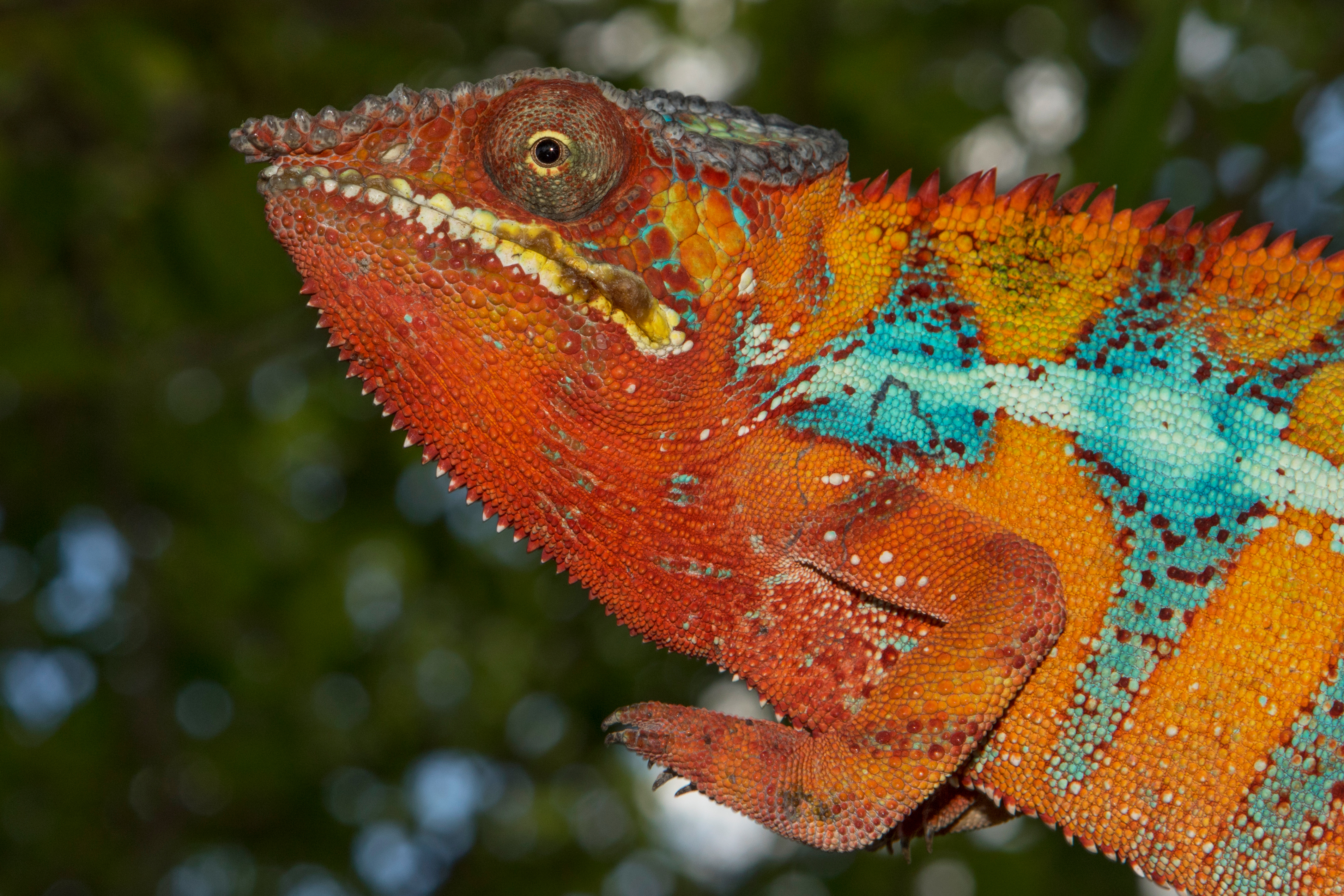
Photo: Panther chameleon in Madagascar, photographed by Alex Negro

New case reports on hemipenes amputation

New case reports on hemipenes amputation

Tiermedizin

The University of Sofia (Bulgaria) has published a new paper with several case reports involving chameleons. The authors describe 16 cases of different lizards that suffered a hemipenis prolapse and their treatment.

The lizards included a panther chameleon (Furcifer pardalis) and two Veiled Chameleons (Chamaeleo calyptratus). All three patients were presented to the veterinarians with bilateral hemipenes prolapse. Initially, the prolapses were bathed in 20% dextrose solution, after which the hemipenes were manually repositioned. However, the prolapses then recurred, so surgery was the final solution. Under general and local anaesthesia administered intramuscularly, the hemipenes were removed, the wound sutured and the remaining small stump repositioned in the respective hemipenes pocket. Meloxicam was administered as an analgesic once a day for 5 days after the operation. Only lizards in which the surgical field appeared to be dying off during the follow-up examinations were given antibiotics for 10 days.

Hemipenectomy in leopard geckos, chameleons and bearded dragons
Seven Mustafa & Iliana Ruzhanova-Gospodinova
Tradition and Modernity in Veterinary Medicine, 2024
DOI: nicht vorhanden

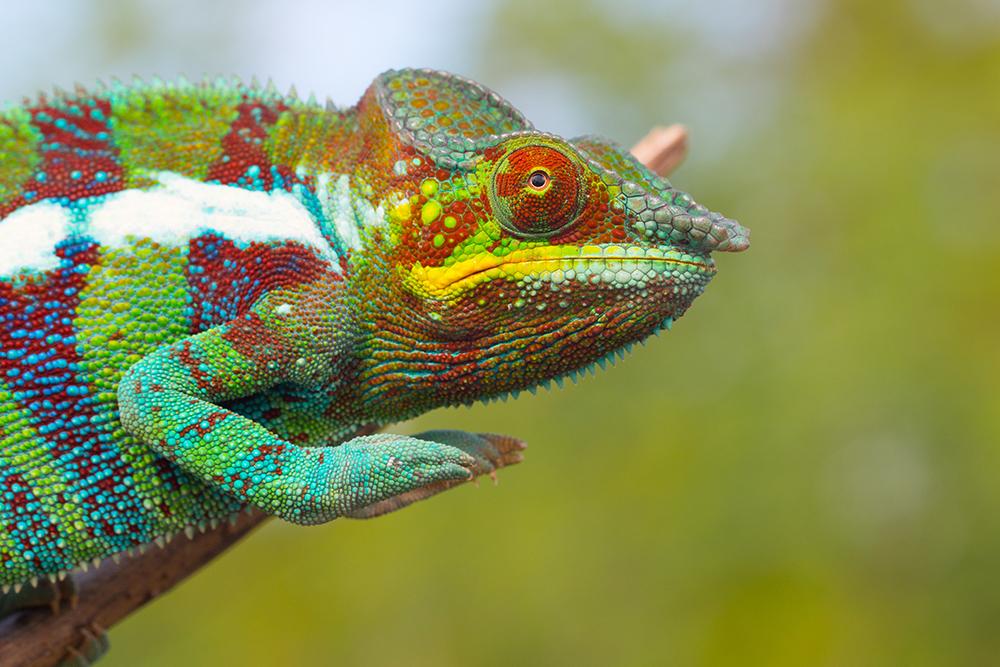
Photo: Panther chameleon, photographed by Alex Laube in Madagascar

Mosquito bites may induce skin colour change

Mosquito bites may induce skin colour change

Tiermedizin Science

Sometimes science starts small: last year, someone posted a photo of a Calumma globifer with a mosquito sitting on it on the online platform iNaturalist. Right there you could see a black discoloration of the scales. I wonder if there was a connection?

A handful of curious people searched for more photos of mosquitoes on chameleons and found what they were looking for: On Facebook there were some of Veiled chameleons, on iNaturalist more of Furcifer minor and Furcifer nicosiai. However, there were also six observations of mosquitoes on chameleons that did not appear to have black spots.

To test the connection, scientists in Madagascar placed two Furcifer oustaleti and four carpet chameleons alone in an enclosure with 25 female Asian tiger mosquitoes (Aedes albopictus), which had not been fed for 24 hours beforehand. At the same time, all six chameleons were pricked in the skin with a needle to test whether this “trauma” would also trigger a color change in the skin. The results were surprising: in the four Furcifer lateralis, numerous black skin discolorations developed after mosquito bites, in the two Furcifer outaleti not a single one. The punctures with the needle remained without consequences in all six.

The authors of the recently published article propose three possible theories as to how the color change in the chameleon’s skin could come about: The mosquito saliva could contain a type of local anesthetic, nitric oxide or other proteins that cause the skin’s melanophores to become exclusively visible. Further research in this field would certainly be exciting!

Mosqito bite-induced color change in chameleon skin
Pablo Garcia, Raul E. Diaz Junior, Christopher V. Anderson, Tovo M. Andrianjafy, Len de Beer, Devin A. Edmonds, Ryan M. Carney
Herpetological Review 54(3), 2023, pp.353-358

Online lecture about parasites in reptiles

Online lecture about parasites in reptiles

Tiermedizin Webinars

The DGHT has created a novelty this year with the digital regulars’ table. Every last Thursday of the month, reptile keepers from all over Germany meet to discuss a given topic and a corresponding lecture. No-one has to travel far to attend, as the speakers and participants come to their living room via an online connection.

Paula Sapion Miranda will kick things off on 25 January 2024. The vet researches parasites in reptiles and amphibians at Justus Liebig University in Giessen and also works at Exomed, the well-known veterinary laboratory for exotic animals. She will talk about common and less common unwanted lodgers. Please register by e-mail to bonsels@dght.de by the day before, and the participation link will be sent out on the day of the regulars’ table.

Paula Sapion Miranda Parasites in reptiles and amphibians
1st online regulars’ table of the DGHT
Start 20.00 hrs

Lecture for vets on prophylaxis for chameleons

Lecture for vets on prophylaxis for chameleons

Tiermedizin Webinars

On 18 November 2023, the spokesperson of the AG Chameleons will give a lecture for veterinary colleagues on which prophylactic measures are possible and useful in veterinary practice. To a large extent, prophylaxis includes keeping the chameleons in the terrarium itself, so a large part of the lecture will deal with what needs to be considered when keeping chameleons and which common mistakes still lead to husbandry-related diseases or injuries in chameleons. She will also discuss the collection of the so-called minimum database during the annual check-up in the veterinary practice and show examples of diseases recognised early and late. A Q&A session directly after the respective presentations rounds off the short excursion into prophylaxis in chameleons.

Registration for the conference is also possible for non-DGHT members who are veterinarians – see the link below to the mVet conference platform.

Dr. Alexandra Laube Prophylaxis for chameleons – is it possible and if so, how?
59. Conference of DGHT working group amphibian and reptile diseases (AG ARK)
Online

Photo: Calumma amber in the Montagne d’Ambre, Madagascar, photographed by A. Laube

Histology of the chameleon liver

Histology of the chameleon liver

Tiermedizin Science

Histological examinations of organ tissue are part of every pathological examination in veterinary medicine. They are also frequently carried out in reptiles, but there are few studies on the histology of healthy organ tissue. An Arabic publication now deals with histological sections of chameleon livers.

Seven adult Yemen chameleons were captured in Abha City in the Aseer region and then killed with ether inhalation. The livers were placed in formalin and then poured into paraffin to make sections.

Morphologically, the liver was found to be a two-lobed, dark brown organ approximately 3.7 x 2 cm in size, which lies in the coelomic cavity in front of the stomach and surrounds the gall bladder. As in other animals, a capsule of connective tissue surrounds the liver.

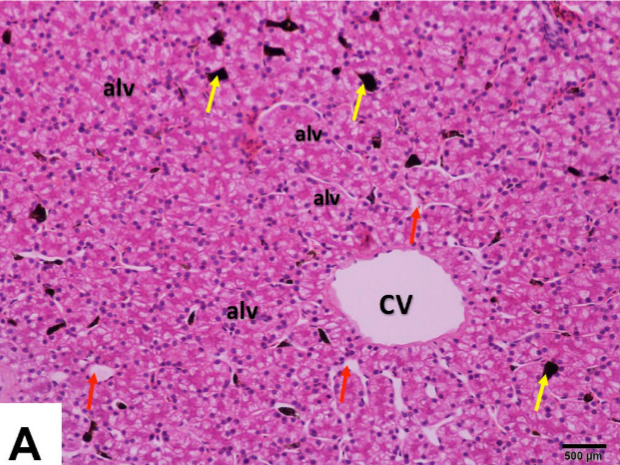
Histologically, the liver of Yemen chameleons resembles that of other vertebrates in many respects. The liver capsule consists of closely spaced collagenous fibres and smooth muscle fibres. Normally, trabecular connective tissue divides the liver itself into many small lobules, but such a structure does not appear to be present in Yemen chameleons. In contrast to mammals, the liver cells (hepatocytes) are not arranged radially around a vein, but rather irregularly in follicles or alveoli. The hepatocytes are surrounded by capillary blood vessels. So-called melanoma macrophages, which are not found in birds and mammals, can be seen in the blood vessels. The hepatocytes in the Yemen chameleon are polyhedral or pyramid-shaped and usually contain several large, round cell nuclei in the periphery. The nuclei contain conspicuously dark nucleoli. Occasionally nuclei are central. Under haematoxylin-eosin (HE) staining, the hepatocytes appear very eosinophilic. In the connective tissue, branches of the portal vein, hepatic artery, small bile ducts and lymphatic vessels could be visualised. Haematopoietic tissue was found in the area directly under the liver capsule.

In addition to the histological examination, several pieces of liver were also examined using transmission electron microscopy. Images of both examination methods can be found in the publication.

Histomorphological, histochemical and ultrastructural studies on the healthy liver of Yemen Veiled Chameleon (Chamaeleo calyptratus) in Southern Saudi Arabia
Amin A. Al-Doaiss, Mohammed A. Alshehri, Ali A. Shati, Mohammad Y. Alfaifi, Mohammed A. Al-Kahtani, Ahmed Ezzat Ahmed, Refaat A. Eid, Laila A. Al-Shuraym, Fahd A. Al-Mekhlafi, Mohammed Al Zahrani, Mohammed Mubarak
International Journal of Morphology 41(5), 2023: pp. 1513-1526.
DOI: none

Image: Histological section of the liver of a Yemen chameleon from the above-mentioned publication