New locality record of Calumma vencesi (Madagascar)

New locality record of Calumma vencesi (Madagascar)

Verbreitung Science

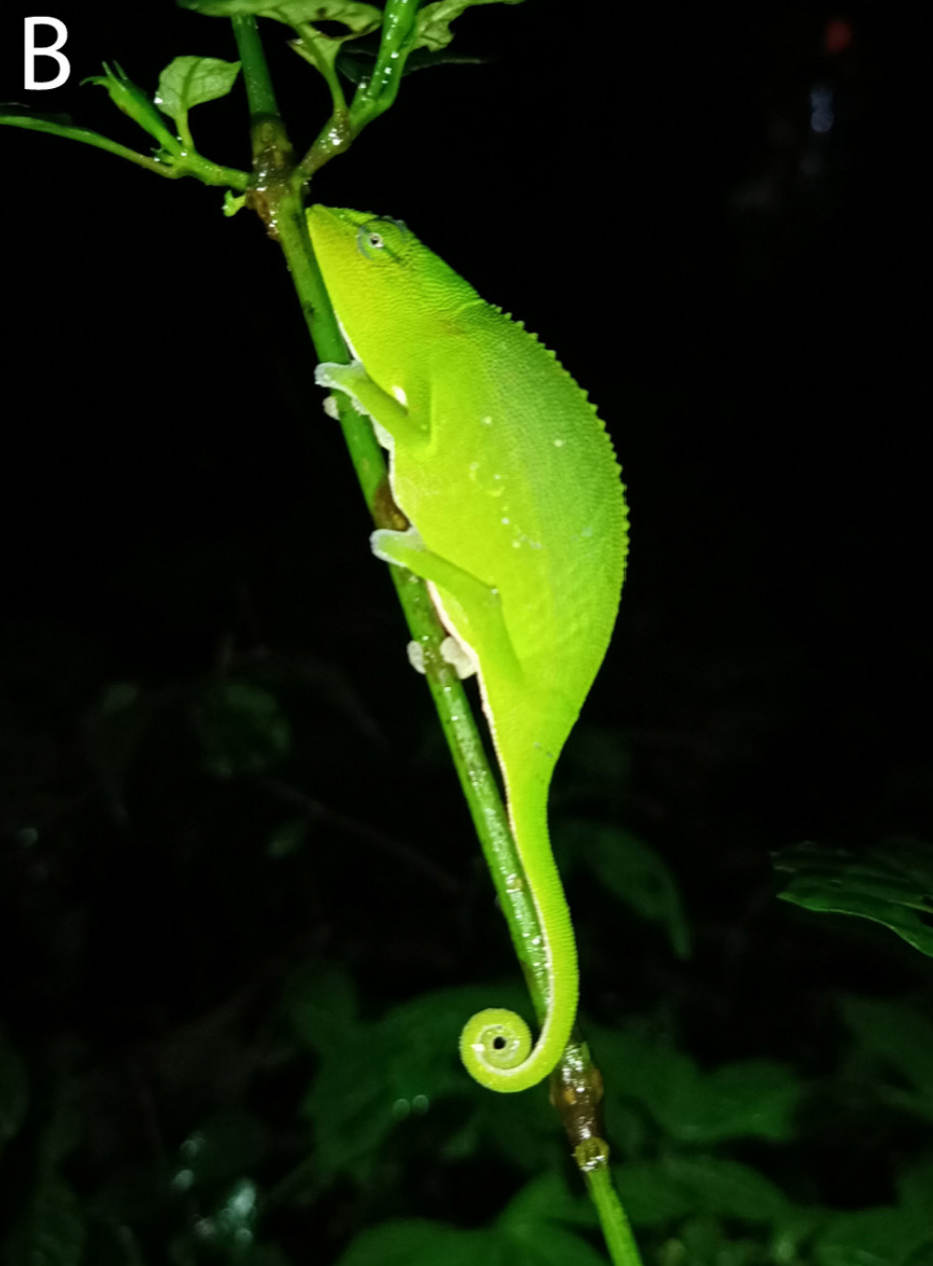
Calumma vencesi occurs in northern Madagascar and has so far been found in Betaolana, Besariaka and Tsararano. A Madagascan research team has now discovered the species in another rainforest: Sorata. Sorata is part of the COMATSA corridor, which mainly consists of the Marojejy, Anjanaharibe Sud and Tsaratanana rainforests. Sorata, on the other hand, is located slightly further north towards Vohémar. The rainforest is currently managed by the WWF in collaboration with the local association Ambodimandresy Miaro ny Ala (AMA).

The scientists randomly distributed 14 transects in the rainforest, each consisting of three parallel lines of 50 m. Then, at night, they searched for sleeping chameleons along the transects with flashlights. The frequency of the species per 100 m was calculated, the plants used were documented and the sleeping height was measured.

A total of eight Calumma vencesi were found. They slept at an average branch height of 1.43 m, mostly on leaves, with a few individuals on branches. Five chameleons were found sleeping vertically, three more horizontally. Seven of the eight Calumma vencesi slept with their heads up, only one upside down.

The occurrence of only 0.38 individuals per 100 m is surprisingly low and even falls below that of chameleon species classified as critically endangered, such as Calumma tarzan. Until now, Calumma vencesi had only been found below 1000 m, but the study area in Sorata was at an average altitude of 1326 m. Calumma vencesi occurs in Sorata in the same distribution area as Brookesia nana, which makes the need to protect this rainforest even more urgent. The forest is threatened by slash-and-burn farming, illegal logging, grazing livestock and vanilla plantations.

 A new locality for the endangered Vence’s Chamaeleon, Calumma vencesi Andreone et al., 2001, from Sorata Forest, northeastern Madagascar
Jeanneney Rabearivony, Andriatsitohaina Ranaivojaona, Moussaïna Jao, Achille P. Raselimanana
Herpetology Notes 18, 2025: 817-820.
DOI: not available
Free article download

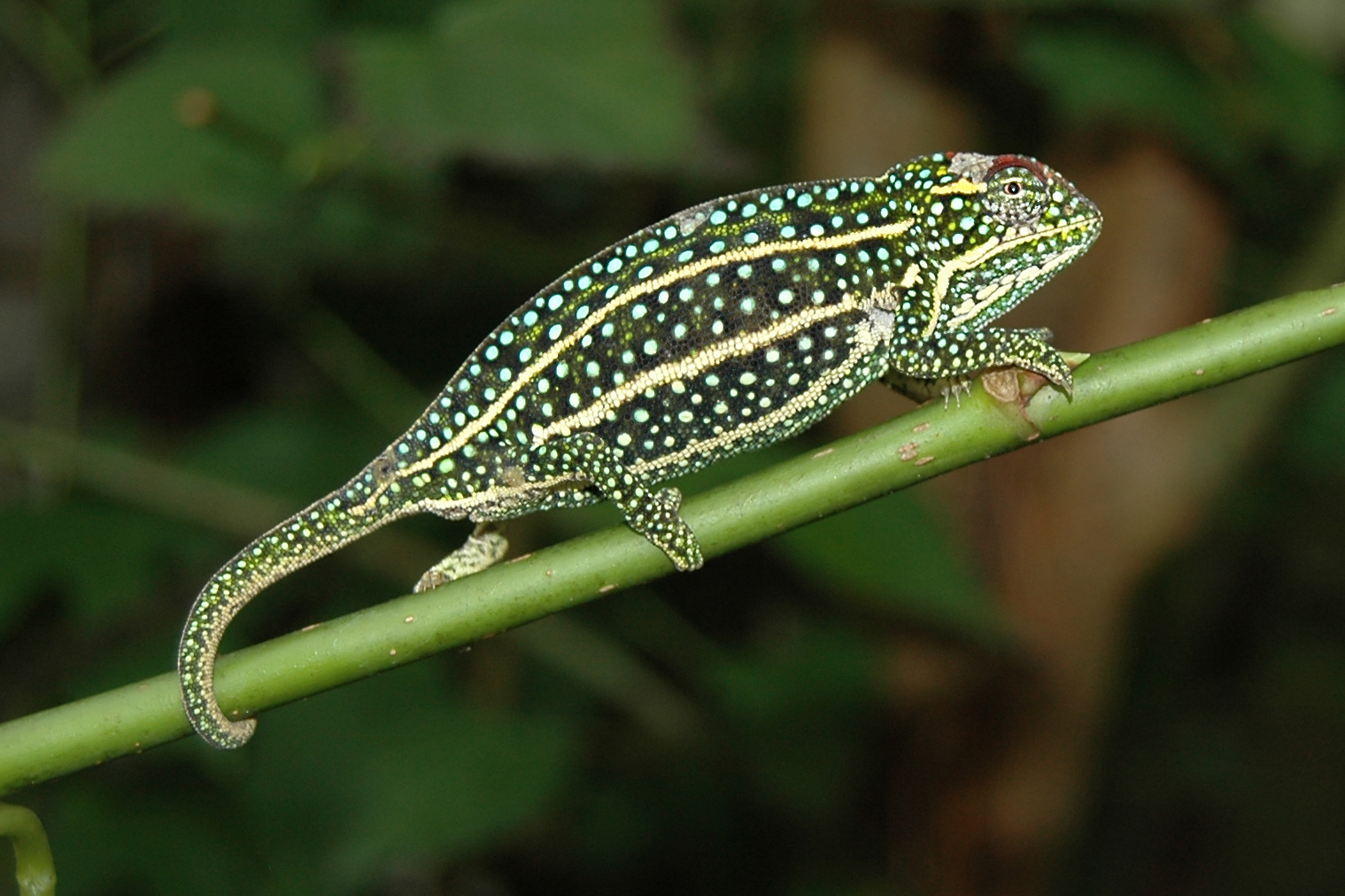
Photo: Calumma vencesi, photographed by Asméralie William, from the aforementioned publication

Ultrasound of the urogenital tract in chameleons

Ultrasound of the urogenital tract in chameleons

Tiermedizin Science

In recent years, initial studies have been conducted on imaging in the diagnosis of diseases specifically in chameleons. A further study by veterinarians at the University of Leipzig (Germany) now presents additional comparative data on the urogenital tract of chameleons.

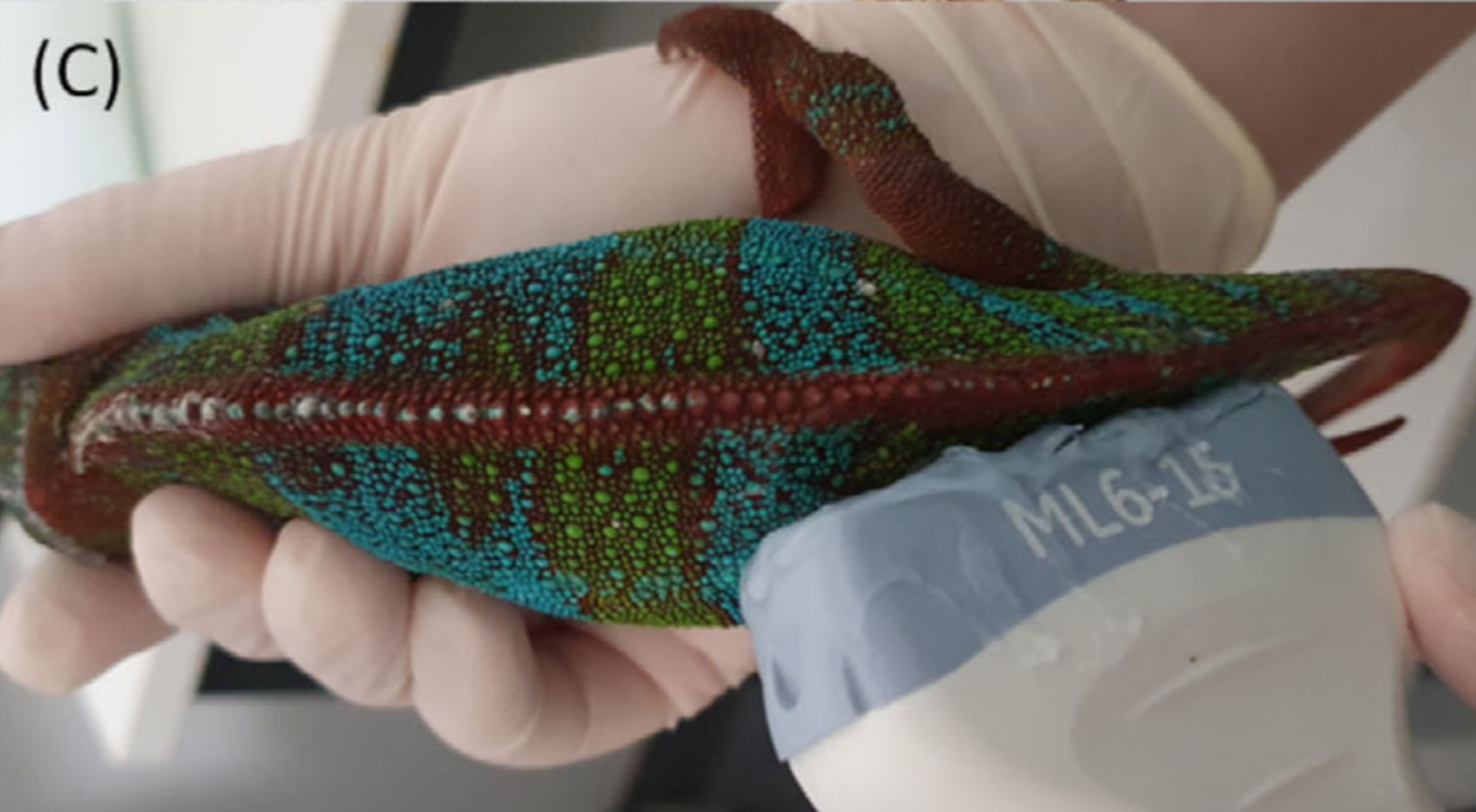
They examined the kidneys, bladder and reproductive organs of 42 lizards brought to the university hospital by private owners using ultrasound. Among the patients were seven Chamaeleo calyptratus and five Furcifer pardalis. Of these 12 chameleons, six were male and six were female. All organs were measured, described and sample images were saved.

Unfortunately, the sex organs of none of the female chameleons could be assessed for the study, as they were either pathologically altered or had already been removed during previous surgery. The most suitable location for coupling the ultrasound probe to the kidneys of the chameleons was found to be approximately one centimetre in front of the hip. The postpelvic portion of the kidneys was always smaller than the prepelvic portion. The kidneys of all male chameleons showed heterogeneous stripes, while the kidneys of the females were always homogeneous. This striping is probably due to sexual segments in the kidneys of males. The kidney tissue was isoechogenic to muscle tissue and more hypoechoic than adipose tissue. The testes of the male chameleons were located in the posterior third of the coelomic cavity, directly below the spine and in front of the kidneys. The right testicle was slightly further forward than the left. The capsule was hyperechoic in all males, while the testicular structure was always homogeneous. The study also provides average measurements of the kidneys and testicles of Yemen and panther chameleons.

The data largely correspond to the data already compiled by Aßmann in 2015 on ultrasound of the urogenital tract of chameleons. Only the kidney length differed significantly (longer) from previous studies.

Comparative sonographic studies of the urogenital tract of lizards
Nils B. Klützow, Volker Schmidt
Veterinary Radiology & Ultrasound 2025, 66:e70075
DOI: 10.1111/vru.70075
Free download of the article

Gene evolution in chameleon teeth

Gene evolution in chameleon teeth

Science

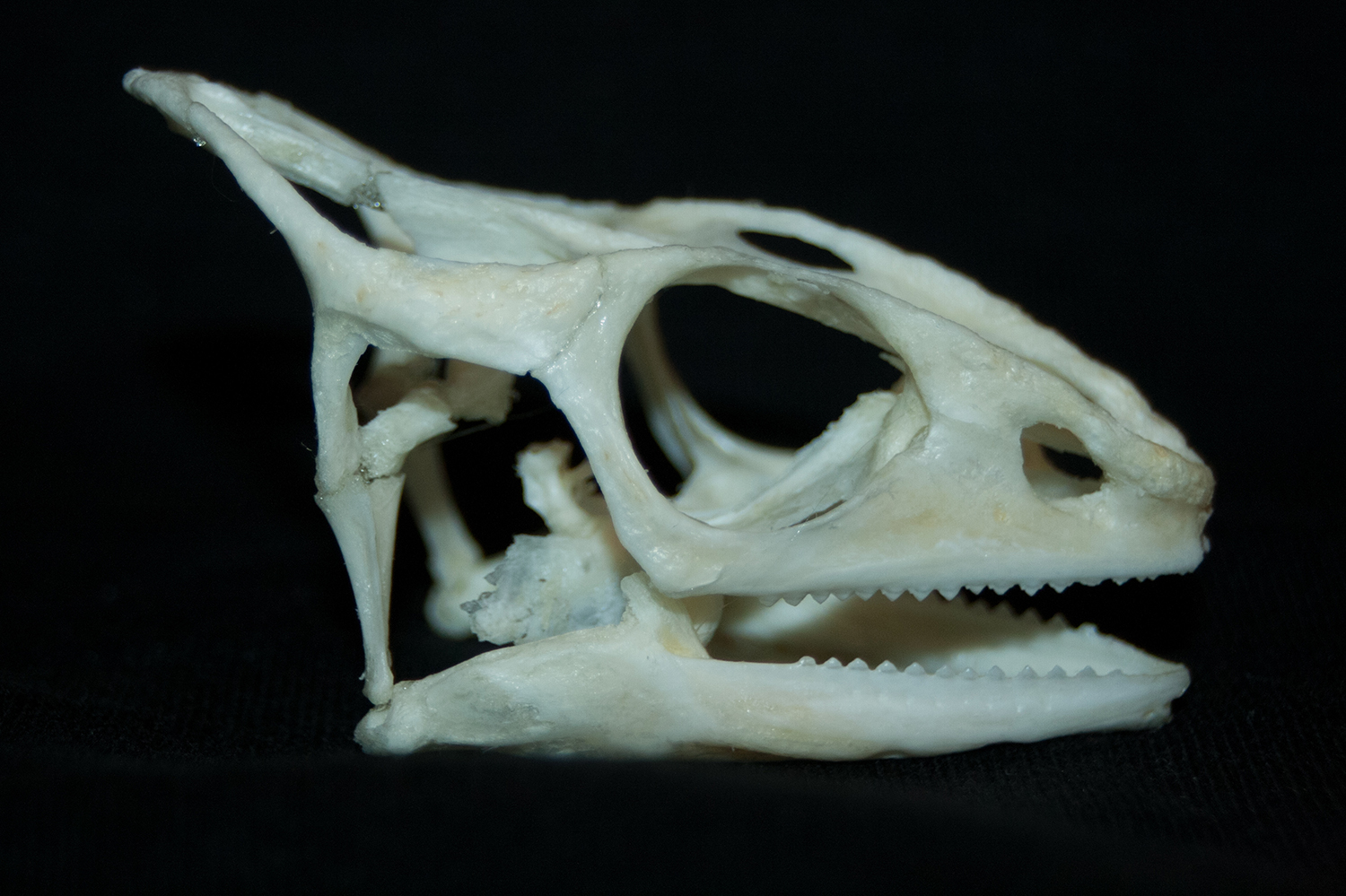
Chameleons have acrodont teeth, which means that their teeth are directly attached to the bone. Mammals, on the other hand, have so-called alveoli in which the teeth are seated. Scientists from Michigan (USA) have now investigated the genetic evolutionary development of tooth structures by comparing mammals with acrodont reptiles.

To do this, they compared the genomes of 24 acrodont reptiles and 12 mammal species. The acrodont reptiles included the chameleon species Furcifer pardalis, Trioceros harennae and Chamaeleo calyptratus, as well as chameleons of the genera Chamaeleo, Bradypodion and Trioceros that were not identified at the species level. The genes for amino acids, from which certain proteins in tooth enamel are built, were compared using various calculations and analyses.

The results showed that the loss of tooth replacement in acrodont reptiles did indeed lead to changes in the genes responsible for tooth enamel formation.

Reduction of tooth replacement disproportionately affects the evolution of enamel matrix proteins
John Abramyan, Gengxin Li, Hannah Khansa
Journal of Molecular Evolution 93, 2025: 494-510.
DOI: 10.1007/s00239-025-10258-4
Kostenloser Download des Artikels

Photo: Specimen of a panther chameleon skull with acrodont teeth, photographed by Alex Negro

Location for the 2024 conference

Location for the 2024 conference

AG Interna General topics

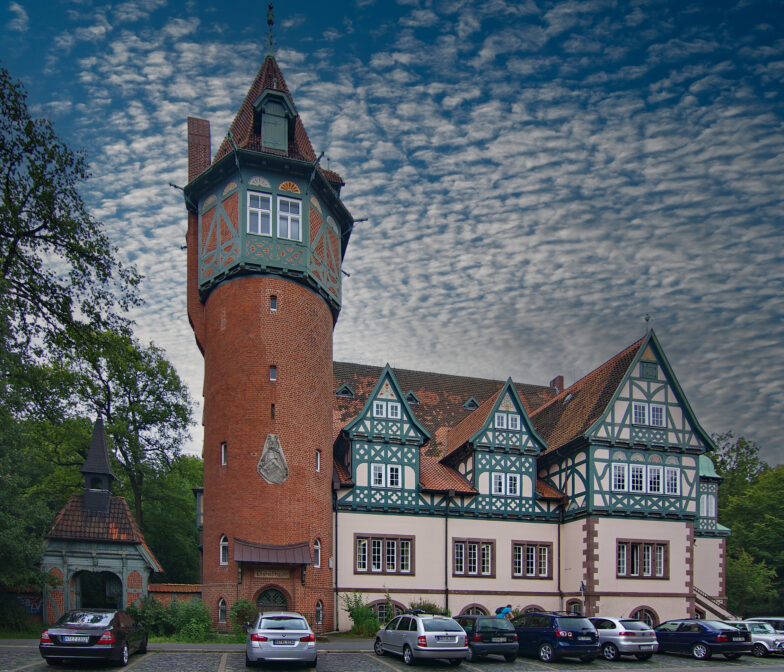
It’s now official: we will be meeting for the 2026 conference in Hanover, the capital of Lower Saxony. As voted by the members, the conference will take place from 29 to 31 May 2026. Hanover is a very diverse city and offers excellent ICE connections and an airport for travellers from further afield. We will meet in the Lister Turm district centre, a historic building beautifully located on the edge of the Eilenriede city forest. There is a beer garden for adults and a playground for children in the immediate vicinity. The Hannover Adventure Zoo is located directly on the other side of the Eilenriede forest, within walking distance. There are also several hotels within walking distance, so there will be something for every budget and length of stay. We look forward to seeing you there!

Picture: Lister Turm CC BY-SA 3.0 losch

Tick species detected on chameleon for the first time

Tick species detected on chameleon for the first time

Beobachtungen Tiermedizin

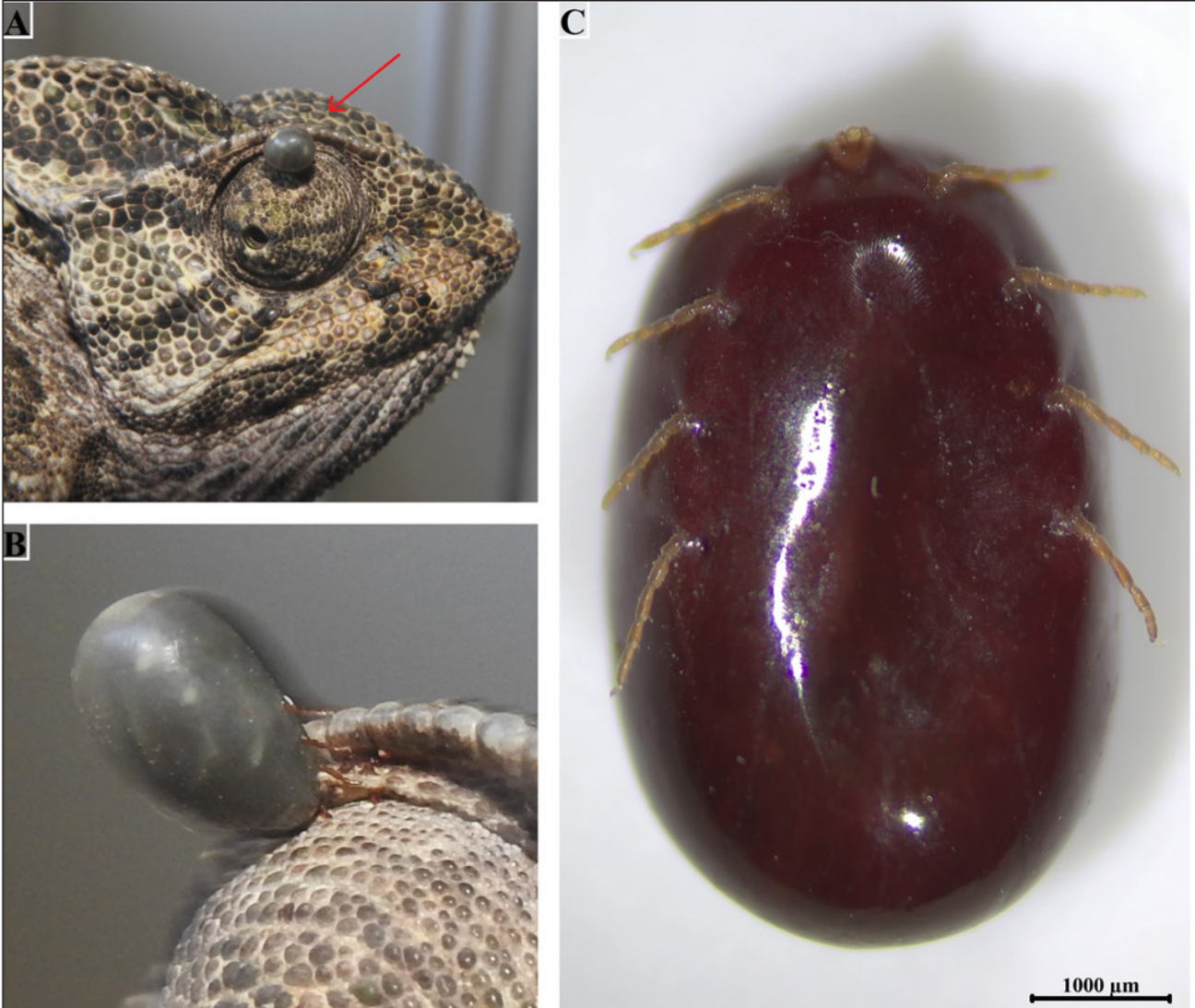
Ticks are a relatively rare parasite in chameleons. A recent case report of tick infestation in a chameleon comes from southern Turkey.

A Chamaeleo chamaeleon with an engorged tick above its right eye was noticed by a veterinarian right next to a path on the campus of a department of the Agricultural Research and Policy Authority in Demre. He removed the tick and had it examined further. Under the microscope, it turned out to be a nymph of the species Hyalomma aegypticum. Hyalomma aegypticum is known to date in reptiles, especially tortoises of the genus Testudo, but the spectrum of possible hosts also includes numerous mammals. Chameleons were not previously known as hosts, so this is the first case worldwide.

Incidentally, ticks of the genus Hyalomma have also been present in Germany for about ten years. Unlike many other tick species, they can ‘actively hunt’, i.e. pursue their host, and have become ‘notorious’ thanks to media exaggeration. In addition, some species transmit Crimean-Congo haemorrhagic fever (CCHF) to humans, while others transmit spotted fever. With reference to the current publication, it would be interesting to know whether other Hyalomma species native to this country are potentially hosts for chameleons in outdoor enclosures.

A novel host record: Hyalomma aegypticum (Linnaeus, 1758) infestation on the Mediterranean Chameleon, Chamaeleo chamaeleon (Linnaeus, 1758) in Türkiye
Gokhan Eren
Eurasian Journal of Veterinary Sciences 2025: 41:e0454
DOI: 10.63673/eurasianjvetsci.454

Photo: The tick found, together with the host chameleon, from the publication mentioned above.

…and they do adapt to their surroundings!

…and they do adapt to their surroundings!

Science

The headline isn’t quite right, but it’s close. Scientists from the United Kingdom have recently proven that flap-necked chameleons do indeed adapt their colouring to their surroundings to a certain extent.

To this end, eight subadult Chamaeleo dilepis, which had previously been imported from Tanzania, were subjected to several experiments. The chameleons were placed in a small terrarium sitting on horizontal bars and exposed to different backgrounds: in the first experiment, the backgrounds were yellow, yellow-green, orange and blue-green; in the second experiment, the backgrounds were black and white. And in the third experiment, the backgrounds were decorated with yellow, yellow-green, black or white patterns in different scales (the pattern was originally taken from photos of blackberry bushes from the chameleons’ habitat). A terrarium with a grey background was used as a ‘neutral space’ before the experiments. The animals were photographed repeatedly for 21 minutes during each experiment.

On the yellow background, the chameleons without the predator decoy changed colour most quickly. There was no difference in the speed of colour change between yellow and orange, nor between yellow-green and blue-green backgrounds. The longer the chameleons sat in front of the orange background, the more they adapted to it.

When the chameleons sat on black backgrounds, their colouring also became significantly darker than on grey or white backgrounds. In experiments with differently patterned backgrounds, the scientists found that the chameleons reduced their own colour pattern on green or yellow backgrounds, but hardly at all on white or black patterns – this suggests that the animals are better protected in their natural habitat, especially in green/yellow grass, than on black or white backgrounds.

Of course, the flap-necked chameleons were not able to take on the exact colour of the background like an octopus – this myth remains just that – a myth. However, it would certainly be interesting to know if and when chameleons change their colouring for reasons of communication, camouflage or thermoregulation. So there is still plenty of room for further research.

Flap-necked chameleons change colour to match their background
Tom major, Alexia C.M. Hesten, Jan Stipala, Michael A. Cant, Martin Stevens, Jolyon Triscianko
Biology Letters 21, 2025: 20250134
DOI: 10.1098/rsbl.2025.0134

Comparisons between dwarf chameleons in South Africa

Comparisons between dwarf chameleons in South Africa

Science

South African scientists have recently been investigating whether three closely related Bradypodion lineages in the Eastern Cape Province of South Africa have evolved differently due to their different habitats or whether other causes are responsible.

The scientists are studying the two species Bradypodion ventrale from the Nama Karoo and Bradypodion taeniabronchium from the Elandsberg and Tsitsikamma Mountains and the fynbos of Thyspunt and Honeyville, as well as a population of dwarf chameleons from the fynbos of the Groot Winterhoek Mountains that has not yet been described as a separate species. The latter are often referred to as Bradypodion sp. ‘groendal’ because they occur in the Groendal Nature Reserve, among other places.

At night, chameleons were searched for using flashlights and the naked eye. Adult chameleons with a body length (SVL) of more than 36 mm were taken away overnight to be released back at the site where they were found the next day. All animals were measured accurately. Tissue samples were taken from the tip of the tail. In addition, the thickness and height of the branches on which the chameleons were found were measured. Further branch thicknesses were recorded along three 100 m long transects in each population. The data collected was statistically evaluated and the tissue samples were genetically examined.

A total of 232 chameleons were sampled for the study. Bradypodion taeniabronchium had significantly smaller head features than the other two species, but larger hands and feet. Bradypodion ventrale was larger overall than the others, but had longer limbs. Bradypodion taeniabronchium used the widest branches (average diameter 2.83 mm), but also the lowest (average height 82 cm above the ground). Bradypodion ventrale, on the other hand, used the thinnest branches (average diameter 1.52 mm), but the highest (average just under 93 cm above the ground).

The researchers found that all three populations of dwarf chameleons showed increased external similarity (convergence) when they occurred in the same habitats and less similarity (divergence) when they occurred in different habitats. The dwarf chameleons preferred certain branch thicknesses depending on their population, even though other branches were also available in their habitat. Finally, the authors point out that all the evidence available so far suggests that the as yet undescribed dwarf chameleons of the Groendal Nature Reserve represent a separate species.

Ecological factors promote convergent evolution and ecological speciation in dwarf chameleons (Bradypodion)
Krystal A. Tolley, Devon C. Main, Keith M. Dube, Bettine Jansen van Vuuren, Jessica M. da Silva
Zoosystematics and Evolution 101(3) 2025: 1227-1247
DOI: 10.3897/zse.101.151926

Photo: Bradypodion ventrale, from the publication cited

UV fluorescence in dwarf chameleons

UV fluorescence in dwarf chameleons

Science

Chameleons have window-like, translucent scales over certain bony processes, especially on the head. If the bone is illuminated with UV light at these points, the areas light up. It has previously been assumed that this UV fluorescence or the fluorescent tubercles are used for intra-species communication. South African scientists have now investigated this further in dwarf chameleons.

Five Bradypodion species in different habitats (fynbos, forest, bushland) were studied.

If the fluorescent tubercles are used for communication between males and females during reproduction, one would have to assume that their number differs greatly between males and females. Chameleons that live in a dense forest should also have more of them than animals in open terrain that is easy for predators to see.

The result of the study is quite astonishing: the larger sex of each of the different dwarf chameleon species had the higher number of fluorescent tubercles. Bradypodion of the same size, on the other hand, always had approximately the same number of fluorescent tubercles on their heads. The different habitats did not appear to have any influence on the number of fluorescent tubercles. There was also no difference between habitats heavily influenced by humans, such as gardens, and near-natural, unspoilt landscapes.

The authors conclude that the fluorescent bone tubercles in South African dwarf chameleons are probably not used for communication. It remains to be seen whether this is also the case in other chameleon species.

Body size, not habitat or sex, best explains the extent of ultraviolet fluorescence in African dwarf chameleons (Bradypodion)
Jody M. Barends, Wade K. Stanton-Jones, Graham J. Alexander, Krystal A. Tolley
Journal of Zoology
DOI: 10.1111/jzo.70032

Flap-necked chameleons in Cabinda (Angola)

Flap-necked chameleons in Cabinda (Angola)

Verbreitung Science

The province of Cabinda, a 7064 km² area belonging to Angola between the Democratic Republic of the Congo and the Republic of the Congo, is one of the least explored herpetological areas in Africa. The enclave is located around 50 kilometres north of the rest of Angola, directly on the Atlantic coast. Both its enclave status and the difficult accessibility of the existing forest areas have contributed to the fact that little information exists on the local herpetofauna. The Mayombe National Park makes up around a third of Cabinda’s territory. Mayombe is divided into a higher part of the park with rainforest between 500 and 900 metres and a lower part between the Inhuca and Chiloango rivers. This is followed by a coastal plain with valleys and drier vegetation directly on the coast.

During ten expeditions between 2018 and 2024, reptiles and amphibians were searched for on a daily basis. A total of 17 different locations were covered, 10 of which were within Mayombe National Park. Photos were taken of all animals and samples were taken to enable genetic identification.

Chamaeleo dilepis, which is widespread in Angola, was discovered in Mbongo Zimune in Mayombe National Park near the river in a plantation of introduced bamboo. The bamboo plantations are located at around 324 metres above sea level. The species was also found in Nganzi at 107 m in the valleys, where it is more common according to other literature. In the drier coastal areas, where Chamaeleo dilepis is also said to occur frequently, no chameleon could be detected in the present study.

A total of 76 different species were recorded, including 48 amphibian and 28 reptile species. 33 amphibian and reptile species mentioned in earlier literature could not be found again.

Filling the gaps: herpetological checklist of Mayombe National Park and Cabinda Province (Angola) shed light on one of the most unexplored corners of tropical Central Africa
Javier Lobón-Rovira, Ninda L. Baptista, Tyron Clark, Luke Verburgt, Gregory F.M. Jongsma, Werner Conradie, Luis Verissimo, Pedro Vaz Pinto
African Journal of Herpetology 74(1): 1-59
DOI: 10.1080/21564574.2024.2421007

Chameleons in Andrafiamena-Andavakoera (Madagascar)

Chameleons in Andrafiamena-Andavakoera (Madagascar)

Verbreitung Science

The north of Madagascar is a treasure trove of biodiversity – this has long been known. Nevertheless, even in the 21st century, many areas of the island are still little explored. A group of Malagasy and US biologists has now presented a new overview study that focuses on one such area.

The Andrafiamena-Andavakoera Protected Area (Paysage Harmonieux Protége d’Andrafiamena-Andavakoera) is located in the north of Madagascar, right between the Ankarana National Park and the Analamerana Protected Area. It is managed by the NGO Fanamby and consists of three isolated dry forests called Binara, Antsahabe and Andrafiamena.

During the transition from the dry to the wet season, observations were made by day and night with the naked eye along designated transects and pitfall traps were dug into the ground along three transect lines. In addition, possible reptile refuges, for example under dead wood, were examined and frog calls were recorded.

A total of 13 amphibian and 39 reptile species were recorded in the three forests. Three species of chameleons were frequently found in all three dry forests: Brookesia stumpffi in the deciduous layer, Furcifer pardalis and Furcifer petteri on trees and shrubs. Surprisingly, the most common chameleon species in Madagascar, Furcifer oustaleti, was only found in Andrafiamena during the study period, but not in Binara and Antsahabe. Brookesia stumpffi was always found on the ground or sleeping on young plants below 1 m height. Furcifer petteri and Furcifer pardalis tended to be found in the middle or upper part of the trees. The authors cite humans and the associated destruction of habitat as a possible threat to the protected area.

Herpetofaunal diversity in northern Madagascar: The Andrafiamena-Andavakoera protected area.
Fandresena Rakotoarimalala, Arianna Kuhn, Achille P. Raselimanana, Sara Ruane
Malagasy Nature 19, 2025: 160-174
DOI: not available

Photo: Male Furcifer petteri in Madagascar, photographed by Alex Negro