Chameleons in Namoroka (Madagascar)

Chameleons in Namoroka (Madagascar)

Verbreitung Science

The Tsingy de Namoroka are located in the hot west of Madagascar. They consist of needle-sharp karst rock with caves beneath and are surrounded by fragments of dry forest. Although the Tsingy are now a national park, access has so far been extremely difficult due to a complete lack of infrastructure and paths, and is even impossible during the rainy season.

The scientists carried out survey studies at three different locations within the national park. To do this, they used three 1,000 to 1,500 m transect lines at each site, along with pitfall traps. In addition, specific habitats such as caves were specifically targeted.

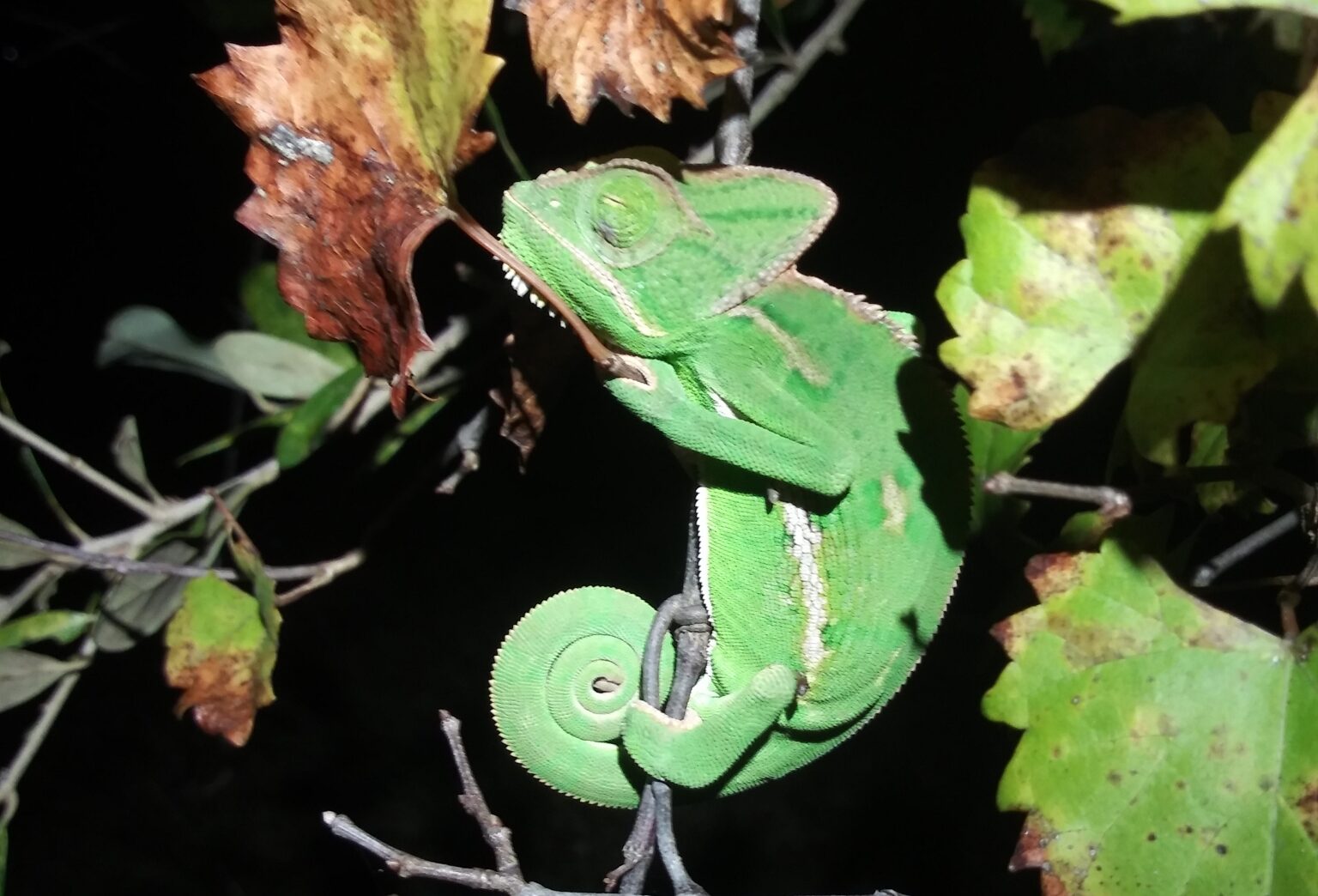
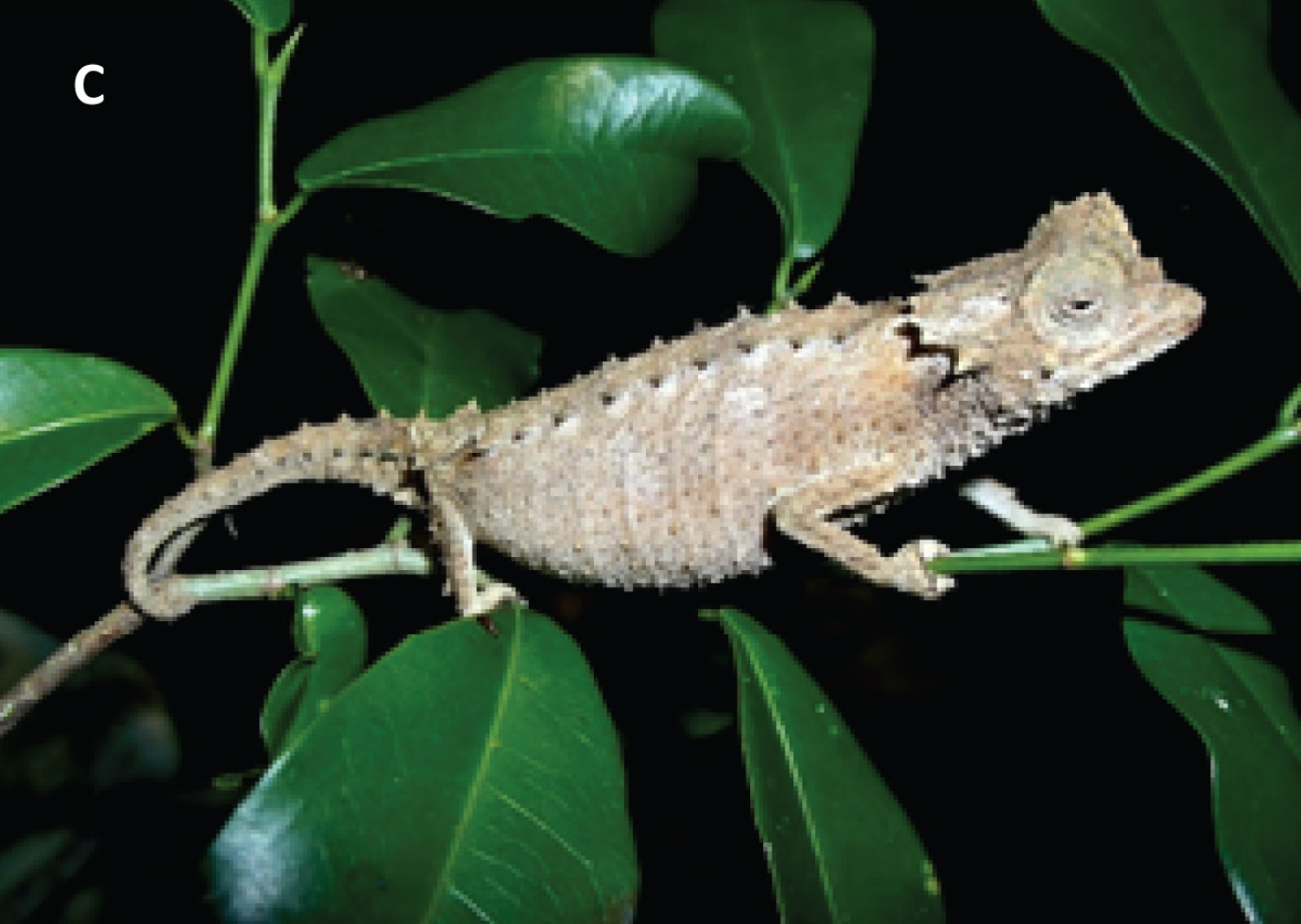
A total of 57 animal species were recorded in Namoroka, 41 of which were reptiles. Brookesia brygooi, Furcifer angeli and Furcifer oustaleti were recorded at all three sites surveyed. Brookesia bonsi, which is endemic to Namoroka, was found at only one site. This is an area situated at an altitude of 87 m, with trees ranging from 6 to 15 m in height and a relatively open canopy. The area is characterised by dense, virtually impenetrable undergrowth, particularly in the damp, rocky gorges between the Tsingy.

The scientists point out that slash-and-burn farming and the resulting uncontrollable bushfires continue to pose a major risk to the animals’ habitats in Namoroka. Logging, as well as the harvesting of wild honey, wild root tubers and medicinal plants, also ensures that the national park’s habitats are disturbed. Zebus are also driven into the national park to graze. Effective protection of the area is very difficult due to its remote location and the high levels of poverty among the local population.

Aperçu des amphibiens et des reptiles du Parc National de Namoroka: Diversité biologique, intérêt biogéographique et représentativité en matière de conservation
Hajaniaina Rasoloarison, Bernard Ranriamahatantsoa, Nirhy Rabibisoa, Christopher J. Raxworthy
Malagasy Nature 2026, 20: 30-46.
DOI: not available
Free article download

Picture: Brookesia bonsi in Namoroka, from the afore mentioned publication
Chamaeleo africanus found in Greece outside Pylos

Chamaeleo africanus found in Greece outside Pylos

Verbreitung Science

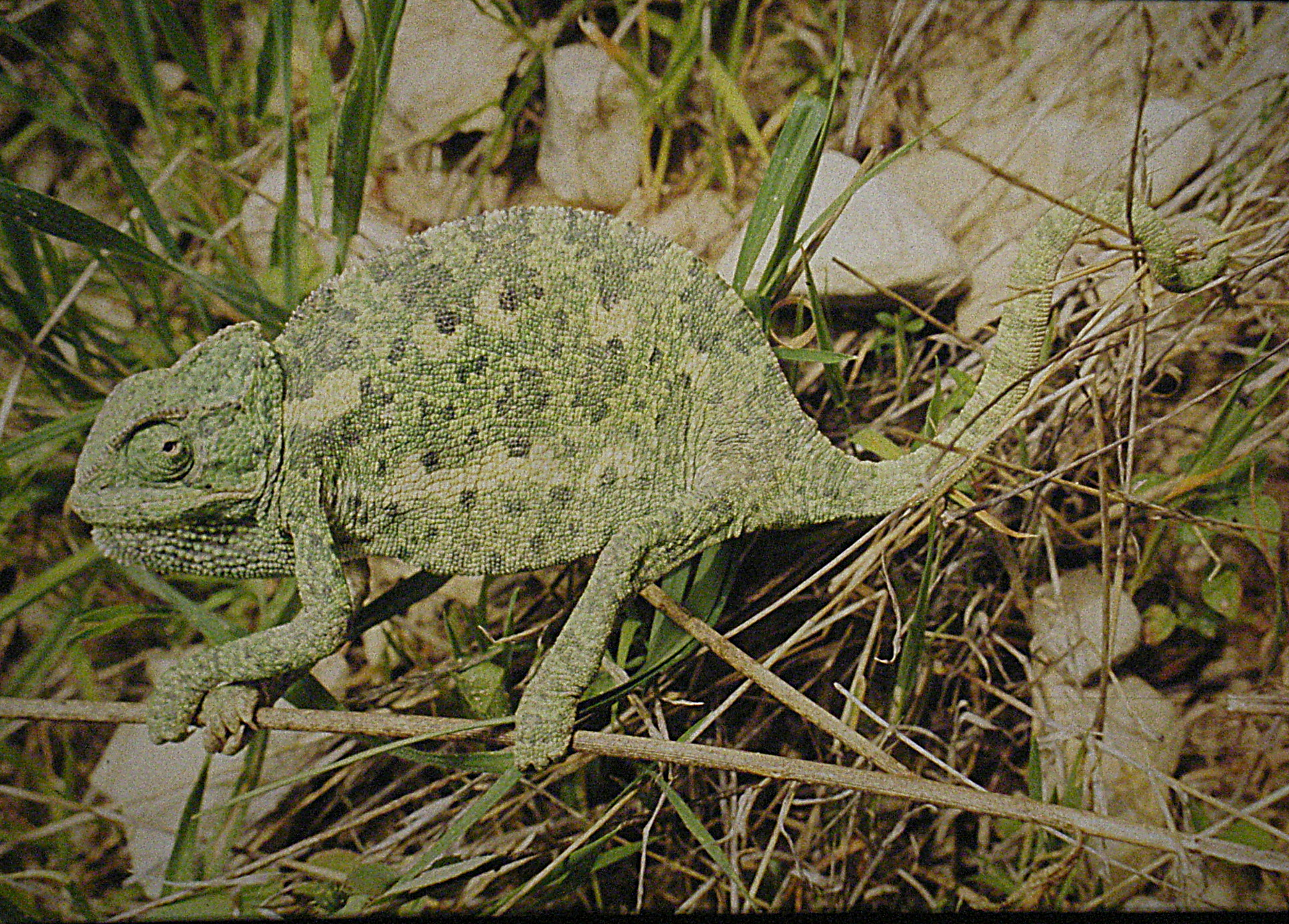
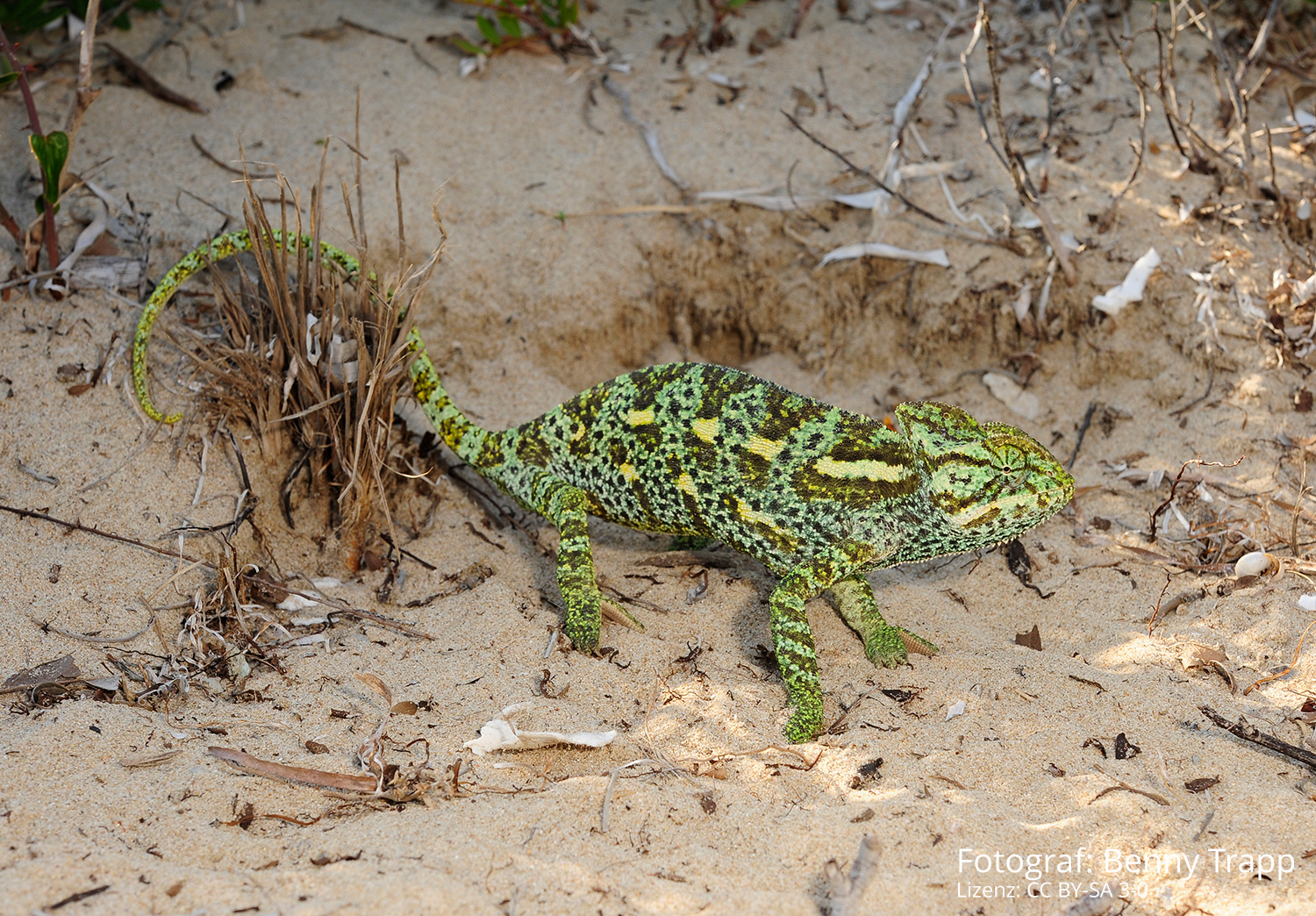
It has long been known that Chamaeleo africanus occurs in the lagoon of Gialova, in the Pylos region (Greece). It differs not only visually but also genetically from Chamaeleo chameleon, which is relatively widespread in southern Europe. There have been sporadic reports of other occurrences of Chamaeleo africanus in Greece, but until now there has been no scientific evidence of the species in areas other than Pylos.

Scientists have now identified a second population of the species. They found at least seven individuals of the species about 130 km north of the Gialova lagoon on the Peloponnese. The chameleons live in a Natura 2000 area called Limnothalassa Kalogrias /Dasos Strogylias Kai Elos Lamias. A young animal was sampled via cheek swab to genetically confirm the species Chamaeleo africanus.

Genetic evidence for the presence of Chamaeleo africanus in Greece outside the Pylos region
Erika Lego, Maria Koutsokali, Michael Valachas
Conservation Genetics Resourecs 18(5), 2026
DOI: 0.1007/s12686-026-01409-w
Free preview of the article

Photo: Chamaeleo africanus, photographed by Benny Trapp, CC BY-SA 3.0

The flap-necked chameleon in northern Mozambique

The flap-necked chameleon in northern Mozambique

Verbreitung Science

Scientists recently searched for reptiles in the municipality of Mocuba in northern Mozambique to compile an inventory of the species found there. They examined a so-called miombo dry forest (a type of sparse forest savannah with hardly any undergrowth) and a nearby granite rock called Mount Morué, which is only 361 metres high.

Over several months during the rainy and dry seasons, both habitats were searched for seven days at a time (42 days in total). The scientists used pitfall traps and searched with the naked eye during the day along predetermined transects. Reptiles were identified using existing field guides and with the help of experts. In addition, some animals were killed and added to the Zambezi University collection.

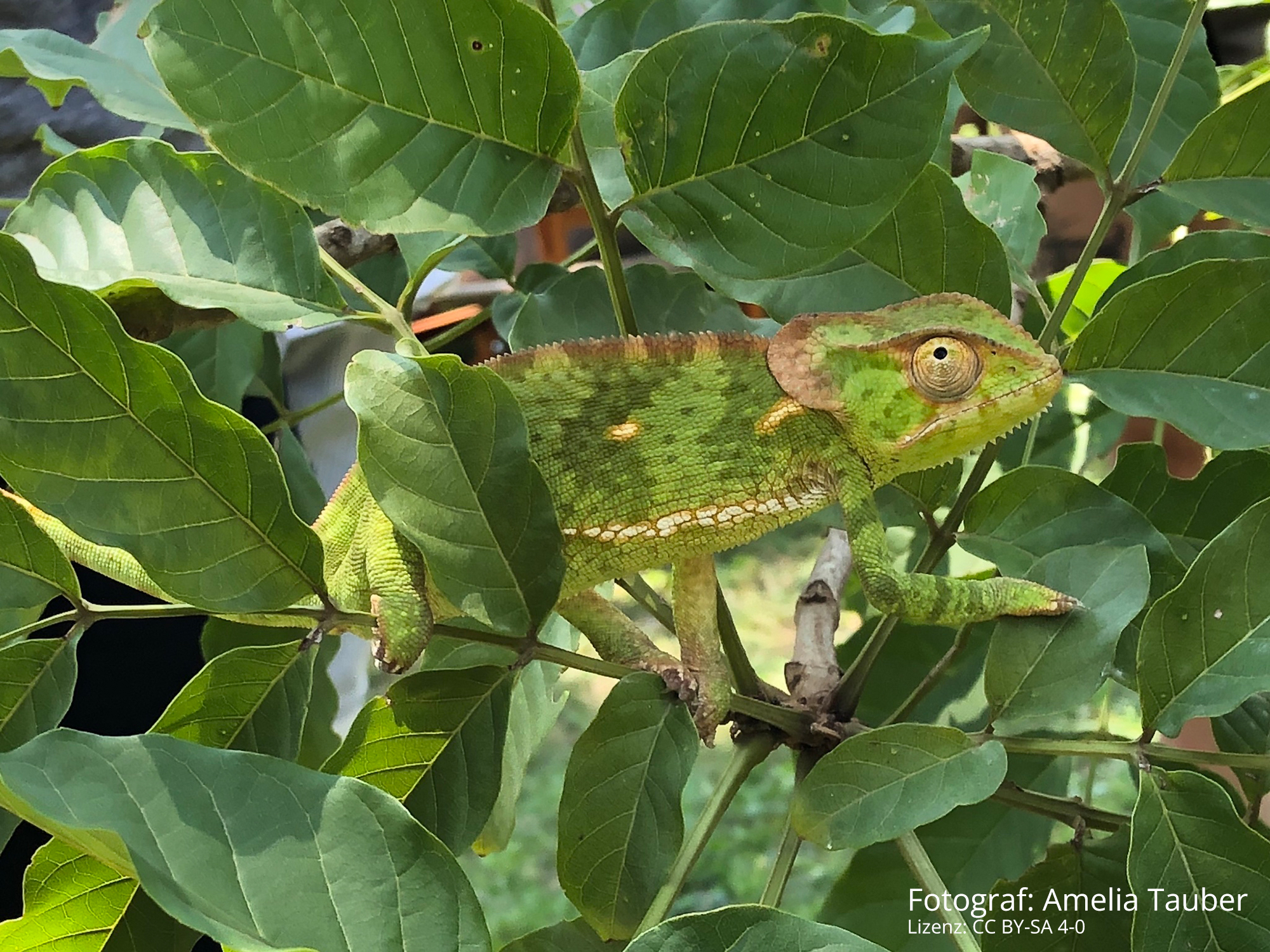
A total of 23 different reptile species were observed. Chamaeleo dilepis was found six times. All chameleons were found in the Miombo woodland and not a single chameleon was found on the granite rock of Mount Morué. Two chameleons were hunting for prey, while two others were still in a sleeping position when found early in the morning. Another lappet chameleon had ended up in a pit trap. The species is already known from many finds in Mozambique. However, no finds had been made in Mocuba until now.

Beyond the asymptote: a near-complete reptile inventory in the Miombo woodland and on Mount Morué, Mocuba Municipality, with a major range extension for the lizard Nucras boulengeri Neumann, 1900
Avelino R. Miguel, Berta I. Sitole, Nando A.M. Calonga, Celso H. Duarte, Dolescêncio Armando, Célia J.A. Nanvonamuquitxo, Hinrich Kaiser
Herpetology Notes 18: 1051-1071.
DOI: not available
Free article download

Photo: Chamaeleo dilepis in the Miombo Woodlands, photographed by Miguel Avelino

New distribution data of Rieppeleon brachyurus in Mozambique

New distribution data of Rieppeleon brachyurus in Mozambique

Beobachtungen Verbreitung Science

Rieppeleon brachyurus is a small stump-tailed chameleon species, first described at the end of the 19th century from the Shire Highlands south of Lake Malawi. The species has since been found in Malawi, Tanzania and Mozambique. In Mozambique, it was previously known from rainforests and gallery forests, known as miombo forests. Miombo forests are very open dry forests with sparse grass cover, giving them a savannah-like appearance (hence the term ‘forest savannah’). The Zambezi River, which runs across Mozambique, was previously considered the natural boundary for the occurrence of Rieppeleon brachyurus.

Herpetologists have now discovered that the species also occurs south of the river. They found two juvenile individuals and two adult females of the species in Coutada 11, a 5000 km² hunting concession in the heart of Mozambique. The animals were found there in a sand forest, a rare type of tropical forest on sand dunes, right next to a shallow wetland. These observations extend the previously known range of the species by about 250 km further south.

The authors also report two further new locations where Rieppeleon brachyurus has been found, in Taratibu and Montepuez Rubi Mining Concession, both of which are located north of the Zambezi River. In both observations, the ground chameleons were found in miombo forest at altitudes between 250 and 400 m.

Rieppeleon brachyurus (Günther, 1893) Beardless Pygmy Chameleon First records south of the Zambezi River
W. Conradie, D. Botma, C. Nanvonnamuquitxo
African Herp News 88, 2025: 28-33
DOI: not available
Free download of the article

Photo: Juvenile Rieppeleon brachyurus in Mozambique, photographed by Delport Botma, from the above-mentioned publication

New locality record of Calumma vencesi (Madagascar)

New locality record of Calumma vencesi (Madagascar)

Verbreitung Science

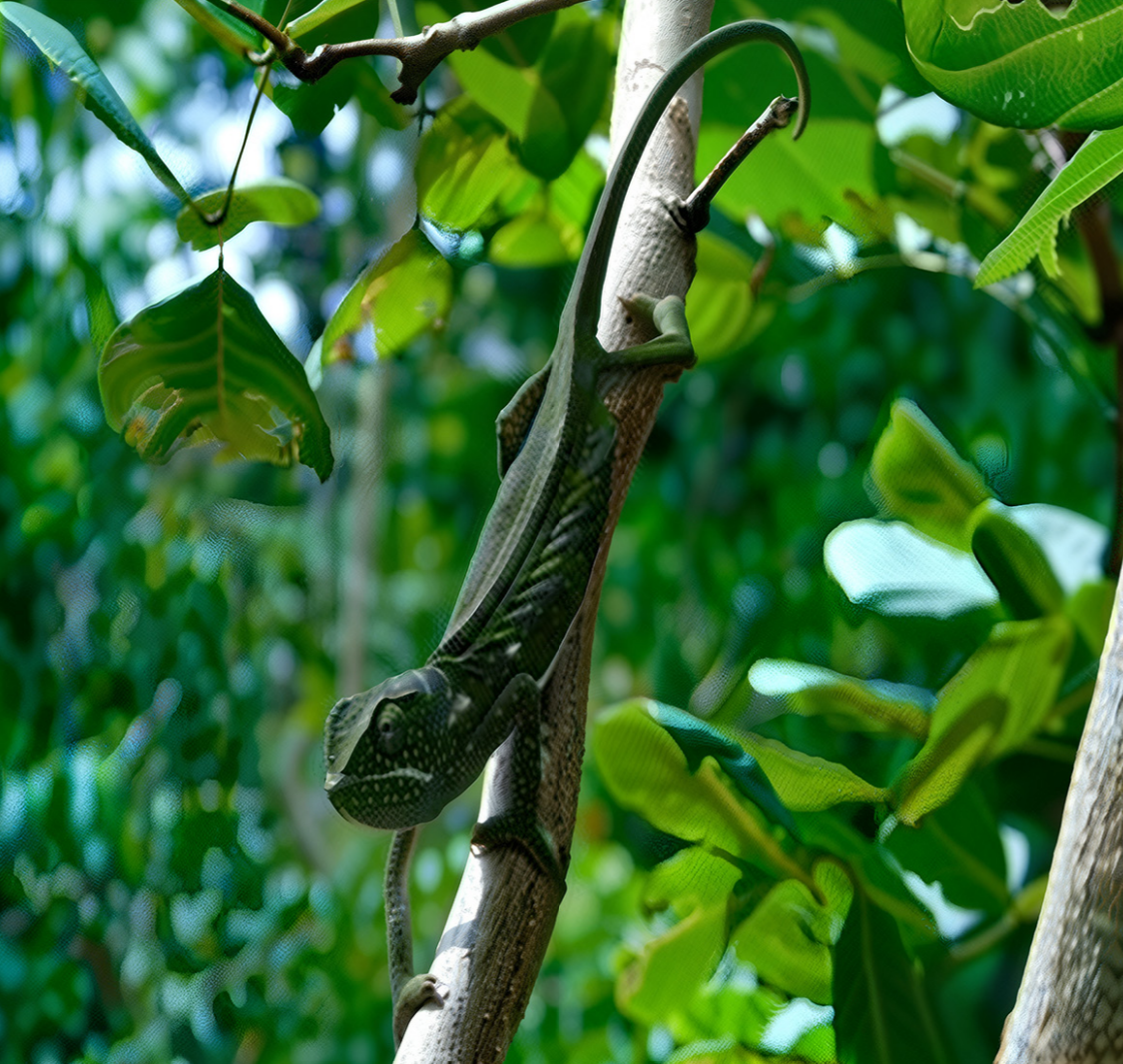
Calumma vencesi occurs in northern Madagascar and has so far been found in Betaolana, Besariaka and Tsararano. A Madagascan research team has now discovered the species in another rainforest: Sorata. Sorata is part of the COMATSA corridor, which mainly consists of the Marojejy, Anjanaharibe Sud and Tsaratanana rainforests. Sorata, on the other hand, is located slightly further north towards Vohémar. The rainforest is currently managed by the WWF in collaboration with the local association Ambodimandresy Miaro ny Ala (AMA).

The scientists randomly distributed 14 transects in the rainforest, each consisting of three parallel lines of 50 m. Then, at night, they searched for sleeping chameleons along the transects with flashlights. The frequency of the species per 100 m was calculated, the plants used were documented and the sleeping height was measured.

A total of eight Calumma vencesi were found. They slept at an average branch height of 1.43 m, mostly on leaves, with a few individuals on branches. Five chameleons were found sleeping vertically, three more horizontally. Seven of the eight Calumma vencesi slept with their heads up, only one upside down.

The occurrence of only 0.38 individuals per 100 m is surprisingly low and even falls below that of chameleon species classified as critically endangered, such as Calumma tarzan. Until now, Calumma vencesi had only been found below 1000 m, but the study area in Sorata was at an average altitude of 1326 m. Calumma vencesi occurs in Sorata in the same distribution area as Brookesia nana, which makes the need to protect this rainforest even more urgent. The forest is threatened by slash-and-burn farming, illegal logging, grazing livestock and vanilla plantations.

 A new locality for the endangered Vence’s Chamaeleon, Calumma vencesi Andreone et al., 2001, from Sorata Forest, northeastern Madagascar
Jeanneney Rabearivony, Andriatsitohaina Ranaivojaona, Moussaïna Jao, Achille P. Raselimanana
Herpetology Notes 18, 2025: 817-820.
DOI: not available
Free article download

Photo: Calumma vencesi, photographed by Asméralie William, from the aforementioned publication

Flap-necked chameleons in Cabinda (Angola)

Flap-necked chameleons in Cabinda (Angola)

Verbreitung Science

The province of Cabinda, a 7064 km² area belonging to Angola between the Democratic Republic of the Congo and the Republic of the Congo, is one of the least explored herpetological areas in Africa. The enclave is located around 50 kilometres north of the rest of Angola, directly on the Atlantic coast. Both its enclave status and the difficult accessibility of the existing forest areas have contributed to the fact that little information exists on the local herpetofauna. The Mayombe National Park makes up around a third of Cabinda’s territory. Mayombe is divided into a higher part of the park with rainforest between 500 and 900 metres and a lower part between the Inhuca and Chiloango rivers. This is followed by a coastal plain with valleys and drier vegetation directly on the coast.

During ten expeditions between 2018 and 2024, reptiles and amphibians were searched for on a daily basis. A total of 17 different locations were covered, 10 of which were within Mayombe National Park. Photos were taken of all animals and samples were taken to enable genetic identification.

Chamaeleo dilepis, which is widespread in Angola, was discovered in Mbongo Zimune in Mayombe National Park near the river in a plantation of introduced bamboo. The bamboo plantations are located at around 324 metres above sea level. The species was also found in Nganzi at 107 m in the valleys, where it is more common according to other literature. In the drier coastal areas, where Chamaeleo dilepis is also said to occur frequently, no chameleon could be detected in the present study.

A total of 76 different species were recorded, including 48 amphibian and 28 reptile species. 33 amphibian and reptile species mentioned in earlier literature could not be found again.

Filling the gaps: herpetological checklist of Mayombe National Park and Cabinda Province (Angola) shed light on one of the most unexplored corners of tropical Central Africa
Javier Lobón-Rovira, Ninda L. Baptista, Tyron Clark, Luke Verburgt, Gregory F.M. Jongsma, Werner Conradie, Luis Verissimo, Pedro Vaz Pinto
African Journal of Herpetology 74(1): 1-59
DOI: 10.1080/21564574.2024.2421007

Chameleons in Andrafiamena-Andavakoera (Madagascar)

Chameleons in Andrafiamena-Andavakoera (Madagascar)

Verbreitung Science

The north of Madagascar is a treasure trove of biodiversity – this has long been known. Nevertheless, even in the 21st century, many areas of the island are still little explored. A group of Malagasy and US biologists has now presented a new overview study that focuses on one such area.

The Andrafiamena-Andavakoera Protected Area (Paysage Harmonieux Protége d’Andrafiamena-Andavakoera) is located in the north of Madagascar, right between the Ankarana National Park and the Analamerana Protected Area. It is managed by the NGO Fanamby and consists of three isolated dry forests called Binara, Antsahabe and Andrafiamena.

During the transition from the dry to the wet season, observations were made by day and night with the naked eye along designated transects and pitfall traps were dug into the ground along three transect lines. In addition, possible reptile refuges, for example under dead wood, were examined and frog calls were recorded.

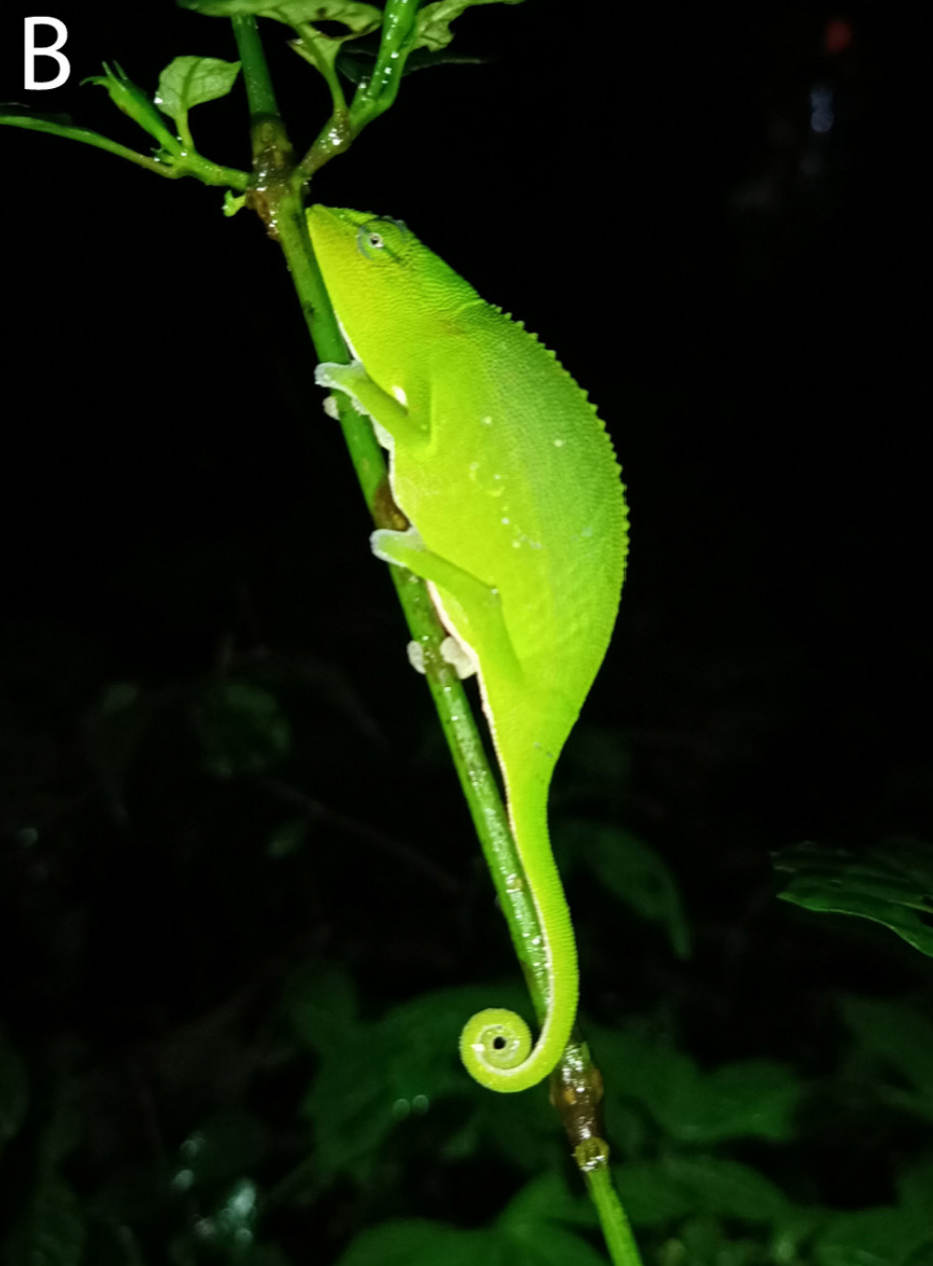
A total of 13 amphibian and 39 reptile species were recorded in the three forests. Three species of chameleons were frequently found in all three dry forests: Brookesia stumpffi in the deciduous layer, Furcifer pardalis and Furcifer petteri on trees and shrubs. Surprisingly, the most common chameleon species in Madagascar, Furcifer oustaleti, was only found in Andrafiamena during the study period, but not in Binara and Antsahabe. Brookesia stumpffi was always found on the ground or sleeping on young plants below 1 m height. Furcifer petteri and Furcifer pardalis tended to be found in the middle or upper part of the trees. The authors cite humans and the associated destruction of habitat as a possible threat to the protected area.

Herpetofaunal diversity in northern Madagascar: The Andrafiamena-Andavakoera protected area.
Fandresena Rakotoarimalala, Arianna Kuhn, Achille P. Raselimanana, Sara Ruane
Malagasy Nature 19, 2025: 160-174
DOI: not available

Photo: Male Furcifer petteri in Madagascar, photographed by Alex Negro

Chameleons in St. Luce (Madagascar)

Chameleons in St. Luce (Madagascar)

Verbreitung Science

The St. Luce reserve is located in the south-east of Madagascar, just 34 km north of the city of Tolagnaro (Fort Dauphin). The protected area includes beaches and rocky cliffs on the coast of the Indian Ocean, lowland rainforest, marshland, savannah-like plains, rivers and lagoons. The remaining rainforest is broken up into many small fragments. There is also a very large rare earth mining project in the area. 12 of the 17 forest fragments of St. Luce are affected by the mining work. A group of scientists has now studied the herpetofauna of the area in more detail.

Over a period of two years, reptiles and amphibians were searched for and captured in St. Luce. The searches were carried out with the naked eye along existing transects. In addition, ground traps were used for two weeks along four 100 m long lines. Five artificial shelters and five corrugated sheets were laid out at a total of 12 locations to check for animals after a certain period of time. Samples of tail tips and toes were taken and measurements taken, after which the animals were released back to their original locations. The species were identified by genetic analysis.

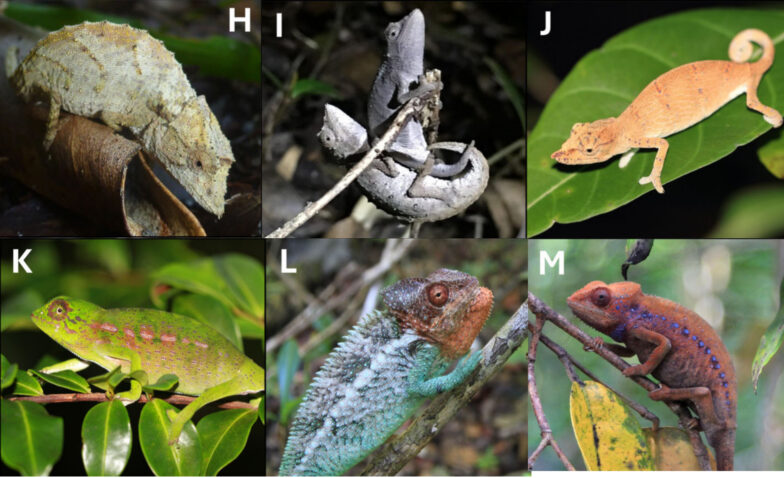
Of 17 rainforest fragments in St. Luce, the scientists found only one intact and another intact but heavily fragmented. All other forest fragments were found with clear signs of habitat destruction. A total of 22 amphibian and 54 reptile species were found. Four species of chameleons were among the reptiles: Palleon sp. aff. Nasus, Calumma tjiasmantoi, Furcifer major and Furcifer verrucosus. All four chameleon species occurred exclusively in the remaining intact or intact areas of the Angalavinaky, Ambandrika and Andranangy/Amboronteny/Agnalaro forests. In the forests already destroyed by the mine, no chameleons were found at all. Of the 76 amphibian and reptile species found, 13 were candidate species, which are presumably undescribed new species.

The authors point out that, according to the present study, the diversity of the herpetofauna in St. Luce is significantly greater than previously assumed. They suggest that several forest fragments should be included in the “Mining Avoidance Zones”, i.e. areas where rare earths should not be searched for, and that the protection status should be increased.

A littoral treasure trove: a comprehensive assessment of the herpetofauna of Sainte Luce, southeastern Madagascar
Sam Hyde Roberts, Marco Sannolo, Hoby Tsimijaly Longosoa, Ryan Clark, Leo Jhaveri, Gonçalo M. Rosa, Walter Cocca, Franco Andreone, Angelica Crottini
Systematics and Biodiversity 23(1): 2513472
DOI: 10.1080/14772000.2025.2513472

Photos: Chameleons found in St. Luce from the aforementioned publication

Veiled chameleon distributed over 12 new counties in Florida (USA)

Veiled chameleon distributed over 12 new counties in Florida (USA)

Verbreitung Science

Introduced Veiled chameleons (Chamaeleo calyptratus) have been living in Florida (USA) since at least 2002. The first wild Veiled chameleons were found in Collier County, two years later animals were observed in Fort Myers in Lee County. This was followed by findings in Hendry, Miamia-Dade, Broward, St. Lucie, Palm Beach, Monroe, Alachua and Hillsborough County. Now an author in the Herpetological Review reports on 12 further populations in Florida: in Brevard, Charlotte, De Soto, Glades, Indian River, Lake, Manatee, Osceola, Pinellas, Polk, Sarasota and Seminole County.

He used data from iNaturalist and EDDMapS. The author suspects that most of the new finds could be due to so-called chameleon ranching. Chameleons are deliberately released into other habitats in order to later collect and sell the resulting juveniles. But even without prior release, collecting (‘harvesting’) animals for sale has become a source of income in Florida, which has also led to the fact that distribution data on new populations is rarely published. It is now a common recreational activity in Florida to search for Veiled chameleons at night. There are even commercial operators offering guided tours.

One problem is increasingly the owners of private property who feel disturbed by ‘chameleon tourism’. The impact on native wildlife in the USA is still unclear. Theoretically, Veiled chameleons could eat smaller mammals or young birds, but there have been no reports of such incidents in Florida to date.

It seems increasingly unlikely that it will be possible to get rid of the introduced Veiled chameleons. A one-year trial in Lake Worth Beach (Palm Beach) resulted in 1043 chameleons being caught during 71 collection campaigns, but not in the elimination of the population living there.

New County Records for the Veiled Chameleon (Chamaeleo calyptratus) in Florida, USA
Kevin M. Enge
Herpetological Review 55 (2), 2025: 223-226.
DOI: not available

Photo: Chamaeleo calyptratus, found and photographed in Fort Myers (USA) by Andrew Durso, CC-BY

Chameleons in Marsa El Brega (Lybia)

Chameleons in Marsa El Brega (Lybia)

Verbreitung Science

While other areas of Africa are regularly the subject of publications and expeditions, the herpetofauna of Libya has not been fully researched. Little is known about the reptiles of the coastal region of Marsa El Brega in particular. Marsa El Brega is located in the north of Libya directly on the Mediterranean Sea and therefore has a Mediterranean climate. The vegetation consists mainly of a desert-like landscape with low shrubs such as Nitraria retusa and small date palm oases in between.

A Hungarian herpetologist has investigated the reptile populations in Marsa El Brega during two expeditions. Unfortunately, the exact procedure for finding animals is not mentioned in the article. All animals found were photographed and species phenotyped according to existing field guides.

The author found a total of 25 reptile species in the Marsa El Brega region, including two Chamaeleo chameleons, one each two days apart. The coordinates given for the find site are in the outskirts of the town of Brega, right next to the garden of a bed’n’breakfast facing the beach. The author cites stray dogs and cats as the greatest potential threat to the local herpetofauna. In addition, the coastal area investigated was heavily littered.

Some reptiles from Marsa El Brega, Libya (Reptilia: Chamaeleonidae, Gekkonidae, Phyllodactylidae, Lacertidae and Scincidae)
Attila Haris
Natura Somogyiensis 45: 17-26, 2025
DOI: 10.24394/NatSom.2025.45.17