The population of Furcifer labordi in Andranomena (Madagascar)

The population of Furcifer labordi in Andranomena (Madagascar)

Science

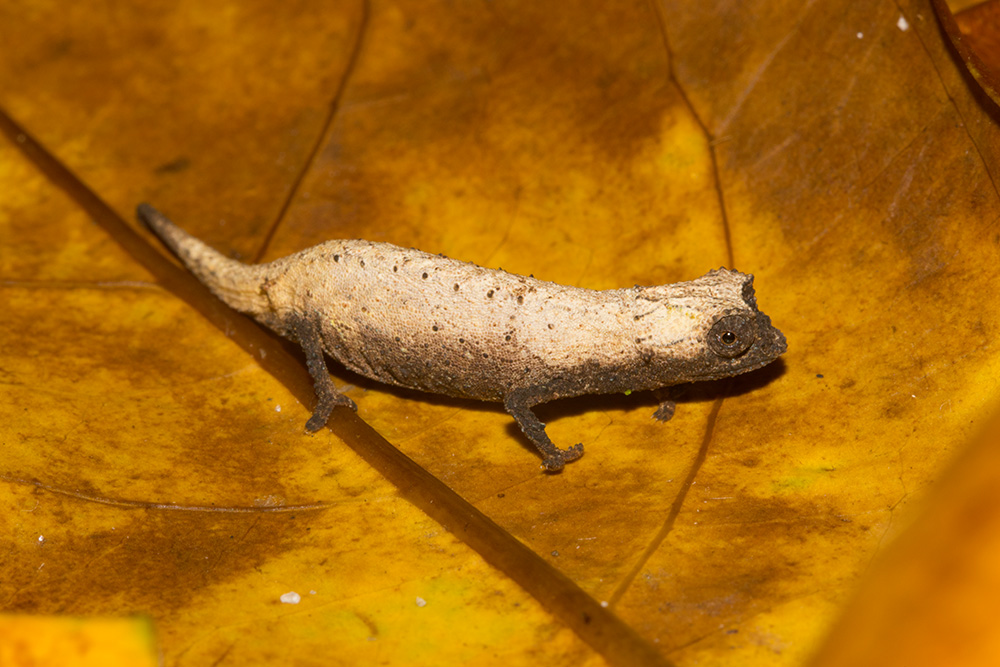
After we already discussed a preprint on the habitat of the Labordes chameleon (Furcifer labordi) in Andranomena, Madagascar, last year, the final publication now followed after a long peer review. In fact, the focus of the paper was reconsidered and adapted.

Labordes chameleon (Furcifer labordi) has been known for several years as the world’s shortest-lived chameleon. Five scientists from Madagascar have recently investigated which factors influence the distribution and population size of the species. The study was carried out in the Andranomena Special Reserve, which is located around 30 kilometres north of the coastal town of Morondava in western Madagascar. The special reserve has various habitats used by the chameleons, such as intact dry forest with parts near and far from water as well as regrowing / heavily modified forest.

Distance sampling was used to estimate the population density of Furcifer labordi. For this purpose, each part of the forest was divided into three 50 metre transects over a width of 150 metres. At night, the chameleons were then searched for with a torch, their location measured and the animals themselves marked in colour with nail varnish. Faecal samples were collected and analysed. The following day, a 5 x 5 metre plot was marked around each site and at least 5 metres away along the transect line. In all plots, the degree of canopy cover in per cent, the thickness of the foliage layer on the ground and ground-covering plants in centimetres, the number of shrubs up to 1 m, the number of trees over 1 m and the number of felled and burnt trees were counted. Five days after the first count, chameleons were again searched for and counted at night. In addition, insects were counted and identified using light traps. Along a 1400 metre transect, observations of six species of birds of prey and four species of snakes were also counted as examples. Unfortunately, the exact species are no longer named.

Statistical analyses showed that more Furcifer labordi were found in forest sections where the canopy was denser, the foliage layer on the ground was thicker and there were more trees overall. In the parts of the forest where no chameleons were found at all, significantly more felled trees were counted. The predators observed or their presence did not appear to have any influence on the population density of the chameleons. Surprisingly, the suspected feeders present, mostly insects, also showed no effect on the distribution of the chameleon population. The height of the branches on which Furcifer labordi were found varied greatly over the observation period. However, no correlation was found between age and sex. Preferences in the choice of plants used could not be observed in the chameleons. Furthermore, the different age groups showed no clear preference in their choice of microhabitat.

The authors conclude that the declining population size is primarily due to habitat loss. Habitat loss in Andanomena is almost exclusively of human origin (deforestation for agriculture and cattle grazing, slash-and-burn).

Analyses spatiales de population de Furcifer labordi (Grandidier, 1972) dans la Réserve Spéciale d’Andranomena, Morondava-Madagascar
Philibertin Honoré Djadagna Ahy Nirindrainiarivony, Achille Philippe Raselimanana, Lily-Arison René de Roland, Willy Nathoo Veriza, Daudet Andriafidison
European Scientific Journal 20 (15), 2024,
DOI: 10.19044/esj.2024.v20n15p48
Informations about the preprint

The flap-necked chameleon on Serra da Neve (Angola)

The flap-necked chameleon on Serra da Neve (Angola)

Verbreitung Science

The Serra da Neve inselberg is located in the province of Namibe in south-west Angola on the south-western edge of Africa. At 2489 metres above sea level, it is the second highest mountain in the country. The isolated location in the middle of savannahs makes the inselberg a refuge for biodiversity, but this has so far been poorly researched concerning herps. Scientists from the USA, Portugal and Germany have recently carried out a first survey study to inventory the amphibians and reptiles of the Serra da Neve.

Three expeditions have been carried out since 2016, each lasting a few days. Eight areas were selected to search for animals, including rocky areas as well as forest, open grassland and various altitudes. Pitfall traps, snares, rubber bands and manual searches by day and night were used to find the animals. The individuals found were all killed and prepared for storage and further examination in the museum.

A total of 59 species of reptiles and amphibians were found on the inselberg. Chamaeleo dilepis was found exclusively around the village of Catchi, located at 1590 metres. The village is surrounded by granite rocks and the Miombo forest area, which is dominated by Brachystegia and Julbernardia trees. The flat parts of the plateau surrounding the village are largely deforested. The land is used for grazing cattle or for growing cereals and maize. However, the steep slopes around the village are still forested. A small river also runs through the plateau.

An island in a sea of sand: A first checklist of the herpetofauna of the Serra da Neve inselberg, southwestern Angola
Mariana P. Marques, Diogo Parrinha, Manuel Lopes-Lima, Arthur Tiutenko, Aaron M. Bauer, Luis M. P. Ceríaco
ZooKeys 1201, 2024: pp. 167-217.
DOI: 10.3897/zookeys.1201.120750

Photo: taken from the aforementioned publication

Phylogenetics of African dwarf chameleons

Phylogenetics of African dwarf chameleons

Science

The archives of museums and other zoological collections still contain a lot of single-gene fragment data. Although it is now relatively easy to decode entire genomes and prepare material for storage, this was not the case for a long time. Scientists at the University of Johannesburg (South Africa) have now investigated whether and, if so, which components of these single genes in dwarf chameleons can provide information on the entire genome with regard to the creation of phylogenetic family trees.

Samples were taken from 44 dwarf chameleons in the form of cut-off tail tips during various expeditions between 2010 and 2022. The sampled animals were captured and released in the Eastern Cape, KwaZulu-Natal, Limpopo, Mpumalanga, Northern Cape and Western Cape provinces. They belonged to the species Bradypodion barbatulum, caeruleogula, caffrum, damaranum, gutturale, melanocephalum, ngomeense, occidentale, pumilum, setaroi, taeniabronchum, thamnobates, transvaalense, ventrale, venustum as well as candidate species from Greytown, Kamberg. Karkloof Forest and Gilboa Forest in KwaZulu-Natal. An existing mitogenome of a Chamaeleo chamaeleon was used as a reference genome. In addition, the mitogenomes of seven other genera were loaded from GenBank for comparison.

DNA was extracted from all samples and phylogenetically analysed using Geneious Prime and IQ-Tree, among others. A total of 22 different alignments were created: a complete mitogenome alignment (without tRNA), 15 alignments of individual loci, the short fragment of 16S, a frequently used COI fragment, a concatenation of 16S fragment with ND2, a concatenation of ND2 and ND5, a concatenation of the two ribosomal subunits and a concatenation of all protein-coding genes (PCG). A statistical analysis of the data followed.

The results showed that the complete mitogenome topology is largely consistent with the previously published phylogenies of African dwarf chameleons from ND2-16S concatenations. The phylogeny based on the ND2 fragments proved to be more stable and even closer to the mitogenome. These gene fragments are therefore well suited to phylogenetically classify a genome and thus a chameleon species. However, there were also a few differences to the previously published phylogenies. The mitogenome topology considers Bradypodion setaroi and Bradypodion caffrum to be sister taxa. Furthermore, Bradypodion ngomeense possibly belongs genetically to the Bradypodion transvaalense clade instead of being a sister taxon of it.

The efficacy of single mitochondrial genes at reconciling the complete mitogenome phylogeny – a case study on dwarf chameleons
Devon C. Main, Jody M. Taft, Anthony J. Geneva, Bettine Jansen van Vuuren, Krystal A. Tolley
PeerJ 12:e17076, 2024
DOI: 10.7717/peerj.17076

Picture: Bradypodion transvaalense, photographed by Ryan van Huyssteen, Creative Commons Attribution-Share Alike 4.0 International

Presentation in Dortmund about Socotra (Yemen)

Presentation in Dortmund about Socotra (Yemen)

Live lectures

On Friday, 7 June 2024, the ‘AG veteran’ Wolfgang Schmidt will give an illustrated lecture on Socotra in Bergkamen near Dortmund. He will report on a trip to the island in the Indian Ocean. Socotra officially belongs to Yemen, but has been ruled by the United Arab Emirates since 2018. The island is also known as the ‘Galapagos of the Indian Ocean’ because its centuries of isolation as an island have allowed a unique flora and fauna to develop. Over a third of the plant species found there are endemic, and the number of amphibians and reptiles is likely to be even higher. Between dragon trees and the largest coastal dunes in the world, there are many exciting herpetological observations, including chameleons.

Wolfgang Schmidt Socotra [German!]
DGHT City Group Dortmund
Restaurant Olympia
Im Alten Dorf 2
59192 Bergkamen

Lecture starts at 7.30 pm

Five new Rhampholeon species

Five new Rhampholeon species

Neubeschreibungen Science

There is still a lot to discover about the small, brown pygmy chameleons on the African mainland. After new species were discovered in the Rhampholeon uluguruensis/moyeri complex in Tanzania two years ago, international scientists have now taken a closer look at the Rhampholeon boulengeri complex. And as expected, new species have been discovered!

The pygmy chameleons from this complex inhabit various habitats along the Albertine Rif). This 6000 km long chain of mountains and rifts stretches from Lake Albert in Uganda to Lake Tanganyika. It crosses the Democratic Republic of Congo, Rwanda, Burundi and Tanzania. In the genus Rhampholeon, the species hardly differ externally, but often live in very different habitats or can be easily distinguished from each other genetically. The authors analysed over 130 pygmy chameleons from more than 20 different locations as well as the lectotypes (the holotype no longer exists) of the species Rhampholeon boulengeri. Using genetic analyses, they were able to identify five new Rhampholeon species.

The already known species Rhampholeon boulengeri, described by Grauer in 1908, occurs exclusively in its type locality according to the current data. This is the Itombwe Plateau in the Democratic Republic of Congo, at altitudes between 2100 and 2470 metres.

Rhampholeon plumptrei was named in honour of the English zoologist Andrew Plumptre. As chairman of the Wildlife Conservation Society, he has been campaigning for species conservation along the African Rift Valley for almost 20 years. The species lives in montane and submontane rainforest at altitudes of 1203-2269 metres, although they are most commonly found at 1200 to 1700 metres. The distribution ranges from the east of the Democratic Republic of Congo with the Kahuzi-Biega National Park to the west of Kenya to the Kakamega Forest National Reserve. In between, Rhampoleon plumptrei can be found in Bwindi Impenetrable National Park, in Mabira and in Kalinzu Central Forest Reserve in western Uganda. It has a clearly visible nasal appendage and a slightly shorter tail than Rhampholeon boulengeri. Rhampholeon plumptrei grows up to 60 mm in size. The males have a white colouration on the throat and belly and one or two diagonal dark stripes on the body. Most chameleons of this species have a dark-coloured tubercle on the back of the neck.

Rhampholeon nalubaale was named after the Luganda word for ‘goddess’, which is also the native name of Lake Victoria, the largest lake in Africa. So far, only the females of this species are known, males have not yet been found. Rhampholeon nalubaale occurs in submontane rainforest at altitudes of 513 to 1506 metres. It is most common in the Kibale National Park in Uganda, but can also be found in the Budungo Central Forest Reserve in the same country and in the Kahuzi-Biega National Park and the Itombwe Natural Reserve in the Democratic Republic of Congo. Rhampholeon nalubaale grows up to 56 mm long. One of the animals found was illuminated with UV light and some of the tubercles in the face fluoresced blue, as is already known from other chameleons – but this is new for the genus Rhampholeon. The species occurs together with Trioceros johnstoni and Kinyongia tolleyae.

Rhampholeon bombayi was named after the waYao explorer Sidi Mubarak Bombay. He was born in 1820 on the border between Tanzania and Mozambique and was sold to India as a slave at an early age. He later returned to Africa and made a name for himself on expeditions by British explorers in East Africa. Rhampholeon bombayi grows up to 55 mm long. It lives in montane forests at altitudes of 1450 to 2330 metres in Rwanda and the Democratic Republic of Congo. It has so far been recorded in Kahuzi-Biega National Park, Kabobo Natural Reserve, Itombwe Natural Reserve and Nyungwe Forest National Park. Trioceros johnstoni and Trioceros schoutedeni also live in the same forest. The animals have two or three dark lines diagonally on the body, the tail and extremities are often darker brown than the trunk.

Rhampholeon msitugrabensis was named after the Albertine Rift. The Swahili word for forest, msitu, and the German word for rift, Graben, were combined. This ground chameleon grows up to 49 mm in size. It inhabits forest edges near Mpishi close to Kibira National Park in Burundi. Rhampholeon msitugrabensis is also described from Mount Bigugu in Nyungwe Forest National Park in Rwanda, so that its occurrence extends from 1986 to 2699 metres. In the Nyungwe Forest, Rhampholeon msitugrabensis occurs allopatrically with Rhampholeon bombayi, more precisely in the Kamiranzovu swamp area at 2000 to 2330 m altitude. Other chameleons that share a habitat with Rhampholeon msitugrabensis are Trioceros ellioti, Chamaeleo dilepis and Kinyongia rugegensis.

Rhampholeon monteslunae was named after its habitat, the Rwenzori Mountains on the border of the Democratic Republic of the Congo and Uganda. This mountain range, where the Nile rises, was described by Ptolemy as ‘Lunae Montes’ as early as 150 AD. Rhampholeon monteslunae occurs at altitudes of 1655 to 2360 metres and is most common in the Rwenzori Mountains National Park near the entrance to Nyakalengija. Another population can be found in the Bururi Forest Nature Reserve in Burundi. This ground chameleon grows up to 47 mm long. Kinyongia carpenteri, Kinyongia xenorhina, Kinyongia tolleyae, Trioceros ellioti, Trioceros johnstoni and Trioceros rudis are also found in the same forests.

Taxonomy of the Rhampholeon boulengeri Complex (Sauria: Chamaeleonidae): Five new species from central Africa’s Albertine Rift
Daniel F. Hughes, Mathias Behangana, Wilber Lukwago, Michele Menegon, J. Maximilian Dehling, Philipp Wagner, Colin R. Tilbury, Trisan South, Chifundera Kusamba, Eli Greenbaum
Zootaxa Vol. 5458 4, 2024, pp. 451-494
DOI: 10.11646/zootaxa.5458.4.1

Photo: From top left to bottom right Rhampholeon boulengeri, Rhampholeon plumptrei, Rhampholeon nalubaale, Rhampholeon bombayi, Rhampholeon msitugrabensis und Rhampholeon monteslunae from the mentioned publication

Conference report 2024

Conference report 2024

Conference reports

The first time somewhere else! This year’s annual conference took place from 24 to 26 May in Fulda, Hesse. The Stadtgasthof Drei Linden was both the venue for the conference and the overnight accommodation for most of the participants. The first travellers met on Friday evening in the old town of Fulda for a convivial dinner at Chumbos, a Mexican restaurant. Many new faces were present and there were good conversations and a lot of dialogue.

Dr Johannes Penner opened the presentations on Saturday in front of around 35 conference participants with his talk on Citizen Conservation under the motto ‘Husbandry saves species’. He explained the structure of the gGmbH, which was only founded a few years ago, and its objectives. At Citizen Conservation, they keep studbooks for various species of fish, amphibians and reptiles. This includes target numbers of animals and keepers for a period of 40 years. The keepers are given the animals to care for, but the animals and their offspring naturally remain the property of CC. Committed private keepers and school vivaria, zoos or other institutions can take part. Rhampholeon acuminatus is the first chameleon species to be included in the programme. The original animals come from Vienna Zoo and are kept there – in accordance with their origin – in relatively cool conditions with temperatures below 25°C during the day and a sharp drop to 7-9°C at night. Further keepers are still being sought! We are very excited about the progress of the project.


After the lunch break, the programme continued with a report by Martin Etave, who is flying to Madagascar for the first time this July to accompany various projects in the Vohimana Special Reserve. So far, in collaboration with the Caméléon Center Conservation (Switzerland), they have mainly confirmed the species of chameleons present in Vohimana and measured humidity, UVI and temperatures at their respective locations. In addition, several interesting studies are in their infancy, such as the interaction between favoured plants and chameleons or preferred habitats of the different species. Chester Zoo is currently carrying out experiments to tag Parson’s chameleons in order to be able to study their ecology in Vohimana in more detail at a later date.

Paula Miranda Sapion, PhD student at ExoMed, then reported on a case of a very special parasitosis in an Meller’s Chameleon (Trioceros melleri). Pentastomids were discovered during the dissection of a deceased chameleon that had previously been kept in a zoo. The parasites were so numerous in the lungs that the animal had died from them. It is unclear where the infection came from and whether it has consequences for other animals. Another species of Raillietiella was introduced into the USA years ago with invasive reptile species and is causing many deaths among native reptiles there. Next on the programme was Dr Malek Hallinger, who was unfortunately unable to attend the conference. His ‘wild ride through microbiology’ was kindly presented by Paula, too. Viruses, bacteria, fungi and parasites – what are they, what are the differences and what can they do in chameleons? The afternoon was all about microbiology.


There were two categories in this year’s photo competition. Svea Brüne won the nature photography category with her photo of a Calumma vohibola in the rainforest of Akanin’ny Nofy in Madagascar. In the terrarium category, Michael Schuchard won with his photo of two Trioeros ellioti juveniles. Both received a €50 voucher from Chimaira and our AG-own chameleon calendar. David Prötzel and Gerd Fritzsche tied for second place in the nature photography category. Gerd Fritzsche also came second in the terraristics category. Sophie Obermaier took third place. The second and third places each received vouchers from Der Terraristikladen or QB Insects and the coveted chameleon calendars.

We then continued directly with an expedition to Tanzania that Dr Frank Glaw had undertaken at the end of last year. The trip was dedicated to the chameleons of the Eastern Arc Mountains, which are known for many different chameleon species, each living in isolation on their own mountains and altitudes. Frank demonstrated the chameleon search on foot in West and East Usambara and on the Taita Hills. After an initial lack of luck, the expedition members were more than successful over the course of several weeks. They were able to find and of course photograph many Kinyongia and Trioceros species, but they also observed smaller species such as Rhampholeon spinosus or Rieppeleon brevicaudatus in their natural habitat. In addition, we now all know how to make poachers disappear in Tanzania ‘without much paperwork’. More interesting were unexpected findings such as a population of colourful Trioceros deremensis that simply sat in tall grass at night away from bushes or trees. Saturday evening ended in a cosy atmosphere at the Stadtgasthof Drei Linden. The chameleon conversations lasted late into the night over an excellent meal.


On Sunday, we started with a travel report by Svea Brüne, who travelled to Madagascar for the first time in March. Although the originally planned itinerary had to be changed spontaneously due to a cyclone and several collapsed bridges, she was able to see many different species of chameleon. Then it was out into the fresh air: a whole series of conference participants came along to the Fulda pond garden. The Aquarien- und Terrarienverein Scalare 1925/55 e.V., which runs the grounds, an exhibition centre, various outdoor enclosures, a clubhouse and a playground, owns one of the few breeding groups of Cuban crocodiles in Europe.

A big thank you naturally goes to all the speakers for their interesting and varied contributions. We would also like to say a big thank you to the Stadtgasthof Drei Linden. We were very well catered for and looked after. Both the food and the conference room and rooms on site are highly recommended!

P.S.: Unfortunately, our belated group photo from Sunday lunchtime no longer shows all the conference participants ;)

Tagungsprogramm 2024

  Freitag, 24. Mai 2024
__
19:00 Anreise und gemütliches Abendessen in Fulda
Chumbos Mexican Grill & Bar, Karlstraße 29, 36037 Fulda
__
  Samstag, 25. Mai 2024
__
09:00 __ Eintreffen am Tagungsort: Stadtgasthof Drei Linden, Neuenberger Str. 37, 36041 Fulda
09:15 Zeit für Chamäleon-Gespräche und einen langsamen Start in die Tagung
10:00 Johannes Penner: Citizen Conservation – Haltung rettet Arten
11:00 Diskussion: Ex situ Zuchten bei Chamäleons
12:00 Mittagspause
14:00 Martin Etave: Ecological study of chameleons in the Vohimana Special Reserve in Madagascar: Initial results
15:15 Paula Sapion Miranda: Erstmaliger Nachweis von Raillietiella orientalis beim Elefantenohrchamäleon
15:45 Malek Hallinger: Infektiöse Erkrankungen bei Chamäleons – Ein wilder Ritt durch die Welt der Mikrobiologie
16:15 Kaffeepause und Fotowettbewerb
16:30 Frank Glaw: Expedition zu den Chamäleon Tansanias
17:30 Mitgliederversammlung
  __
  Sonntag, 26. Mai 2024
__
09:45 Begrüßung
10:00 Svea Brüne: Reisevortrag Madagaskar
12:00 Verabschiedung
13:00 Exkursion in den „Tümpelgarten“
Aquarien- und Terrarienverein „Scalare“, Maberzeller Str. 40, 36041 Fulda
Calendars for sale

Calendars for sale

Abzugeben AG Interna

We still have a few calendars to give away! Of course, the calendars don’t start in January, but in June 2024 and extend beyond our next conference into June 2025. They contain many fantastic chameleon photos from our last photo competition – finally there are changing chameleons for the wall. ;) The format is 30 x 30 cm, the print is very high quality. To the right of the dates you have the option of entering dates or notes for each day. Cost: €20 plus shipping. If you would like to secure one of the last copies, simply send an e-mail to info@agchamaeleons.de !

Addendum: All calendars have now been sold.


New data on the international trade in chameleons

New data on the international trade in chameleons

Science

Researchers from several universities recently analysed the international trade in chameleons. The focus was on Tanzania in East Africa. Tanzania is currently home to 41 of the 228 known species, making it the country with the second-highest number of chameleon species after Madagascar.

The study was based on the publicly accessible CITES trade database and the annual reports of the countries participating in the Washington Convention on International Trade in Endangered Species of Wild Fauna and Flora. Chameleons exported for scientific or non-commercial purposes were excluded. In addition, the most frequently clicked websites on the Internet in the form of English-language sales platforms, social media and forums were searched for sale and purchase adverts for chameleons using Google and “[species] for sale”. A total of 14 websites of commercial sellers, two online forums, two advertising websites, four social media sites and seven closed groups in social media were analysed. As a third pillar of the study, villagers in the Eastern Arc Mountains in Tanzania were interviewed using a questionnaire with eleven questions.

The general result of the study is that the international trade in chameleons fell rapidly between 2000 and 2019. At the same time, the number of chameleons bred in captivity increased. The number of “ranched” chameleons, i.e. chameleons bred on a farm in the country of origin for export, fell slightly. The largest export factor was commercial trade, with almost all species being exported directly from their countries of origin and not via other intermediaries in other countries. From 2000 to 2019, a total of 327,522 chameleons were legally traded. Only six countries accounted for 91% of exports: Tanzania, Madagascar, Mozambique, Uganda, Ghana and Cameroon. Tanzania was the country from which the most chameleons were traded, accounting for 34% of all exports. The country to which most chameleon exports went was the USA with 46%. The USA thus received almost half of all chameleons traded under CITES worldwide between 2000 and 2019. Other countries with relatively high numbers of chameleon imports were Japan (13%) and Germany (10%).

Six chameleon species from Tanzania were particularly sought after. Together they accounted for 85% of the trade in chameleons in the period mentioned. Kinyongia fischeri and Kinyongia tavetana were exported most frequently, followed by Trioceros werneri, Trioceros deremensis and Trioceros fuelleborni. Of the 42 species occurring in Tanzania, 35 were found for sale on online platforms and 29 were regularly on sales lists.

The on-site surveys in Tanzania revealed that only two out of three mountain ranges observed had participated in the trade in chameleons (East Usambara and Uluguru). As Tanzania has suspended its exports indefinitely since 2016, the majority of respondents stated that there is currently no longer any trade in chameleons. Interestingly, the villagers stated that they had collected 13 species for trade, but 7 of these species never appeared on the official exports for Tanzania. The answers to the question of how many chameleons of which species were traded also differed significantly from the official figures in the perception of the local population: While locals reported “thousands” of chameleons with one horn as supposedly collected annually, only very isolated ones of these were actually exported. There may also be a strong divergence here due to a lack of species differentiation.

Trade routes in Tanzania could be traced quite well through the interviews. In general, traders from Muheza and Morogoro came to the Usambaa and Uluguru mountains and gave the villagers a desired number of certain species (selected according to “one horn, two horns, three horns or giant”). A time limit was set, after which the traders returned and transported the collected chameleons to Dar es Salaam for export. One trader was questioned more intensively and stated that his father had already traded in chameleons. He had also never seen a collection permit, even though his clients always emphasised that they had one. The middlemen and collectors had no interest in what the collected chameleons were to be used for, only what was paid for them. Even a middleman only received 0.4 US dollars per chameleon.

Status and trends in the international wildlife trade in Chameleons with a focus on Tanzania
Maxim Conrad Isaac, Neil D. Burgess, Oliver J.S. Tallowin, Alyson T. Pavitt, Reuben M. J. Kadigi, Claire Ract
PLoS ONE 19(5), 2024.
DOI: 10.1371

Picture: Kinygonia tavetana, photographed by Elizabeth Dougherty, Creative Commons Attribution 4.0 International

Chameleons as prey of Compsophis infralineatus

Chameleons as prey of Compsophis infralineatus

Beobachtungen Science

Some interesting observations were recently made in central eastern Madagascar. Two snakes of the species Compsophis infralineatus were observed trying to devour chameleons as prey. Overall, not much is known about these snakes, but they were long thought to be primarily frog and egg eaters. An observation from 2018 already reports an attempt by another Compsophis species to eat a chameleon, which was regurgitated.

The current observations were made in the private rainforest of Vallombre Natiora near Mandraka. During night walks, an adult Compsophis infralineatus was discovered eating an adult Calumma gastrotaenia. The entire process of consumption was not observed, the snake had disappeared on return to the site, as had the chameleon. The authors assume that the chameleon was successfully devoured. On the same night, another snake of the same species was seen attempting to eat an adult Calumma crypticum. The chameleon was still alive and tried to free itself from the snake’s coils, but seemed unsuccessful first. Later, the same snake was seen again, hanging with its mouth in the back of the chameleon, which was apparently still alive but no with the snake wrapped around it. In the photo, it appears that the chameleon is still alive.

Predation on the chameleons Calummy crypticum Raxworthy and Nussbaum, 2006 and C. gastrotaenia (Boulenger, 1888) by the snake Compsophis infralineatus (Günther 1882) near Mandaka, Madagascar
Devin A. Edmonds and Samina S. Sam-Edmonds
Herpetology Notes (17), 2024: pp. 327-328
DOI:  not available

Picture: from the above-mentioned publication, CC BY-NC-ND 4.0