New publication: A book about the European Chameleon

New publication: A book about the European Chameleon

Book publications

“The common chameleon – Chamaeleo chamaeleon” fills a small gap in the reptile book market, because until now there was no comparable book dealing only with this species. The authors are Jürg Meier, professor emeritus of zoology at the University of Basel in Switzerland and member of the AG Chamäleons, Juan Pablo González de la Vega, herpetologist from Andalusia and Joaquín Santaolalla, head of the Biodiversity Control Centre at the Málaga Veterinary Office.

At the beginning of the book, the species Chamaeleo chamaeleon is introduced, its habitat and the differences to Chamaeleo africanus, the second chameleon species native to Europe. The rest of the first half of the book then deals mainly with basic knowledge about chameleons in general. The body structure, the modified hands and feet, the highly specialised eye, the ability to change colour and the famous tongue shot are discussed among other things. Again and again, results from scientific studies are incorporated into the text. The second half of the book deals with the life cycle and occurrence of Chamaeleo chamaeleon. Predators are introduced, and mating and reproduction, as well as the different colour dresses of the animals, are explained. Photos of nest-building, egg-laying and hatching of the small chameleons complete the presentation of the species. Finally, the endangerment of the European chameleon and current conservation efforts in Spain are discussed. Many photos and graphics illustrate the text.

The book is aimed at laymen – people who do not know much about chameleons and would like to learn more. It is easy to read and easy to understand, only a few sections get a little lost in scientific terms. A bit of a pity is some pixelated and altogether very colourful graphics in the book, which detract from the valuable overall impression. Ultimately, however, this does not detract from the purpose of the book. It awakens enthusiasm for chameleons, especially among interested nature lovers who have had nothing to do with these fascinating reptiles until now. And that is exactly what it was designed for. The book is currently being used in Málaga as a small textbook in environmental lessons at school and as a purchasable read for curious travellers and locals.

The book is available in German and Spanish. It is self-published and can currently be obtained from the author (see below) or from the Chameleon Centre of the Veterinary Office of Málaga, Spain.

The common chameleon – Chamaeleo chamaeleon
Jürg Meier, Juan Pablo Gonzalez de la Vega, Joaquín Santaolalla
128 pages, Jumeba Sachbuch Verlag
ISBN 978-3-907338-00-1

20 € including shipping
Order under https://jumeba.ch/shop/ or directly via the first author j.meier@jumeba.ch
New research on the Labord’s chameleon in Kirindy, Madagascar

New research on the Labord’s chameleon in Kirindy, Madagascar

Science

Furcifer labordi is known as the world’s shortest-lived chameleon. Within three months, these animals grow from hatchling to adult chameleons, mate, lay eggs and mostly die immediately afterwards. Scientists at the University of Göttingen researched whether the short lifespan has an influence on the mating strategy of Furcifer labordi.

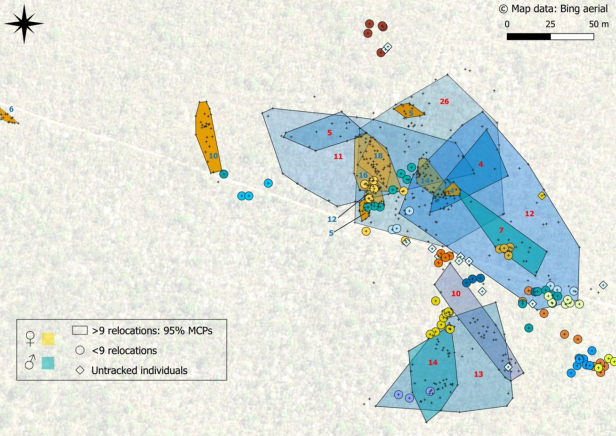
The study site was the dry forest of Kirindy in western Madagascar. Kirindy is located about 60 km north of the coastal town of Morondava and about 20 km from the sea in the Menabe region. During the rainy season in early 2020, 39 Furcifer labordi of both sexes were fitted with radio transmitters there. Weight and body length at the time of discovery as well as some other values were measured, and the sleeping height of the animals found at night was noted. The animals were released at the site where they were found. The researchers then tracked the chameleons twice during the day and once at night for several weeks using telemetry to record GPS data and establish movement and behaviour patterns.

The results of the study show that female Furcifer labordi in Kirindy are very site-faithful. They only cover short distances. In contrast, male Furcifer labordi move much more and over longer distances, so that seven to fourteen times more males than females could be observed in a forest section. The observed females mated with up to six different males – however, the researchers repeatedly found unmarked males among the observed females. This suggests that Furcifer labordi could actually have a significantly higher number of different reproductive partners. The individually very different body sizes of the males as well as differently pronounced nasal processes had no connection to movement patterns. Furthermore, it could be shown that Furcifer labordi does not occupy and defend territories. This means that presumably the short lifespan actually leads to competition for the few available females being more intense – and as observations show also more aggressive – than in other chameleon species. This study is the first investigation of the mating system of a Malagasy chameleon.

Sex-specific movement ecology of the shortest-lived tetrapod during the mating season
Lennart Hudel & Peter M. Kappeler

Published in Scientific Reports 12
Open Access (free download possible)
DOI https://doi.org/10.1038/s41598-022-14156-3


Conference Report 2022

Conference Report 2022

Conference reports

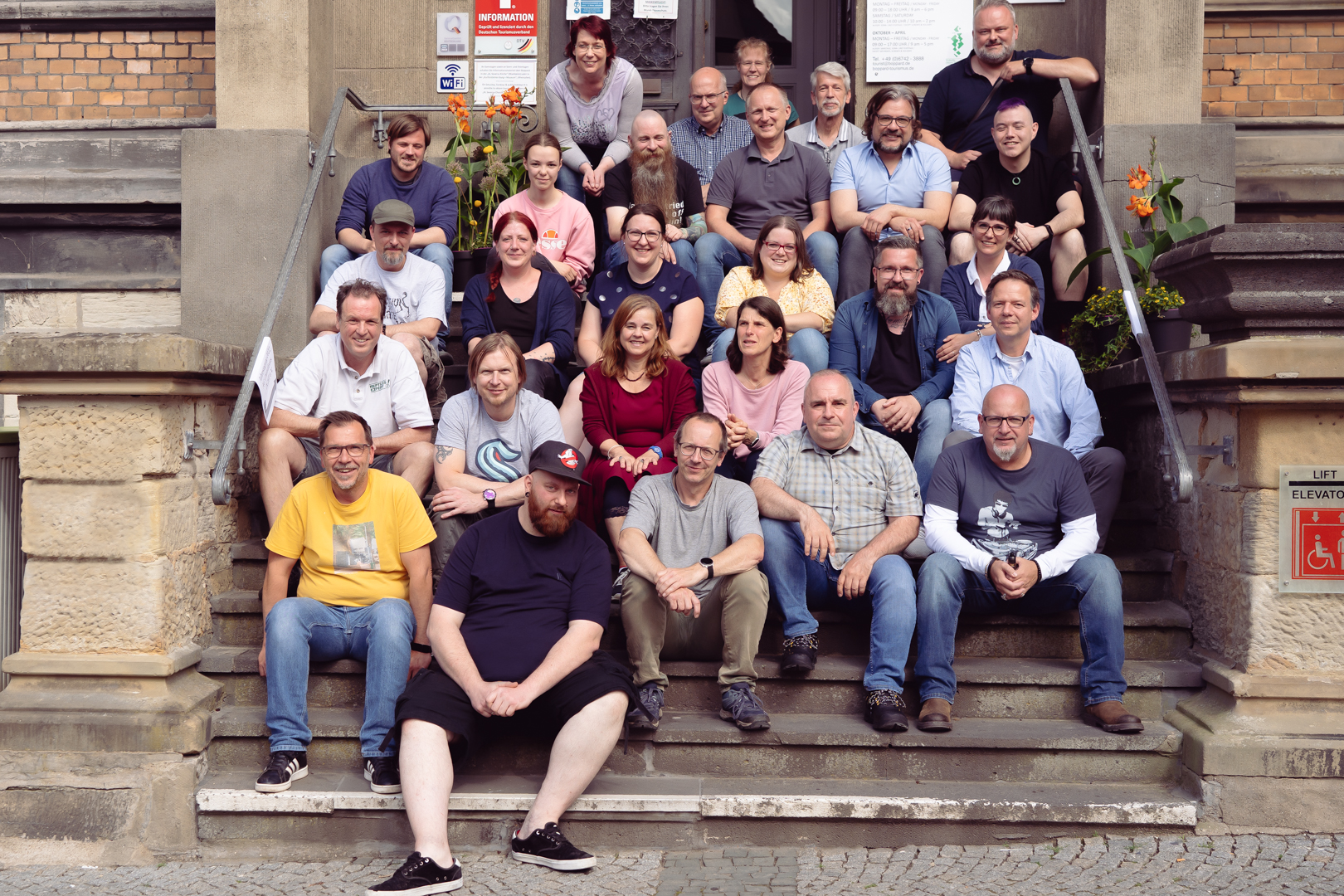
Finally another conference! From 20 to 22 May 2022, the meeting of the AG Chamäleons took place in the tranquil town of Boppard am Rhein. Due to the pandemic, the 2020 and 2021 meetings were cancelled – so it was all the nicer to see old and new chameleon friends again after such a long time. On Friday evening, they met for a cosy get-together at the former “Pizza Toni”, which is now run in Croatian and called “Albano“.

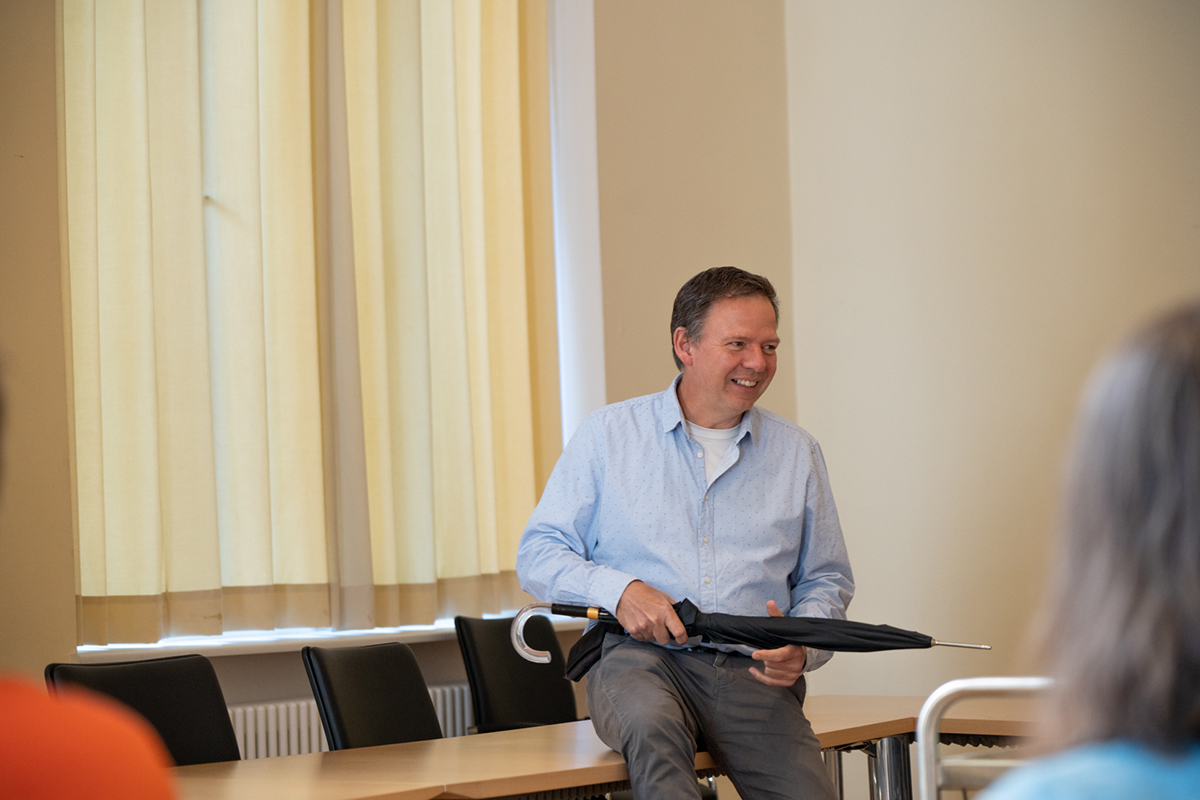
On Saturday, the conference started with an interesting presentation on various diseases in chameleons by Svea Brüne. To give a lecture at the age of 17 was praised by the AG, especially in times of a lack of young people in the field of herpetoculture. Afterwards, chameleon veteran Wolfgang Schmidt presented his experiences from many decades of successful keeping of leaf and pygmy chameleons. From Brookesia stumpffi to species of the minima clade to Rieppeleon brevicaudatus, Wolfgang has already kept an enormous variety of smaller species and was able to report which of them were good or more complicated to breed in the past and what he had noticed in particular, for example physiologically occurring white spots in the head area after hatching. After the lunch break, we continued with a travel report, also by Wolfgang Schmidt, on the African Chameleon in Greece. After the Chamaeleo africanus project in Gialova Bay collapsed a few years ago, the development of the area for tourists has progressed rapidly in recent years with the construction of another huge hotel. Nevertheless, Wolfgang was able to show that the future of Chamaeleo africanus in Greece does not seem to be nearly as endangered as originally assumed. Together with his wife, he was able to find several more areas where the animals occur in larger numbers. However, as is often the case with these chameleons, you have to be in the right place at the right time to find them!


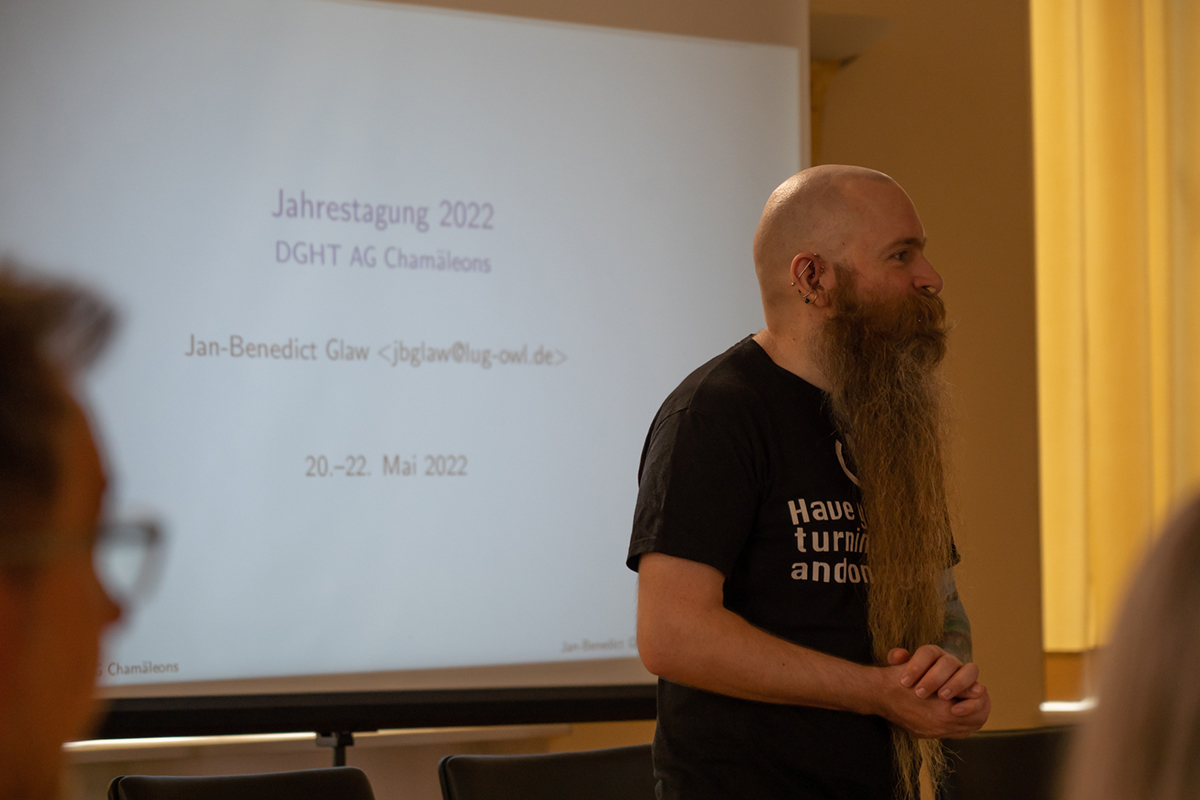
This exciting update was followed by the elections of the new leadership team. David Hellendrung, who had successfully led the AG Chamäleons since 2015, was unfortunately no longer available for the position for professional reasons. Alexandra Laube was unanimously elected as the new spokesperson of the AG. Jan-Benedict Glaw was re-elected as literature and internet professional, Tim Vierbücher as treasurer. Likewise, the long-time, tireless helpers Anne Stemper and Monique Bartsch were confirmed in their positions as assessors. Benjamin Ludwig was also appointed as an assessor and Svea Brüne as social media officer to complete the leadership team. DGHT President Markus Monzel congratulated the new management team on behalf of the DGHT and looked forward to good cooperation.

Late on Saturday afternoon, Falks Eckhardt’s lecture on the short-lived Furcifer labordi from Madagascar followed. It has just been proven that this colourful species is extremely dependent on the climate in southwest Madagascar. It could become a loser of climate change in the future if rainy seasons shorten and no longer provide enough time for the extremely fast life cycle from hatching to reproduction within a few months. In the photo competition, a beautiful photo of a Furcifer timoni from the Amber Mountain in Madagascar by Markus Bartels was chosen as the winner. He received a voucher from Chimaira as well as one of the beautiful conference collection mugs designed by Caro Vierbücher, which change chameleon species every year – depending on the winning motif of the previous year’s photo competition. Second place went to Martin Knauf with two photos of Furcifer voeltzkowi from Katsepy and Furcifer pardalis from Ankify, for which he received a voucher from “der Terraristikladen“. At the end of the day, Falk Eckhardt presented facts, figures and considerations on importing chameleons, which were very lively discussed afterwards.


Sunday started early with a great talk by herpetologist Dr. Frank Glaw, who showed the development of chameleon research on Madagascar from the 17th century until today. Frank also presented several highlights from his own research, such as the rediscovery of the Voeltzkov’s chameleon in 2018, which was even shared by Leonardo di Caprio on Instagram. Special highlights also included the groundbreaking discoveries of the world’s smallest chameleons, including Brookesia micra in 2012 and, a few years later, an even smaller terrestrial chameleon, Brookesia nana in 2021. David Suryanto Kasih then followed with a practical, very interesting talk on different ways to create living terrarium grounds. The last lecture of the 2022 meeting was given by Alexandra Laube with a brand-new travelogue from Madagascar about camping with chameleons post-Corona.

A big thank you goes to all the speakers for their interesting and varied contributions and, of course, to all the helpers in the background who made the conference a success. Special thanks to David Hellendrung as the previous speaker of the AG – we will certainly ask you again for one or the other lecture! And finally, we would like to thank the DGHT policy advisor, Peter Sound, and the town of Boppard, who have provided uncomplicated accommodation for the AG Chameleons conference for 20 years. We are already looking forward to next year!


Tagungsprogramm 2022

  Freitag, 20. Mai 2022
__
18:00 Anreise und gemütliches Abendessen im Restaurant Albona, Rheinallee 47a (ehemals Toni)
__
  Samstag, 21. Mai 2022
__
09:00 __ Eintreffen im Gebäude des Stadtrats, Marktplatz 17, 56154 Boppard
09:30 Begrüßung
09:45 Svea Brüne: Krankheit oder nicht? Erfahrungsberichte aus meiner Chamäleonhaltung
10:15 Pause
10:30 Wolfgang Schmidt: Stummelschwanz- oder Erdchamäleons—längst vergessene Juwelen im Terrarium
12:00 Mittagspause
14:15 Wolfgang Schmidt: Reise zum Afrikanischen Chamäleon in Griechenland
15:30 AG-Intern: Kassenbericht, nächstes Treffen, Wahlen
16:30 Pause mit Wahl der Gewinner des Fotowettbewerbs
16:45 Falk Eckhard: Furcifer labordi in Kirindy, Madagaskar
18:00 Falk Eckhard: Chamäleon-Importe
  __
  Sonntag, 22. Mai 2022
__
09:00 Eintreffen im Gebäude des Stadtrats, Marktplatz 17, 56154 Boppard
09:15 Frank Glaw: Highlights aus 30 Jahren Chamäleonsforschung in Madagaskar
11:15 David-Suryanto Kasih: Von Destruenten und anderem Ungeziefer: Lebender Boden
12:10 Alexandra Laube: Camping mit Chamäleons—Neues aus Madagaskar
13:30 Verabschiedung

Maecenas vel urna quis dui dapibus mollis placerat sed leo. Vivamus ultrices dui nulla, sed tincidunt eros luctus et. Proin metus risus, commodo vel neque id, tincidunt facilisis velit. Phasellus aliquet non tortor vel mollis. Fusce iaculis lectus sed consequat laoreet. Sed eu nisi imperdiet, bibendum turpis nec, molestie est. Morbi ut pellentesque risus.

Nullam varius metus vel nulla iaculis iaculis. Nulla non velit arcu. Donec scelerisque id tellus vel mollis. Vivamus placerat lacinia congue. Integer vel justo in nulla euismod elementum vel id tellus. Proin nibh arcu, pharetra vitae venenatis nec, ultricies ut sem. In vitae velit sapien. Ut rhoncus lacus eu est malesuada, nec scelerisque mauris posuere.