Presentation in Frankfurt about Uganda

Presentation in Frankfurt about Uganda

Reiseberichte Live lectures

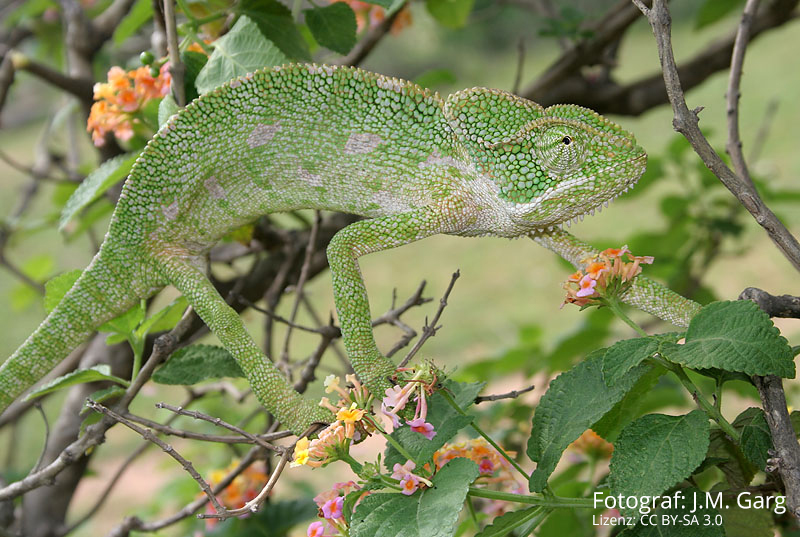
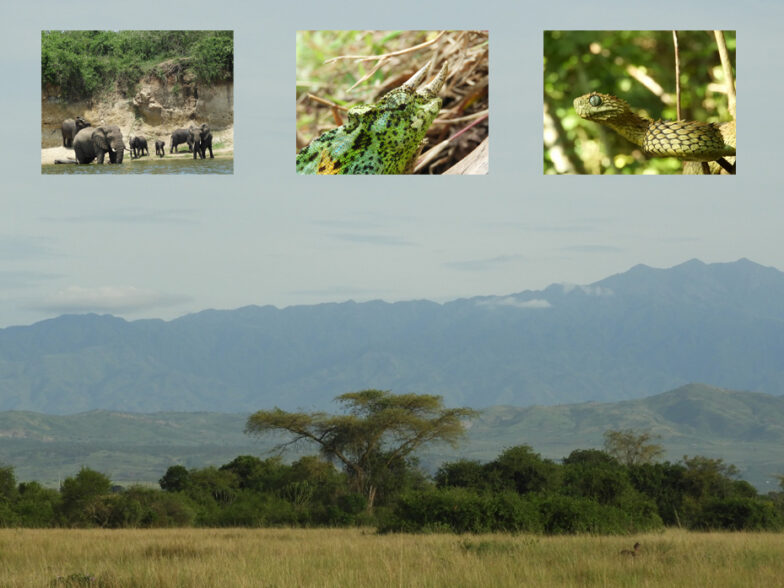
Next Friday, 19.08.2022, at 7 pm, Sönke Frahm will hold his presentation “Uganda – pearl of Africa” in Frankfurt am Main. He will report on a trip to the East African country of Uganda, which is framed by South Sudan, the Democratic Republic of Congo, Rwanda, Tanzania and Kenya. The journey starts in Entebbe on Lake Victoria and from there to the Mitjanja District in search of snakes of the species Bitis and Atheris. Sönke then takes the visitor on a safari to the unique Queen Elisabeth National Park and for chimpanzee trekking in Kibale National Park. Afterwards, a visit to the famous mountain gorillas in Bwindi National Park is scheduled. The trip concludes in a swamp area at Lake Victoria to look for the charismatic Abu Markub, the “father of the shoe”. Sönke met several species of chameleons on the way – there are thirteen different ones in Uganda – and of course, photographed them. So if you want to enjoy an evening with not only herpetological impressions, Frankfurt is the place to be. The presentation is in German.

Sönke Frahm: Uganda – Perle Afrikas
DGHT Stadtgruppe Frankfurt am Main
Zooschule des Zoo Frankfurt
Bernhard-Grzimek-Allee 1
60316 Frankfurt am Main
Admission from 18:30, beginning of the presentation at 19 o’clock

Lecture in Munich on LED lighting

Lecture in Munich on LED lighting

Live lectures

Anyone involved in chameleon husbandry will increasingly come across LED lighting. Although their use has been rather limited so far, LEDs now offer many possibilities, but also some dangers. Physicist Sarina Wunderlich from www.licht-im-terrarium.de has studied the subject in depth and bundled everything important into an informative lecture. The lecture “UV-B-LEDS: New developments and tried and tested methods for supplying vitamin D3 to terrarium inhabitants” will take place on Thursday, 18.08.2022, at 7 pm at the Munich State Zoological Collection. If you would like to attend, please send an email to Kathrin Glaw. A contribution towards expenses of € 10 will be charged, and drinks and pretzels will be organised.

Sarina Wunderlich UV-B-LEDS: New developments and tried and tested for supplying vitamin D3 to terrarium inhabitants

Lecture room of the Zoologische Staatssammlung München
Münchhausenstraße 1
81247 München
Start of lecture: 7 pm

Factors in the geographical dispersal of chameleons

Factors in the geographical dispersal of chameleons

Science

For a long time, people have been trying to find out how and why chameleons have spread across the African continent, to islands and as far as Europe and Asia. French scientists, in collaboration with international colleagues, have now used phylogenetics and various computational models to investigate how the factors of body size, coastal habitat and extreme lifestyles may have affected the distribution of different chameleon species. The study examined 181 species divided into nine main biogeographical regions: North Africa and Arabia, Central Africa, Southeast Africa, Southwest Africa, India, Socotra, Madagascar, Comoros and Seychelles.

Chameleon species that occurred more than 10 km from the sea historically spread significantly less than the 74 coastal chameleon species. A similar phenomenon is known from skinks and crocodiles. Dispersal probably took place mainly along the coasts, mostly on the same continent and only rarely across the water to other continents or islands.

The size of the different chameleons also seems to have influenced their dispersal throughout history: Large chameleons spread further and more frequently than small chameleons. This could be related to the fact that larger chameleons have a lower metabolic rate – so they need less energy overall relative to smaller competitors. In addition, larger chameleons lay clutches with significantly more eggs, which simply gives them an advantage in numbers.

A somewhat unexpected result came from the study of different life cycles. One would initially assume that short life cycles are associated with faster dispersal. In fact, the calculations showed that especially chameleon species with extreme life cycles spread further. Thus, those that reproduced particularly slowly or particularly quickly were historically more successful among chameleons than the species “in the middle”. In this regard, the authors consider whether particularly slow life cycles with late sexual maturity and long gestation might be more successful on the same continent, while faster reproductive strategies with large clutches are more favourable for dispersal across the sea to islands and other continents. In line with this, Furcifer polleni and Furcifer cephalolepis in Comoros and Chamaeleo zeylanicus in India, all three examples of aquatic dispersal, have a very fast life cycle.

The 34 chameleon species with the combination of living close to the coast, large size and extreme life cycle had a 98% higher dispersal rate than species without these characteristics.  All in all, this is certainly a very theoretical study, but it nevertheless provides exciting insights into the historical distribution and dispersal of chameleons.

Chameleon biogeographic dispersal is associated with extreme life history strategies
Sarah-Sophie Weil, Laurie Gallien, Sébastien Lavergne, Luca Börger, Gabriel W. Hassler, Michaël P.J. Nicolaï & William L. Allen
Ecography
DOI: 10.1111/ecog.06323

Fieldguide to the Chameleons in Uganda

Fieldguide to the Chameleons in Uganda

Book publications
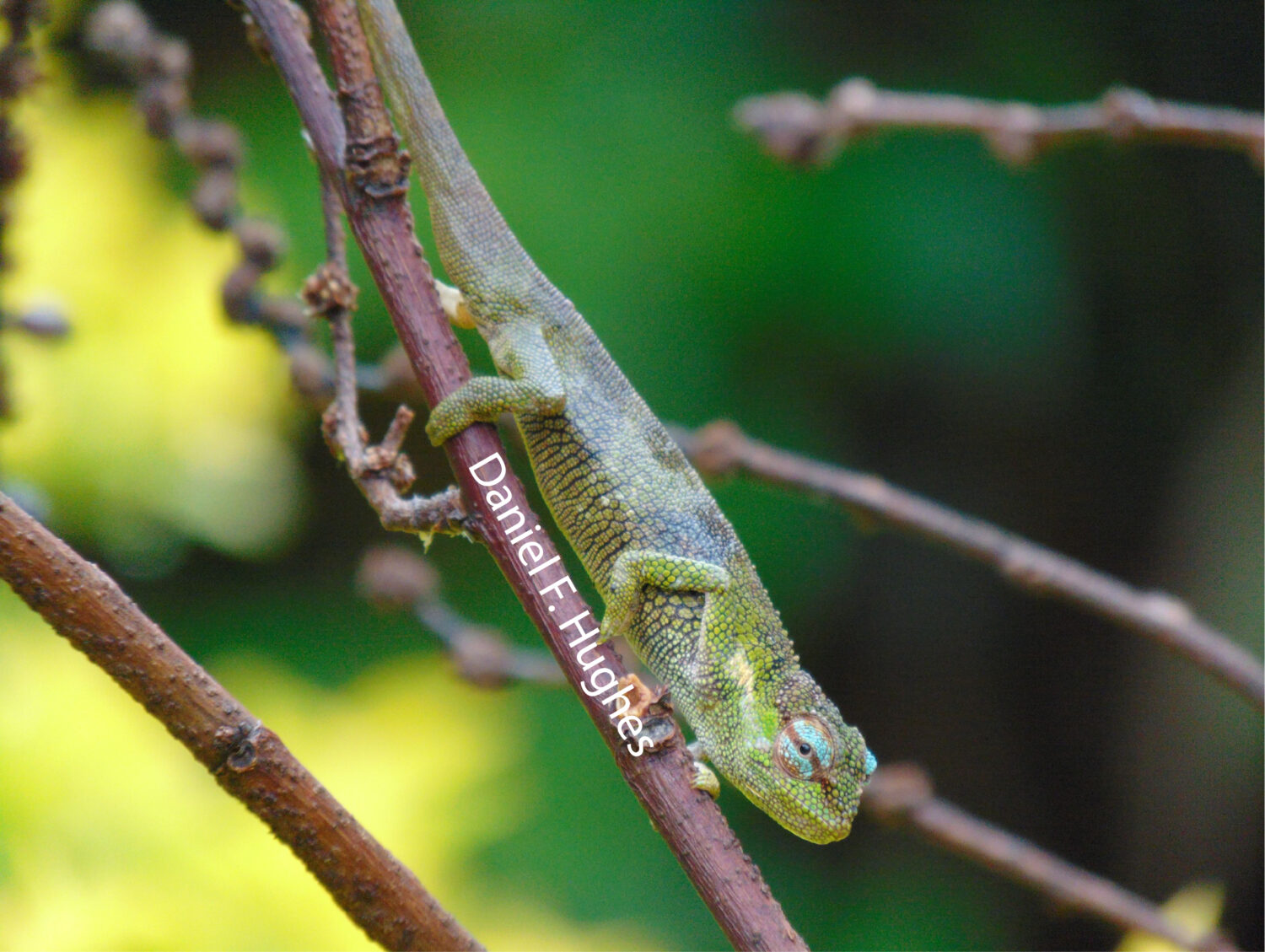
Kinyongia tolleyae, Rwenzori, Uganda

Good things come to those who wait. Already in 2019, the two biologists Dr Daniel Hughes and Dr Mathias Behangana had produced a field guide to the chameleons in Uganda. Hughes works at the Carnegie Museum of Natural History (Pittsburgh, Pennsylvania, USA), Behangana is one of Uganda’s leading herpetologists. But the worldwide corona pandemic put the project on an involuntary hiatus. Only now could 4000 copies of the field guide be distributed in Uganda.

The small field guide has 64 pages and is designed in a pocket format to be handy to take with you into the rainforest and savannah. The language of the field guide is English, which is the official language in Uganda along with Swahili. The field guide includes all 13 species of chameleons found in the landlocked East African country. Each species is presented with photos of the chameleons in their habitat, a distribution map and a detailed description. There is also a short preface with information on chameleons in general, for example, that, contrary to local myths, they are harmless to humans and useful flycatchers. The project was supported by Uganda Wildlife Authority, Wildlife Conservation Society (WCS), NatureUganda and US Agency for International Development (USAID. Ein Interview mit Dr. Daniel Hughes wird in Kürze in der CHAMAELEO erscheinen.

A pocket guide to the Chameleons of Uganda
Mathias Behangana, Daniel F. Hughes
64 pages, self-published
The PDF is available for free download here.

Hidden species within the genus Chamaeleo

Hidden species within the genus Chamaeleo

Science

Thanks to genetic studies, the identification of species is much more precise today than it was a few decades ago. However, genetics always raises new questions. The genus Chamaeleo currently has 14 species. Scientists from South Africa have now investigated whether there might be other ‘hidden’ species of the genus Chamaeleo. At the same time, they investigated where the origin of the genus Chamaeleo might lie. For this purpose, the genetic material of all 14 species recognised so far was examined. Exciting results came to light: of the fourteen Chamaeleo species, thirteen were confirmed, but one was questioned. In addition, several new candidate species were identified.

The two different populations of Chamaeleo anchietae in western Angola and in south-eastern Congo and Tanzania probably represent two different species. If the animals from the Democratic Republic of Congo and Tanzania were true to be elevated to species status in the future, they would have to be named Chamaeleo vinckei according to taxonomy and a species description from 1950.

Chamaeleo gracilis seems to hide – which would not be surprising due to its wide distribution – at least three independent species. The “real” Chamaeleo gracilis would be found in Liberia, Sierra Leone and Guinea. The other two groups originate from the triangle of countries between Chad, Cameroon and the Central African Republic and from the border between Kenya and Tanzania. Unfortunately, only single specimens of Chamaeleo gracilis have been sampled, so no more far-reaching recommendation on the splitting of species can be made at this point.

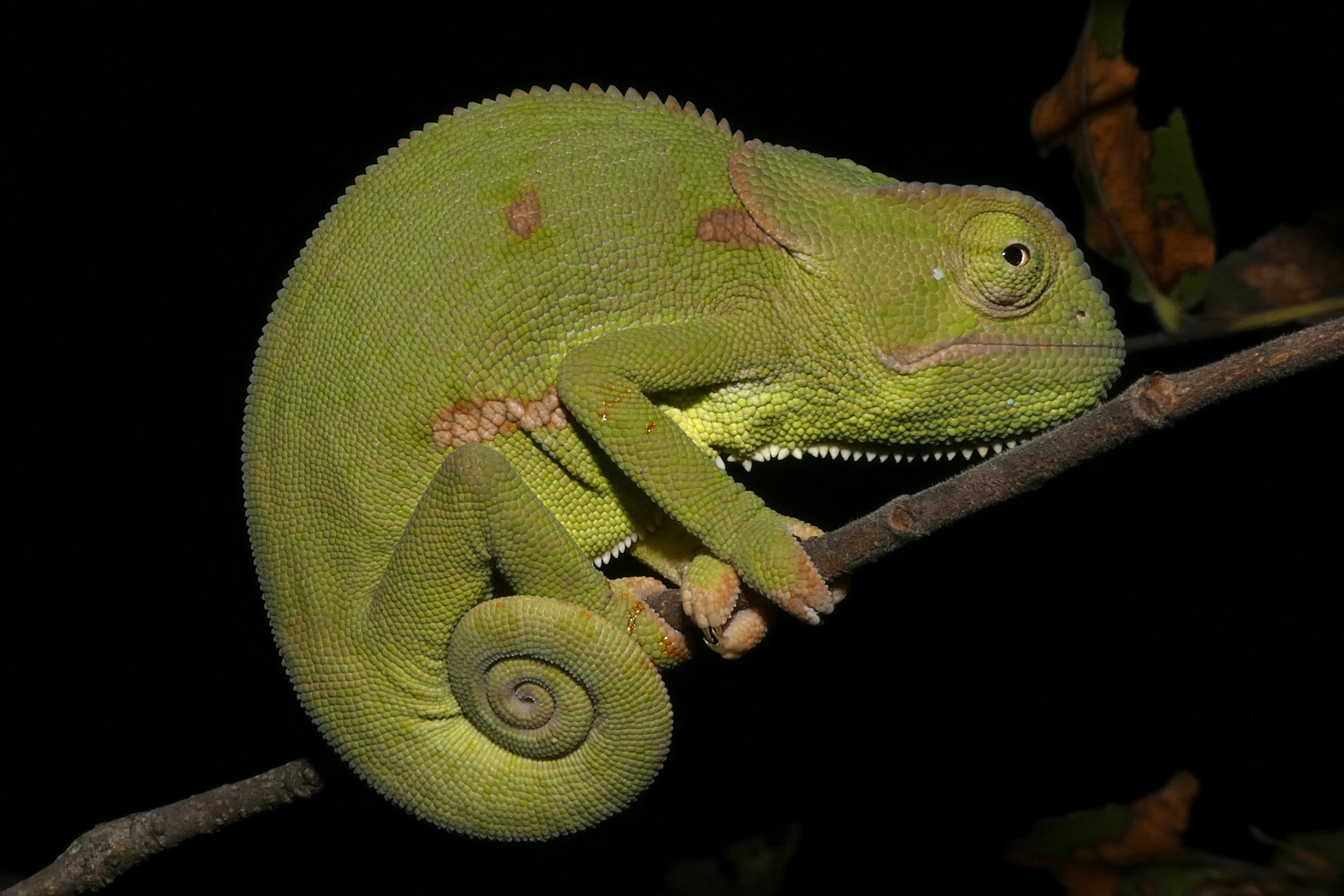
The flap-necked chameleon (Chamaeleo dilepis), currently described as a single species, could contain a total of three species. One of the genetically distinct populations occurs in eastern Africa in Tanzania and Rwanda, while a second species is found in southern and eastern Africa, from South Africa through Botswana, Zambia, Namibia, Mozambique and Malawi to southern Tanzania. The third species would be distributed in west central Africa between Angola and the Congo. None of the candidate species matches the eight subspecies described so far purely on the basis of appearance. Therefore, a complete review of the previous subspecies, their status and the species status of the three newly emerged clades is necessary.

The results of the study on Chamaeleo necasi from Benin are also interesting. It turned out that the genetics identified the sampled animal as Chamaeleo gracilis. However, the specimen itself was not examined by the researchers. It could be a Chamaeleo gracilis misclassified by its appearance. In this case, the specimens used for the species description in 2007 would have to be viewed and sampled again in order to obtain more information about the actual species’ status.

In the course of the genetic investigations, the researchers found out that the origin of the genus Chamaeleo probably lies in South Africa. Chamaeleo namaquensis, the only terrestrial chameleon of the genus Chamaeleo, split off from the other Chamaeleo species as early as 40 million years ago in the Eocene. This makes the Namaqua chameleon from the Namib Desert and Damaraland the “oldest” chameleon of the genus Chamaeleo. Chamaeleo anchietae followed about 29 million years ago.

Out of southern Africa: origins and cryptic speciation in Chamaeleo, the most widespread chameleon genus
Devon C. Main, Bettine Jansen van Vuuren, Colin R. Tilbury & Krystal A. Tolley Conceptualisation
Molecular Phylogenetics and Evolution, Volume 175
DOI: 10.1016/j.ympev.2022.107578

Unexpected genetic diversity in leaf chameleons in western Madagascar

Unexpected genetic diversity in leaf chameleons in western Madagascar

Science

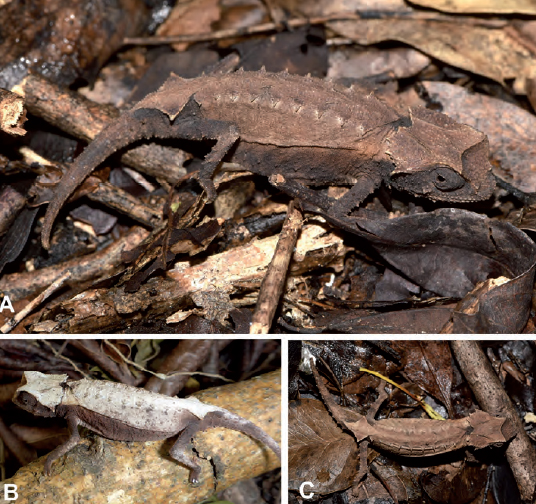
Until now, it was thought that the earth chameleon Brookesia bonsi occurs exclusively in the Tsingy of Namoroka in western Madagascar. German and Malagasy researchers have now discovered that very close relatives of the species live a good 150 km further north, not far from the coastal town of Mahajanga. The earth chameleons from a forest near Antsanitia look more like Brookesia decaryi on the outside, but genetically they are more closely related to Brookesia bonsi. In contrast, the true Brookesia decaryi from Ankarafantsika, 80 km east of Mahajanga, seems to be exclusively restricted to this occurrence and not more widespread, as originally assumed. In the same studies, the scientists found that another population of leaf chameleons from the UNESCO World Heritage Site Tsingy de Bemaraha is also closely related to Brookesia bonsi. The leaf chameleons of the population found there had previously been assigned to Brookesia brygooi on a purely visual basis.

Further work is now necessary to clarify the exact genetic identity of Brookesia aff. bonsi. Are they separate species or merely locally isolated populations of Brookesia bonsi? One thing, however, is already certain: the habitat near Mahajanga should urgently be placed under protection. The leaf chameleons must be protected so that they can be studied further. According to current data, they could already be critically endangered (IUCN). And further research could still be very exciting!

New records of threatened leaf chameleons highlight unexpected genetic diversity of the Brookesia decaryi / B. bonsi species complex in western Madagascar
Frank Glaw, Njaratiana A. Raharinoro, Rojo N. Ravelojaona, David Prötzel und Miguel Vences
Der Zoologische Garten 90, 2022 (1)
DOI 10.53188/zg003

Influence of UV-B on growth

Influence of UV-B on growth

Short messages Science

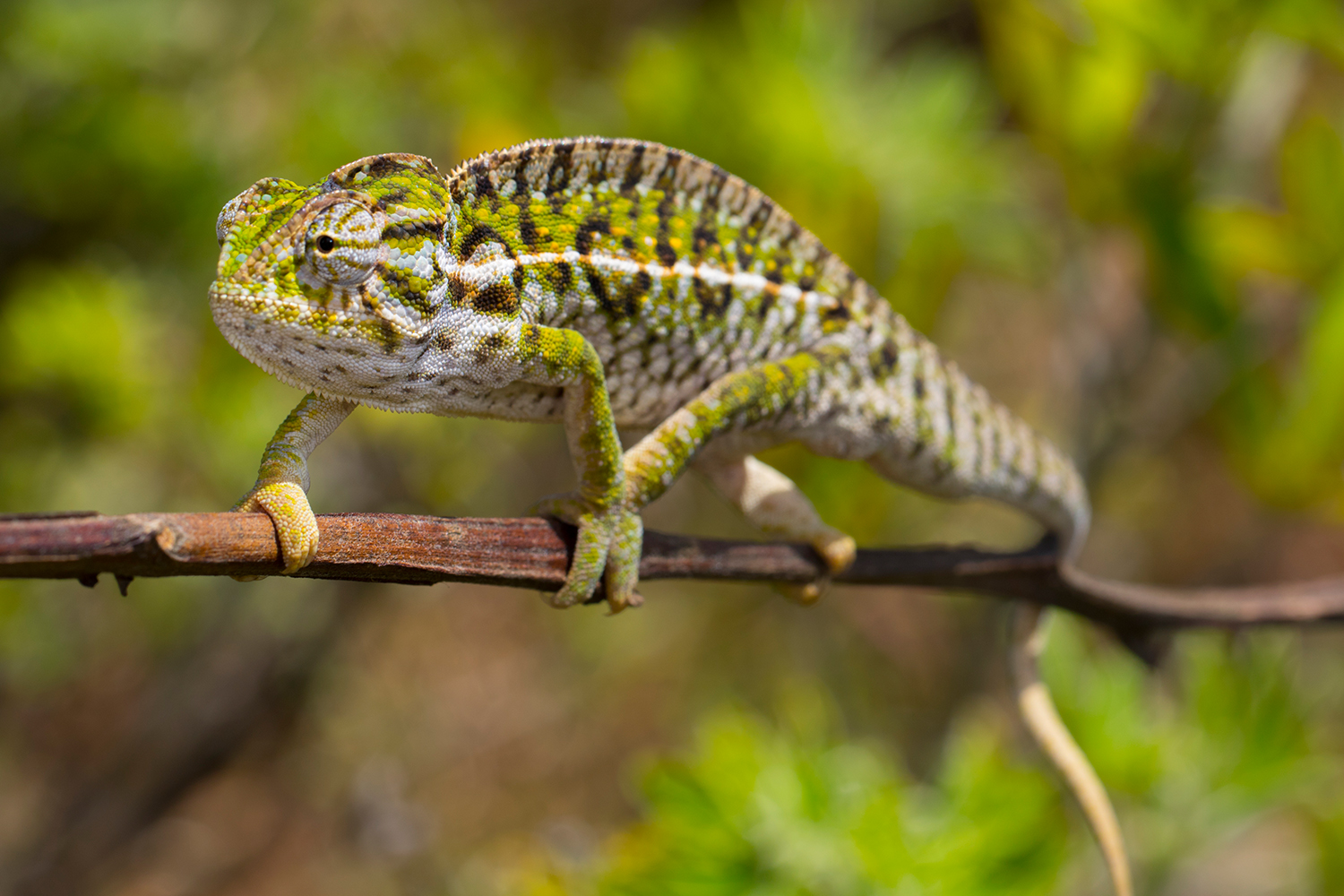
An interesting husbandry experience from the USA was presented in a short note in the Herpetological Review. Twelve carpet chameleon hatchlings (Furcifer lateralis) from the same clutch were divided into four groups of three animals each. During the first ten weeks after hatching, two groups were provided with a daily UV index of up to 3 for 12 h, the other two groups with a UV index of up to 7. Reptisun 5.0 was used to achieve the different UV indices. Measurements were taken with the Solarmeter 6.5. The chameleons were allowed to avoid UVI up to 0. After six, eight and ten weeks, the carpet chameleons were measured and weighed. It was noticed that in weeks 6 and 10, the groups with the lower UV index were up to 25% heavier than the comparison groups.

The two authors conclude that higher UV indices during rearing in the first weeks could lead to slower growth rates in carpet chameleons. This would correspond to the observation in nature that young animals “sunbathe” rather rarely and stay more hidden in the bushes. Due to the small group of test subjects and mixed groups instead of individual keeping, you must still be cautious with conclusions here. In addition, it is unfortunately still largely unexplored whether and how chameleons can regulate their vitamin D3 regulation in artificial light compared to natural sunlight. Nevertheless, it is a very interesting approach that is certainly worth pursuing.

Furcifer lateralis (carpet chameleon): Impact of Ultraviolet Light on growth
Michael J. Nash, Christopher V. Anderson
Herpetological Review 52 (2), 2022

New publication: A book about the tiger chameleon

New publication: A book about the tiger chameleon

Book publications

Until now, there was no book that dealt with the keeping of the tiger chameleon. You had to painstakingly search for individual reports on keeping tiger chameleons from various sources and puzzle together small pieces of information to form a larger unit. With the newly published book by Markus Grimm, who has been a member of the AG Chamäleons for almost 20 years, this has now changed. Markus Grimm was responsible for the first breeding of the tiger chameleon in 2004 and teaches courses on chameleons in Switzerland.

The first quarter of the book is about chameleons in general. The distribution and the diversity of the different species and their habitats are presented. A brief overview of possible diseases of chameleons in terraristics as well as tips on what should be considered when buying a chameleon completes this part of the book. Then it’s on to the tiger chameleon itself. The distribution and habitat of the small chameleons on the Seychelles islands of Mahé, Praslin and Silhouette are presented. This is followed by herpetoculture: basics such as terrarium size, ventilation and climate technology are explained as well as CITES listing and corresponding keeper obligations in Germany, Austria and Switzerland. In the biology of the tiger chameleon, some information is repeated and specified for the species. The sex determination of the tiger chameleon is explained in detail so that even a beginner should be able to select suitable animals for a small breeding group after reading the book. The author gives concrete recommendations on food quantity and food insects. Many personal experiences of the author form the main focus of the book. The book concludes with a detailed section on the reproduction of the tiger chameleon in the terrarium. Mating, pregnancy and egg-laying are discussed in richly illustrated detail. The author also dispels the myth that Archaius tigris only lays its eggs in leaf axils. It does show this behaviour frequently, but there are also tiger chameleons that bury their eggs in the ground like other egg-laying chameleon species of the Indian Ocean. Egg incubation and hatching as well as the rearing of the young complete the species presentation.

The book is aimed at anyone who is considering keeping Archaius tigris. The large font makes it easy to read. In some places, the lack of picture descriptions, some technically vague information and a lot of detached photos disturb the reading flow a little. The first quarter of the book also sometimes gets lost in other chameleon species. However, it then finds its way back to the tiger chameleon to deliver the world’s first book of its kind on Archaius tigris. The advanced chameleon keeper will certainly enjoy the last third of the book most, with many details on the propagation of the species and rearing of the young. For the novice keeper, the book offers a great deal of very valuable information for good, chameleon-friendly husbandry.

The book is only available in German. It is self-published and can be ordered from the author.


The tiger chameleon (Archaius tigris) – keeping, care and reproduction
Markus Grimm
131 pages, Self-published
ISBN 978-3-033-09238-9
currently at the introductory price of 20 CHF/€ excluding shipping
otherwise 22,90 CHF (currently 22,90 €) excluding shipping
Order directly from the author markus-grimm@gmx.ch

Save the date: Conference 2023 / Call for speakers

Save the date: Conference 2023 / Call for speakers

Short messages

For the first time in the history of the AG Chamäleons, the date for the next meeting was found by online voting this year. An astonishing number of chameleon enthusiasts took part. As a result, the next meeting date will be 05 to 07 May 2023. So please mark this date in your calendar already now!

At the same time, we would like to invite you to submit planned presentations to leitungsteam@agchamaeleons.de. We are looking for reports on common or rarer species, breeding reports, notes from everyday life with chameleons, travel reports to chameleon habitats, information on diseases, and also results from research, taxonomy, new discoveries or other exciting areas. If you would like to give a talk, you do not necessarily have to be a member of the AG Chamäleons or the DGHT. We are looking forward to a colourful variety of presentations!