Presentation in Frankfurt about Ethiopia

Presentation in Frankfurt about Ethiopia

Reiseberichte Live lectures Science

On Friday, 26 September 2025, herpetologist Dr Arthur Tiutenko from Friedrich-Alexander University Erlangen-Nuremberg will give a lecture accompanied by numerous images about a very special forest in Ethiopia.

The Harenna Forest, which stretches along the southern slopes of the Bale Mountains in southern Ethiopia, is one of the last remaining forest areas in the Horn of Africa and the largest remaining rainforest on the African mainland. It is not only home to Arabica coffee, but also to numerous other endemic plant and animal species, many of which have not yet been scientifically discovered and described. The herpetofauna of the Harenna Forest includes more than 40 species, including the two large Ethiopian vipers – Bitis harenna and Bitis parviocula. The habitats of these animals and the entire ecosystem are being destroyed by overpopulation and increasing economic exploitation. Even the future of the officially protected parts of the forest looks bleak. This makes it all the more important to gain knowledge about the species that still live in the forest before it is too late. Arthur Tiutenko has explored the Harenna Forest in ten expeditions, the results of which he reports on in this lecture.

Dr. Arthur Tiutenko Harenna Forest, Ethiopia – 12 years of expeditions into the last rainforest in the Horn of Africa [German]
DGHT Stadtgruppe Frankfurt
Zoo school of Zoo Frankfurt
Bernhard-Grzimek-Allee 1
60316 Frankfurt am Main
Lecture begins at 7 p.m., doors open at 6:30 p.m. via the exit gate at the main entrance on Alfred-Brehm-Platz (gate between the zoo shop and the zoo society building).

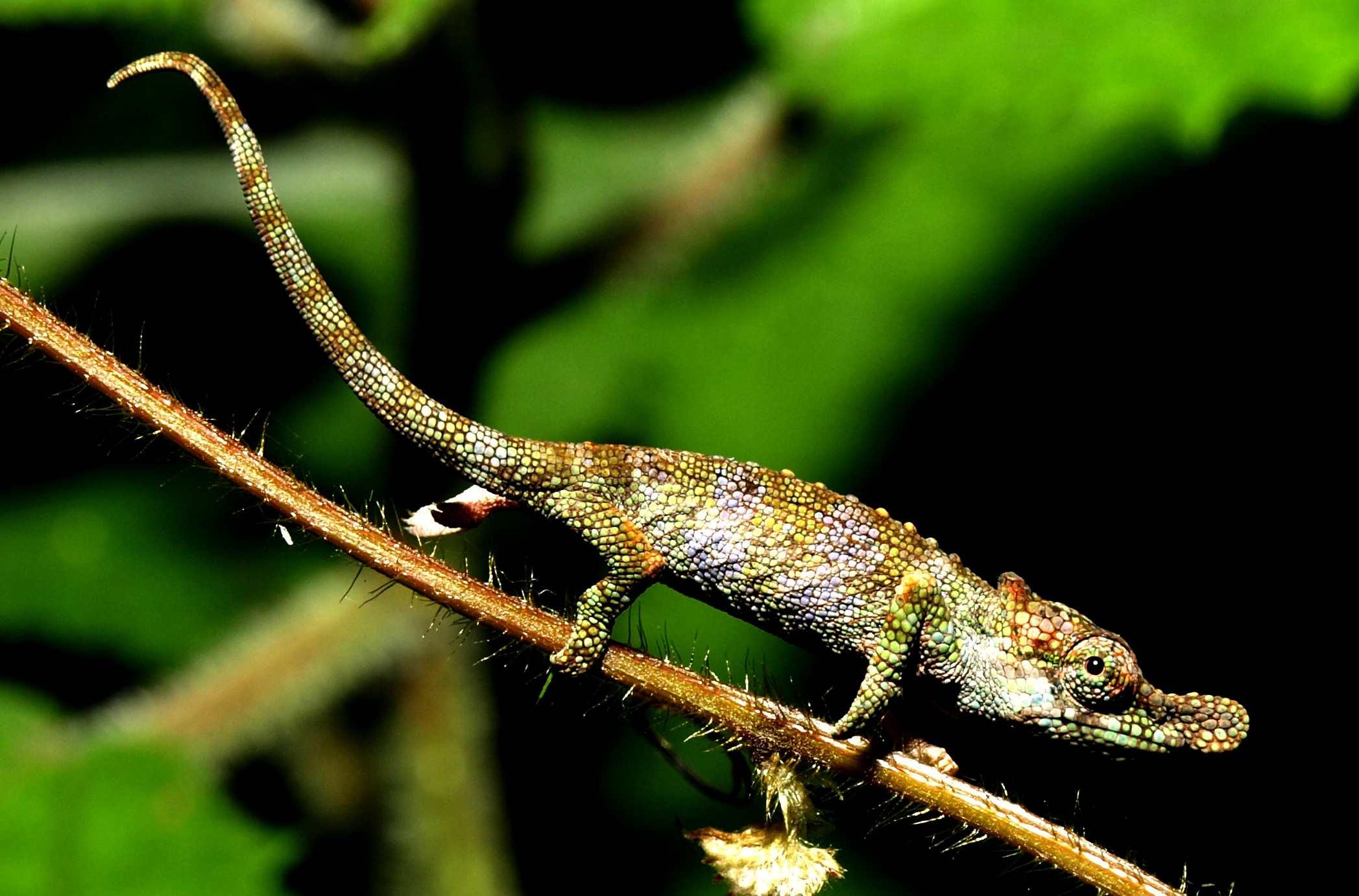
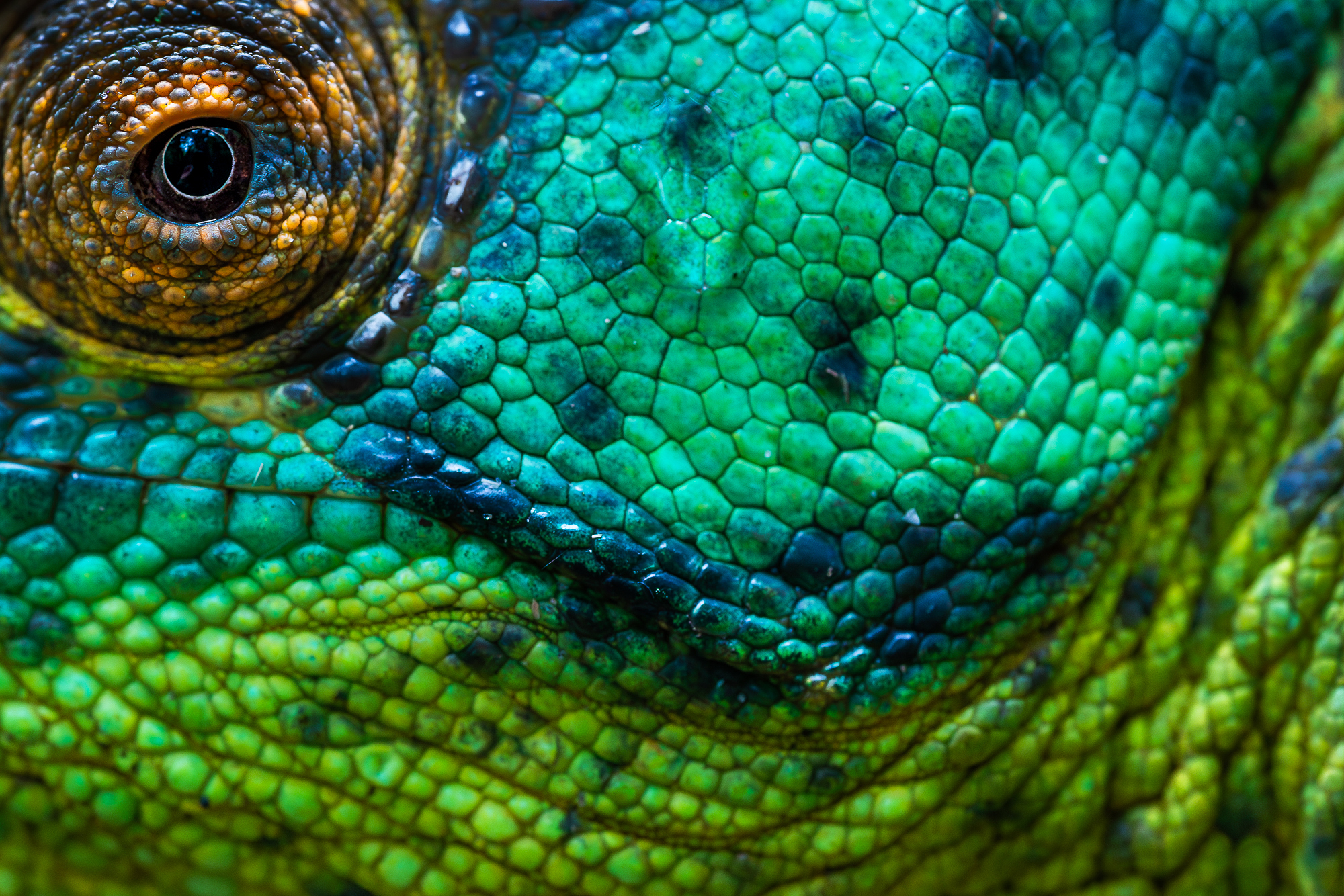
Photo: Trioceros balebicornutus, photographed by Arthur Tiutenko on one of his travels

Chameleons in St. Luce (Madagascar)

Chameleons in St. Luce (Madagascar)

Verbreitung Science

The St. Luce reserve is located in the south-east of Madagascar, just 34 km north of the city of Tolagnaro (Fort Dauphin). The protected area includes beaches and rocky cliffs on the coast of the Indian Ocean, lowland rainforest, marshland, savannah-like plains, rivers and lagoons. The remaining rainforest is broken up into many small fragments. There is also a very large rare earth mining project in the area. 12 of the 17 forest fragments of St. Luce are affected by the mining work. A group of scientists has now studied the herpetofauna of the area in more detail.

Over a period of two years, reptiles and amphibians were searched for and captured in St. Luce. The searches were carried out with the naked eye along existing transects. In addition, ground traps were used for two weeks along four 100 m long lines. Five artificial shelters and five corrugated sheets were laid out at a total of 12 locations to check for animals after a certain period of time. Samples of tail tips and toes were taken and measurements taken, after which the animals were released back to their original locations. The species were identified by genetic analysis.

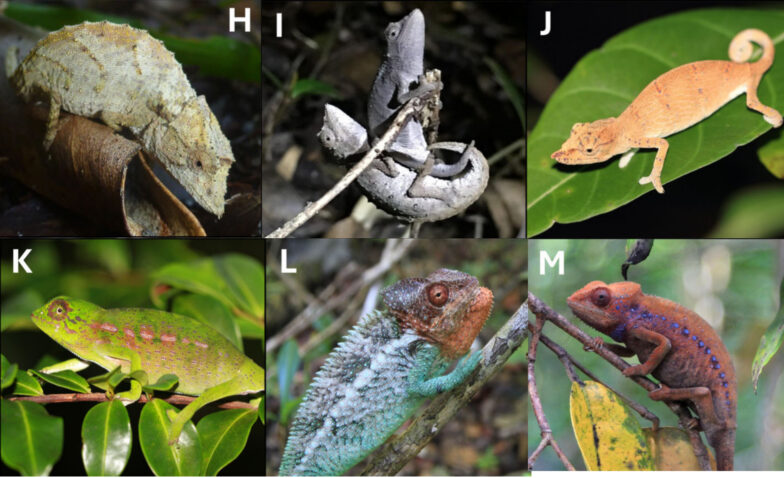
Of 17 rainforest fragments in St. Luce, the scientists found only one intact and another intact but heavily fragmented. All other forest fragments were found with clear signs of habitat destruction. A total of 22 amphibian and 54 reptile species were found. Four species of chameleons were among the reptiles: Palleon sp. aff. Nasus, Calumma tjiasmantoi, Furcifer major and Furcifer verrucosus. All four chameleon species occurred exclusively in the remaining intact or intact areas of the Angalavinaky, Ambandrika and Andranangy/Amboronteny/Agnalaro forests. In the forests already destroyed by the mine, no chameleons were found at all. Of the 76 amphibian and reptile species found, 13 were candidate species, which are presumably undescribed new species.

The authors point out that, according to the present study, the diversity of the herpetofauna in St. Luce is significantly greater than previously assumed. They suggest that several forest fragments should be included in the “Mining Avoidance Zones”, i.e. areas where rare earths should not be searched for, and that the protection status should be increased.

A littoral treasure trove: a comprehensive assessment of the herpetofauna of Sainte Luce, southeastern Madagascar
Sam Hyde Roberts, Marco Sannolo, Hoby Tsimijaly Longosoa, Ryan Clark, Leo Jhaveri, Gonçalo M. Rosa, Walter Cocca, Franco Andreone, Angelica Crottini
Systematics and Biodiversity 23(1): 2513472
DOI: 10.1080/14772000.2025.2513472

Photos: Chameleons found in St. Luce from the aforementioned publication

Impact of agriculture on chameleons in Madagascar

Impact of agriculture on chameleons in Madagascar

Science

In Madagascar’s eastern highlands, farmland for rice fields is mainly obtained by slashing and burning primary forests or secondary vegetation. The rice fields are only used for one season. The following year the field is used for root vegetables. After just one harvest, the land lies fallow for up to five years before it is slash-and-burned again to grow rice again. Just five of these cycles can turn fertile land into degraded. In recent decades, fallow land has been cleared at ever shorter intervals. This practice has allowed invasive, non-native plant species to spread, while Malagasy plants that depend on primary forest have disappeared. Malagasy scientists have now investigated the impact of this form of agriculture on chameleons on the east coast of Madagascar.

The Ankeniheny-Zahamena rainforest corridor in the eastern highlands was used as the object of study. It runs along the east coast of Madagascar over an area of around 5000 km², some of which are only connected by very narrow forest fragments. A total of 44 sites were investigated during the rainy season, which were categorised into five habitat types: Ten sites with closed canopy rainforests, eight with tree fallows, eleven with shrub fallows, ten sites after at least five slash-and-burn cycles (degraded land) and five sites where reforestation was practised. The majority of chameleons were searched for, identified and measured at night along predefined transects (three to four parallel lines each 50 metres long).

A total of 15 chameleon species of the genera Brookesia, Furcifer and Calumma were found, although three species could not be precisely identified (as far as recognisable, these are animals from the Calumma nasutum/emelinae complex). Most chameleons favoured closed rainforest, whereas significantly fewer animals and species were found after slash-and-burn clearing. In forest areas with reforestation efforts, the number of chameleons was significantly higher than in degraded areas. Both emphasise the need to protect remaining rainforests as well as the relevance of reforestation in Madagascar.

Six species (including Calumma cf. vencesi, Brookesia superciliaris, Brookesia therezieni, Calumma parsonii) were clearly more sensitive to agriculture and can probably only survive to a very limited extent outside primary forest. Only three species were found on intensively farmed land, of which only Furcifer lateralis was most frequently found there.

Effects of shwidden agriculture on chameleon diversity and abundance in eastern tropical rainforest in Madagascar
Rodlis Raphali Andriantsimanarilafy, Joseph Christian Randrianantoandro, Josué Rakotoarioa, Alain Jean Victorien Rakotondrina, Ruth Kelly, Alison Cameron
Sustainability and biodiversity conservation 3(2): 99-118.
DOI: 10.5281/zenodo.13861065

Photo: Carpet chameleon at the edge of a rice field in Madagascar, photographed by Alex Negro