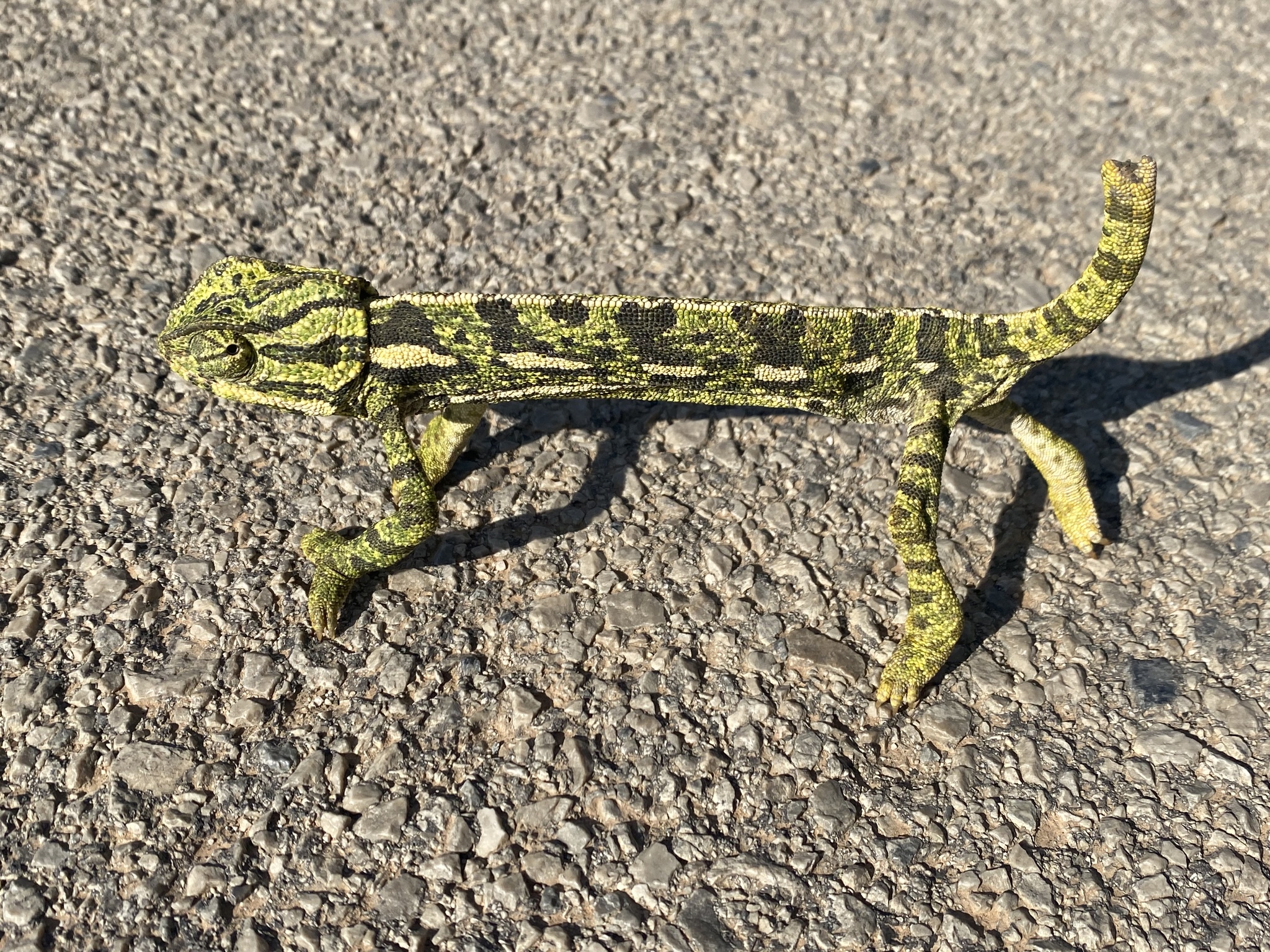
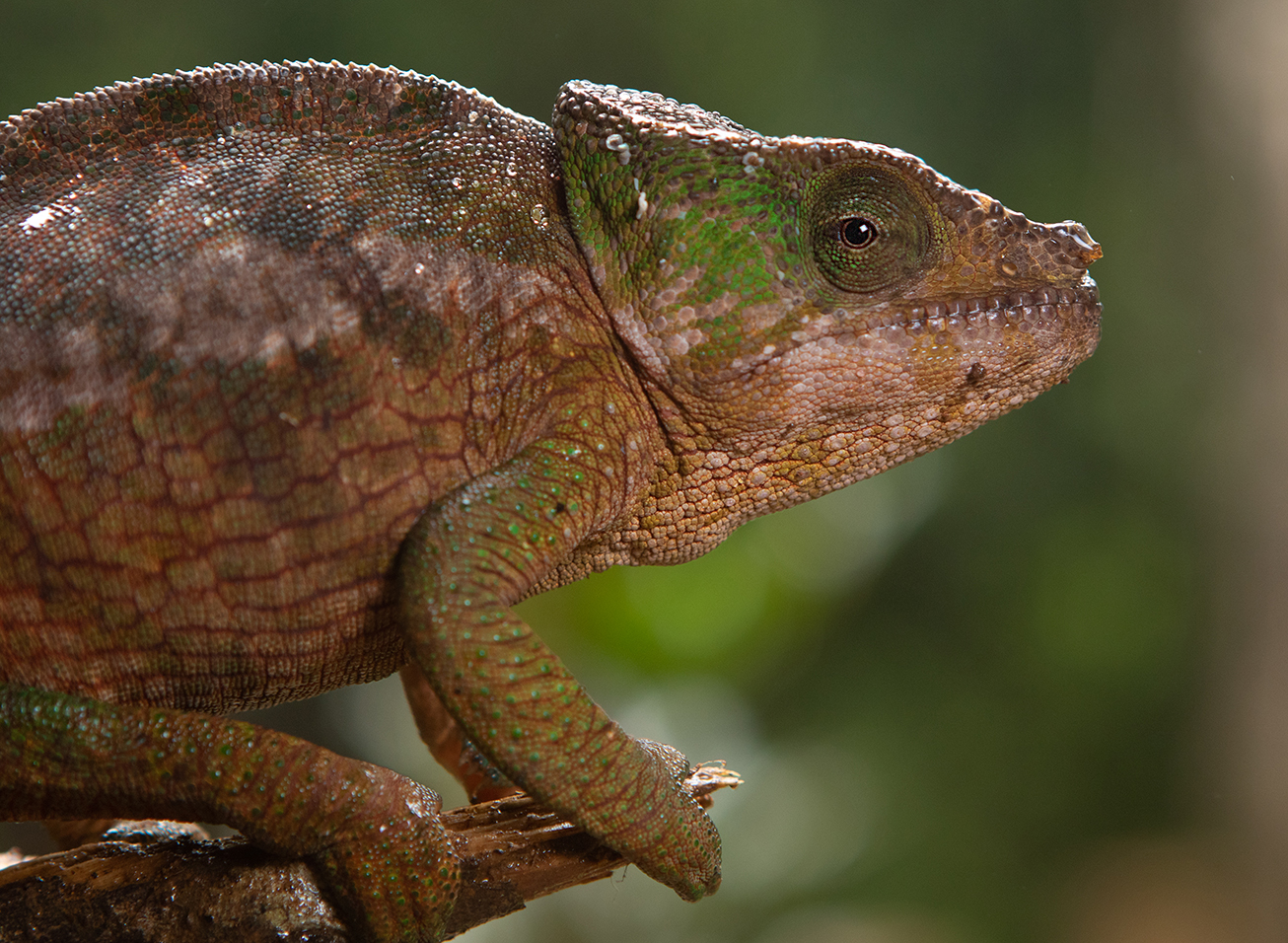
Biologists from the University of Antananarivo recently investigated how different habitats affect the presence of four Calumma species in Madagascar. They chose the Ambohitantely Special Reserve, managed by Madagascar National Parks, and two forests in the Anjozorobe-Angavo corridor as their study areas: Anorana, not officially declared a protected area and managed by local communities, and Antsahabe, managed by the NGO Fanamby. The three study areas covered a wide variety of forest types, from intact rainforest to forest fragments with mainly young trees, including areas that had been cleared by burning. All three areas are located in the northern highlands of Madagascar.
During the dry and rainy seasons of two years, biologists searched for chameleons along 50-metre-long transects (14 transects per location, each with three parallel lines). The searches were carried out in pairs at night using torches. Each chameleon found was identified, measured and various data on the location of the find was recorded. In addition, 16 botanical transects, each 100 m long, were used to collect data on the surrounding habitat.
The results of individual transects had to be removed from the evaluation because slash-and-burn farming had taken place in their vicinity shortly before the search nights and an impact on the animals could not be ruled out. A total of 32 transects could still be evaluated.
Basically, Calumma gastrotaenia, Calumma globifer, Calumma crypticum and chameleons of the Calumma nasutum group were found in all three study areas. Calumma gastrotaenia was by far the most frequently discovered species. As expected, significantly more chameleons were discovered during the rainy season than during the dry season, including more hatchlings in particular. At all three locations, more females than males were found in all seasons. More chameleons were found in undisturbed, intact rainforest than in destroyed areas. In addition to the Calumma species sought, Brookesia ramanantsoai, Brookesia thieli and Furcifer willsii were also discovered.
No differences in the preferred height of sleeping places were found between the rainy and dry seasons. Overall, the chameleons used a very wide range of vegetation for sleeping. Hatchlings and juveniles generally used narrower and higher sleeping places than adult chameleons.
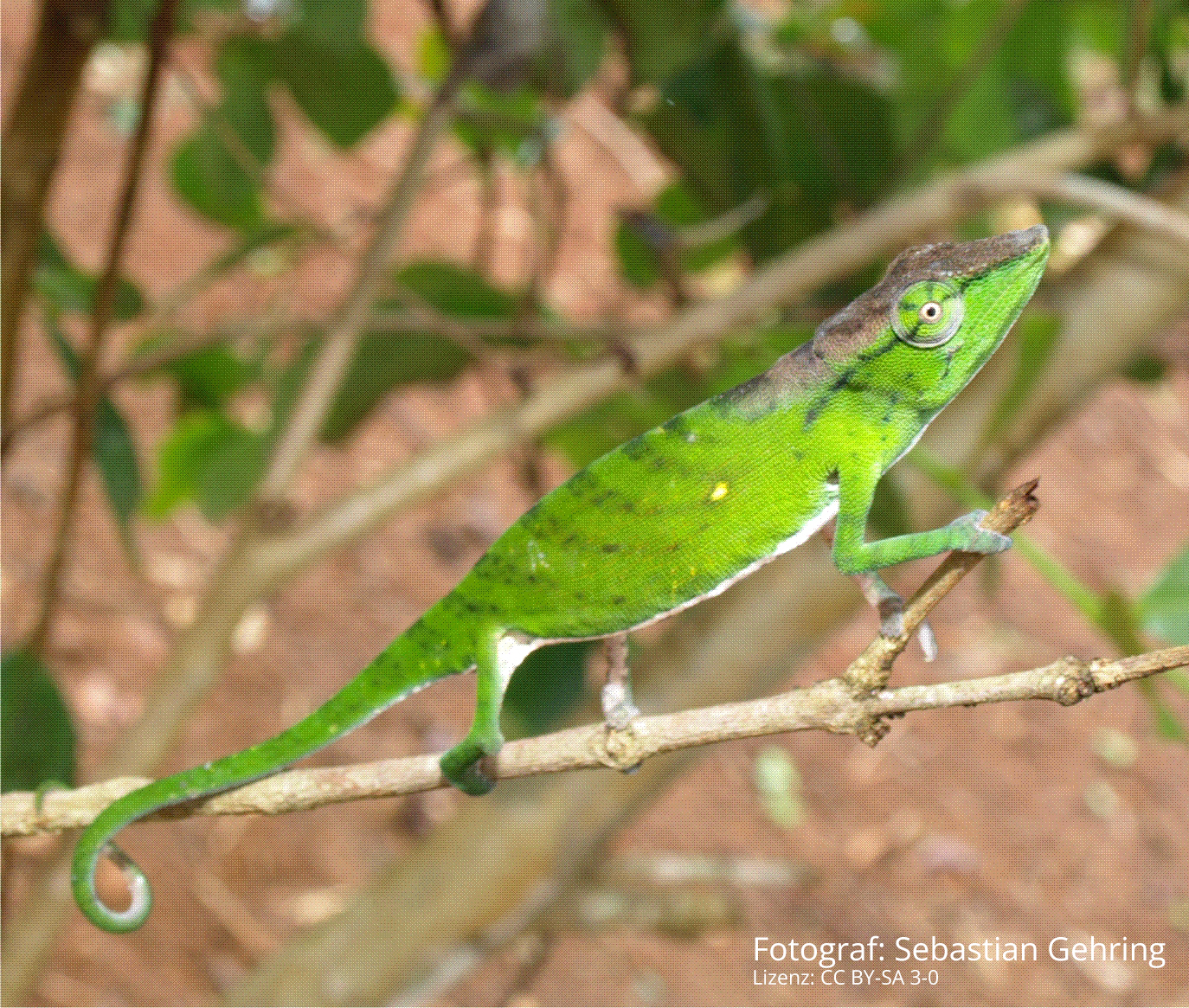
The highest population density of Calumma globifer was found in Anorana, with 88 individuals per hectare. On average, the animals of this species slept at heights between 0.5 and 5 m, with almost 40% sitting on lianas. Juveniles were occasionally found on bamboo, dragon trees (Dracaena ssp.) and stone pines (Podocarpus madagascariensis). Calumma gastrotaenia and Calumma globifer preferred habitats with large trees and denser vegetation between 2 and 4 m in height. Calumma globifer mainly inhabited habitats with a closed canopy.
The highest population density of Calumma gastrotaenia was found in Ambohitantely with 60 individuals per hectare. The species was mainly found in undergrowth with bamboo, ferns, plants with elongated leaves and grasses. It was noticeable that over 30% of the roosting sites were bamboo. Overall, the species seemed to cope better than the others with destroyed habitat.
The highest population density of the Calumma nasutum group was found in Ambohitantely, with 61 individuals per hectare. They were also relatively common during the dry season in Ambohitantely and Antsahabe. The species preferred the ends of small, thin branches and climbing plants for sleeping. They usually sat at a height of between 0.3 and 6 m. More than half of the animals found in the Calumma nasutum group were on the branches of shrubs and leaves, while the other half were found on lianas and climbing bamboo (Nastus ssp.).
In contrast to the other species, Calumma crypticum showed a much lower population density in the forests studied, with a maximum of 9 individuals per hectare in Antsahabe. Calumma crypticum was the only species found higher during the rainy season than during the dry season, at an average of 4 to 6 m. However, the species also showed a high variation in the height of its roosting places, with one chameleon discovered at a height of only 0.5 m. The species preferred thicker branches in particular. Both Calumma crypticum and chameleons of the Calumma nasutum group preferred open habitats that were nevertheless rich in branches. It remains unclear whether the seven Calumma brevicorne found in the entire study area can actually be attributed to this species or whether these are individuals that do not match the original description, which is almost 150 years old.
Ultimately, it was confirmed that the vegetation structure of a habitat has a significant influence on the population density of the Calumma species studied. The habitat described by the scientists as most suitable for Calumma species was found in the forests of Antsahabe and Anorana, both located in the Anjozorobe-Angavo corridor. The latter also had the highest total number of Calumma gastrotaenia and Calumma globifer. The Ambohitantely reserve, on the other hand, was notable mainly for its heavily destroyed forest area. In just two years during the study, several large fires following slash-and-burn practices had led to massive tree loss. Ambohitantely is the place where Calumma crypticum was first described – yet this species was the least represented in the study areas.
Habitat use, selection, and population density of chameleon communities (Calumma spp.) in the fragmented central highland forests of Madagascar
Fandresena Raktoroarimalala, Arianna L. Kuhn, Achille P. Raselimanana, A. Tahinarivovny Jacquis, Sara Ruane
MBC Ecology and Evolution 25: 137.
DOI: 10.1186/s12862-025-02479-4
Kostenloser Download des Artikels
Picture: Calumma globifer in Maintsoanala, photographed by Alex Negro