Presentation in Landau about Madagascar

Presentation in Landau about Madagascar

Reiseberichte Live lectures

On Saturday, 21 March 2026, Patrick Schönecker will give a richly illustrated talk on Madagascar. And there will be plenty of cameleons to see!

Patrick Schönecker has been travelling to the island of Madagascar for 25 years, exploring numerous habitats across the country. In recent years, his travels have increasingly focused on the humid and semi-arid regions – with a particular emphasis on species hotspots and the last remaining areas of rainforest and dry forest. The result is a talk that documents Madagascar’s extraordinary biodiversity with impressive nature photographs, placing particular emphasis on the fascinating herpetofauna.

The lecture centres on two areas that are quite contrasting in terms of their natural environment: on the one hand, the rainforest belt around Andasibe, where a network of state and private protected areas ensures the connectivity of the eastern highlands. On the other hand, the remaining forests in the north of the island, whose limestone-rich landscapes have given rise to a multitude of local microhabitats and endemic species.

Although the focus is on the herpetofauna, our speaker does not overlook the enormous diversity of endemic mammals, insects and plants – and invites his audience on an impressive journey through the threatened natural paradises of one of the most unique islands on our planet.

Patrick Schönecker Madagascar’s fascinating world of reptiles and amphibians – insights into the biodiversity of the hotspots in the central highlands and north of the island [German]
DGHT regional group Kurpfalz
Reptilium Landau
Werner-Heisenberg-Straße 1
76829 Landau in der Pfalz
The lecture begins at 8.00 pm; doors open at 7.00 pm

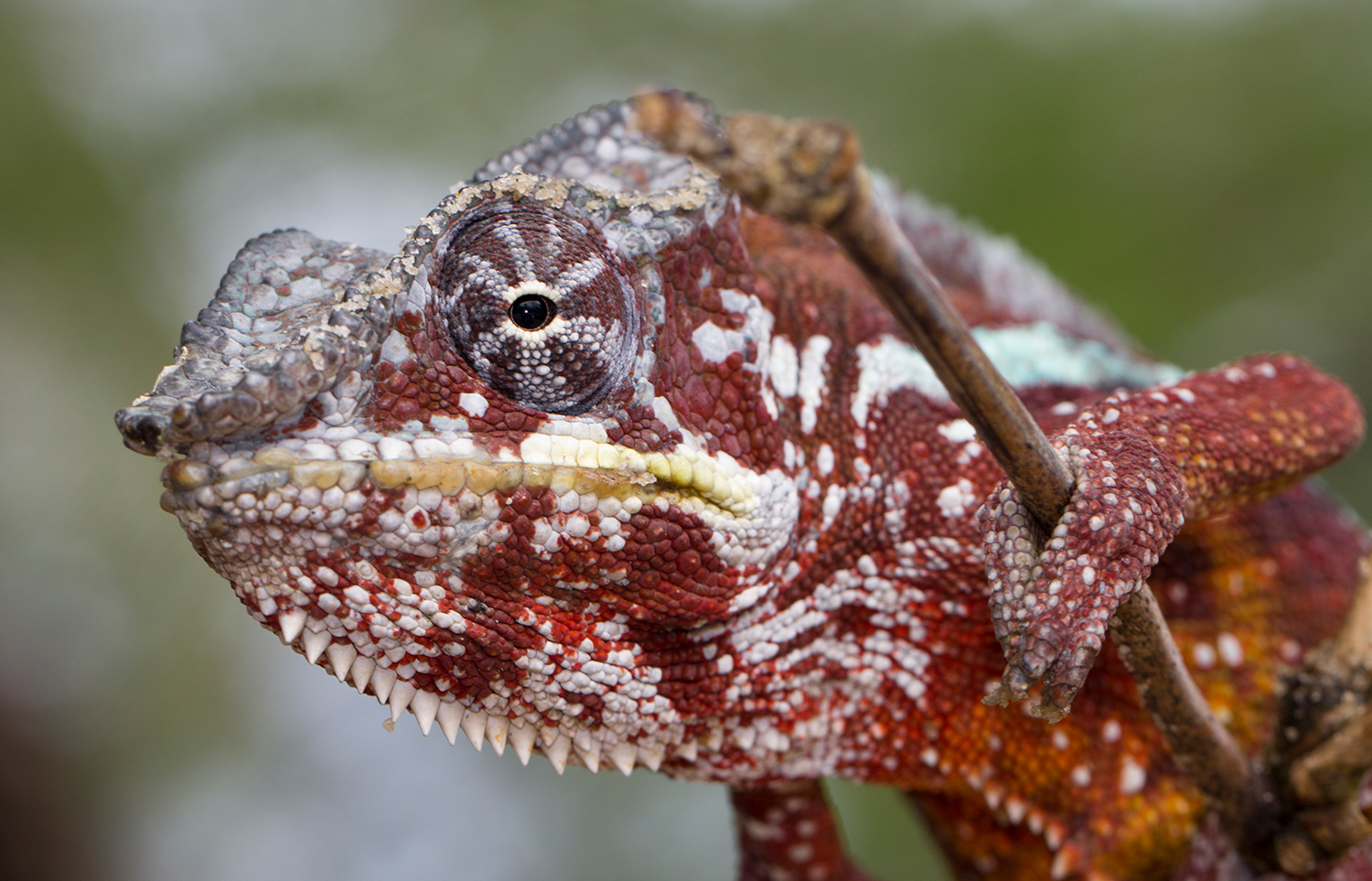
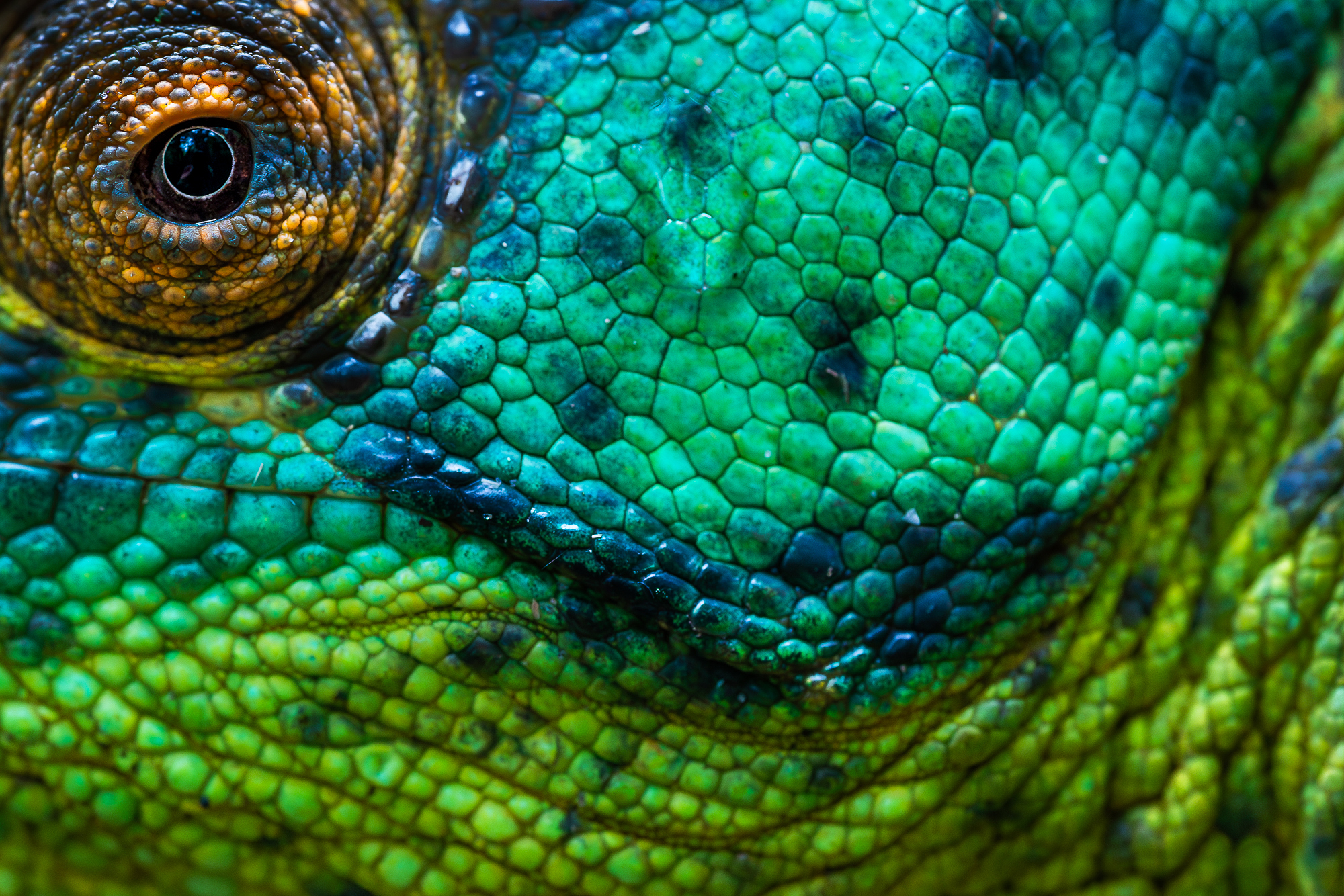
Picture: Calumma parsonii parsonii, photographed by Patrick Schönecker
Abundance of the world’s smallest chameleon (Madagascar)

Abundance of the world’s smallest chameleon (Madagascar)

Beobachtungen Science

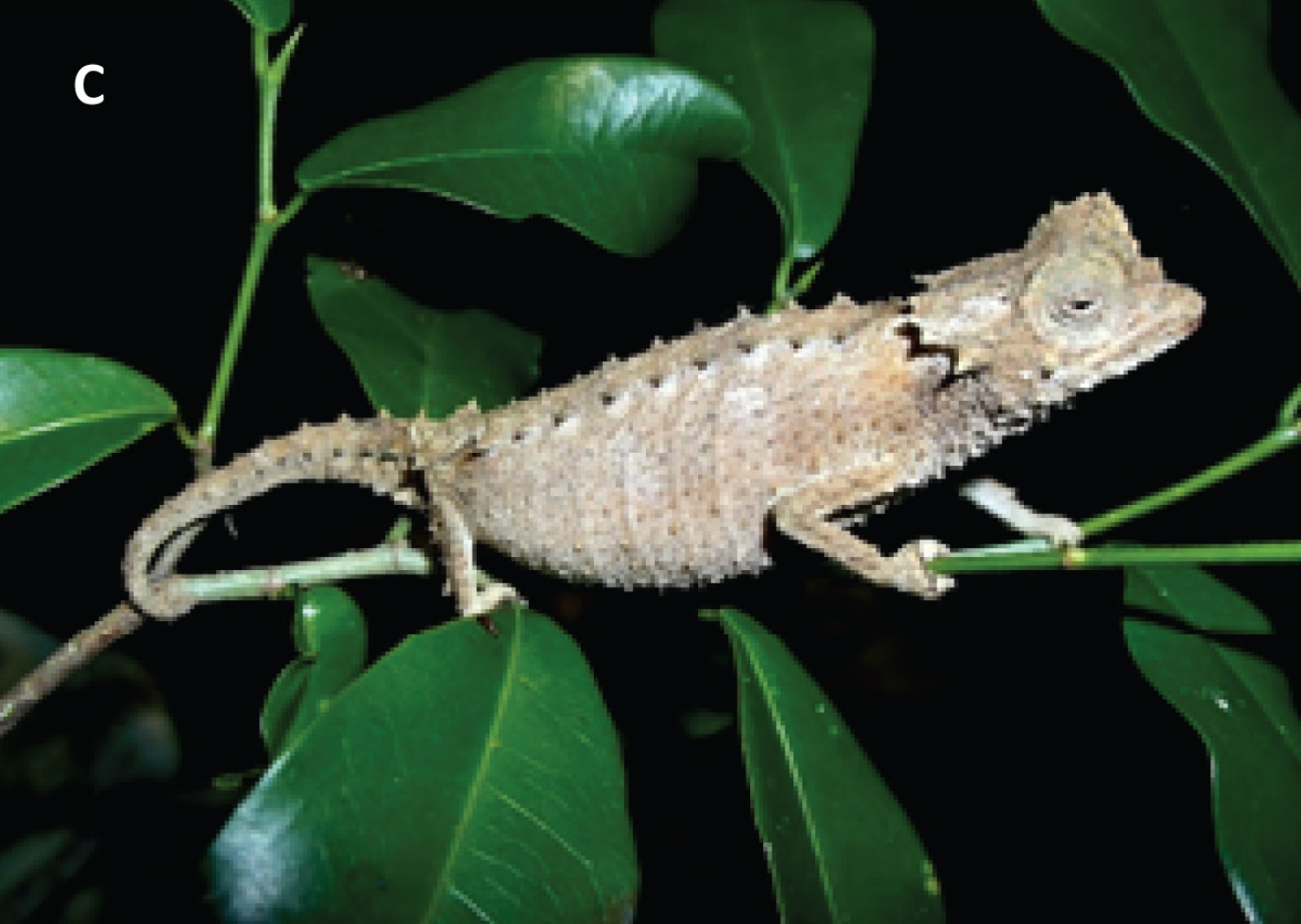
The world’s smallest known chameleon was discovered a few years ago in Sorata, in northern Madagascar. The Sorata Forest forms part of the Marojejy-Anjanaharibe-South Tsaratanana corridor (COMATSA), an area of fragmented forest remnants situated between the major national parks mentioned and the Réserve Naturelle Intégrale. It is currently managed by the WWF in collaboration with a local organisation called Ambodimandresy Miaro ny Ala.

Scientists from the universities of Antsiranana and Antananarivo have now investigated the abundance of Brookesia nana in Sorata. For 14 nights during the rainy season, they searched for the tiny chameleons along 14 transects, each 150 metres long.

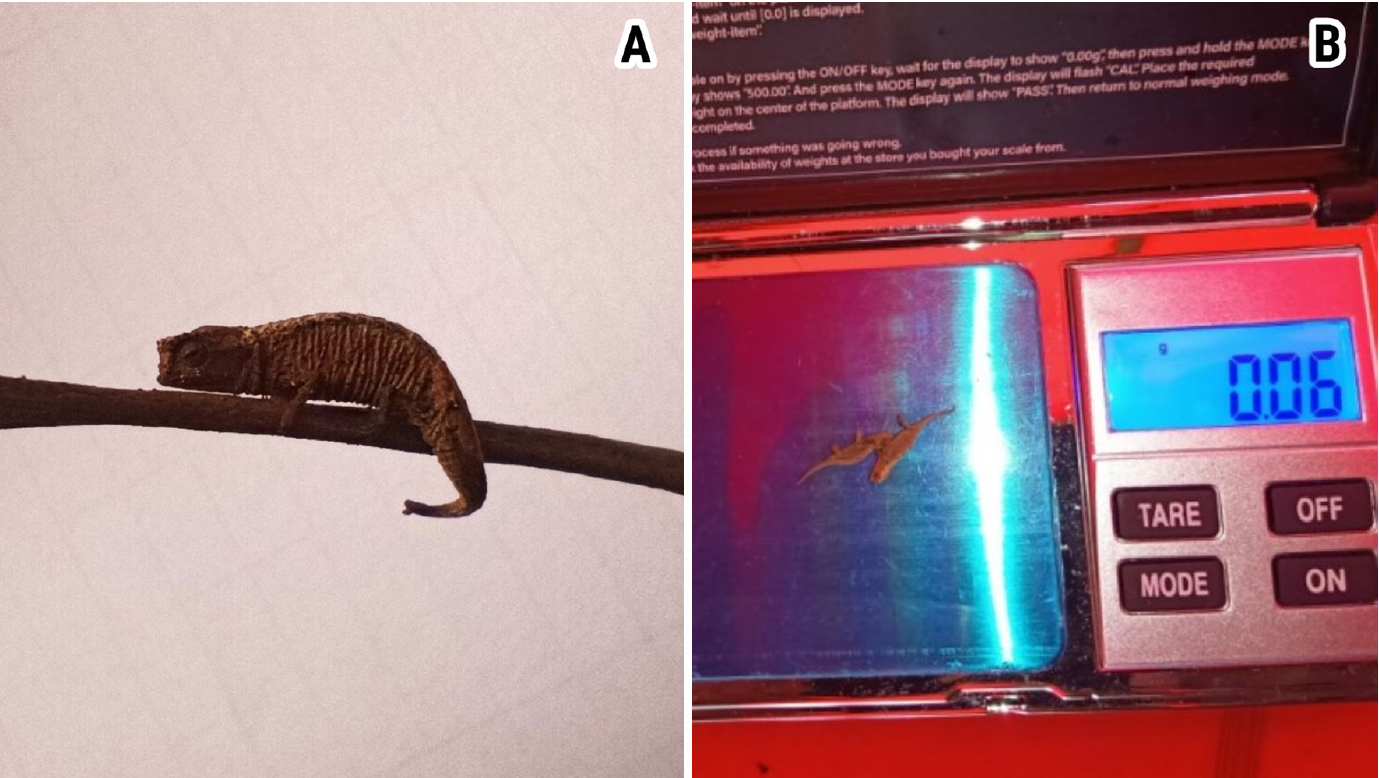
In total, the scientists found 0.33 individuals per 100 m. In concrete terms, this means that only seven Brookesia nana were found across the 2,100 m of transects. The females were slightly larger than the males. All the chameleons were found sleeping on very low vegetation, on average just 7 cm above the ground.

The low abundance necessitates further studies in other forests of the COMATSA corridor to determine the exact distribution of Brookesia nana. It is also interesting to note that Brookesia nana appears to be rarer than other species of the minima group, suggesting that the species may be at greater risk of extinction.

A brief overview of the natural history of the recently described, miniaturised leaf chameleon, Brookesia nana Glaw et al., 2021, from Sorata Forest, northeastern Madagascar
Jeanneney Rabearivony, Andriatsitohaina Ranaivojaona, Asmeralie Willian, Crispin Jaohasy, Moussaïna Jao, Achille P. Raselimanana
Herpetology Notes 19, 2026: 123-128.
DOI: not available
Free article download

Photo: Brookesia nana, found in the study mentioned, photographed by Asmeralie William

Chameleons in Namoroka (Madagascar)

Chameleons in Namoroka (Madagascar)

Verbreitung Science

The Tsingy de Namoroka are located in the hot west of Madagascar. They consist of needle-sharp karst rock with caves beneath and are surrounded by fragments of dry forest. Although the Tsingy are now a national park, access has so far been extremely difficult due to a complete lack of infrastructure and paths, and is even impossible during the rainy season.

The scientists carried out survey studies at three different locations within the national park. To do this, they used three 1,000 to 1,500 m transect lines at each site, along with pitfall traps. In addition, specific habitats such as caves were specifically targeted.

A total of 57 animal species were recorded in Namoroka, 41 of which were reptiles. Brookesia brygooi, Furcifer angeli and Furcifer oustaleti were recorded at all three sites surveyed. Brookesia bonsi, which is endemic to Namoroka, was found at only one site. This is an area situated at an altitude of 87 m, with trees ranging from 6 to 15 m in height and a relatively open canopy. The area is characterised by dense, virtually impenetrable undergrowth, particularly in the damp, rocky gorges between the Tsingy.

The scientists point out that slash-and-burn farming and the resulting uncontrollable bushfires continue to pose a major risk to the animals’ habitats in Namoroka. Logging, as well as the harvesting of wild honey, wild root tubers and medicinal plants, also ensures that the national park’s habitats are disturbed. Zebus are also driven into the national park to graze. Effective protection of the area is very difficult due to its remote location and the high levels of poverty among the local population.

Aperçu des amphibiens et des reptiles du Parc National de Namoroka: Diversité biologique, intérêt biogéographique et représentativité en matière de conservation
Hajaniaina Rasoloarison, Bernard Ranriamahatantsoa, Nirhy Rabibisoa, Christopher J. Raxworthy
Malagasy Nature 2026, 20: 30-46.
DOI: not available
Free article download

Picture: Brookesia bonsi in Namoroka, from the afore mentioned publication

Chameleons as moral authorities

Chameleons as moral authorities

Beobachtungen

Although the area around Maroantsetra in northern Madagascar is largely Christian, ancestor worship is still widespread. This includes sacred animals, places, commandments and prohibitions, as well as taboos passed down through generations. A theologian has now investigated what the so-called hiaña is all about in the area around Masoala National Park.

Over a period of three months, he interviewed 20 people aged between 12 and over 60 years from Maroantsetra. Eleven men and nine women, all from the Betsimisaraka ethnic group, took part in the survey. The theologian also observed interactions with chameleons in and around Maroantsetra.

The respondents stated that chameleons in the area are preferably called amboalava, which translates as long dog. In other regions of Madagascar, the terms tanalahy and tarondro are predominantly used, but these are less common among the Betsimisaraka people of Maroantsetra.

The respondents understood hiaña to be a spiritual, God-given power that is inherent primarily in chameleons, but also in special places. In Maroantsetra, the panther chameleon (Furcifer pardalis) is said to possess hiaña, presumably because it is the most commonly encountered species. Other respondents stated that chameleons even function as a kind of moral authority through which the ancestors control the affairs of the living.

Most respondents stated that harming a chameleon would result in negative consequences from the ancestors. However, the nature of these consequences differed considerably between the answers given by the various individuals. One person reported that if a human harmed a chameleon, the same injury would befall the human being. The injured hiaña would then have to be cured, similar to a curse, through the ritual of a traditional healer. One person said that he had injured a chameleon and then suffered severe pain himself. Only when he killed the still suffering chameleon did the pain stop. Another person reported that her child had died after accidentally killing a chameleon. There is therefore no uniform interpretation of hiaña, but rather individual stories that are retrospectively interwoven with hiaña and interpreted accordingly.

Several respondents stated that although chameleons possessed hiaña, it could not harm a devout Christian, as the Christian faith took precedence over the traditional ancestor cult. Interestingly, it was mainly the younger people in the interviews who stated that chameleons were important and rather peaceful creatures. They did not associate the animals negatively with hiaña. Several boys stated that they had already interacted with chameleons without any negative consequences.

Hiaña as a moral-ecological system: Chameleons, sacred potency, and human-animal relations in Maroantsetra, Madagascar
Olivier Randrianjaka
Preprint
DOI: 10.13140/RG.2.2.30826.38088
Free article download

Picture: Furcifer pardalis in Maroantsetra, photographed by Alex Negro

Presentation in Dortmund about Kenya

Presentation in Dortmund about Kenya

Reiseberichte Live lectures

On Friday, 6 February 2026, Rolf Mätzkow will give a richly illustrated lecture about an exciting journey in Kenya. And chameleons will not be neglected!

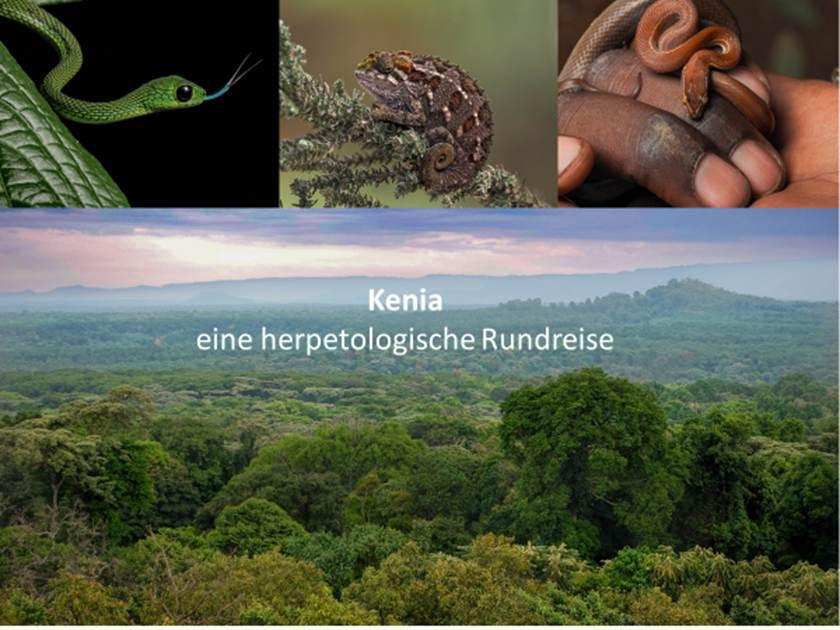
Kenya attracts visitors not only with its high biodiversity, but also with its diverse landscapes. The short herpetological tour takes viewers via Naivasha to the Kakamega Rainforest, Kenya’s only tropical (lowland) rainforest. Further along the route, the chameleon-rich heights of Njoro invite you to stop off before the journey continues to Mount Kenya National Park – and not just for the chameleons. Of course, the savannah landscape is a must on this tour, and so Tsavo National Park, with its snakes, lizards and tortoises, fits seamlessly into our tour concept. A visit to the coastal landscape of Watamu, where we finally get to see coral skinks, brings this short tour to a harmonious close.

Rolf Mätzkow Kenya – a herpetological round trip [German]
DGHT Stadtgruppe Dortmund
Restaurant Olympia – Zur alten Post
Im alten Dorf 2
59192 Bergkamen
Lecture begins at 7.30 p.m.

Photos: Collage by Rolf Mätzkow accompanying the lecture

Presentation in Munster about Madagascar’s chameleons

Presentation in Munster about Madagascar’s chameleons

Reiseberichte Live lectures Science

The DGHT Münster is also starting the new year with lots of chameleons. On Friday, 16 January 2026, Philip-Sebastian Gehring will give a detailed lecture on Madagascar and its many chameleons.

Madagascar is home to almost half of all known chameleon species worldwide, all of which are found exclusively on this island. This extraordinary diversity makes Madagascar’s chameleons an important subject of scientific research, as they offer unique insights into the mechanisms of evolution and adaptation. Over the past 20 years, numerous studies and new discoveries have significantly expanded our understanding of species diversity and evolutionary processes within this group of reptiles. In particular, the identification and description of new species and the investigation of their genetic differences have provided key insights into the origin and differentiation of species. The lecture will provide a comprehensive overview of this research and clearly present the current state of research on Madagascan chameleons.

Dr. Philip-Sebastian Gehring Evolution and diversity of Madagascar’s chameleons – Latest research findings [German]
DGHT city group Munster
Zoo school of Allwetterzoo Munster
Sentruper Straße 315
48161 Münster
Lecture begins at 7 p.m., doors open at 6:30 p.m. via the main entrance of the zoo.

Photos: small Calumma species in Madagascar, photographed by Philip-Sebastian Gehring

Presentation in Frankfurt about Madagascar

Presentation in Frankfurt about Madagascar

Reiseberichte Live lectures Science

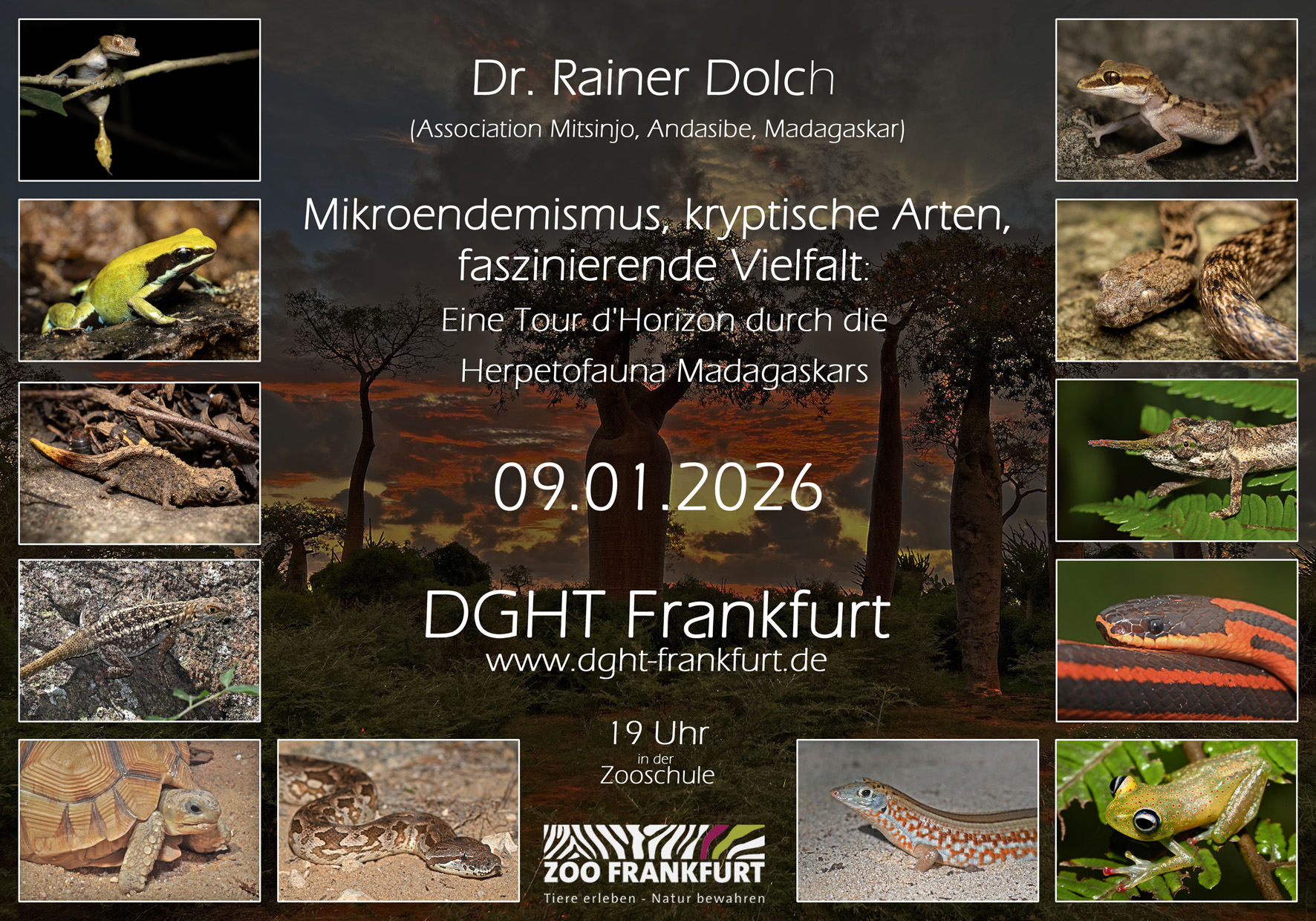
The DGHT Frankfurt is kicking off the new year with a highlight. Thanks to a visit home, they are fortunate to welcome Rainer Dolch from the Association Mitsinjo in Andasibe, Madagascar. On Friday, 9 January 2026, he will give a detailed lecture on Madagascar and its herpetological diversity.

Madagascar’s amphibians and reptiles inhabit a wide variety of habitats, from lowland forests to the highest mountain peaks, karst areas, dry forests and unique semi-deserts. Madagascar’s long isolation after the break-up of the supercontinent Gondwana, its geography and the enormous diversity of its habitats have promoted evolutionary processes that have produced numerous endemic species of amphibians and reptiles. Many of these taxa are allopatric and microendemic, meaning they are restricted to very small, confined areas. Endemic families such as the Madagascar frogs (Mantellidae), the Madagascar snakes (Pseudoxyrhophiidae) and the Madagascar iguanas (Opluridae) have each undergone major radiation. A wide variety of legless skinks and some of the world’s rarest turtles also belong to the island’s extraordinary herpetofauna. Finally, Madagascar is a hotspot for chameleon diversity. In the chameleon genus Calumma in particular, many cryptic species have only recently been described which, although they look almost identical externally, are genetically so different that they can no longer reproduce with each other. Many of the amphibians and reptiles native to Madagascar and the habitats they inhabit are presented, as are the threats they face and measures taken to protect them.

Dr. Rainer Dolch Microendemism, cryptic species, fascinating diversity: a tour d’horizon through the herpetofauna of Madagascar [German]
DGHT city group Frankfurt
Zoo school of Frankfurt zoo
Bernhard-Grzimek-Allee 1
60316 Frankfurt am Main

Lecture begins at 7 p.m., doors open at 6:30 p.m. via the exit gate at the main entrance on Alfred-Brehm-Platz (gate between the zoo shop and the zoo society building).

Photos: Herpetological diversity of Madagascar, photographed by Rainer Dolch

New data about Furcifer campani in Ankaratra (Madagascar)

New data about Furcifer campani in Ankaratra (Madagascar)

Science

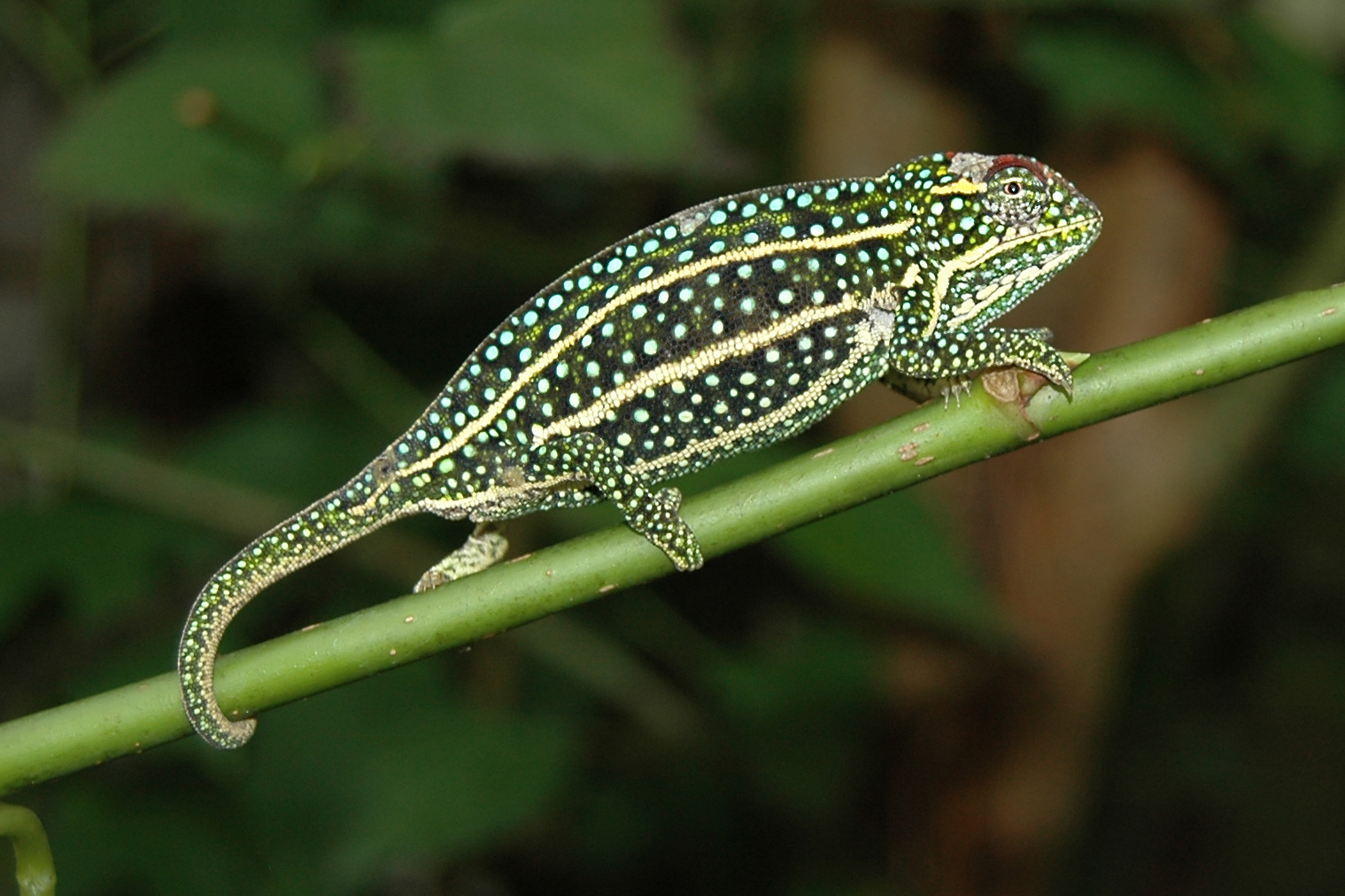
Two Madagascan biologists recently studied the current situation of the jewelled chameleon (Furcifer campani) in the Ankaratra reserve. Ankaratra is located around 80 km south of the capital Antananarivo in the central highlands, not far from the small town of Ambatolampy. The reserve extends over altitudes of 1601 to 2656 m and covers dense rainforest, pine forest and savannahs with areas similar to heathland. Average temperatures are 11.9°C in the dry season (July) and 17.9°C in the rainy season (January).

The study was conducted using a method known as distance sampling. This involves drawing three lines, each 50 metres long and 25 metres apart, at different locations within the study area. After a waiting period of 24 hours, the two biologists walked the transects at night with torches and searched for chameleons. The perch height and sex of the chameleons found were noted. In addition, an assessment was made as to whether or not the animal was in a severely destroyed habitat (= slash-and-burn in the last 4-5 years).

The results of the study show a population density of Furcifer campani in Ankaratra of 19.06 individuals per hectare in habitats with little destruction and 12.62 individuals per hectare in habitats with severe destruction. Approximately half of the transects were located in habitats severely destroyed by slash-and-burn practices. Furcifer campani was found at night at heights between 4 cm and 3 m above the ground. On average, the chameleons slept slightly higher up in the vegetation at 47 cm compared to 40 cm in undisturbed habitats.

The two authors identified two major threats to Furcifer campani in Ankaratra: firstly, slash-and-burn farming, which poses a double problem. Not only does slash-and-burn irretrievably destroy suitable habitat, but the authors also found Furcifer campani that had died from burn injuries during their study. The authors identified the pine forests within the protected area as the second major threat. Pine trees were planted there in many places for later logging. However, they are also spreading outside the area originally intended for them and encroaching on other habitats. Furcifer campani prefers to live in savannahs, which in Ankaratra consist mainly of Philippia and Helichrysum grasses, and cannot thrive in pine forests. There has been no significant removal of animals for international trade in recent years and this is therefore not considered an acute threat.

Habitat quality and roost preference of jewelled chameleon (Furcifer campani) in Ankaratra highlands, central Madagascar
Rodlis Raphali Andriantsimanarilafy, Joseph Christian Randrianantoandro
Scientific Reports in Life Sciences 6(3), 2025: 33-40.
DOI:  10.5281/zenodo.16895177
Free article download

Picture: Furcifer campani in Madagascar, photographed by Thorsten Negro

Presentation in Leipzig about Madagascar

Presentation in Leipzig about Madagascar

Reiseberichte Live lectures

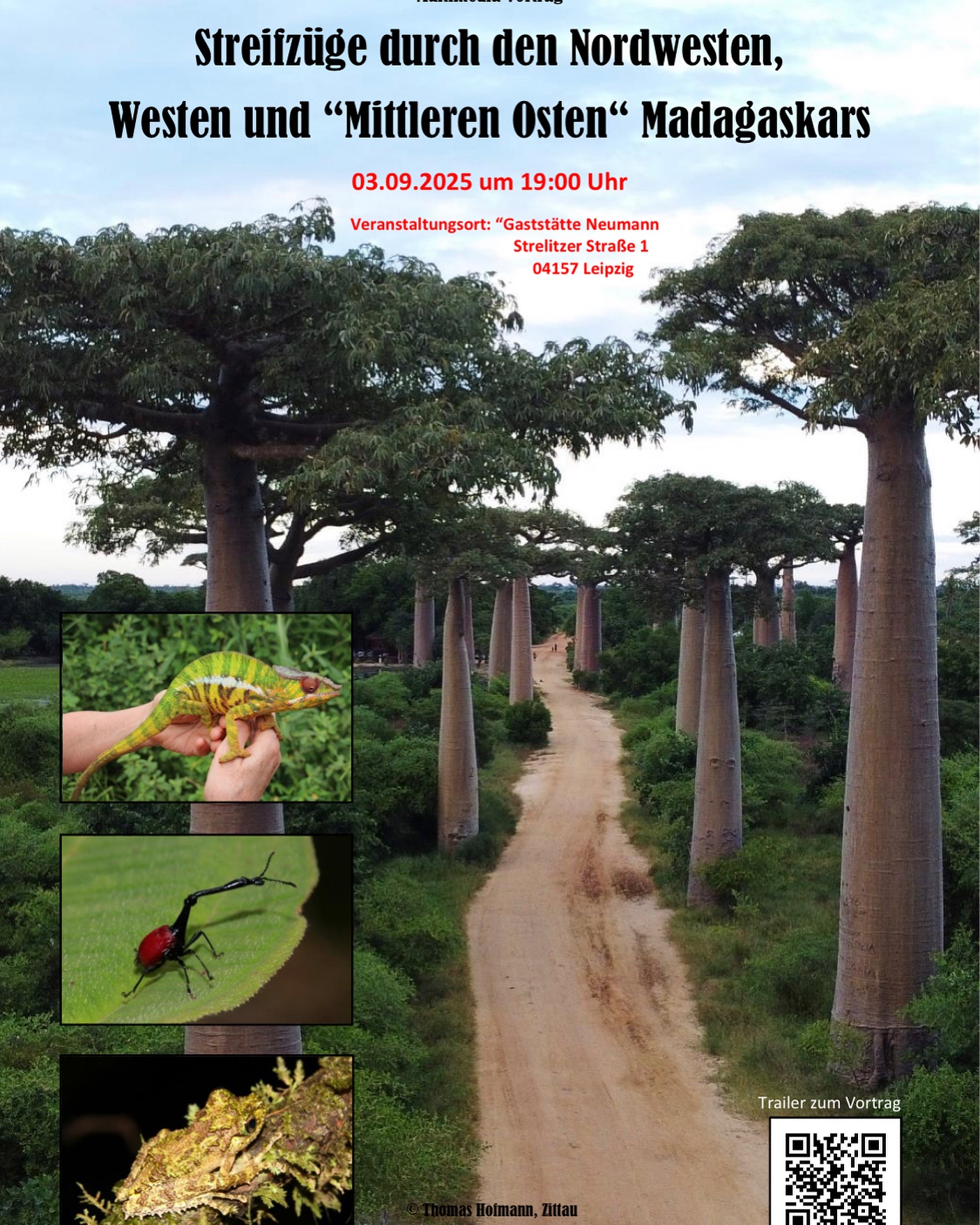
On Wednesday, 3 September 2025, Thomas Hofmann will give a lecture rich in images about Madagascar in Leipzig (Saxony). The island in the Indian Ocean is a mecca for travellers interested in herpetology. Over 90% of the reptiles and amphibians found here are endemic – they exist nowhere else in the world. Among the endemic species are not only a large number of chameleons, but also many other herpetological highlights.

Thomas Hofmann Excursions through the north-west, west and ‘Middle East’ of Madagascar [German]
DGHT Stadtgruppe Leipzig
Restaurant Neumann
Strelitzer Straße 1
04157 Leipzig
Start of the event 7 p.m.

New locality record of Calumma vencesi (Madagascar)

New locality record of Calumma vencesi (Madagascar)

Verbreitung Science

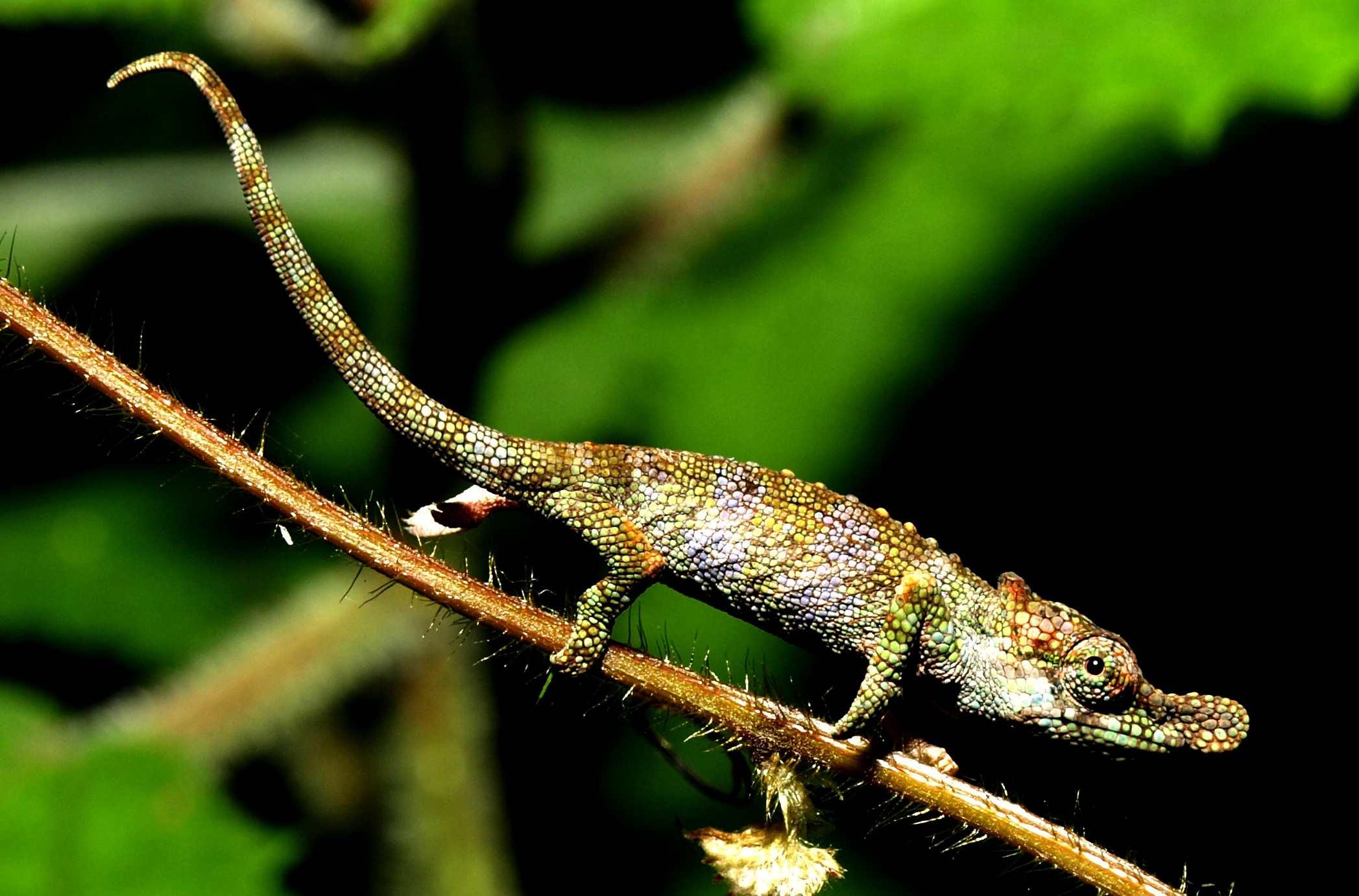
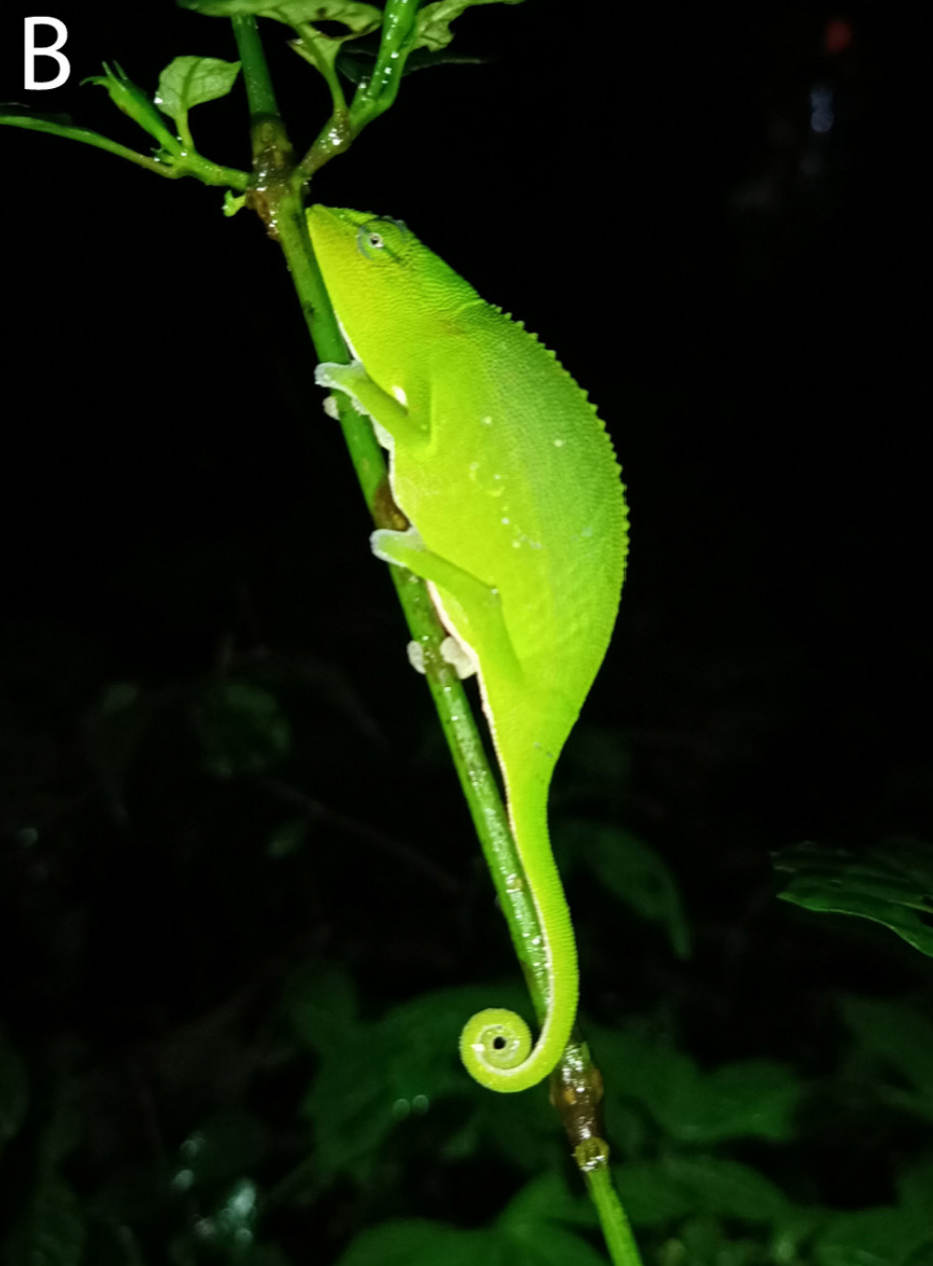
Calumma vencesi occurs in northern Madagascar and has so far been found in Betaolana, Besariaka and Tsararano. A Madagascan research team has now discovered the species in another rainforest: Sorata. Sorata is part of the COMATSA corridor, which mainly consists of the Marojejy, Anjanaharibe Sud and Tsaratanana rainforests. Sorata, on the other hand, is located slightly further north towards Vohémar. The rainforest is currently managed by the WWF in collaboration with the local association Ambodimandresy Miaro ny Ala (AMA).

The scientists randomly distributed 14 transects in the rainforest, each consisting of three parallel lines of 50 m. Then, at night, they searched for sleeping chameleons along the transects with flashlights. The frequency of the species per 100 m was calculated, the plants used were documented and the sleeping height was measured.

A total of eight Calumma vencesi were found. They slept at an average branch height of 1.43 m, mostly on leaves, with a few individuals on branches. Five chameleons were found sleeping vertically, three more horizontally. Seven of the eight Calumma vencesi slept with their heads up, only one upside down.

The occurrence of only 0.38 individuals per 100 m is surprisingly low and even falls below that of chameleon species classified as critically endangered, such as Calumma tarzan. Until now, Calumma vencesi had only been found below 1000 m, but the study area in Sorata was at an average altitude of 1326 m. Calumma vencesi occurs in Sorata in the same distribution area as Brookesia nana, which makes the need to protect this rainforest even more urgent. The forest is threatened by slash-and-burn farming, illegal logging, grazing livestock and vanilla plantations.

 A new locality for the endangered Vence’s Chamaeleon, Calumma vencesi Andreone et al., 2001, from Sorata Forest, northeastern Madagascar
Jeanneney Rabearivony, Andriatsitohaina Ranaivojaona, Moussaïna Jao, Achille P. Raselimanana
Herpetology Notes 18, 2025: 817-820.
DOI: not available
Free article download

Photo: Calumma vencesi, photographed by Asméralie William, from the aforementioned publication