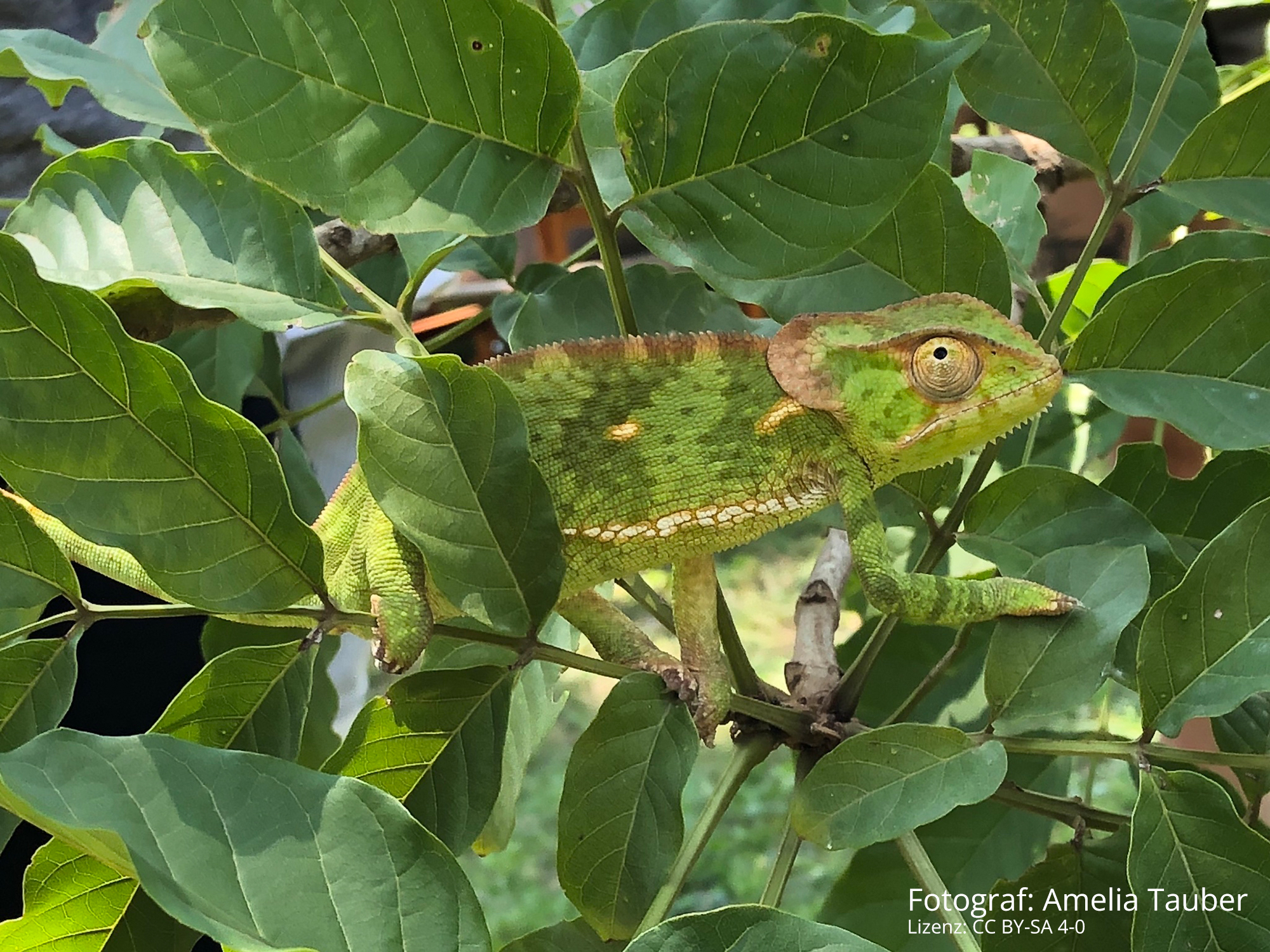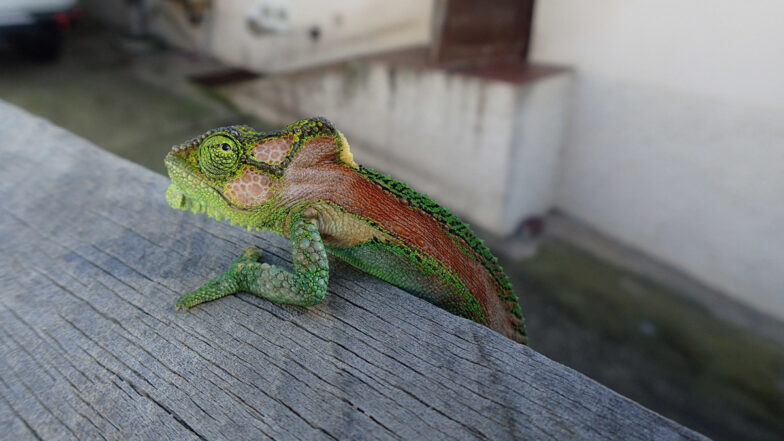
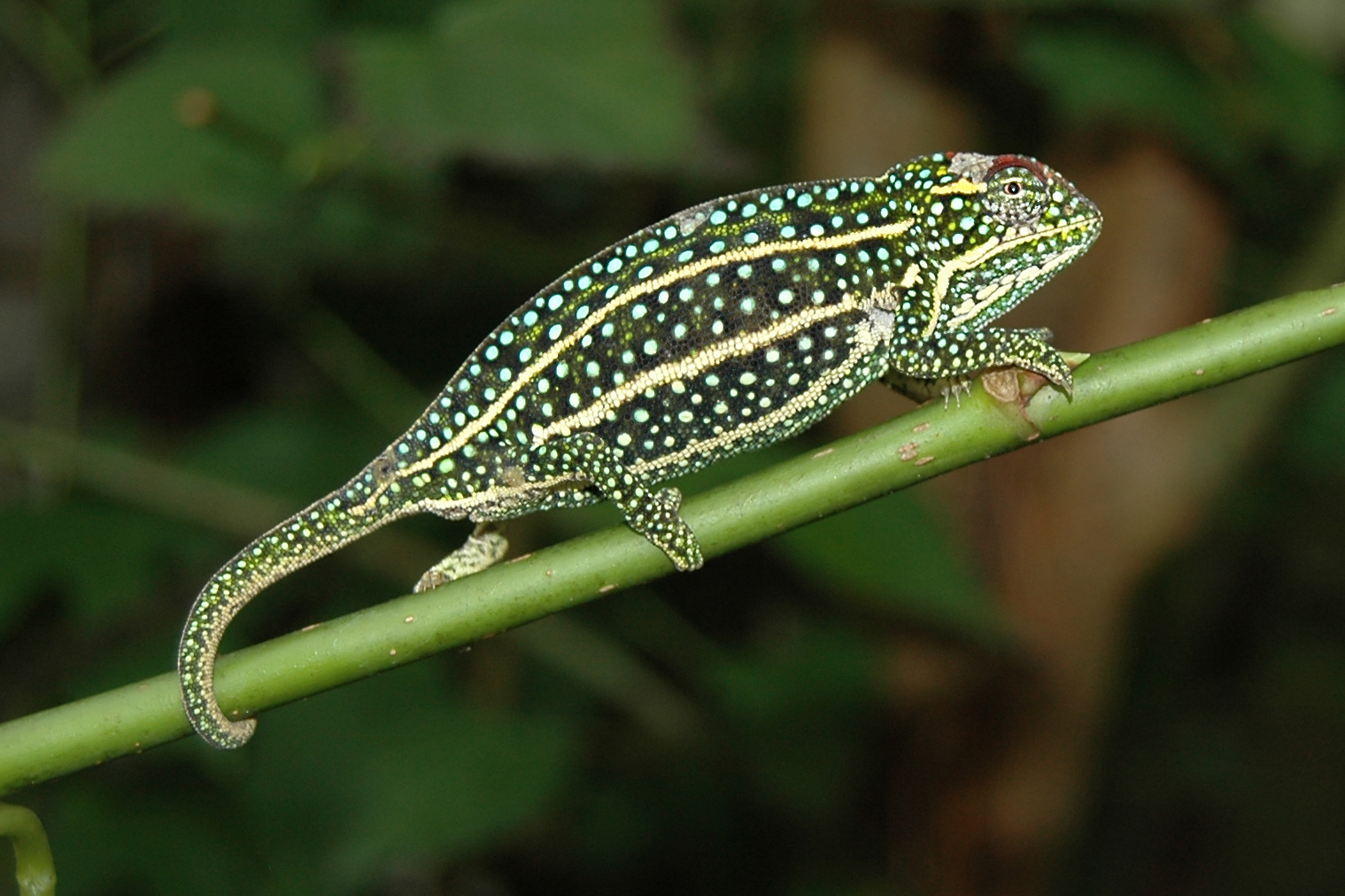
Two Madagascan biologists recently studied the current situation of the jewelled chameleon (Furcifer campani) in the Ankaratra reserve. Ankaratra is located around 80 km south of the capital Antananarivo in the central highlands, not far from the small town of Ambatolampy. The reserve extends over altitudes of 1601 to 2656 m and covers dense rainforest, pine forest and savannahs with areas similar to heathland. Average temperatures are 11.9°C in the dry season (July) and 17.9°C in the rainy season (January).
The study was conducted using a method known as distance sampling. This involves drawing three lines, each 50 metres long and 25 metres apart, at different locations within the study area. After a waiting period of 24 hours, the two biologists walked the transects at night with torches and searched for chameleons. The perch height and sex of the chameleons found were noted. In addition, an assessment was made as to whether or not the animal was in a severely destroyed habitat (= slash-and-burn in the last 4-5 years).
The results of the study show a population density of Furcifer campani in Ankaratra of 19.06 individuals per hectare in habitats with little destruction and 12.62 individuals per hectare in habitats with severe destruction. Approximately half of the transects were located in habitats severely destroyed by slash-and-burn practices. Furcifer campani was found at night at heights between 4 cm and 3 m above the ground. On average, the chameleons slept slightly higher up in the vegetation at 47 cm compared to 40 cm in undisturbed habitats.
The two authors identified two major threats to Furcifer campani in Ankaratra: firstly, slash-and-burn farming, which poses a double problem. Not only does slash-and-burn irretrievably destroy suitable habitat, but the authors also found Furcifer campani that had died from burn injuries during their study. The authors identified the pine forests within the protected area as the second major threat. Pine trees were planted there in many places for later logging. However, they are also spreading outside the area originally intended for them and encroaching on other habitats. Furcifer campani prefers to live in savannahs, which in Ankaratra consist mainly of Philippia and Helichrysum grasses, and cannot thrive in pine forests. There has been no significant removal of animals for international trade in recent years and this is therefore not considered an acute threat.
Habitat quality and roost preference of jewelled chameleon (Furcifer campani) in Ankaratra highlands, central Madagascar
Rodlis Raphali Andriantsimanarilafy, Joseph Christian Randrianantoandro
Scientific Reports in Life Sciences 6(3), 2025: 33-40.
DOI: 10.5281/zenodo.16895177
Free article download
Picture: Furcifer campani in Madagascar, photographed by Thorsten Negro