New distribution data of Rieppeleon brachyurus in Mozambique

New distribution data of Rieppeleon brachyurus in Mozambique

Beobachtungen Verbreitung Science

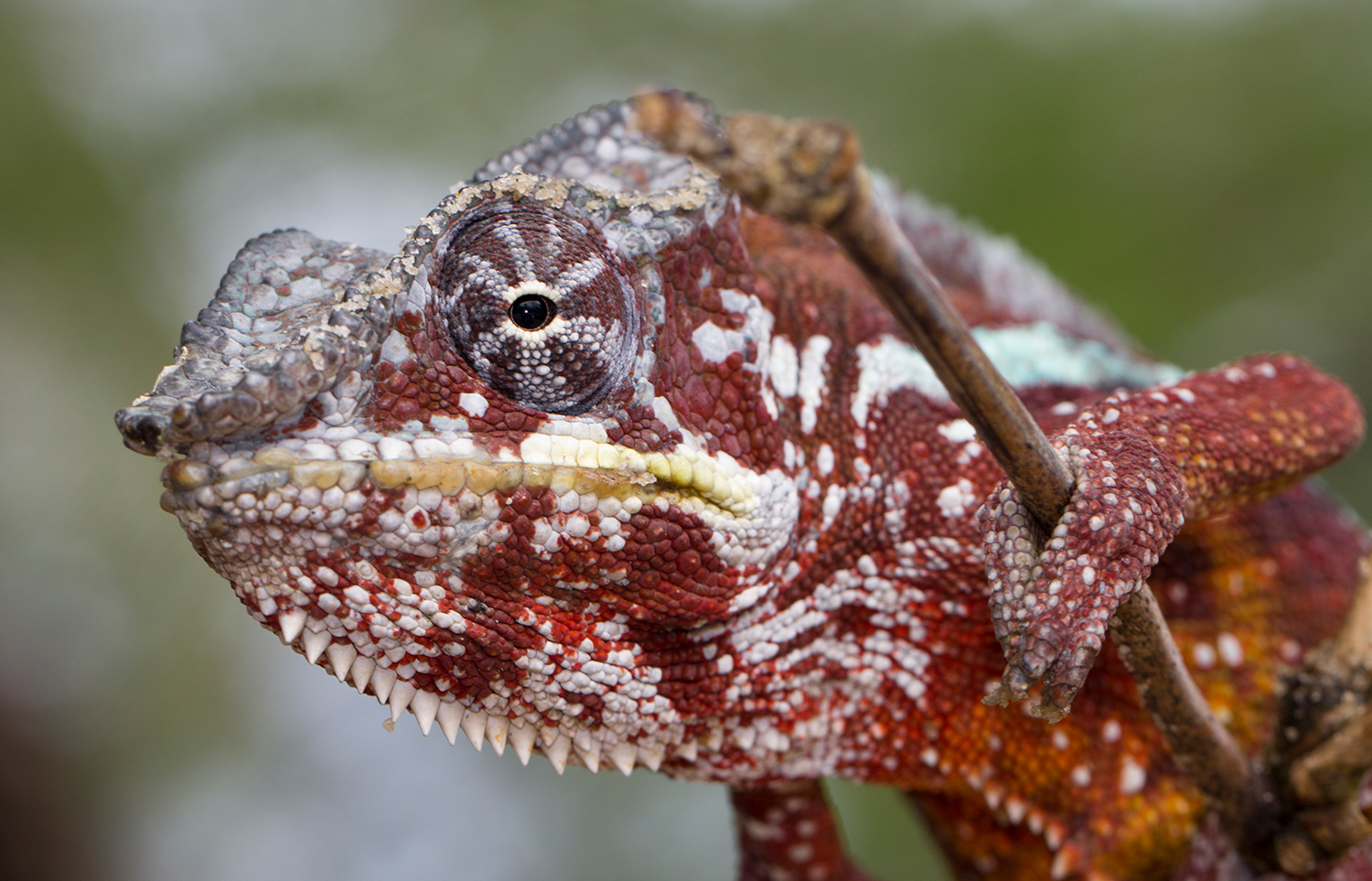
Rieppeleon brachyurus is a small stump-tailed chameleon species, first described at the end of the 19th century from the Shire Highlands south of Lake Malawi. The species has since been found in Malawi, Tanzania and Mozambique. In Mozambique, it was previously known from rainforests and gallery forests, known as miombo forests. Miombo forests are very open dry forests with sparse grass cover, giving them a savannah-like appearance (hence the term ‘forest savannah’). The Zambezi River, which runs across Mozambique, was previously considered the natural boundary for the occurrence of Rieppeleon brachyurus.

Herpetologists have now discovered that the species also occurs south of the river. They found two juvenile individuals and two adult females of the species in Coutada 11, a 5000 km² hunting concession in the heart of Mozambique. The animals were found there in a sand forest, a rare type of tropical forest on sand dunes, right next to a shallow wetland. These observations extend the previously known range of the species by about 250 km further south.

The authors also report two further new locations where Rieppeleon brachyurus has been found, in Taratibu and Montepuez Rubi Mining Concession, both of which are located north of the Zambezi River. In both observations, the ground chameleons were found in miombo forest at altitudes between 250 and 400 m.

Rieppeleon brachyurus (Günther, 1893) Beardless Pygmy Chameleon First records south of the Zambezi River
W. Conradie, D. Botma, C. Nanvonnamuquitxo
African Herp News 88, 2025: 28-33
DOI: not available
Free download of the article

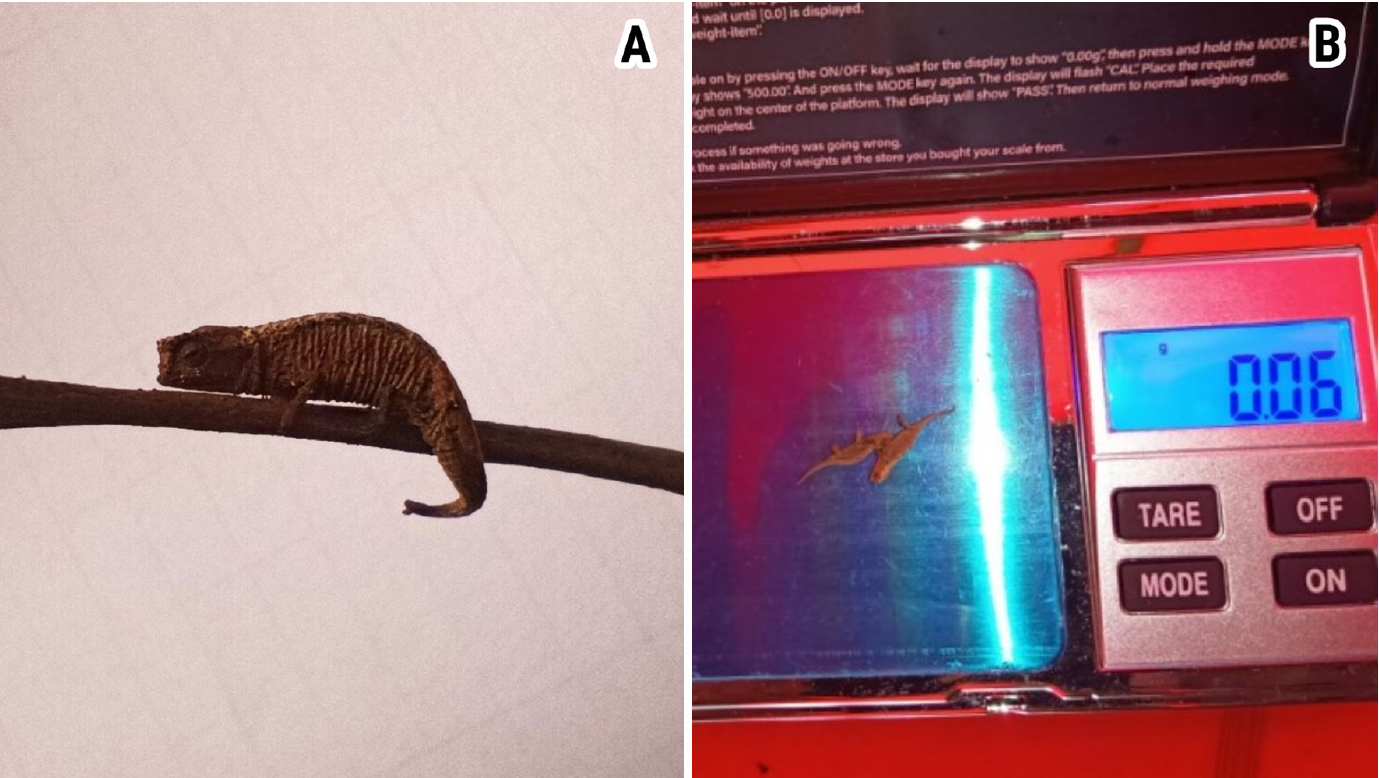
Photo: Juvenile Rieppeleon brachyurus in Mozambique, photographed by Delport Botma, from the above-mentioned publication

Cape dwarf chameleons are ambush predators

Cape dwarf chameleons are ambush predators

Beobachtungen Science

For a long time, only two types of foraging behaviour were distinguished: active foragers and sit-and-wait or ambush foragers. Many years ago, two publications classified chameleons as ‘cruise foragers’, i.e. hunters that move slowly through the bushes, stop to feed and then move on. A study from South Africa is now investigating whether this is true and whether other factors contribute to movement. In order to evaluate the mode of foraging, one would actually have to ‘factor out’ movement for regulating body temperature, evading predators or opponents, searching for females or mate guarding.

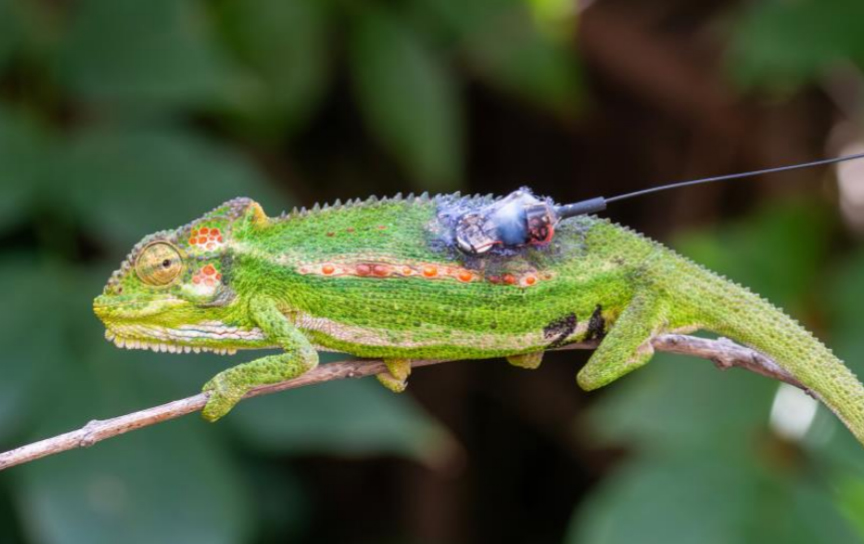
To this end, 38 tagged (12 of them radio-tagged) Bradypodion pumilum were tracked over 10 days in April and 10 days in February. The chameleons live in Brümmer Park in Stellenbosch in the Western Cape province. They were divided into 17 male, 19 female and 2 indeterminate Bradypodion pumilum. The animals were located every evening and every morning on the specified days using telemetry and the naked eye. Each chameleon was observed for 60 to 180 minutes at a time, with two to four observers using binoculars from a distance of 5 to 10 metres from the chameleon being observed. The researchers recorded movements and stationary behaviour and assigned the corresponding motivation to each movement, noting food intake and number of shots.

A total of 171 hours of observation time was accumulated. Bradypodion pumilum spent most of the day (over 75%) stationary on their branches in Brümmer Park. In the morning, over 80% of them were sitting around, with almost half of this time spent sunbathing, presumably to warm up, and the other half spent stationary in shady vegetation. During the observation period, 26 Bradypodion pumilum fed a total of 110 times. They ate significantly more often (over 80%) when they were not moving. A strong factor for movement was interaction with conspecifics – during the observations, one male was even chased away by a female, causing it to fall from the tree.

The authors conclude from their study that Bradypodion pumilum is more likely to be a ambush hunter.

A multi-index approach to assessing foraging mode: a case study using chameleons
Wade K. Stanton-Jones, Krystal A. Tolley, Jody M. Barends, Graham J. Alexander
Current Zoology, 2025, zoaf065
DOI: 10.1093/cz/zoaf065
Free article download

Photo: Bradypodion pumilum tagged with a transmitter from the study mentioned above

Tick species detected on chameleon for the first time

Tick species detected on chameleon for the first time

Beobachtungen Tiermedizin

Ticks are a relatively rare parasite in chameleons. A recent case report of tick infestation in a chameleon comes from southern Turkey.

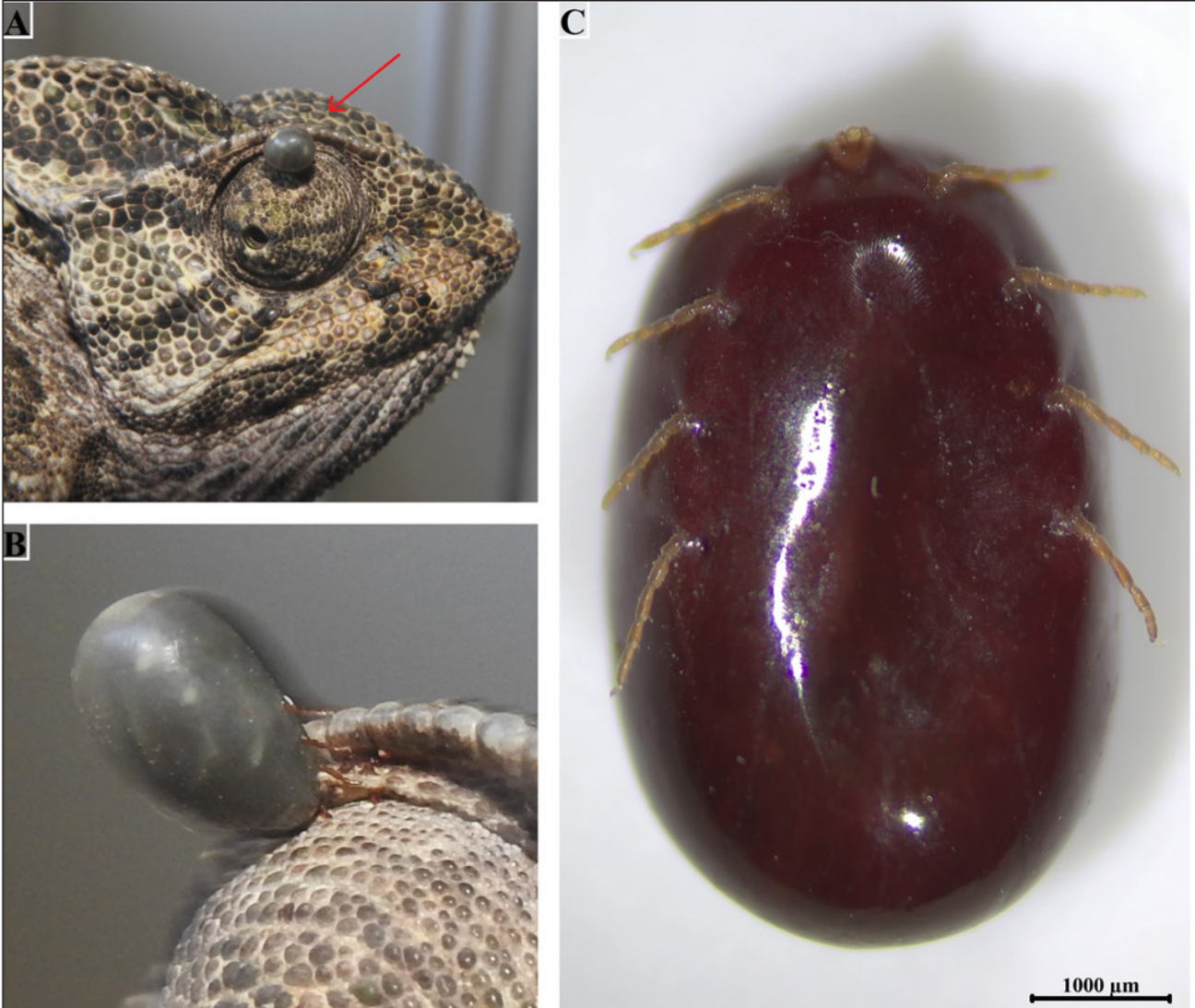
A Chamaeleo chamaeleon with an engorged tick above its right eye was noticed by a veterinarian right next to a path on the campus of a department of the Agricultural Research and Policy Authority in Demre. He removed the tick and had it examined further. Under the microscope, it turned out to be a nymph of the species Hyalomma aegypticum. Hyalomma aegypticum is known to date in reptiles, especially tortoises of the genus Testudo, but the spectrum of possible hosts also includes numerous mammals. Chameleons were not previously known as hosts, so this is the first case worldwide.

Incidentally, ticks of the genus Hyalomma have also been present in Germany for about ten years. Unlike many other tick species, they can ‘actively hunt’, i.e. pursue their host, and have become ‘notorious’ thanks to media exaggeration. In addition, some species transmit Crimean-Congo haemorrhagic fever (CCHF) to humans, while others transmit spotted fever. With reference to the current publication, it would be interesting to know whether other Hyalomma species native to this country are potentially hosts for chameleons in outdoor enclosures.

A novel host record: Hyalomma aegypticum (Linnaeus, 1758) infestation on the Mediterranean Chameleon, Chamaeleo chamaeleon (Linnaeus, 1758) in Türkiye
Gokhan Eren
Eurasian Journal of Veterinary Sciences 2025: 41:e0454
DOI: 10.63673/eurasianjvetsci.454

Photo: The tick found, together with the host chameleon, from the publication mentioned above.

Frugivory in Furcifer oustaleti

Frugivory in Furcifer oustaleti

Beobachtungen Science

Frugivory, the eating of fruit, is only known from a few chameleon species. These are mainly isolated observations. Japanese scientists have recently investigated the extent to which fruit-eating chameleons could contribute to the spread of plant seeds.

The study was carried out in the Ankarafantsika National Park in western Madagascar. Three species of reptiles in Madagascar were observed during two rainy seasons and their droppings were examined: The Madagascar giant chameleon Furcifer oustaleti, the Madagascar iguana Oplurus cuvieri and the plated lizard Zonosaurus laticaudatus. The reptiles were observed during the day and filmed or photographed while feeding on fruit and then captured. Chameleons were mainly caught at night. Fruits with seeds were collected for identification from plants on which reptiles of the three species mentioned had been feeding. All captured reptiles were kept in net containers for 6 days until faeces were deposited. The animals were then microchipped and released back into their habitats. The scientists then attempted to sow plant seeds obtained from the animals’ excrement.

A total of 89 chameleons, 254 Madagascar iguanas and 38 shield lizards were captured for the study. 24.7% of the Furcifer oustaleti sampled had plant seeds in their feces, compared to 20.1% of the iguanas and 15.8% of the tortoiseshell lizards. The observations showed that the chameleons and the plated lizards ate fruit from at least eight different plants, while the iguanas ate from as many as 18 different plant species. Some of the plant seeds obtained from the feces had germination rates of over 50%.

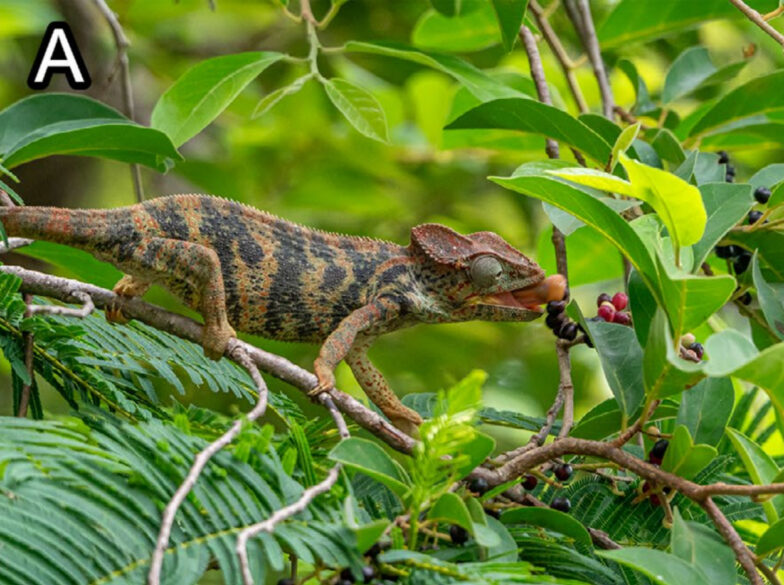
During the observation period in Ankarafantsika, Furcifer oustaleti only ate red, black or brown fruits with a maximum diameter of one centimeter. Green or larger fruits were always left on the plants. The fruits were usually first tapped with the tongue before they were actually eaten. Sometimes the fruits were also shot with the tongue. Fruits of Grangeria porosa, Terminalia boivinii, Trilepisium madagascariense, Antidesma madagascariense, Bridelia perviellana, Phyllanthus casticum, Chassalia princei and Doratoxylon chouxii were ingested by Furcifer oustaleti. Fruits were recorded from both sexes of chameleons and regardless of body size in each of the observation months.

The authors conclude that all three reptile species could contribute to the spread of plants in their habitat. Until now, the brown maki (Eulemur fulvus) in Ankarafantsika was primarily thought to be a seed disperser. Now the considerations should probably be extended to reptiles and their role in the forest ecosystem – even if the proportion of seeds in their droppings is significantly lower than that of lemurs.

Frugivory by three species of lizards in Madagascar: Implication for their ecological roles as seed disperser
Ryobu Fukuyama, Wataru Noyori, Shuichiro Tagane, Shouta Iyoda, Hiroki Sato
Biotropica 57(4): e70052
DOI: 10.1111/btp.70052

Photo: Furcifer oustaleti eating fruit, image from the above-mentioned publication

Avian predators of the Indian Chameleon

Avian predators of the Indian Chameleon

Beobachtungen Science

This week, a review paper was published in which an Indian biologist summarizes a series of observations in which birds have attacked chameleons in Sri Lanka and India. These are exclusively observations with Chamaeleo zeylanicus, the Indian chameleon, as prey.

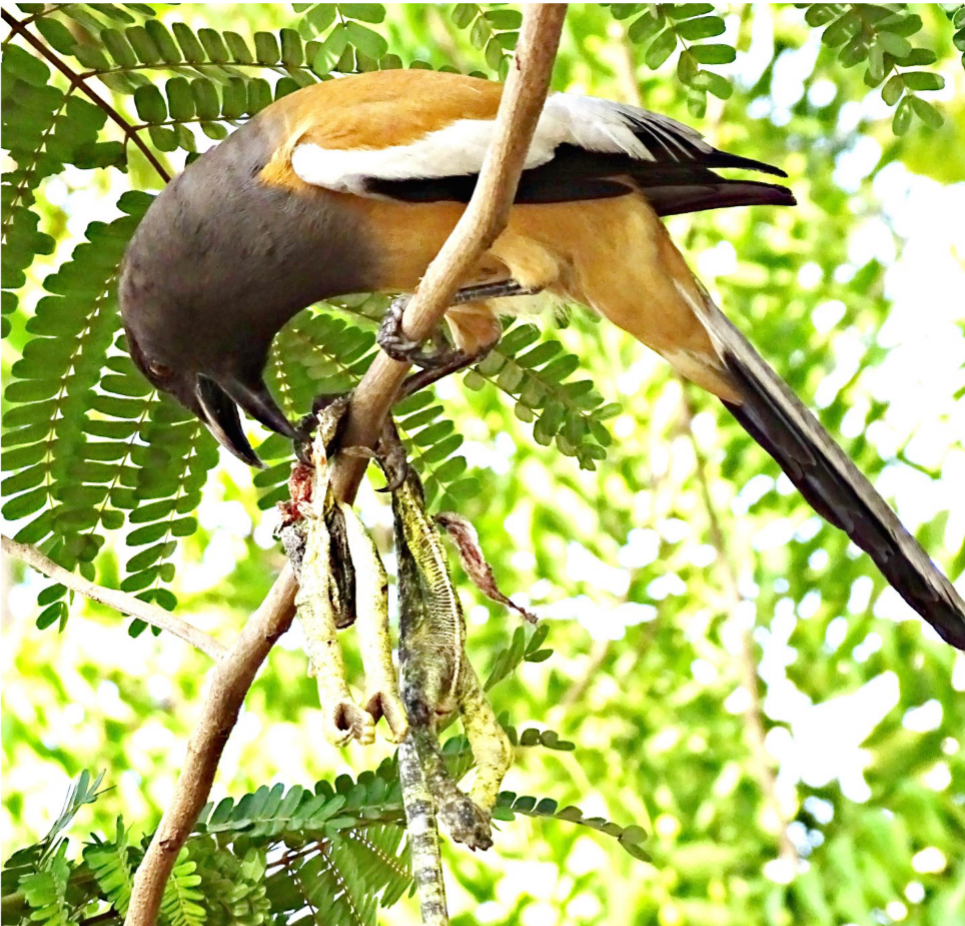
A total of seven birds have already been observed either attacking or eating Chamaeleo zeylanicus between 2012 and 2023. In Bhadreshwar on the western edge of India, a greater coucal (Centropus sinensis) was observed preying on a chameleon. In the Janbughoda Wildlife Sanctuary in eastern India, it was a rufous treepie (Dendrocitta vagabunda) that flew away with a chameleon in its beak and was then photographed eating it. In the Kolli Hills in southern India, a crested serpent eagle (Spilornis cheela) was observed eating an Indian chameleon. Three other crested serpent eagles were seen hunting in Wilpattu National Park in Sri Lanka. Another observation in the same national park shows the Malabar pied hornbill (Anthracoceros coronatus) as a predator of chameleons.

Avian predators of the Indian Chameleon Chamaeleo zeylanicus
Raju Vyas
Biodiversity Observations 15, 2025: 96-98
DOI: 10.15641/bo.152

Photo: Rufous treepie eating an Indian chameleon, the photo was taken from the open source publication mentioned above

Invasive plant kills chameleons

Invasive plant kills chameleons

Beobachtungen

An interesting observation was made by a Madagascar traveler and his guide last year: in Ranomafana in the southern highlands of the island, he observed Calumma oshaughnessyi juveniles twice becoming entangled in an invasive plant and apparently dying as a result. The authors suspect that the animals were unable to free themselves from the small, fine barbs of the plant and may have starved to death as a result.

The plant in question is the Spanish clover (Desmodium uncinatum), which has already spread worldwide. It is a good fodder plant for cattle, which has a high symbolic value in Madagascar. However, there are case reports from India and Australia of bats and other small mammals becoming entangled in the Velcro-like plant stems and dying.

Natural History Notes: Calumma oshaughnessyi
Michael Nash, Patrick Adriamihaja
Herpetological Review 55(3), 2024
DOI: not available

Photo: from the publication mentioned

Eagle owl captures chameleon

Eagle owl captures chameleon

Beobachtungen Science

The eagle owl (Bubo bubo) is the largest native owl in Europe and has a large range that extends as far as Greece. It is not only very adaptable in terms of the habitat it uses, but also in terms of its prey. Known and common prey in the Mediterranean region include small to medium-sized mammals and other smaller birds. Ampihibians, reptiles, fish and invertebrates such as insects are also preyed upon, but have always been considered more of a stopgap, especially in areas of Greece where there is a lack of larger prey.

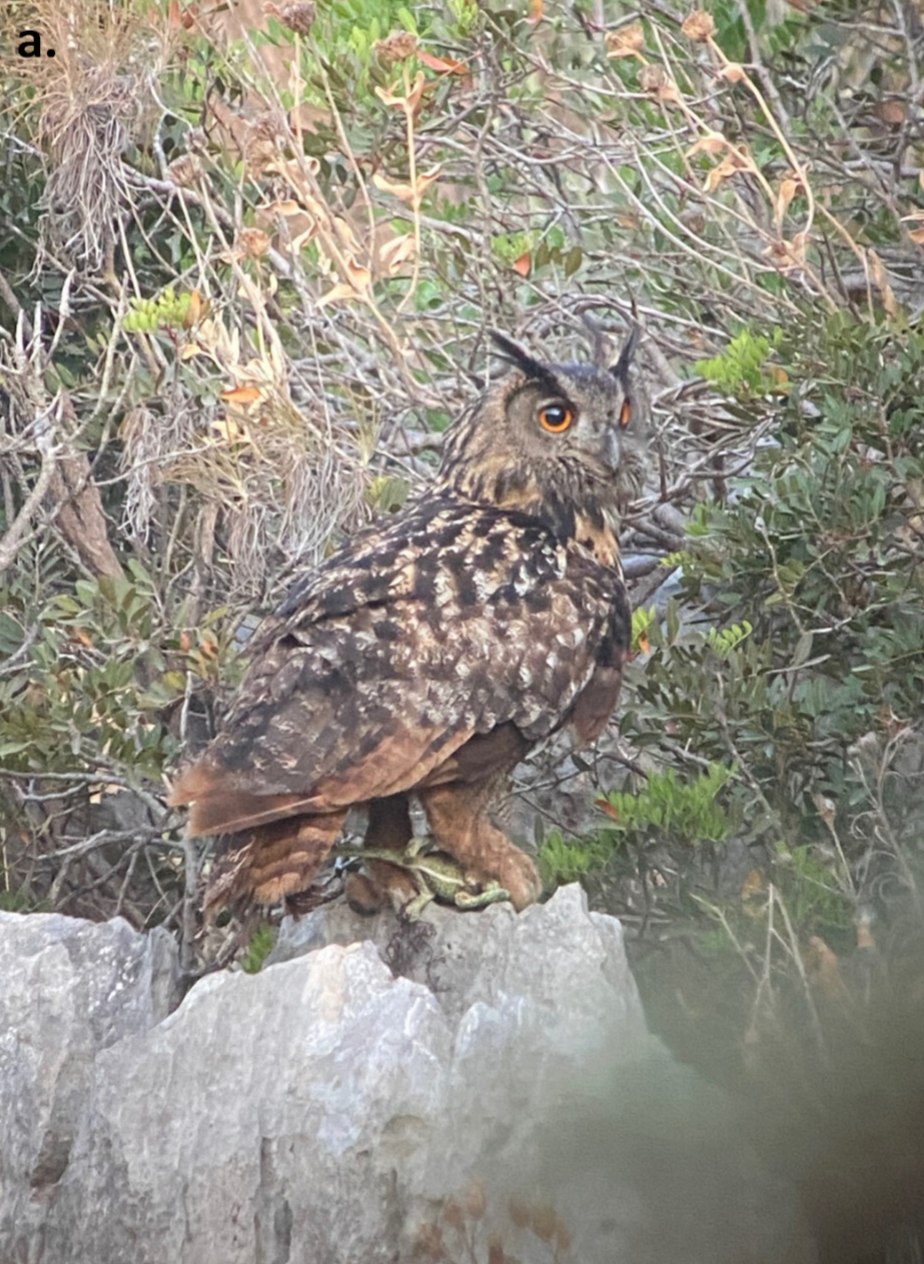
Greek authors recently made a very special observation on the prey spectrum of the owl species in the area around Pylos in the western Peloponnese. In July 2024, the authors observed an eagle owl hunting in the early morning. To their surprise, it preyed on a Chamaeleo africanus. This is the first published observation of an eagle owl preying on a chameleon. Further research on this would be desirable, as there is a general lack of data on the prey spectrum of eagle owls in the Peloponnese.

An exceptionally rare predation on a chameleon species (Squamata: Chamaeleonidae) by a Eurasian Eagle-Owl (Aves: Strigidae)
Apostolos Christopoulos, Luca Cornacchia, Christos Kotselis, Yiannis G. Zevgolis
Diversity 17, 2025: 333
DOI: 10.3390/d17050333

Photo: from the publication mentioned

Madagascar giant chameleon eats carpet chameleon

Madagascar giant chameleon eats carpet chameleon

Beobachtungen Science

Three authors report an interesting observation from the capital of Madagascar, Antananarivo. Near Akamasoa, they observed a male Furcifer oustaleti in the process of devouring another chameleon. The animal had not been observed hunting. The victim, presumably a carpet chameleon (Furcifer lateralis), was completely devoured within a few minutes.

The observation is one of a few exciting sightings of relatively large chameleons that at first glance appear to eat ‘too large’ prey. However, this does not seem to happen very often, as the few existing observations are spread over several decades. It is interesting that the new observation was made in the dry season, when the insect density is significantly lower compared to the rainy season.

Predation on Furcifer sp. by Oustalet’s Chameleon, Furcifer oustaleti (Mocquard, 1894), in the Central Highlands of Madagascar
Angelinah René de Roland, Duvivier Razarazafy, Séraphin Fabrice
Herpetology Notes 18: 305-306.
DOI: not available

Photo: from the publication mentioned

Furcifer verrucosus discovered in the stomach of a snake

Furcifer verrucosus discovered in the stomach of a snake

Beobachtungen Science

Biologists from the University of Michigan (USA) recently made a curious discovery: they analysed a snake of the species Langaha madagascariensis that had been prepared 31 years ago using dissection and microCT. The specimen had been largely untouched in the Zoological Museum of the University of Michigan since 1994. The snake was originally collected by R.A. Nussbaum in the extreme south of Madagascar, not far from Tolagnaro. Little is known about the diet of the leaf-nosed snake, only anecdotal case reports are known. Chameleons have now been added to the list of potential prey: An adult Furcifer verrucosus was found in the stomach of the female leaf-nosed snake examined.

Natural history notes: Langaha madagascariensis (Malagasy leaf-nosed snake)
Andressa L. Viol, Hayley L. Crowell, Justin L. Lee, Tristan D. Schramer
Herpetological Review 55 (2), 2025: 223-226.
DOI: not available

Photo: Furcifer verrucosus, photographed by Nick Newberry, CC BY 4.0

Co-Sleeping in Chamaeleo zeylanicus (India)

Co-Sleeping in Chamaeleo zeylanicus (India)

Beobachtungen

A small publication recently focussed on observations of chameleons in India. Four researchers were travelling in the state of Karnataka in India and repeatedly observed chameleons at night. On a good 20 occasions, they observed single sleeping animals. However, two observations stood out from the others.

In July 2021, they observed two Chamaeleo zeylanicus sleeping less than five centimetres apart on the same branch in Narasimha Betta. A similar picture presented itself to them a little later in July of the same year in Devarayana Durga, 53 km away from the first observation. The chameleons were located in well vegetated hilly scrubland interspersed with rocks.

Unfortunately, the authors were unable to determine the sexes of the animals. As the observations were both made during the monsoon, the reproductive season of the Indian chameleon, they assume mate guarding. This involves a male ‘guarding’ a mated female for several days in order to increase his reproductive success.

Co-Sleeping in the Indian Chameleon Chamaeleo zeylanicus Laurenti, 1768
Nitya P. Mohanty, Krishna Murthy, B.R. Ansil, Ashwin Viswanathan
Herpetology Notes 2024, 17: 679-681.
DOI: not available

Photo: Sleeping Chamaeleo zeylanicus, photographed byDr. Raju Kasambe, Creative Commons Attribution-Share Alike 4.0 International