Chameleons in St. Luce (Madagascar)

Chameleons in St. Luce (Madagascar)

Verbreitung Science

The St. Luce reserve is located in the south-east of Madagascar, just 34 km north of the city of Tolagnaro (Fort Dauphin). The protected area includes beaches and rocky cliffs on the coast of the Indian Ocean, lowland rainforest, marshland, savannah-like plains, rivers and lagoons. The remaining rainforest is broken up into many small fragments. There is also a very large rare earth mining project in the area. 12 of the 17 forest fragments of St. Luce are affected by the mining work. A group of scientists has now studied the herpetofauna of the area in more detail.

Over a period of two years, reptiles and amphibians were searched for and captured in St. Luce. The searches were carried out with the naked eye along existing transects. In addition, ground traps were used for two weeks along four 100 m long lines. Five artificial shelters and five corrugated sheets were laid out at a total of 12 locations to check for animals after a certain period of time. Samples of tail tips and toes were taken and measurements taken, after which the animals were released back to their original locations. The species were identified by genetic analysis.

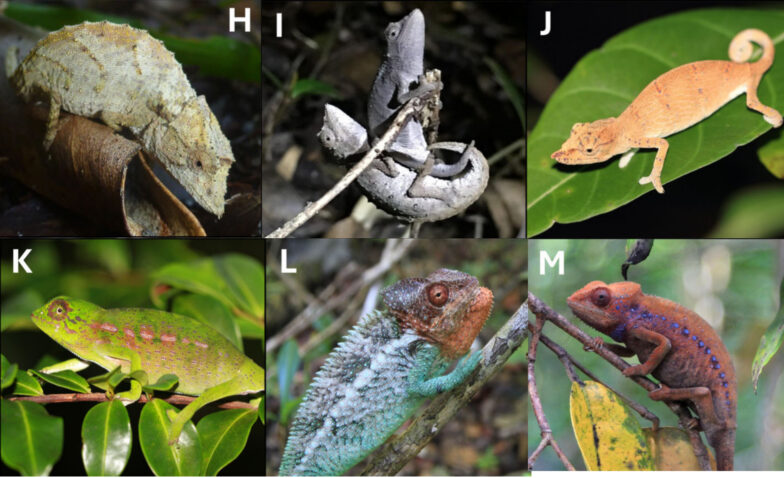
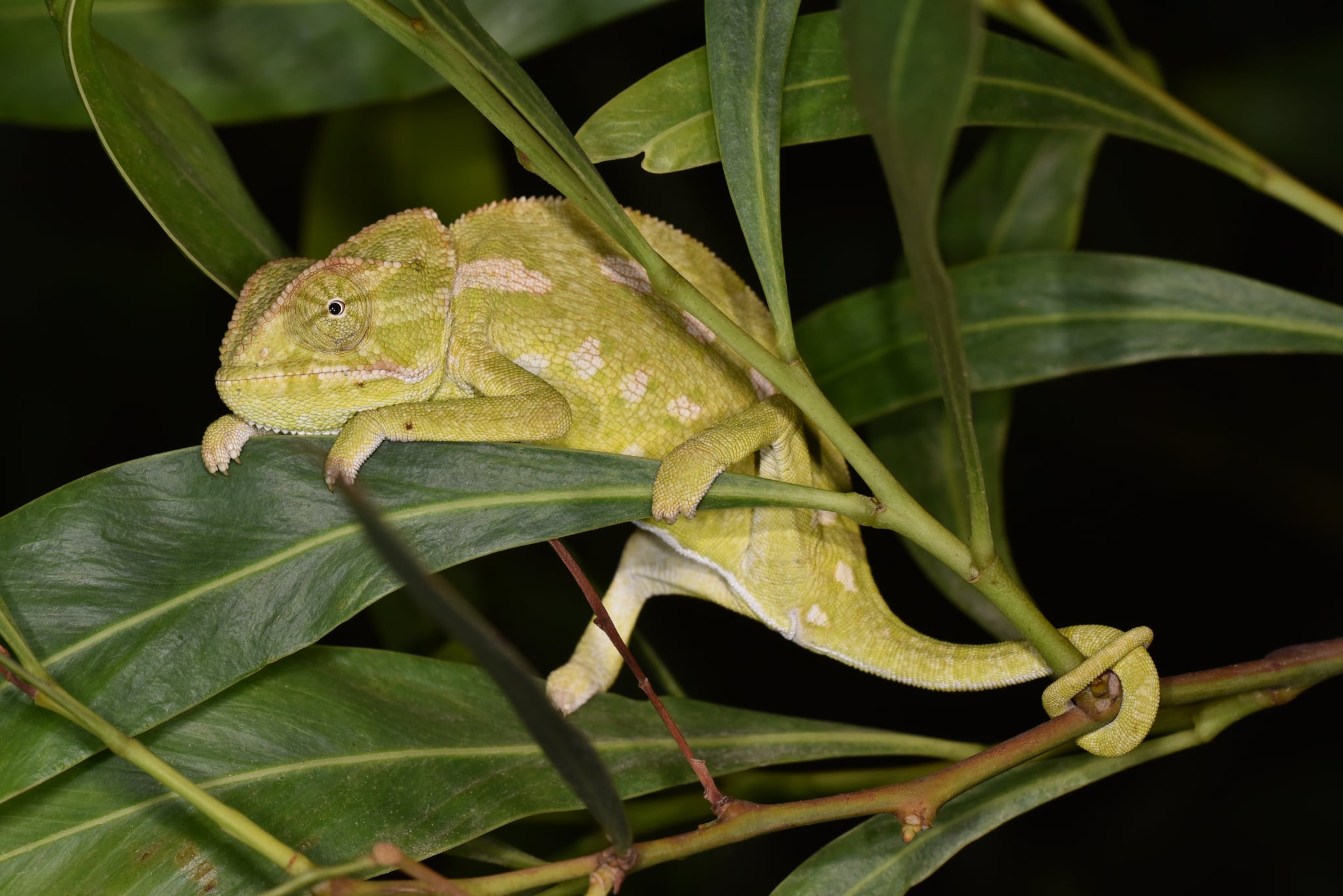
Of 17 rainforest fragments in St. Luce, the scientists found only one intact and another intact but heavily fragmented. All other forest fragments were found with clear signs of habitat destruction. A total of 22 amphibian and 54 reptile species were found. Four species of chameleons were among the reptiles: Palleon sp. aff. Nasus, Calumma tjiasmantoi, Furcifer major and Furcifer verrucosus. All four chameleon species occurred exclusively in the remaining intact or intact areas of the Angalavinaky, Ambandrika and Andranangy/Amboronteny/Agnalaro forests. In the forests already destroyed by the mine, no chameleons were found at all. Of the 76 amphibian and reptile species found, 13 were candidate species, which are presumably undescribed new species.

The authors point out that, according to the present study, the diversity of the herpetofauna in St. Luce is significantly greater than previously assumed. They suggest that several forest fragments should be included in the “Mining Avoidance Zones”, i.e. areas where rare earths should not be searched for, and that the protection status should be increased.

A littoral treasure trove: a comprehensive assessment of the herpetofauna of Sainte Luce, southeastern Madagascar
Sam Hyde Roberts, Marco Sannolo, Hoby Tsimijaly Longosoa, Ryan Clark, Leo Jhaveri, Gonçalo M. Rosa, Walter Cocca, Franco Andreone, Angelica Crottini
Systematics and Biodiversity 23(1): 2513472
DOI: 10.1080/14772000.2025.2513472

Photos: Chameleons found in St. Luce from the aforementioned publication

Frugivory in Furcifer oustaleti

Frugivory in Furcifer oustaleti

Beobachtungen Science

Frugivory, the eating of fruit, is only known from a few chameleon species. These are mainly isolated observations. Japanese scientists have recently investigated the extent to which fruit-eating chameleons could contribute to the spread of plant seeds.

The study was carried out in the Ankarafantsika National Park in western Madagascar. Three species of reptiles in Madagascar were observed during two rainy seasons and their droppings were examined: The Madagascar giant chameleon Furcifer oustaleti, the Madagascar iguana Oplurus cuvieri and the plated lizard Zonosaurus laticaudatus. The reptiles were observed during the day and filmed or photographed while feeding on fruit and then captured. Chameleons were mainly caught at night. Fruits with seeds were collected for identification from plants on which reptiles of the three species mentioned had been feeding. All captured reptiles were kept in net containers for 6 days until faeces were deposited. The animals were then microchipped and released back into their habitats. The scientists then attempted to sow plant seeds obtained from the animals’ excrement.

A total of 89 chameleons, 254 Madagascar iguanas and 38 shield lizards were captured for the study. 24.7% of the Furcifer oustaleti sampled had plant seeds in their feces, compared to 20.1% of the iguanas and 15.8% of the tortoiseshell lizards. The observations showed that the chameleons and the plated lizards ate fruit from at least eight different plants, while the iguanas ate from as many as 18 different plant species. Some of the plant seeds obtained from the feces had germination rates of over 50%.

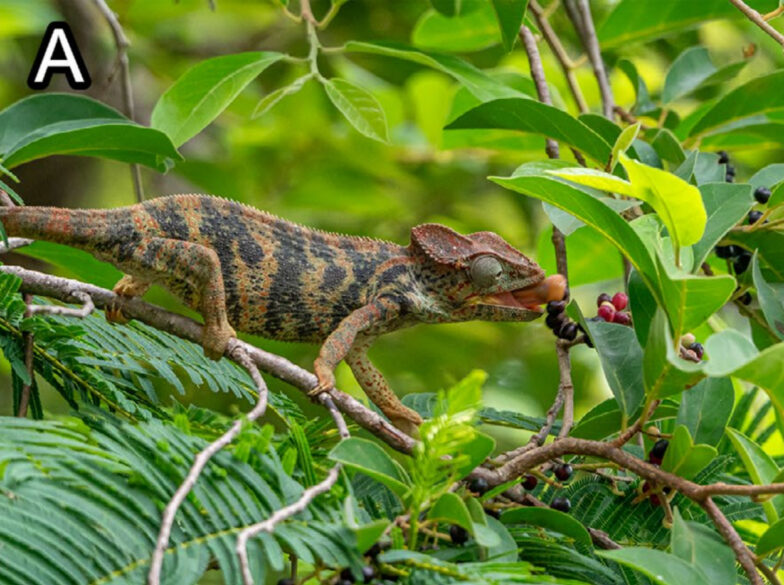
During the observation period in Ankarafantsika, Furcifer oustaleti only ate red, black or brown fruits with a maximum diameter of one centimeter. Green or larger fruits were always left on the plants. The fruits were usually first tapped with the tongue before they were actually eaten. Sometimes the fruits were also shot with the tongue. Fruits of Grangeria porosa, Terminalia boivinii, Trilepisium madagascariense, Antidesma madagascariense, Bridelia perviellana, Phyllanthus casticum, Chassalia princei and Doratoxylon chouxii were ingested by Furcifer oustaleti. Fruits were recorded from both sexes of chameleons and regardless of body size in each of the observation months.

The authors conclude that all three reptile species could contribute to the spread of plants in their habitat. Until now, the brown maki (Eulemur fulvus) in Ankarafantsika was primarily thought to be a seed disperser. Now the considerations should probably be extended to reptiles and their role in the forest ecosystem – even if the proportion of seeds in their droppings is significantly lower than that of lemurs.

Frugivory by three species of lizards in Madagascar: Implication for their ecological roles as seed disperser
Ryobu Fukuyama, Wataru Noyori, Shuichiro Tagane, Shouta Iyoda, Hiroki Sato
Biotropica 57(4): e70052
DOI: 10.1111/btp.70052

Photo: Furcifer oustaleti eating fruit, image from the above-mentioned publication

Presentation in Krefeld about Madagascar

Presentation in Krefeld about Madagascar

Live lectures

The head of the DGHT Saar-Palatinate regional group, Patrick Schönecker, will be giving a great lecture on Madagascar on Friday, 4 June 2025 in Krefeld. The island in the Indian Ocean is the Mecca for travellers interested in herpetology. Over 90% of the reptiles and amphibians found here are endemic – they don’t exist anywhere else in the world. Patrick has been there several times. In his presentation, he talks about the rainforests in the central highlands and local conservation efforts. But he also travels up north to the small island of Nosy Hara – an extremely special habitat and home to the second smallest chameleon in the world.

Patrick Schönecker Madagascar – Biodiversity and conservation [German]
DGHT Regional group Mönchengladbach/Krefeld
Clubhouse SC 08 Schiefbahn
Siedlerallee 27
47877 Willich-Schiefbahn
Event starts at 7.00 pm

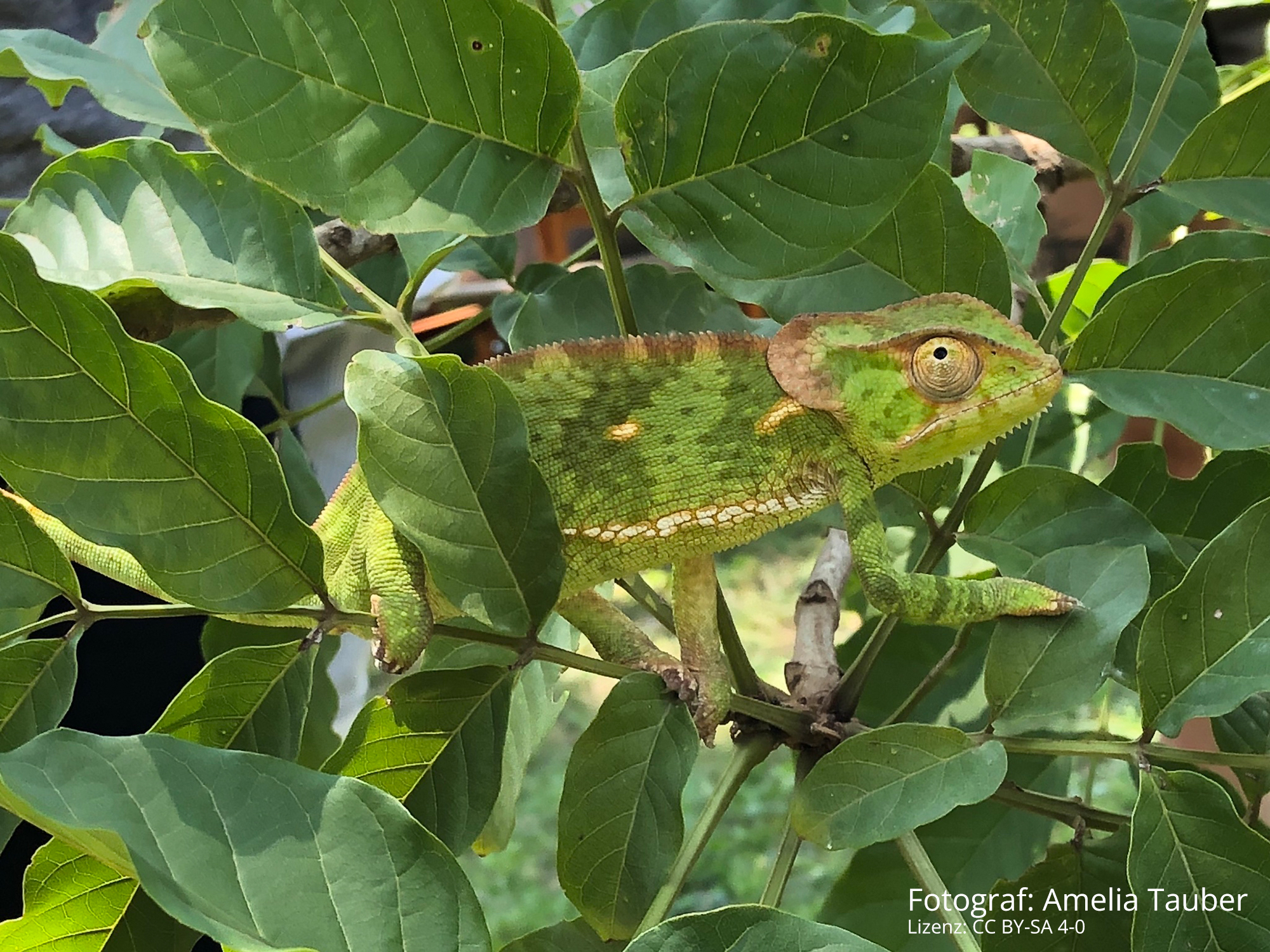
Photo: Calumma parsonii parsonii, photographed by Patrick Schönecker

First vertebrate with annual allochrony: Chamaeleo chamaeleon musae

First vertebrate with annual allochrony: Chamaeleo chamaeleon musae

Science

Allochrony describes the phenomenon that two or more populations of a species have different reproductive cycles over time, even though they occur in the same habitat. In so-called annual allochrony, the populations reproduce at different times of the year. Allochrony is known from many different species, such as insects and corals, which reproduce at different times of the day. Annual allochrony, on the other hand, is extremely rare and has never been demonstrated in vertebrates. Two scientists from Israel have now discovered this phenomenon in chameleons for the first time.

Between 2009 and 2021, they studied the Chamaeleo chamaeleon musae populations in the Holot Mash’abim Nature Reserve in Israel on two nights per month. The reserve is located in the northwestern part of the Negev desert. During the study, the chameleons were searched for from a slow-moving car with flashlights along a 4 km long path. Animals found were measured, sexed, location recorded and claws clipped in a specific sequence for identification. All animals were released at their location within less than 20 minutes. In order to estimate the age of the animals, the time periods between the recovery of previously marked animals were used, as well as an algorithm developed using XGBoost. The chameleons could thus be assigned to the age classes < 1 year, 1-2 years and > 2 years. All data was statistically analyzed.

The astonishing results show that Chamaeleo chamaeleon musae probably occurs in two populations in the Negev desert, separated by annual allochrony. In odd-numbered years, one population of chameleons hatches in September. These animals survive until about November of the following year. In even-numbered years, the second population of chameleons hatches, whose animals also live until November of the following year. The lifespans of the two populations only overlap for a short period of time, when one population is hatching and the already adult animals of the other population are laying eggs. The reproductive Chamaeleo chamaeleon musae of both populations therefore do not overlap or only very rarely due to very few, longer-lived individuals.

The scientists were able to find a total of 1289 chameleons < 1 year old, 231 aged 1 to 2 years and 27 chameleons > 2 years old. Of these, 713 Chamaeleo chamaeleon musae had already been caught for the first time as juveniles, so that their age could be estimated very well. Only 9 of these were rediscovered between 1 and 2 years of age. The survival rate of the hatchlings until their first breeding season was extremely low. In odd-numbered years it was 1%, in even-numbered years 2.5%. Even fewer chameleons survived the first year, at 0.46% and 1.3%. Both populations of Chamaeleo chamaeleon musae were highest in the first and second month of hatching and then declined rapidly. Male chameleons were slightly less likely to survive the first breeding season than females, but overall survival rates were similar for both sexes. In each year of observation, the first hatchlings emerged between mid-September and mid-October, at the end of the hot season. During the cooler and wetter season from December to March, significantly fewer chameleons, most of them juveniles, were found.

This very exciting study naturally raises many more questions. There are several short-lived chameleons, but the entire life cycle of only a few, such as Furcifer labordi, is even known or has been studied. It is possible that there are even more vertebrates with annual allochrony among the chameleons – this still needs to be researched!

First evidence of yearly allochrony in a terrestrial vertebrate: A case study of an annual chameleon
Liran Sagi, Amos Bouskila
Ecology 106(6), 2025: e70144
DOI: 10.1002/ecy.70144

Picture: Chamaeleo chamaeleon, photographed by Markus Grimm

Avian predators of the Indian Chameleon

Avian predators of the Indian Chameleon

Beobachtungen Science

This week, a review paper was published in which an Indian biologist summarizes a series of observations in which birds have attacked chameleons in Sri Lanka and India. These are exclusively observations with Chamaeleo zeylanicus, the Indian chameleon, as prey.

A total of seven birds have already been observed either attacking or eating Chamaeleo zeylanicus between 2012 and 2023. In Bhadreshwar on the western edge of India, a greater coucal (Centropus sinensis) was observed preying on a chameleon. In the Janbughoda Wildlife Sanctuary in eastern India, it was a rufous treepie (Dendrocitta vagabunda) that flew away with a chameleon in its beak and was then photographed eating it. In the Kolli Hills in southern India, a crested serpent eagle (Spilornis cheela) was observed eating an Indian chameleon. Three other crested serpent eagles were seen hunting in Wilpattu National Park in Sri Lanka. Another observation in the same national park shows the Malabar pied hornbill (Anthracoceros coronatus) as a predator of chameleons.

Avian predators of the Indian Chameleon Chamaeleo zeylanicus
Raju Vyas
Biodiversity Observations 15, 2025: 96-98
DOI: 10.15641/bo.152

Photo: Rufous treepie eating an Indian chameleon, the photo was taken from the open source publication mentioned above

Presentation in Dortmund about Kenya

Presentation in Dortmund about Kenya

Live lectures

On Friday, 4 July 2025, Regina Liebel will be giving an illustrated talk about a Kenya safari near Dortmund (North Rhine-Westphalia). The country in East Africa is best known for its ‘Big Five’. This lecture shows that the Kenyan herpetofauna also has a lot to offer and certainly has nothing to hide. Regina Liebel takes her audience on a journey through five national parks.

Regina Liebel Kenya safari through five national parks [German]
DGHT City group Dortmund
Restaurant Olympia – Zur alten Post
Im alten Dorf 2
59192 Bergkamen – Weddinghofen
Event starts at 7.30 pm

First certificate of competence with a focus on chameleons

First certificate of competence with a focus on chameleons

Sachkundenachweis

As our conference participants already know, this year for the first time the VDA-/DGHT-Sachkundezentrum Ost is offering the opportunity to take a certificate of competence with a focus on chameleons. This is the certificate of competence according to §11 TschG in Germany, which every professional or commercial keeper must take; private keepers can take it voluntarily and thus prove their knowledge. Incidentally, the definiton of commercial can also quickly apply to private keepers who have a certain number of offspring per year or a certain turnover through the sale of offspring. The first focus training course on chameleons will take place in Berlin from October 10 to 12, 2025. Registration is possible here by e-mail.

Presentation in Leipzig about Madagascar

Presentation in Leipzig about Madagascar

Live lectures

Johannes Pfleiderer will be giving an illustrated lecture on Madagascar on Wednesday, June 4, 2025 in Leipzig (Saxony). The island in the Indian Ocean is a mecca for travelers interested in herpetology. Over 90% of the reptiles and amphibians found here are endemic – they are found nowhere else in the world. Among the endemics are not only many chameleons, but also the well-known colorful frogs with their many different representatives.

Johannes Pfleiderer On the way to Mantella & Co. – Zoological travel impressions from Madagascar [German]
DGHT city group Leipzig
Restaurant Neumann
Strelitzer Straße 1
04157 Leipzig
Start at 7 p.m.

Invasive plant kills chameleons

Invasive plant kills chameleons

Beobachtungen

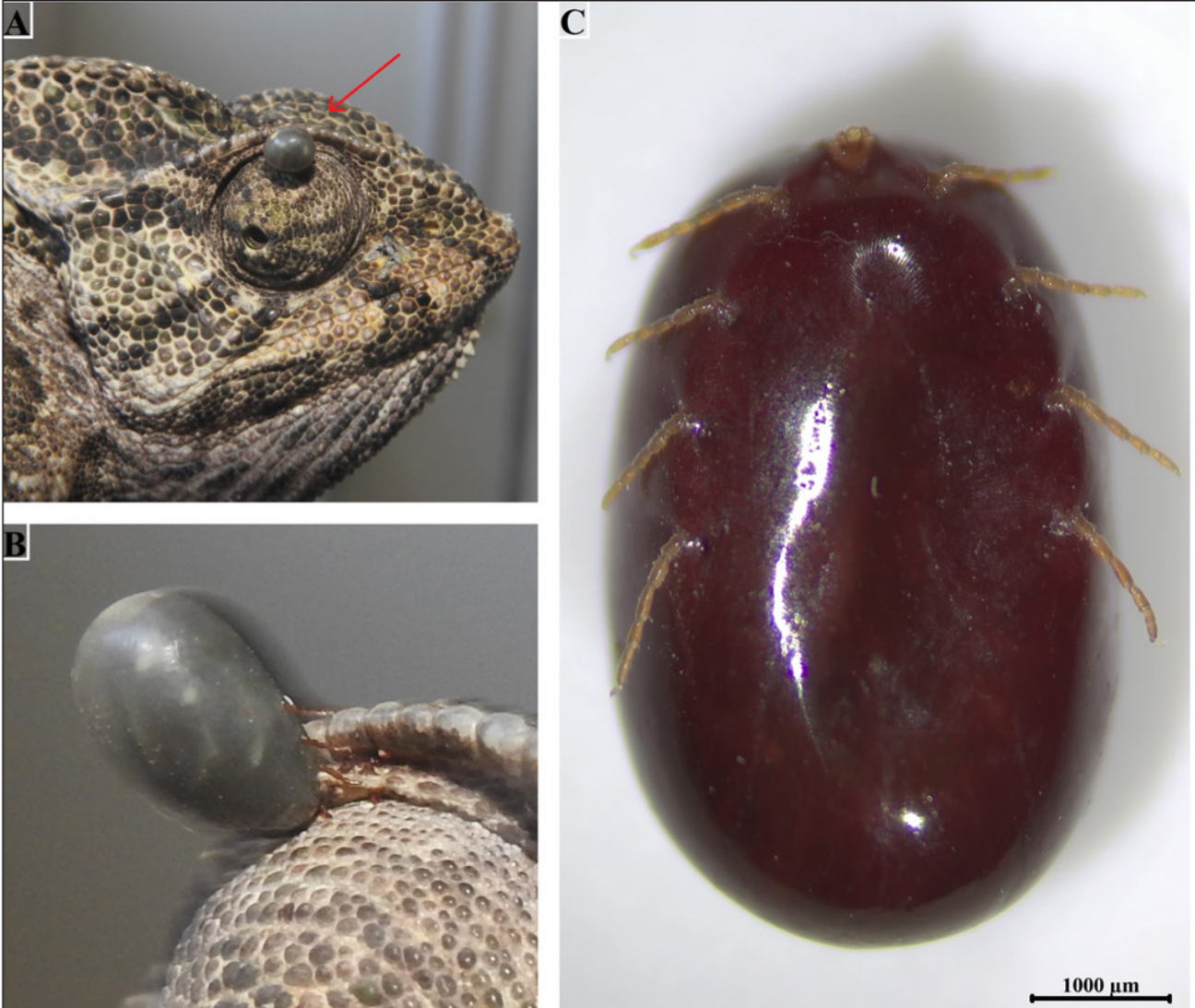
An interesting observation was made by a Madagascar traveler and his guide last year: in Ranomafana in the southern highlands of the island, he observed Calumma oshaughnessyi juveniles twice becoming entangled in an invasive plant and apparently dying as a result. The authors suspect that the animals were unable to free themselves from the small, fine barbs of the plant and may have starved to death as a result.

The plant in question is the Spanish clover (Desmodium uncinatum), which has already spread worldwide. It is a good fodder plant for cattle, which has a high symbolic value in Madagascar. However, there are case reports from India and Australia of bats and other small mammals becoming entangled in the Velcro-like plant stems and dying.

Natural History Notes: Calumma oshaughnessyi
Michael Nash, Patrick Adriamihaja
Herpetological Review 55(3), 2024
DOI: not available

Photo: from the publication mentioned

Conference report 2025

Conference report 2025

Conference reports

From 16 to 18 May 2025, the annual meeting of the AG Chameleons took place once again in Boppard am Rhein. Traditionally, the chameleon friends ‘Diverso’, who had already arrived on Friday, met in the Rheinallee for a cosy and very tasty dinner. An exchange of experiences and many discussions about, with and around chameleons heralded the start of the conference.

Saturday morning began with the first remote lecture directly from Berlin in front of around 35 conference participants. Sophie Obermeier reported on the expert training courses offered by the VDA/DGHT Expert Training Centre East. There, interested parties can complete both the certificate of competence according to §2 TschG and that according to §11 for commercial and – attention, this also applies to many private owners – commercial owners. Sophie also explained why every chameleon keeper should obtain a certificate of competence – even if it is not yet compulsory in Germany. A training course focussing solely on chameleons is currently being planned. Now that the technology is working perfectly after a few teething problems, there are already initial thoughts about using this option at future annual conferences to allow speakers to speak who are unable to attend in person due to physical distance.

Falk Eckhardt then presented his keeping of Trioceros serratus. The animals – especially the females – are visually difficult to distinguish from Trioceros peretti and Triocecros wiedersheimi. Falk had taken over a group from another keeper and also bred them. He explained how they are kept in gauze enclosures with cork walls on two sides and discussed egg laying and successful incubation of the eggs. As the species’ country of origin, Cameroon, has not allowed chameleon exports for years, the terrarium population of Trioceros serratus is unfortunately not particularly large at present. A lack of females in particular makes the long-term conservation of the species in German terrariums rather unlikely at present. Anyone keeping animals of this species, including individuals, should definitely contact Falk so that any individual animals that still exist can be reunited.


After the lunch break, the programme continued with a richly illustrated travelogue by Gerd Fritzsche. He has already visited the KwaZulu-Natal region in eastern South Africa twice. His ‘bucket list’ on the last trip included various dwarf chameleon species, including Bradypodion melanocephalum, Bradypodion setaroi, Bradypodion thamnobates, Bradypodion caeroleogula and Bradypodiondracomontanum. From Durban we travelled by car to St. Lucia and back to the famous Drakensberg and Karkloof. The odd mamba was removed from huts and houses by his local guide, who specialises in snakes. Hippos and giraffes were also on the itinerary ‘as accessories’ – even though the diverse dwarf chameleons were the main target of the trip.

We then returned to herpetoculture with the presentation by Jean-Dominique Dufraine. He has been keeping carpet chameleons (Furcifer lateralis) for some time now, a small but all the more colourful species from the highlands of Madagascar. Jean-Dominique hopes to find a small group of keepers who would like to keep and breed Furcifer lateralis on a long-term basis. He is particularly interested in exchanging experiences on special, species-specific issues such as ‘egg throwing’, for which Furcifer lateralis is well known. Jean-Dominique reports the experience of the breeder of his animals that the chameleons buried eggs in the sand when the light from a lamp reached the bottom of the terrarium. Several clutches are now in the incubator. There were other interested parties on site who might want to keep the species again or for the first time.


The photo competition was once again divided into two categories this year. Marko von der Osten-Ellinghaus won first place in the nature photography category with his photo of an amazingly colourful, mating Furcifer rhinoceratus male on Madagascar. Second place went to Markus Bartels with a photo of a Calumma parsonii parsonii of the colour variant ‘green giant’, taken on the Masoala Peninsula in Madagascar. Gerd Fritzsche took third place with his Bradypodion setaroi from St Lucia, South Africa. Gerd won again in the terrarium category, but this time in first place, with a very nice Bradypodion damaranum. Benni Ludwig took second place with a Parsons chameleon. Third place was drawn by lot among several participants due to a tie – Jean-Dominique Dufraine won the race with a carpet chameleon. The two first place winners each received a €50 voucher from Chimaira. The second and third places received vouchers worth €30 and €20 respectively from QB Insects and Der Terraristikladen. The latter were fully sponsored for the photo competition, for which we would like to express our sincere thanks. In addition, each winner received one of the conference collector’s mugs, which are designed by Caro Vierbücher and change chameleon species every year – depending on the winning motif of the previous year’s photo competition.

The lecture part ended on Saturday with the general meeting. In her annual report, WG spokesperson Dr Alex Negro presented what the management team had achieved over the past 24 months. These included the 120-page CHAMAELEO 49 as well as two flyers for member recruitment and advertising the breeding statistics. Social media and the lively newsletter were also continued. The offspring statistics, which have been advertised intensively since 2022, were able to record the first reports for 2024 for the first time in almost 10 years. After Tim Vierbücher resigned as treasurer, Alex Negro also provisionally took over his role. She therefore also outlined the current financial situation of AG Chamäleon. The 50th anniversary edition of CHAMAELEO is on the agenda for the coming year. In addition, a competition is planned to modernise the AG Chameleon logo, which is now over 30 years old.

As expected, the new elections were quick and straightforward: the management team was confirmed in its current composition. The team of spokesperson and – new, also treasurer – Alex Negro and the assessors Jan-Benedikt Glaw, Monique Bartsch, Anne Stemper, Benjamin Ludwig and Svea Brüne is now completed by Lars Dwinger. Saturday evening ended with a pizza dinner.


Sunday started with a presentation on the current state of chameleon medicine by vet Alex Negro. She reported that there has been an enormous increase in knowledge, especially in the last ten years. Whereas in the early 1990s, when the AG Chameleons was founded, there were only a few vets who looked at reptiles at all, today there are not only over 120 reptile experts on the AG ARK list, but also reference values for a variety of diagnostics such as blood chemistry, blood counts, ultrasound, X-rays and even computer tomography just for chameleons. Various case reports from around the world complemented the lecture.

This was followed by a more practical and richly illustrated presentation: Markus Bartels and Lars Dwinger reported on their trip to Madagascar in April this year. They spent a whole week in the mountain rainforest of Marojejy in north-eastern Madagascar to find, document and – thanks to permits – collect undescribed species together with the Tanalahorizon team and chameleon researcher Dr Frank Glaw. Following this sweaty but very successful chameleon expedition, they travelled to the lowland rainforest of Bobangira directly on the Indian Ocean. New discoveries awaited them there too – and a rather arduous tractor journey.


Finally, there were some great donations to the AG: Jutta Dwinger donated the proceeds from the hand-sewn bags she sold, totalling € 175. Caro Vierbücher also donated her proceeds from the sale of hand-painted porcelain to the AG Chameleons, another € 184. Many thanks to both of them! A big thank you also goes to all the speakers for their interesting and varied contributions and to the helpers in the background who made the conference a success. And finally, we would like to thank Peter Sound for organising the venue.

See you in Hanover in 2026!


Tagungsprogramm 2025

  Freitag, 16. Mai 2025
__
19:00 Anreise und gemütliches Abendessen
Diverso, Rheinallee 47a, 56154 Boppard
__
  Samstag, 17. Mai 2025
__
09:30 Eintreffen am Tagungsort: Altes Rathaus, Marktplatz, 56154 Boppard
09:45 Begrüßung und Tagungsbeginn
10:00 Sophie Obermaier: Sachkundenachweis für Chamäleonhalter in Deutschland
11:00 Falk Eckhardt: Haltung und Nachzucht von Trioceros serratus
12:00 Mittagspause
14:00 Gerd Fritzsche: Streifzug durch die Provinz KwaZulu-Natal in Südafrika
15:00 Jean-Dominique Dufraine: Back to the roots – Teppichchamäleons
16:00 Kaffeepause
16:30 Fotowettbewerb
17:00 Mitgliederversammlung mit Neuwahlen
  __
  Sonntag, 18. Mai 2025
__
09:45 Eintreffen am Tagungsort
10:00 Alex Negro: Neues, Skurilles und Interessantes aus der Chamäleonmedizin
11:00 Lars Dwinger, Markus Bartels: Der Gipfel von Marojejy und der Galeriewald von Bobangira – zwei nahezu unerforschte Chamäleonhabitate auf Madagaskar
12:00 Verabschiedung