Donations to the AG Chamäleons

Donations to the AG Chamäleons

AG Interna

During our conference, several donations were handed over, which we are of course very happy about. Firstly, Jean-Dominique Dufraine from Terra-Kultur donated 500 €, secondly, Jutta Dwinger handed over the proceeds of the bags she sold during the conference amounting to 320 € to the AG. Thirdly, Caro Vierbücher joined in and added another 100 € to the already high sum. Thank you very much for these great donations!

Conference Report 2023

Conference Report 2023

Conference reports

From 05 to 07 May 2023, the annual meeting of the AG Chamäleons once again took place in Boppard am Rhein. Traditionally, the chameleon friends who had already arrived on Friday met at the Italian restaurant in the Rheinallee for a cosy dinner. After the location had changed owners and names several times in the past years, it is now called “Castello da Toni” again, as it was many years ago. An exchange of experiences and many exciting conversations heralded the conference.

Saturday morning started with a classic keeping and breeding session in front of almost 50 chameleon lovers who turned up. Jean-Dominique Dufraine gave a talk on two species that he has been keeping and breeding successfully for several years. Rieppeleon brevicaudatus, a terrestrial chameleon that seems to have been somewhat forgotten in herpetoculture in recent years, but which is a lot of fun to keep, will hopefully get a new chance to reappear in German terrariums in the future. The Seychelle’s Chameleon Archaius tigris is also small, but a species with interesting behaviour that can be kept in groups. Thorsten Negro then reported on his recent trip to Madagascar, where he went in search of the various Parson’s Chameleons of the red island. A special target was the “green giant“, the colour variant of the Parson’s Chameleon in the rainforest of Masoala, which had hardly been documented until then.


After the lunch break, we continued with legal aspects of terraristics, interestingly presented by Oliver Witte. Whether a tenant can prohibit the keeping of chameleons, whether a certificate of competence makes sense for everyone (yes!) and what rights and obligations you have when selling animals were just some of the topics discussed. In the photo competition, a beautiful photo of a Brookesia vadoni from Marojejy in Madagascar by Markus Bartels was chosen as the winner. He received a 50 € voucher from Chimaira as well as one of the beautiful conference collector’s mugs designed by Caro Vierbücher, which change chameleon species every year – depending on the winning motif of the previous year’s photo competition. Second place went to Markus Grimm with a photo of a Chamaeleo chamaeleon reticrista from the island of Samos in Greece. He received a 30 € voucher from QB Insects. Third place went to Monique Bartsch with a photo of a Calumma globifer she bred herself. She also received a voucher from QB Insects.


The eagerly awaited lecture by Dr. Sarina Wunderlich on the subject of UV-B LEDs. then went directly into practical herpetoculture. The conclusion after many measurements and considerations: Currently, the physicist advises against the use of UV-B LEDs over chameleon terrariums. However, the technical possibilities to reduce the previous deficits of LEDs are already available – just not affordable for the normal consumer so far. It is therefore realistic that UV-B LEDs will become usable in a few years. So we are eagerly awaiting an update in the not-too-distant future. The lecture part was concluded by Rayane Vuillemin, who presented the Association Caméléon Center Consérvation founded in Switzerland last year. Various projects are planned to draw greater public attention to the protection of chameleons. Among others, a project on the occurrence of chameleons in the Vohimana Special Reserve in Madagascar is currently being supported. Several chameleon species are also to be propagated across Europe as part of an ex-situ breeding programme to establish a stable population outside their home countries. An exciting project that we are sure to hear more about!

The general member meeting at the end of the day was pleasantly short. Treasurer Tim Vierbücher gave an overview of the current financial situation. WG spokesperson Dr Alexandra Laube presented the activities of the board in the past year. In addition to the complete overhaul of the website and increased activity in social media, a monthly newsletter was launched and a AG-owned cloud and a data management system were set up, especially for publications. The increased visibility generated a lot of approval among the AG members. The goals for the coming year are the revival of the breeding statistics and the 50th-anniversary issue of CHAMAELEO. In addition, there will be a survey on whether the conference should continue to take place in Boppard or whether it should change location again after 21 years. We are already looking forward to the result! The various ideas and presentations were then eagerly discussed at the joint dinner.


On Sunday, it started right on time with a travel report by Lars Dwinger, who actually comes from the aquatics scene and came to the chameleons via his first trip to Madagascar. He showed many great photos from the rainforests of Ranomafana and Andasibe in the highlands as well as Akanin’ny Nofy on the east coast of Madagascar and gave tips for travelling around the Indian Ocean. The conference ended as it began, with a husbandry report – this time by Markus Grimm. He told about the habitat of Chamaeleo chamaeleon reticrista in the wild and showed video and picture material of storm-beaten chameleons as well as mating. Afterwards, the expert examiner for Switzerland presented his own husbandry conditions for the species in the terrarium and gave a lot of information on how the successful incubation and breeding of the European Chameleon can succeed.

Finally, there were some great donations to the AG: Jean-Dominique Dufraine donated 500 €, Jutta Dwinger donated the proceeds of the bags she sold of 320 € and Caro Vierbücher rounded up the already impressive sum by another 100 € for the AG Chamäleons. Many thanks to all three donors! A big thank you also goes to all the speakers for their interesting and varied contributions and to the helpers in the background who made the conference a success. And finally, we would like to thank the DGHT Policy Advisory Board, Peter Sound, for once again making the premises available without complications. We are looking forward to 2024!

Tagungsprogramm 2023

  Freitag, 05. Mai 2023
__
18:00 Anreise und gemütliches Abendessen
__
  Samstag, 06. Mai 2023
__
09:00 __ Eintreffen am Tagungsort
09:15 Begrüßung
09:30 Jean-Dominique Dufraine: Haltung von Archaius tigris
und Rieppeleon brevicaudatus
10:30 Thorsten Negro: Auf der Jagd nach dem Green Giant – Calumma parsonii parsonii auf Madagaskar
12:00 Mittagspause
13:30 Oliver Witte: Alles was Recht ist
14:45 Fotowettbewerb
15:00 Sarina Wunderlich: UVB-LEDs – neue Entwicklungen in der Terrarienbeleuchtung
16:00 Diskussionsrunde
16:45 Mitgliederversammlung
  __
  Sonntag, 07. Mai 2023
__
09:15 Eintreffen am Tagungsort
09:30 Lars Dwinger: Einmal Madagaskar, immer Madagaskar – Von der Sucht nach der roten Insel
11:15 Markus Grimm: Das  Gemeine Chamäleon (Chamaeleo chamaeleon) – Systematik, Habitat, Haltung und Zucht
12:00 Verabschiedung
The Arabian Chameleon in Abyan (Yemen)

The Arabian Chameleon in Abyan (Yemen)

Verbreitung Science

The majority of overview studies on the occurrence of reptiles in Yemen date back to the 1990s. More recent research is mainly based on areas close to cities, but less on more remote regions. Two biologists from the Universities of Aden and Abyan have recently published a survey on the occurrence of reptiles in Abyan.

The Abyan governorate is located in the south of Yemen on the Arabian Peninsula. It borders the Gulf of Aden to the south and the governorates of Aden, Lahji, Al Bayda, and Shabwa to the west, north and east. 44 areas in Abyan were surveyed within a whole year. Reptiles were caught by hand and some were merely documented, while others were killed and preserved. A total of 202 animals were examined.

A total of 24 different reptile species were found. Chamaeleo arabicus was found in the districts of Lawdar, Zinjibar, Khanfir and Jayshan. Of the 23 finds, most were made in western Khanfir, not far from the town of Zinjibar. Two chameleons were found in northern Lawdar and only one in southern Jayshan. The authors point out that the chameleons are mainly found in cultivated landscapes.

Distribution of lizards in Abyan Governorate, Yemen
Salem M. Busais, Wafa A. Abo-Alib, Hasan M. Alrahowi
Electronic Journal of University of Aden for Basic and Applied Sciences 4 (1), 2023
DOI: 10.47372/ejua-ba.2023.1.220

Keeping and breeding Parson’s Chameleons

Keeping and breeding Parson’s Chameleons

Haltungsberichte Newspaper articles

The keeping and breeding of Calumma parsonii parsonii has become quite successful in Germany in recent years. There are regular offspring and keeping is also becoming increasingly popular. In the current issue of Elaphe, the magazine of the DGHT e.V., there is a detailed report on keeping this beautiful, large chameleon species. It was written by three members of the AG Chamäleons.

They keep their animals in self-built terrariums made of aluminium profiles and Forex with a completely ventilated lid, and door as well as a full side area or in spacious winter gardens. Living plants provide sufficient cover. Both sexes are kept individually. Lighting is provided by Reptiles Expert metal halide lamps, Arcadia UV-B tubes, and HQIs. The lighting time is 10 to 12 hours in summer and winter. The enormous drinking needs of the species are satisfied by daily manual watering. In addition, feeding is rather sparse with only one adult food animal, e.g. a grasshopper, per chameleon per day (or the equivalent of several smaller food animals). A cooler winter hibernation, imitating the dry season in Madagascar, ensures a higher life expectancy and is therefore recommended by the authors.

Mating takes place in the German midsummer from July to August. The chameleons are put together for a few days until successful matings have taken place. The females are pregnant for four to six months. Between late December and early February, the female digs an elongated tube into the ground and lays 20 to 69 eggs. The incubation of the eggs takes place on perlite at 23 to 24°C. Weekly the eggs are sprinkled with distilled water. In February, a diapause is carried out at 13 to 14°C without further water supply. The young hatch after 15 to 24 months and are then raised individually. Unfortunately, the sex can only be determined at the age of 9 to 12 months.

All in all, this is a very detailed article with a lot of information for chameleon lovers who are interested in keeping this great species or are looking for one or two tips for breeding. In addition, the article discusses the distribution and habitat of the different colour varieties of Calumma parsonii parsonii on Madagascar.

Parsons-Chamäleons (Calumma parsonii parsonii) – Madagascar’s Gentle Giants
Alexandra Laube, Andreas Augustin und Thorsten Negro
Elaphe 3, 2023, pp. 12-25

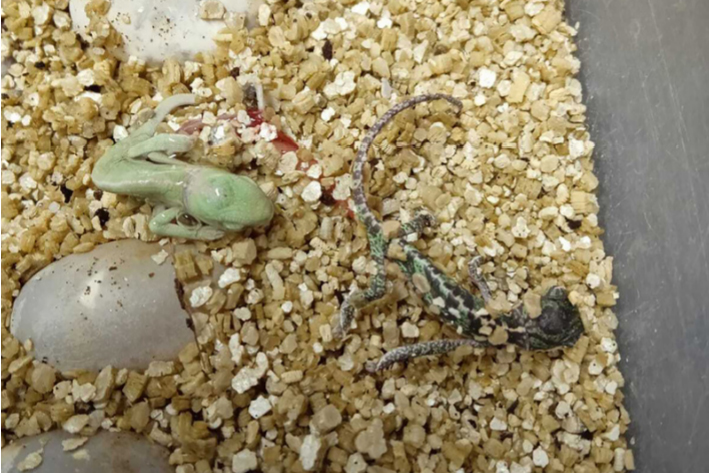
Foto: Schlupf eines Parsons Chamäleons, fotografiert von Alex Laube


Panther chameleons in Madagascar

Panther chameleons in Madagascar

General topics Verbreitung Newspaper articles

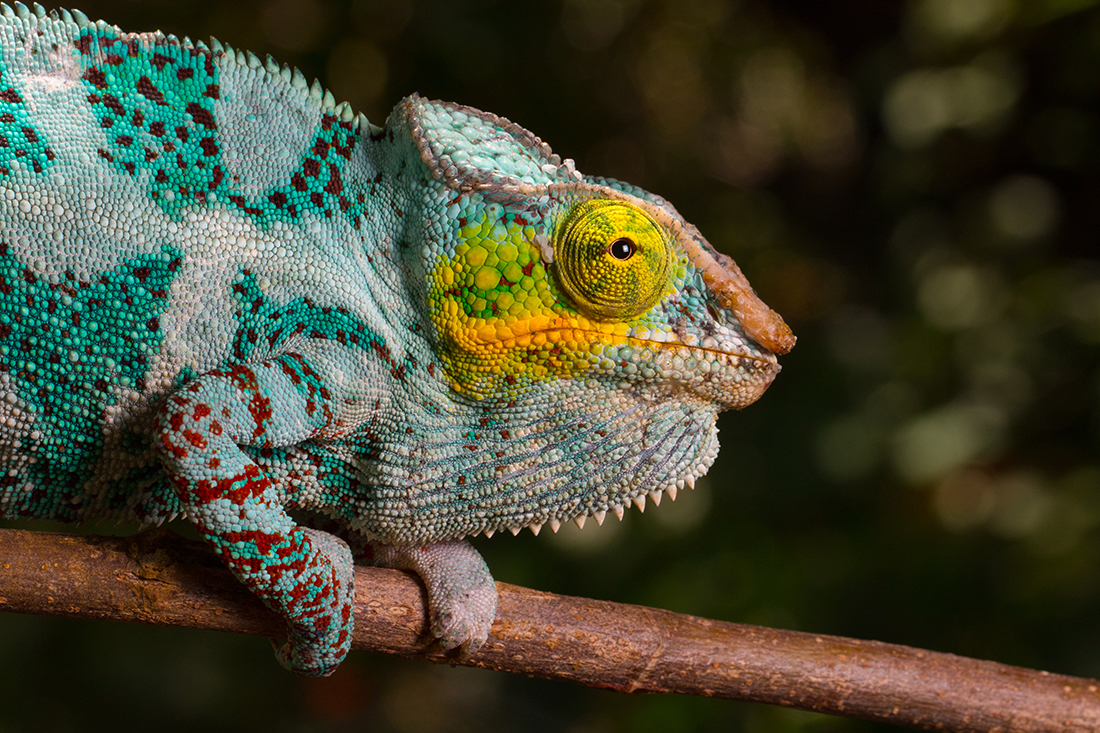
In the bi-monthly magazine of the DGHT e.V., the Elaphe, a nice article on the panther chameleons of Madagascar has been published. It was written by two members of the AG Chamäleons who regularly travel to the island.

The article describes in words and pictures the distribution area of the panther chameleons on Madagascar, which extends over the northern half of the island, more precisely from a few kilometres south of the village of Ankaramibe in the northwest to the north of Madagascar and down the east coast to about 90 km south of the port city of Toamasina. The chameleons are found mainly in secondary vegetation in open landscapes, but also in cocoa plantations, overgrown gardens and rainforests.

The life cycle of the panther chameleons in Madagascar is mainly determined by the rainy season between November and March. The chameleons mate during this time. After 30 to 40 days, the females lay between 11 and 35 eggs in a nest they have dug themselves. The young hatch only in the next rainy season.

The article goes into particular detail about the different local forms, the different colour appearance of the male panther chameleons depending on the location. The authors currently count more than 30 different local forms on Madagascar, which are separated from each other by natural barriers such as rivers. There are probably many more, but not all of them have been discovered yet.

Pantherchamäleons (Furcifer pardalis) – Meister der Farben
Thorsten Negro and Alexandra Laube
Elaphe 3, 2023, pp. 12-25

Photo: Panther chameleon of the local form Ambanja on Madagascar, photographed by Thorsten Negro.

Aggressive fungal pathogen discovered in panther chameleons

Aggressive fungal pathogen discovered in panther chameleons

Tiermedizin Science

Fungi of the genera Nannizziopsis and Paranannizziopsis have long been known to cause severe skin diseases in various reptiles. These include species feared in herpetocolture such as CANV (Chrysosporium Anamorph of Nannizziopsis vriesii) and Nannizziopsis dermatitidis, which are apparently obligate pathogens. Now, a similar skin fungus has been detected in panther chameleons in Florida, USA.

Nine adult panther chameleons (Furcifer pardalis) were taken from a wild population in Florida. They were first housed in groups of two or three chameleons in screen cages with natural and artificial plants at a private keeper. A ReptiSun 5.0 lamp and a conventional light bulb were used. The animals were fed with crickets and zophobas every second day and supplemented with vitamins and calcium. All nine panther chameleons, plus a tenth that was captured later, were finally given to the United States Department of Agriculture (USDA) for a series of experiments. They were kept individually in steel aviaries outdoors.

Subsequently, the eight remaining panther chameleons were also examined. In fact, all but one of the chameleons were found to have either missing claws or swelling of the hands and feet, small skin wounds, circumferential proliferation on the body and/or yellow and black skin lesions. Fungal PCR was no longer carried out, but infection with the same pathogen was suspected. All nine panther chameleons still alive were treated with 25 mg/kg terbinafine and 5 mg/kg voriconazole, both given orally once daily.

After six weeks, the panther chameleons were examined again. The skin lesions were still present, in two animals the hand and foot swellings had decreased. After eleven to twelve weeks of treatment, all symptoms had disappeared in seven chameleons. The skin lesions had developed into scars. Only two chameleons still showed swelling in the foot area, but less than at the beginning of treatment. After 14 weeks of therapy, another panther chameleon died. The autopsy revealed kidney and organ damage as the cause of death. Since the contribution of the medication used to the death of the chameleon could not be ruled out, the therapy was terminated in week 15 for six of the eight panther chameleons. The two panther chameleons that still showed swelling of the feet were treated for another two weeks.

This case report is the first detection of Paranannizziopsis australasiensis in chameleons. So far, this fungal pathogen has only been found in green iguanas and Eastern bearded dragons in herpetoculture and in Tuataras, skinks, geckos, and snakes in nature. It remains unclear where the panther chameleons became infected. Three of the screen cages used in the initial private husbandry had previously been inhabited by Veiled Chameleons (Chamaeleo calyptratus) and Knight Anoles. The private keeper had disinfected the terrariums with chlorine bleach. The rest of his reptile population showed no skin lesions. The aviaries used later at the USDA had been empty for years and had previously only been inhabited by small birds. It is possible that the fungal pathogen had been introduced via potted plants from nurseries that regularly observe native reptiles on the premises. However, Paranannizziopsis australasiensis has not been found in any other wild reptile species in Florida to date.

The most likely scenario seems to be that the chameleons were already infected before they were caught in Florida, but the disease only broke out later. The original animals of the population could have been infected by bearded dragons in the pet trade a good decade ago. A latent infection with a late onset is supported by the fact that most of the skin lesions in this case report were found in winter, after temperatures had dropped below 10°C. Moreover, before the onset of symptoms, so-called “thermal limit trials” were carried out, in which the animals were briefly exposed to extreme temperatures of up to 45°C and 6°C. Another chameleon from the same population was caught at a later time and also developed skin lesions, which indeed suggests an infected population in Florida.

A free-ranging chameleon population infected with Paranannizziopsis australasiensis could pose a huge risk to native reptiles. The fungal pathogen is known to be highly infectious and aggressive. In addition, free-ranging panther chameleons in Florida are now being captured by dealers and sold to private owners, which could result in the spread of the disease in private reptile populations. Further research is urgently needed to clarify the extent of the current occurrence of Paranannizziopsis australasiensis in Florida, both in herpetoculture and in the wild.

Dermatomycosis caused by Paranannizziopsis australasiensis in nonnative panther chameleons (Furcifer pardalis) captured in Central Florida, USA
Natalie M. Claunch, Colin M. Goodman, Madison Harman, Mariaguadalupe Vilchez, Savanna D. Smit, Bryan M. Kluever, James F.X. Wellehan, Robert J. Ossiboff, Christina M. Romagosa
Journal of Wildlife Diseases (4), 2023
DOI: 10.7589/JWD-D-22-00018

Hand-made stuff at our conference

Hand-made stuff at our conference

AG Interna

As every year, some of our AG members will bring great handmade things with chameleon motifs that can be purchased directly on site.

Firstly, Caro Vierbücher will bring a selection of her creative handicrafts. These include small decorative tiles, cups, bowls, egg cups, and other beautiful things, but also wooden plugs and inscribable wooden motifs to attach to the terrarium. Everything is lovingly hand-painted by Caro at home. Our presenters this year and the winners of the photo competition can each look forward to receiving one of our coveted conference collector’s mugs from Caro. This year a very beautiful Furcifer timoni adorns the cups.

For the first time this year, Jutta Dwinger will bring a selection of her handmade bags and pouches with chameleon motifs to the conference. These include very high-quality gym bags with and without zips as well as chic toiletry bags for the chameleon friend who loves to travel. Other small or larger works of art can also be sewn on request.

Also at the conference, Martin Knauf will bring some of his photo tableaus, which can be purchased on Saturday. The tableaus each contain nine matching motifs, measure 50 x 50 cm and come with high-quality Nielsen aluminium frames. Photos, cutting and sorting are done by Martin himself. Special requests can also be taken into account.

Chameleons at different altitudes of the Amber Mountain (Madagascar)

Chameleons at different altitudes of the Amber Mountain (Madagascar)

Science

International scientists have intensively studied the different altitudes of the Amber Mountain and the amphibians and reptiles found there. The Amber Mountain (French Montagne d’Ambre) is a former volcanic massif in northern Madagascar. The mountain, which is up to 1475 m high, is mainly covered by rainforest, which belongs to the national park of the same name. To the north of the mountain is a dry forest that belongs to the Forêt d’Ambre Special Reserve. The north-western flank of the mountain has not yet been protected.

In the present work, amphibians and reptiles were observed and sampled over 12 km between 700 and 1470 metres altitude. The western slope of the Montagne d’Ambre at altitudes between 770 and 1290 m was also included in the study for the first time. In addition, animals were sampled in the Forêt d’Ambre from 470 m altitude. All animals found were measured. Cheek swabs, scales as well as live animals that had been euthanised were collected and genetically analysed. A total of 2631 observations of 34 species of amphibians and 48 species of reptiles were made. As expected, different animals occurred at different altitudes. The species richness of the Montagne d’Ambre was greatest at around 1000 m a.s.l. with 41 different species. Above 1100 m, about one third of the species found were locally endemic.

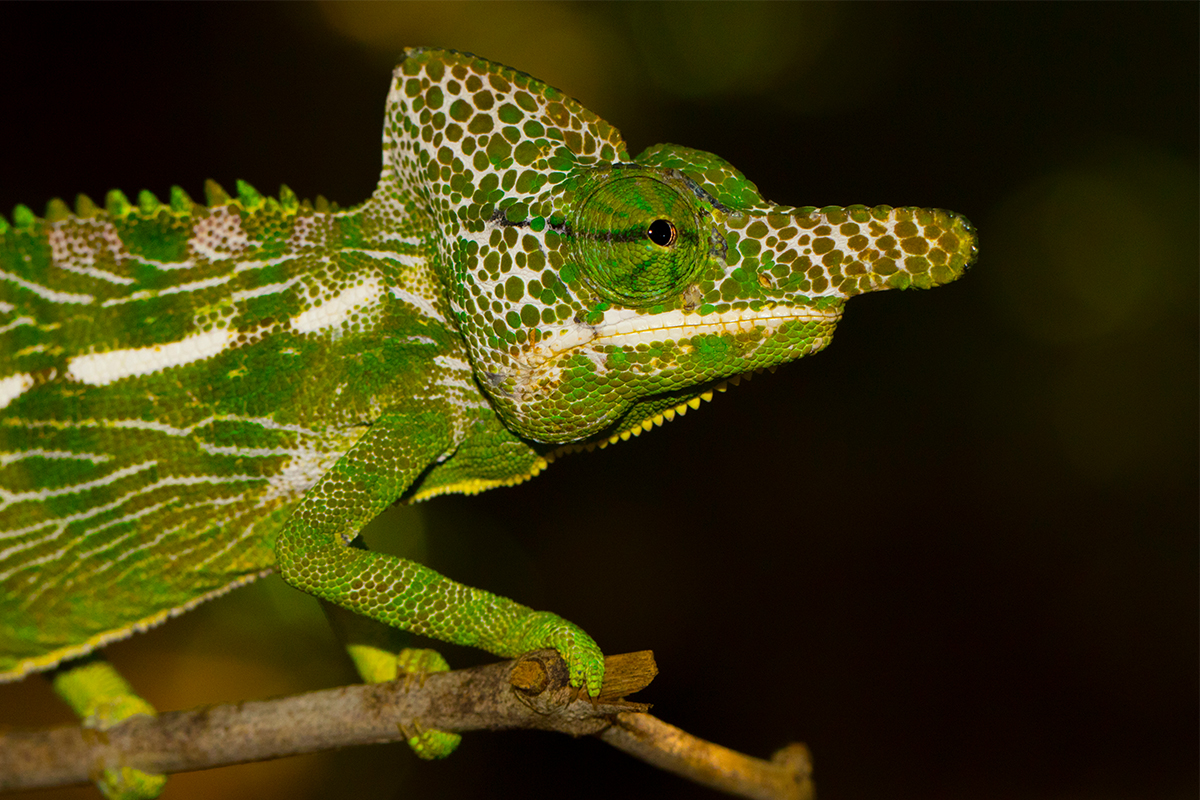
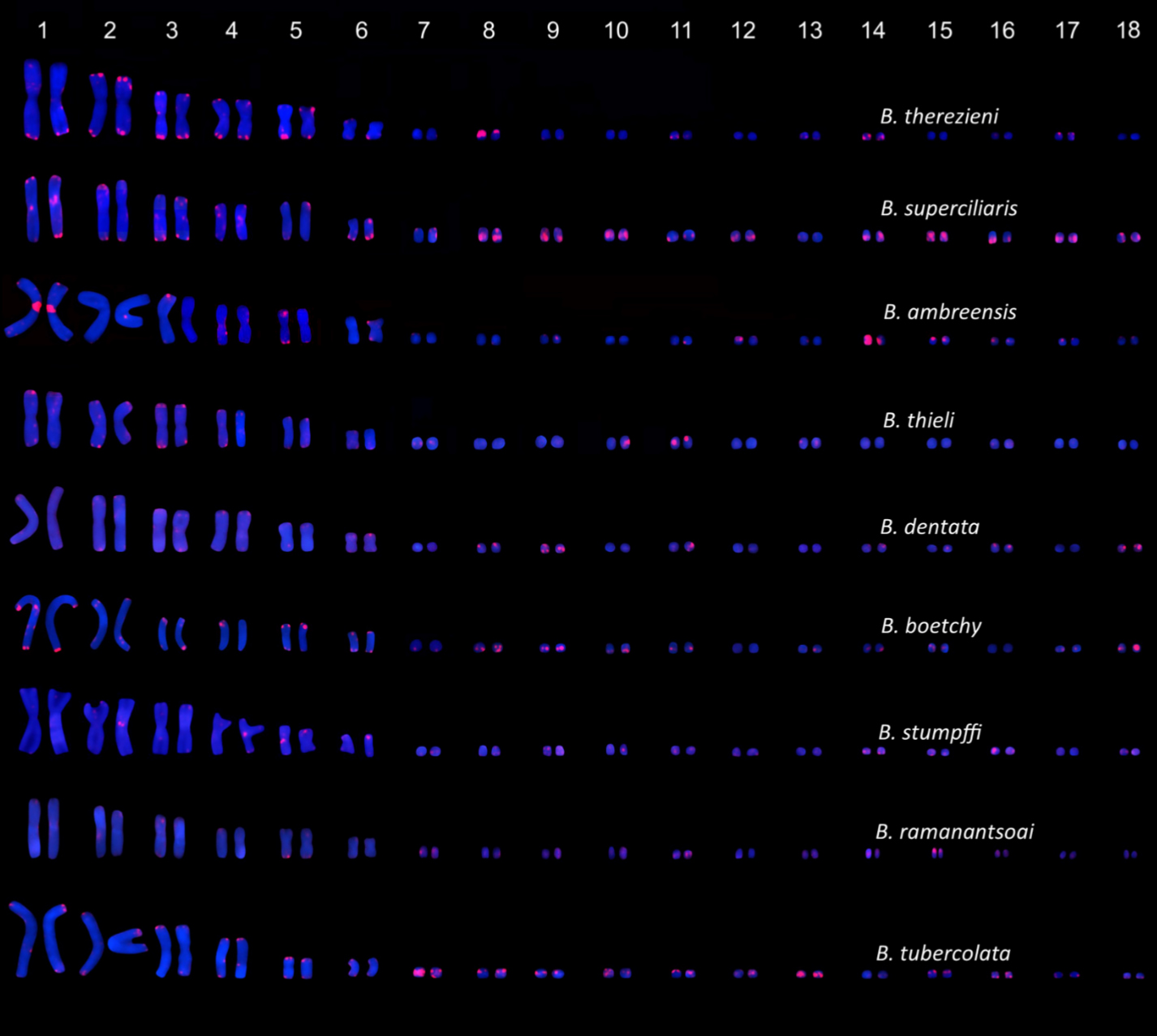
Two genetic clusters of the earth chameleon Brookesia tuberculata have been identified. Group 1 lives on the eastern flank of the Montagne d’Ambre at altitudes of 887 to 1170 m, group 2 at 1260 to 1455 m on the eastern flank and at 956 to 1150 m on the western slope of the Montagne d’Ambre. Group 1 showed a particularly high number of mitochondrial haplotypes, while group 2 had only one haplotype. The scientists assume that due to their small body size and high site fidelity, the species tends to form isolated groups rather than tree-inhabiting chameleons, which can overcome natural barriers more easily and thus move within a much larger environmental radius.

In Calumma linotum, the genetic differences between three groups at different altitudes were rather small. The measurement data of various body dimensions also showed no clear trend for this species at the different altitudes. Although Calumma linotum appeared to be slightly smaller at lower altitudes, this could have been due to subadult individuals misidentified as females. For Calumma amber and Calumma ambreense, body size decreased the higher the chameleons were found in the Montagne d’Ambre. This may be related to the cooler temperatures at higher altitudes, which contribute to slower growth. But it could also be that more younger animals were simply measured.

The study reveals interesting adaptations of different chameleon species to the altitudinal differences of the Montagne d’Ambre. It is possible that these are already the first indications of an early stage of speciation. The work also illustrates how important the different altitudinal levels are for species diversity.

Repeated divergence of amphibians and reptiles across an elevational gradient in northern Madagascar
Mark D. Scherz, Robin Schmidt, Jason L. Brown, Julian Glos, Ella Z. Lattenkamp, Zafimahery Rakotomalala, Andolalao Rakotoarison, Ricky T. Rakotonindrina, Onja Randriamalala, Achille P. Raselimanana, Safidy M. Rasolonjatovo, Fanomezana M. Ratsoavina, Jary H. Razafindraibe, Frank Glaw, Miguel Vences
Ecology and Evolution 13 (3)
DOI: 10.1002/ece3.9914

Movement pattern of Brookesia superciliaris

Movement pattern of Brookesia superciliaris

Science

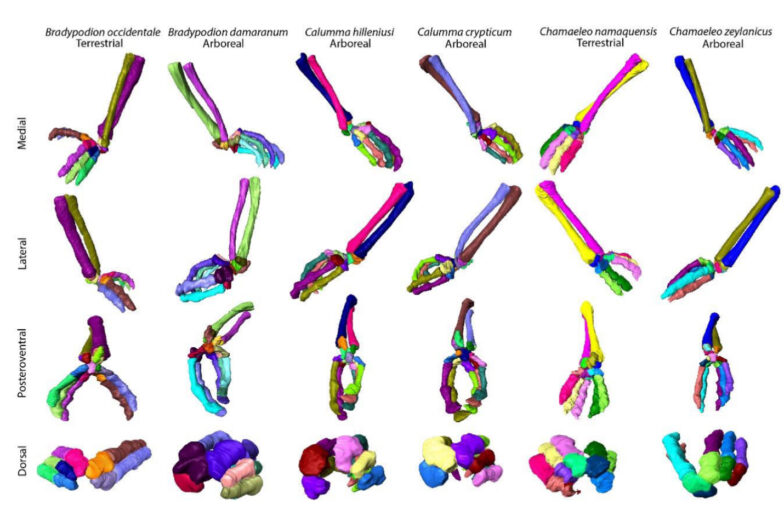
Until now, movement patterns in chameleons have mainly been studied in tree-dwelling species. The predominantly ground-dwelling genera such as Brookesia, Rhampholeon, Palleon and Rieppeleon, which represent about a third of all currently known chameleons, have only rarely been considered. A group of US researchers has now taken a closer look at the terrestrial chameleon Brookesia superciliaris.

The movement of living Brookesia superciliaris on different surfaces was measured and comparisons made with tree-dwelling chameleons and other lizards. Surprisingly, the terrestrial chameleons showed movement characteristics of both tree-dwelling and ground-dwelling animals. Brookesia superciliaris moved slower on branches than on substrate imitating soil. The gait speed was mainly regulated by the step frequency and not by the step length. Although at the beginning of a step the upper arm is strongly extended, a typical feature of aboreal locomotion, shoulder and hip movements on branches are less than usual for arboreal dwellers. This could indicate a predominantly terrestrial lifestyle. When Brookesia superciliaris moves very slowly, it often uses a very unusual step sequence and lapses into a passing gait. Brookesia superciliaris could be considered an example of an intermediate stage between ground and arboreal dwellers because of its early evolutionary split from the developmental lineage of other chameleons.

Locomotor characteristics of the ground-walking chameleon Brookesia superciliaris
Chukwuyem Ekhator, Arnavi Varshney, Melody W. Young, Daniel Tanis, Michael C. Granatosky, Raul E. Diaz, Julia L. Molnar
Journal of Experimental Zoology Part A 339 (4), 2023
DOI: 10.1002/jez.2703

Presentation in Winterthur about the European Chameleon

Presentation in Winterthur about the European Chameleon

Live lectures

Markus Grimm, a long-time member of the AG Chamäleons and entrusted for many years in Switzerland with conducting expert courses for chameleon keeping, will give a detailed lecture on the European Chameleon on 14 April 2023 in Winterthur (Switzerland).

The European Chameleon (Chamaeleo chamaeleon) in a way describes the archetype of the chameleon as such and thus has status character for the human conception of chameleons. The rather seldom-kept chameleon species makes some demands on keeping and breeding, which Markus was able to fathom during trips to the habitat as well as in captivity. After a short introduction, which includes systematics, Markus gives insights into the habitat of this chameleon in nature. In addition, the audience will learn the most important parameters for successful keeping and breeding in the terrarium. So it will definitely be very exciting – anyone interested in chameleons should definitely watch this lecture!

Markus Grimm The European Chameleon – Habitat, Keeping and breeding in captivity
DGHT City Group Winterthur
Restaurant “Rössli”
8405 Winterthur (Switzerland)
The presentation starts at 8:00 p.m.