The Tsingy de Namoroka are located in the hot west of Madagascar. They consist of needle-sharp karst rock with caves beneath and are surrounded by fragments of dry forest. Although the Tsingy are now a national park, access has so far been extremely difficult due to a complete lack of infrastructure and paths, and is even impossible during the rainy season.
The scientists carried out survey studies at three different locations within the national park. To do this, they used three 1,000 to 1,500 m transect lines at each site, along with pitfall traps. In addition, specific habitats such as caves were specifically targeted.
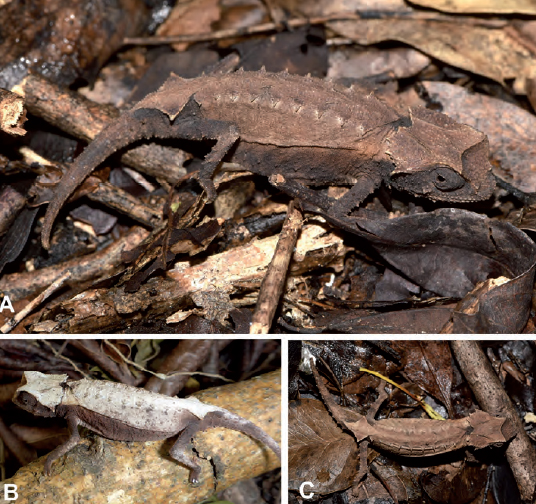
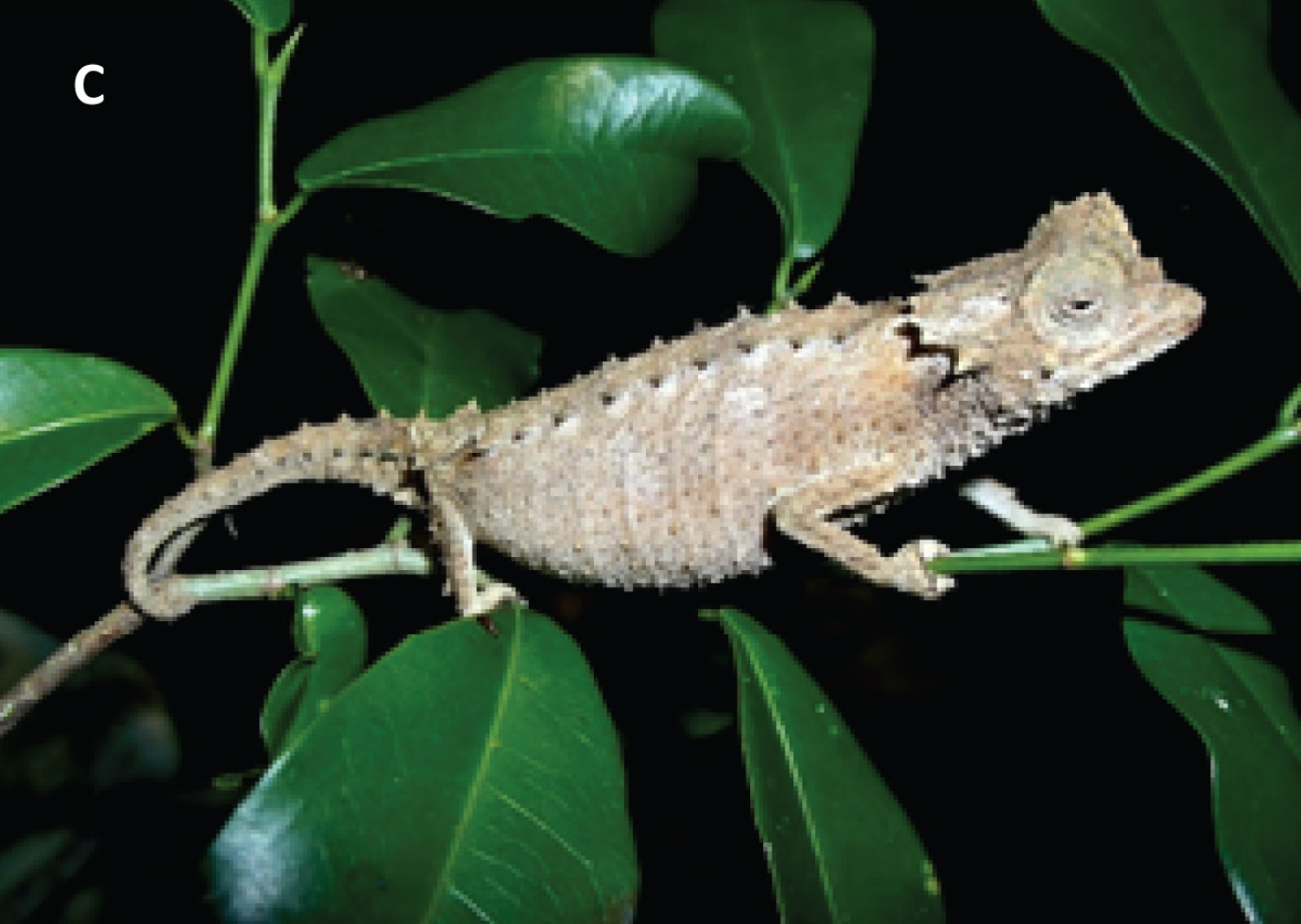
A total of 57 animal species were recorded in Namoroka, 41 of which were reptiles. Brookesia brygooi, Furcifer angeli and Furcifer oustaleti were recorded at all three sites surveyed. Brookesia bonsi, which is endemic to Namoroka, was found at only one site. This is an area situated at an altitude of 87 m, with trees ranging from 6 to 15 m in height and a relatively open canopy. The area is characterised by dense, virtually impenetrable undergrowth, particularly in the damp, rocky gorges between the Tsingy.
The scientists point out that slash-and-burn farming and the resulting uncontrollable bushfires continue to pose a major risk to the animals’ habitats in Namoroka. Logging, as well as the harvesting of wild honey, wild root tubers and medicinal plants, also ensures that the national park’s habitats are disturbed. Zebus are also driven into the national park to graze. Effective protection of the area is very difficult due to its remote location and the high levels of poverty among the local population.
Aperçu des amphibiens et des reptiles du Parc National de Namoroka: Diversité biologique, intérêt biogéographique et représentativité en matière de conservation
Hajaniaina Rasoloarison, Bernard Ranriamahatantsoa, Nirhy Rabibisoa, Christopher J. Raxworthy
Malagasy Nature 2026, 20: 30-46.
DOI: not available
Free article download
Picture: Brookesia bonsi in Namoroka, from the afore mentioned publication