
Chameleons as moral authorities
Although the area around Maroantsetra in northern Madagascar is largely Christian, ancestor worship is still widespread. This includes sacred animals, places, commandments and prohibitions, as well as taboos passed down through generations. A theologian has now investigated what the so-called hiaña is all about in the area around Masoala National Park.
Over a period of three months, he interviewed 20 people aged between 12 and over 60 years from Maroantsetra. Eleven men and nine women, all from the Betsimisaraka ethnic group, took part in the survey. The theologian also observed interactions with chameleons in and around Maroantsetra.
The respondents stated that chameleons in the area are preferably called amboalava, which translates as long dog. In other regions of Madagascar, the terms tanalahy and tarondro are predominantly used, but these are less common among the Betsimisaraka people of Maroantsetra.
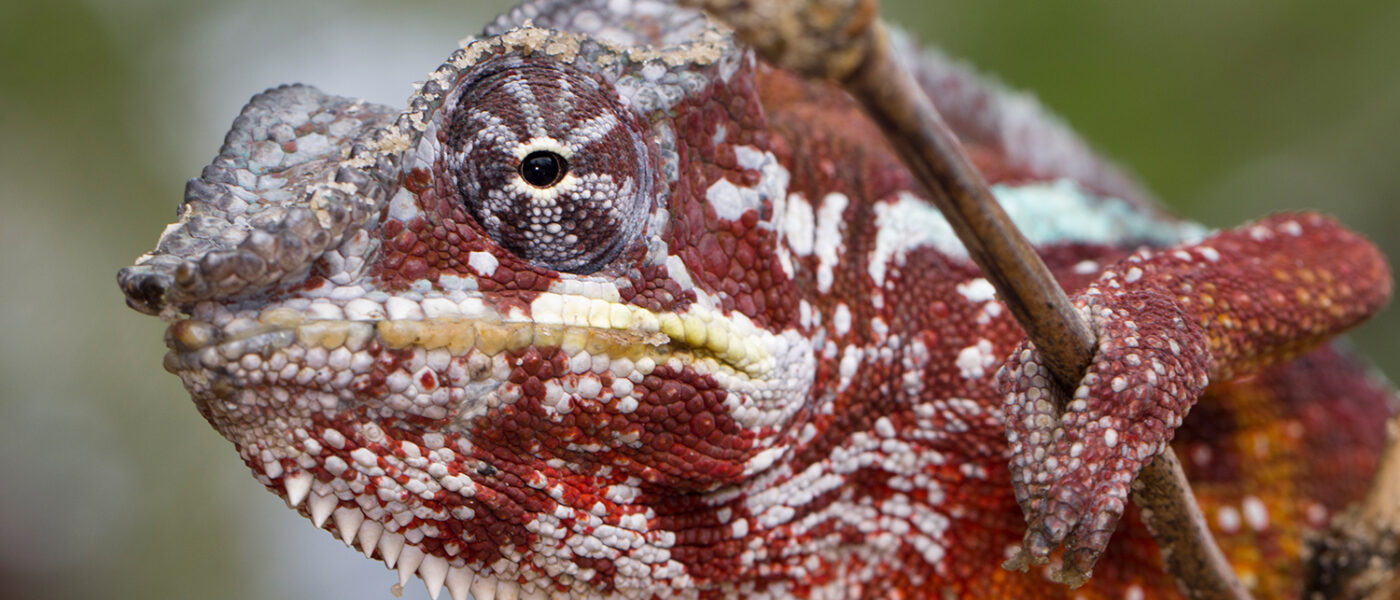
The respondents understood hiaña to be a spiritual, God-given power that is inherent primarily in chameleons, but also in special places. In Maroantsetra, the panther chameleon (Furcifer pardalis) is said to possess hiaña, presumably because it is the most commonly encountered species. Other respondents stated that chameleons even function as a kind of moral authority through which the ancestors control the affairs of the living.
Most respondents stated that harming a chameleon would result in negative consequences from the ancestors. However, the nature of these consequences differed considerably between the answers given by the various individuals. One person reported that if a human harmed a chameleon, the same injury would befall the human being. The injured hiaña would then have to be cured, similar to a curse, through the ritual of a traditional healer. One person said that he had injured a chameleon and then suffered severe pain himself. Only when he killed the still suffering chameleon did the pain stop. Another person reported that her child had died after accidentally killing a chameleon. There is therefore no uniform interpretation of hiaña, but rather individual stories that are retrospectively interwoven with hiaña and interpreted accordingly.
Several respondents stated that although chameleons possessed hiaña, it could not harm a devout Christian, as the Christian faith took precedence over the traditional ancestor cult. Interestingly, it was mainly the younger people in the interviews who stated that chameleons were important and rather peaceful creatures. They did not associate the animals negatively with hiaña. Several boys stated that they had already interacted with chameleons without any negative consequences.
Hiaña as a moral-ecological system: Chameleons, sacred potency, and human-animal relations in Maroantsetra, Madagascar
Olivier Randrianjaka
Preprint
DOI: 10.13140/RG.2.2.30826.38088
Free article download
Picture: Furcifer pardalis in Maroantsetra, photographed by Alex Negro
Beobachtungen